Korean Doenjang Kkotge Tang
Quick answer
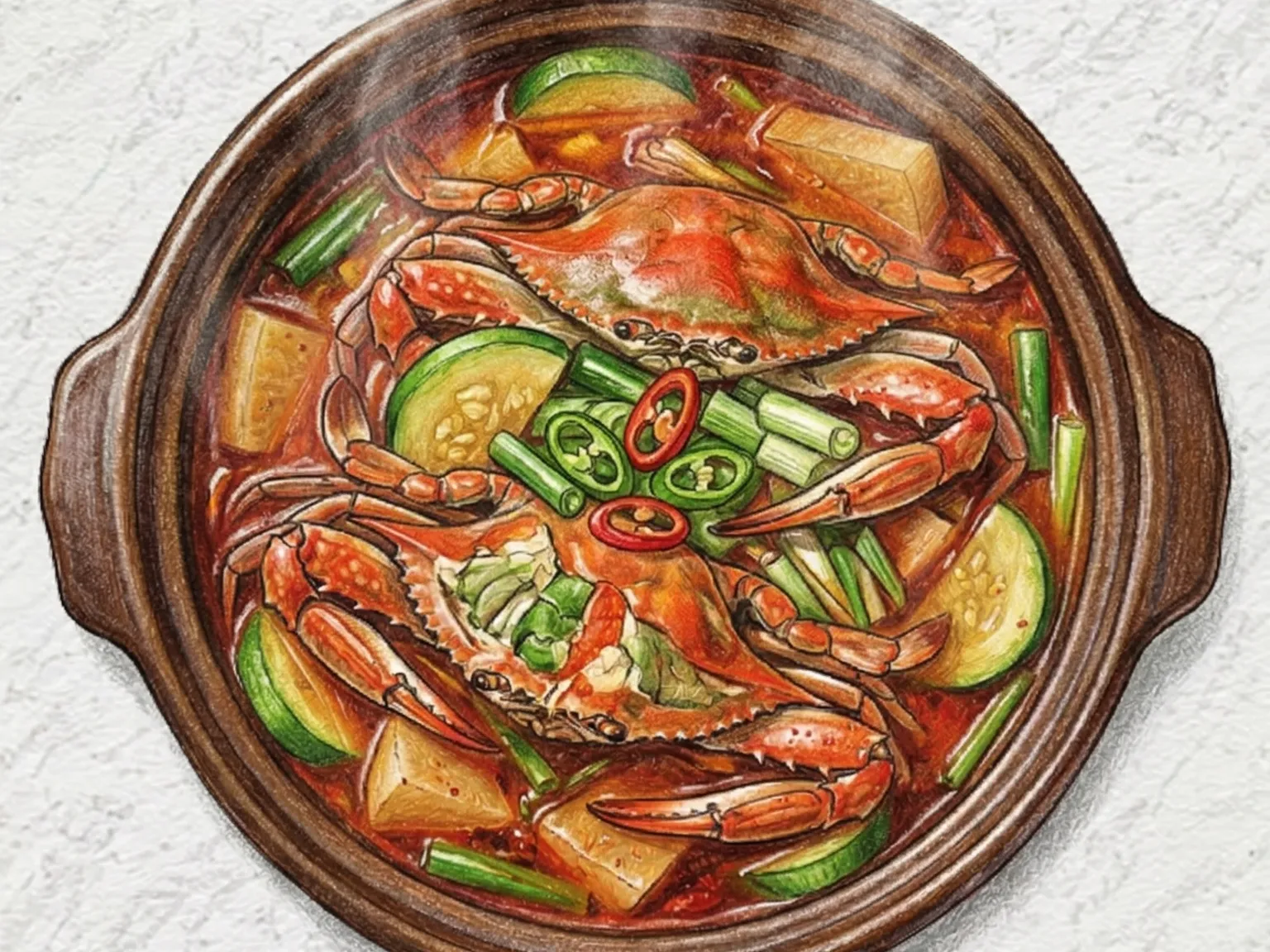
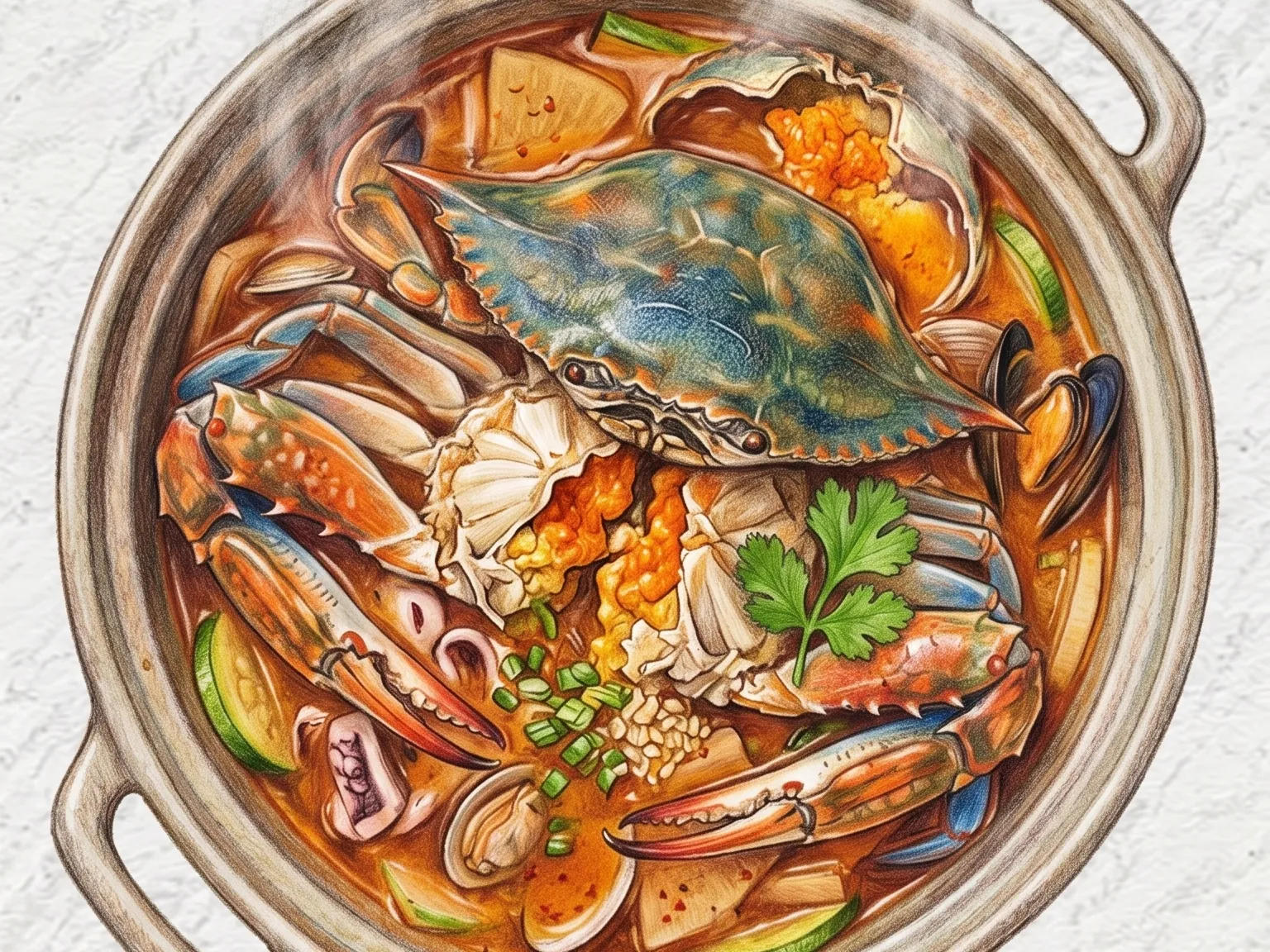
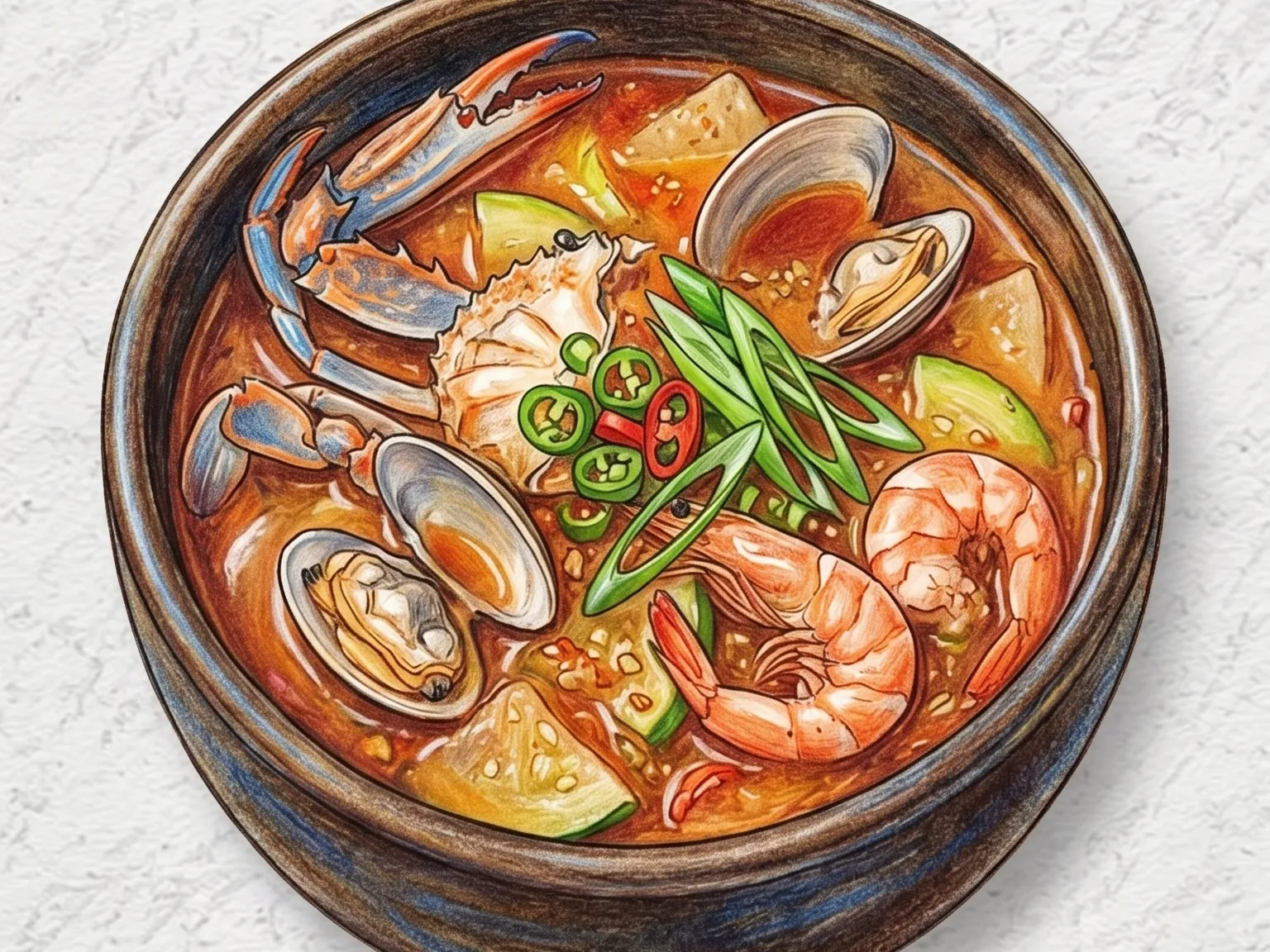
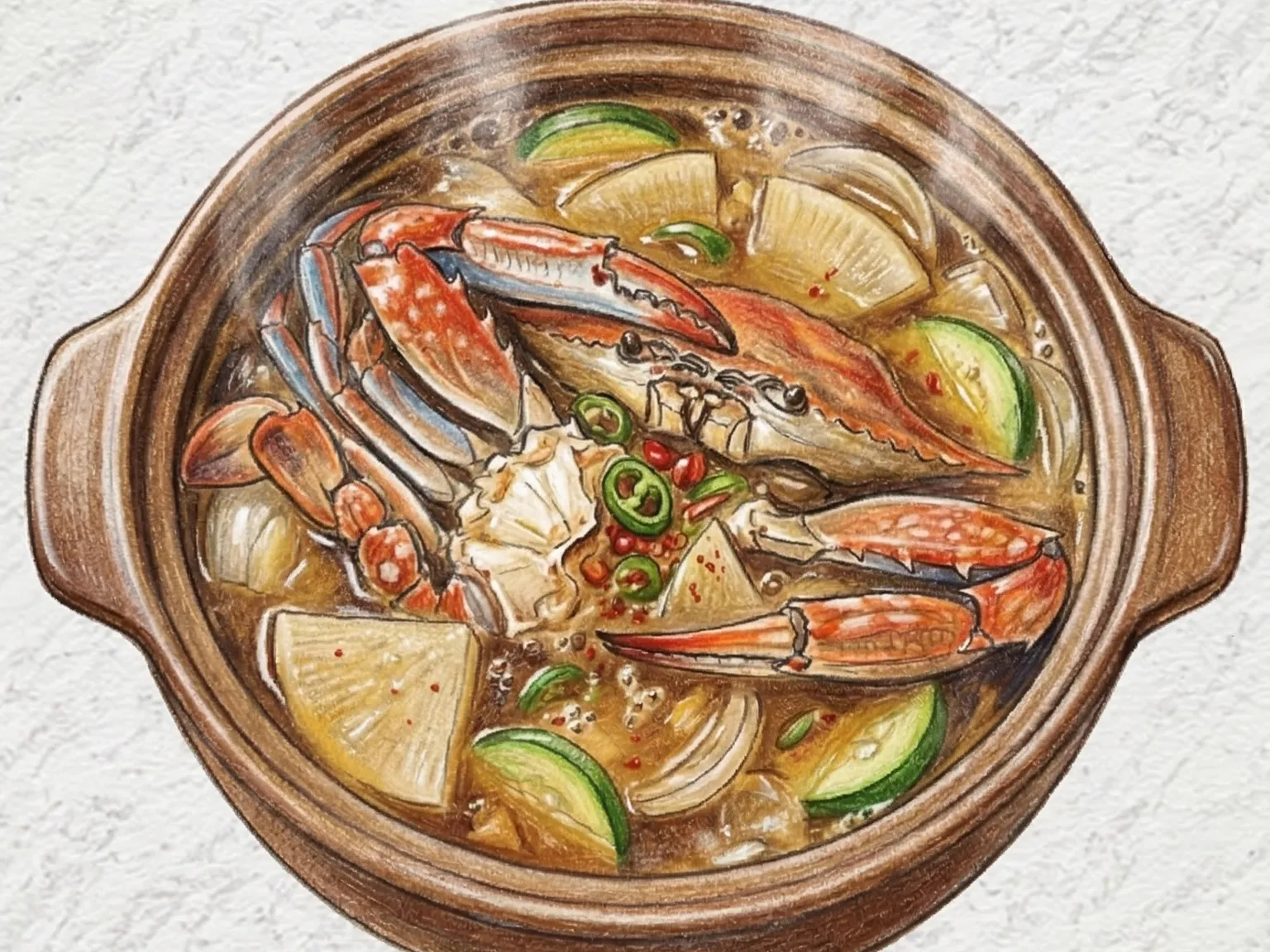
Kkotge tang doenjang is a Korean blue crab stew that uses a full 800g of crab simmered in a doenjang-forward broth, where fermented soybean paste and the crab's natural e...
What makes this special
- Kkotge tang doenjang emphasizes fermented soybean paste to highlight the natural sweetness of 800 grams of blue crab while neutralizing any fishy scents.
- Doenjang-forward seasoning brings deep fermented flavor, unlike red-base crab stews
- Sweet notes from the crab shell combine with miso's fermented depth
Key ingredients
Core cooking flow
- 1 Scrub 800g of thawed blue crab right away with a kitchen brush, then remove the belly flaps.
- 2 Slice 200g of Korean radish into 0.5cm pieces so it cooks before the crab finishes.
- 3 Put 1100ml water and the radish in a pot and bring it to a boil over high heat.
Kkotge tang doenjang is a Korean blue crab stew that uses a full 800g of crab simmered in a doenjang-forward broth, where fermented soybean paste and the crab's natural essence are the two dominant flavors. As the shells cook, they release a deeply savory stock, and radish, zucchini, and onion simmer in that liquid and add layers of sweetness and body. Unlike the more common spicy gochujang-based crab stews, this version leads with doenjang's earthy depth and fermented complexity. Gochugaru and Cheongyang chili provide a secondary heat that balances the richness without taking over. Adding tofu keeps the texture varied and lightens the heaviness of the broth slightly. The crabs turn a vivid orange as they cook, a reliable visual cue that the meat is ready to pull cleanly from the shell. The fermented character of the doenjang suppresses any fishy edge from the crab, making the stew approachable even for those who do not normally gravitate toward shellfish. Served with rice to soak up the broth, it makes a satisfying complete meal.
Instructions
Read the steps as a cooking flow: prep, heat, seasoning, doneness control, and finish.
- 1Prep
Scrub 800g of thawed blue crab right away with a kitchen brush, then remove the belly flaps.
Cut each body in half with kitchen shears so the shells can release flavor into the broth evenly.
- 2Finish
Slice 200g of Korean radish into 0.5cm pieces so it cooks before the crab finishes.
Cut 120g zucchini and 100g onion into bite-size pieces, then slice the green onion and Cheongyang chili diagonally into 1cm pieces.
- 3Control
Put 1100ml water and the radish in a pot and bring it to a boil over high heat.
Once boiling, lower to medium and cook for about 7 minutes, until the radish edges start turning translucent.
- 4Season
Press 1.5 tablespoons doenjang through a strainer into the broth so no salty clumps remain.
Add 1 tablespoon minced garlic and 1 tablespoon gochugaru, then bring the broth back to a steady boil.
- 5Control
Add the prepared crab and simmer over medium heat for about 8 minutes.
Skim off foam as it rises for a cleaner broth, and cook until the shells turn orange and the raw seafood smell fades.
- 6Control
Add the zucchini and onion and simmer for 5 more minutes, just until tender but not collapsing.
Add the green onion and Cheongyang chili for the final minute, then check the broth seasoning before serving with rice.
After the steps
Pick a recipe that fits this dish.
Continue with shared ingredients, meal pairings, or a similar method.
Recipes That Go Well With This
More Stews →Based on shared ingredients and meal pairing
Korean Spring Blue Crab Stew
Kkotgetang is a classic Korean spicy crab stew made with 600g of whole blue crab simmered until the shells release their full flavor into the broth. Gochugaru and a touch of doenjang season the liquid with heat and fermented depth, while radish and zucchini turn sweet as they absorb the crab-infused stock. Two Cheongyang chilies push the spice level higher, and green onion adds a fresh finish. Picking the crab meat from the shell while sipping the hot, briny broth is half the enjoyment. Spring blue crabs are prized for their fuller flesh, making that the ideal season to prepare this dish.
Korean Spicy Blue Crab Seafood Stew
Kkotge haemul jjigae is a Korean seafood stew that combines blue crab, Manila clams, and shrimp in 1.2 liters of anchovy-kelp stock to build the most layered possible ocean flavor. Each shellfish contributes a distinct profile to the broth: blue crab adds a sweet, nutty richness from the body and roe, clams release a clean briny depth, and shrimp fold in their characteristic sweetness and concentrated umami. Together they create a broth with complexity that no single ingredient could produce on its own. Radish and zucchini absorb the seafood-infused liquid as they cook, becoming tender and carrying the flavor deep into their flesh. Doenjang and gochugaru form the seasoning backbone, layering fermented savoriness and spice into what would otherwise be a straightforward clear broth. Cheongyang chili and sliced green onion go on last, brightening the surface and extending the clean, cool finish that is the hallmark of well-made Korean seafood stew. Adding the crab first and letting it simmer before introducing the other shellfish is the key step -- it gives the stock time to take on the crab's full flavor before everything else goes in.
Korean Grilled Eel Rice Bowl
Jangeeo deopbap is a bowl of grilled freshwater eel over steamed rice, where the key technique is building up a thick, lacquered glaze through multiple applications of a sweet-salty sauce reduced from soy sauce, mirin, sugar, and ginger juice. The eel starts skin-side down on the grill over medium heat for around five minutes to crisp the skin, then is flipped and basted repeatedly with the sauce as it finishes cooking. A single coat of sauce produces a pale, thin color, so at least two applications and ideally three or more are needed to build the characteristic glossy surface. With each additional coat, the sugars in the sauce react with heat through both Maillard browning and caramelization, layering flavor with every pass. Because freshwater eel is naturally fatty, fat drips during grilling can cause flare-ups, so heat control is important throughout the process. Sansho pepper dusted on at the end cuts through the eel's inherent richness with a sharp, numbing fragrance that balances the sweet glaze and keeps the dish from feeling heavy.
Korean Spicy Blue Crab Hot Pot
Maeun kkotge jeongol is a fiery blue crab hot pot made with two whole crabs broken down and simmered in a gochujang and gochugaru-laced broth. The crab shells and innards gradually release a deep, concentrated shellfish essence into the pot, which layers with the fermented chili paste to produce a broth that is bold and complex rather than simply hot. Daikon radish and tofu absorb the spicy liquid as they cook, becoming flavorful in their own right, while thick green onion stalks add fragrance near the end. This is a communal dish meant to be placed in the center of the table over a portable burner and shared as it simmers, with a little water added as the broth reduces to keep it going through the meal. Stirring the crab innards directly into the broth deepens the umami considerably.
Serve with this
Korean Seasoned Bracken Fern
Gosari, the Korean name for bracken fern, is one of the oldest foraged vegetables in Korean cooking, with consumption records tracing back to the Three Kingdoms period. It is a mandatory component of bibimbap and a required dish on jesa, the ancestral rite table set for ceremonies honoring the dead. Dried gosari must soak overnight in cold water and then boil until the tough, wiry fibers relax into a distinctively springy, almost elastic chew that no fresh vegetable can replicate. The rehydrated fern is stir-fried in perilla oil with minced garlic until fragrant, then a small amount of soup soy sauce and water goes in and the pan is covered to let the liquid absorb and the fern braise briefly. This short braising step is what rounds the flavor and ensures the seasoning penetrates the fibrous strands rather than sitting only on the surface. Perilla oil is the traditional fat of choice rather than sesame oil because its green, herbal quality pairs more naturally with the woodsy, forest-floor flavor of gosari, amplifying rather than competing with it. Large batches are typically made during Chuseok or Seollal and eaten over several days, as the flavor improves and deepens as the dish sits.
Korean Stuffed Perilla Leaf Pancakes
Kkae-ip-jeon are pan-fried perilla leaf parcels stuffed with a filling of ground pork and firm tofu, coated in flour and egg. The tofu must be squeezed dry in a cloth before mixing; excess moisture causes the filling to spread and stick to the pan. Garlic chives and onion add crunch and fragrance to the mix, and the filling seasoned with soy sauce and black pepper pairs cleanly with the perilla's strong herbal character. Dusting with flour first, then dipping in egg, produces an even coating, and frying covered over medium-low heat for two minutes per side ensures the filling is cooked through to the center. The bite-sized pieces work well as a packed lunch side or as bar food.
Korean Soy Pickled Radish Cubes
Mu jangajji is a fundamental Korean soy-pickled radish made by cutting radish into 1.5 cm cubes, packing them in a sterilized jar with dried chili, and pouring over a boiled brine of soy sauce, vinegar, and sugar. The radish's firm flesh absorbs the sweet-salty brine gradually while maintaining its crisp bite, and the dried chili adds a gentle warmth and aroma to the liquid. Pouring the brine while still hot is important because the heat briefly opens the cell walls of the radish, allowing the seasoning to penetrate more evenly throughout. Vinegar balances the soy's saltiness with a clean tang, and using dense winter radish yields the best texture. This is one of the most versatile Korean pickles, appearing alongside gimbap, bibimbap, and gukbap as a reliable everyday table companion.
Similar recipes
Korean Freshwater Crab Spicy Soup
This spicy freshwater crab soup is a traditional Korean regional dish featuring halved crabs simmered in a rich broth. The preparation starts by scrubbing the crabs and soaking them in light saltwater for five minutes to reduce any muddy odor. A base broth is made by boiling sliced radish and soybean paste, which is strained through a sieve to keep the texture smooth. The crabs are then added and boiled for ten minutes while skimming the foam. A combination of red pepper flakes and Cheongyang chilies builds a double layer of heat, complemented by minced garlic and soup soy sauce. Zucchini, green onions, and chili peppers are added during the final five minutes of cooking, allowing their natural sweetness to balance the spicy broth. Simmering for forty minutes in total extracts the deep, briny flavor of the freshwater crab.
Korean Seafood Hot Pot Soup
Haemul-tang is a Korean seafood hot pot that throws together crab, shrimp, clams, and squid in a fiery, brick-red broth. The liquid starts with gochugaru and plenty of garlic, building a spicy base that the seafood then amplifies with its own briny juices. Radish chunks soften as the pot bubbles, thickening the broth slightly and adding a cool sweetness behind the heat. Green onions and cheongyang peppers go in toward the end for a sharp, vegetal bite. The magic of haemul-tang lies in the convergence of flavors: crab shells release a sweet, crustacean stock; clams open to spill their liquor; shrimp and squid contribute distinct textures from snappy to chewy. The pot is brought to the table still at a rolling boil, and diners pick through the shells and tentacles while the broth continues to concentrate.
Korean Octopus Hot Pot (Spicy Gochujang Broth with Herbs)
Nakji jeongol is a spicy Korean hot pot built around small octopus simmered in anchovy stock seasoned with gochujang and gochugaru, together with napa cabbage, water parsley, onion, and tofu. Anchovy stock works particularly well here because it has a clean, salty depth that amplifies rather than competes with the oceanic flavor of the octopus. The gochujang contributes a fermented sweetness to the broth while the gochugaru layer on top provides the sharp, direct heat, producing a multi-dimensional spicy broth that is more complex than either ingredient alone. Octopus is highly sensitive to overcooking. Cooked within two minutes, it stays springy and pleasantly chewy. Beyond that, the protein fibers contract and the texture becomes tough and rubbery. Water parsley loses its fresh herbal fragrance quickly under heat, so it is best added about one minute before serving to keep that clean, slightly grassy brightness intact. Cooking the hot pot at the table allows diners to add octopus in small batches at their own pace, which is the most reliable way to keep every piece at the ideal doneness.