Korean Spring Blue Crab Stew
Quick answer
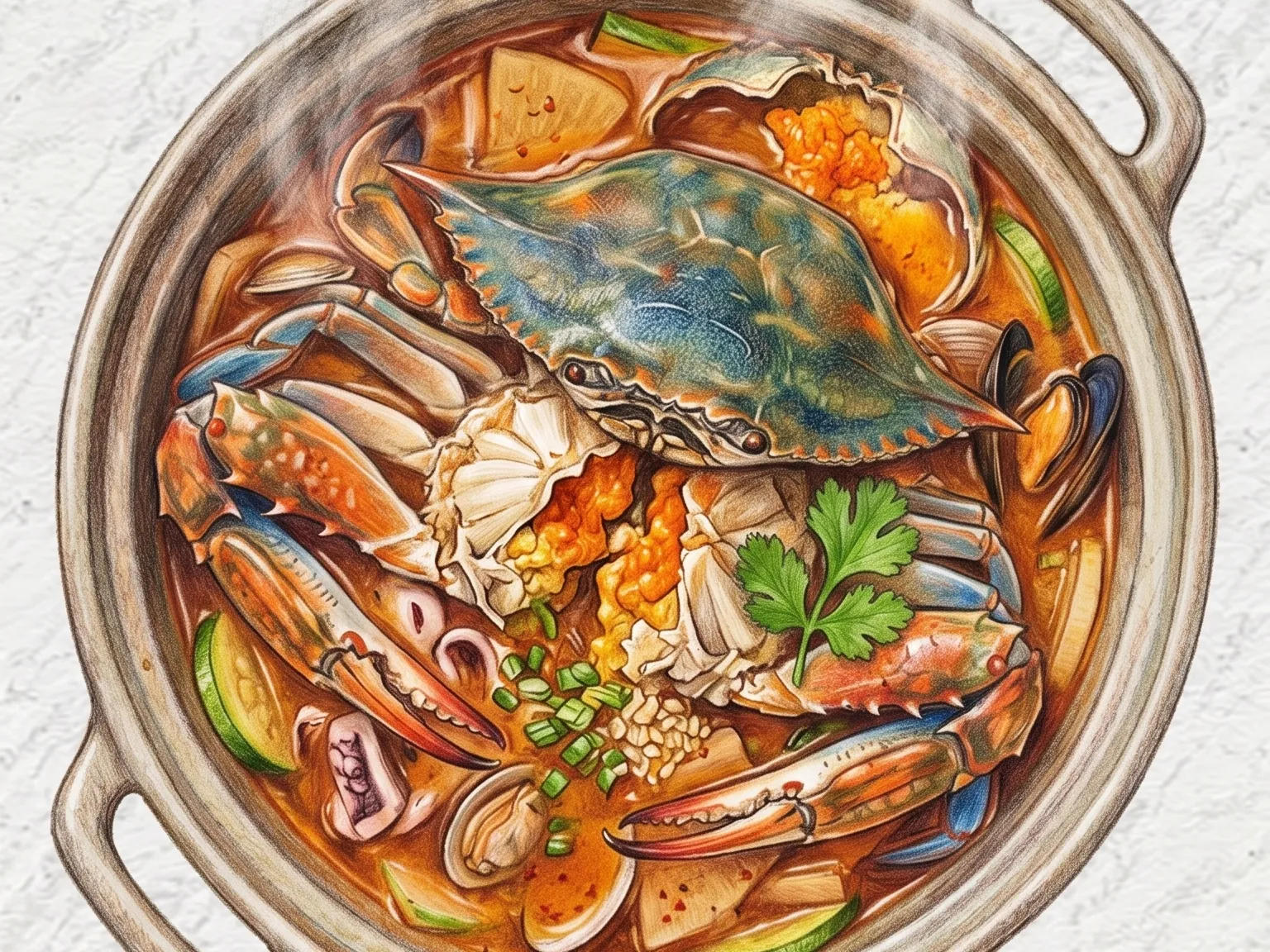
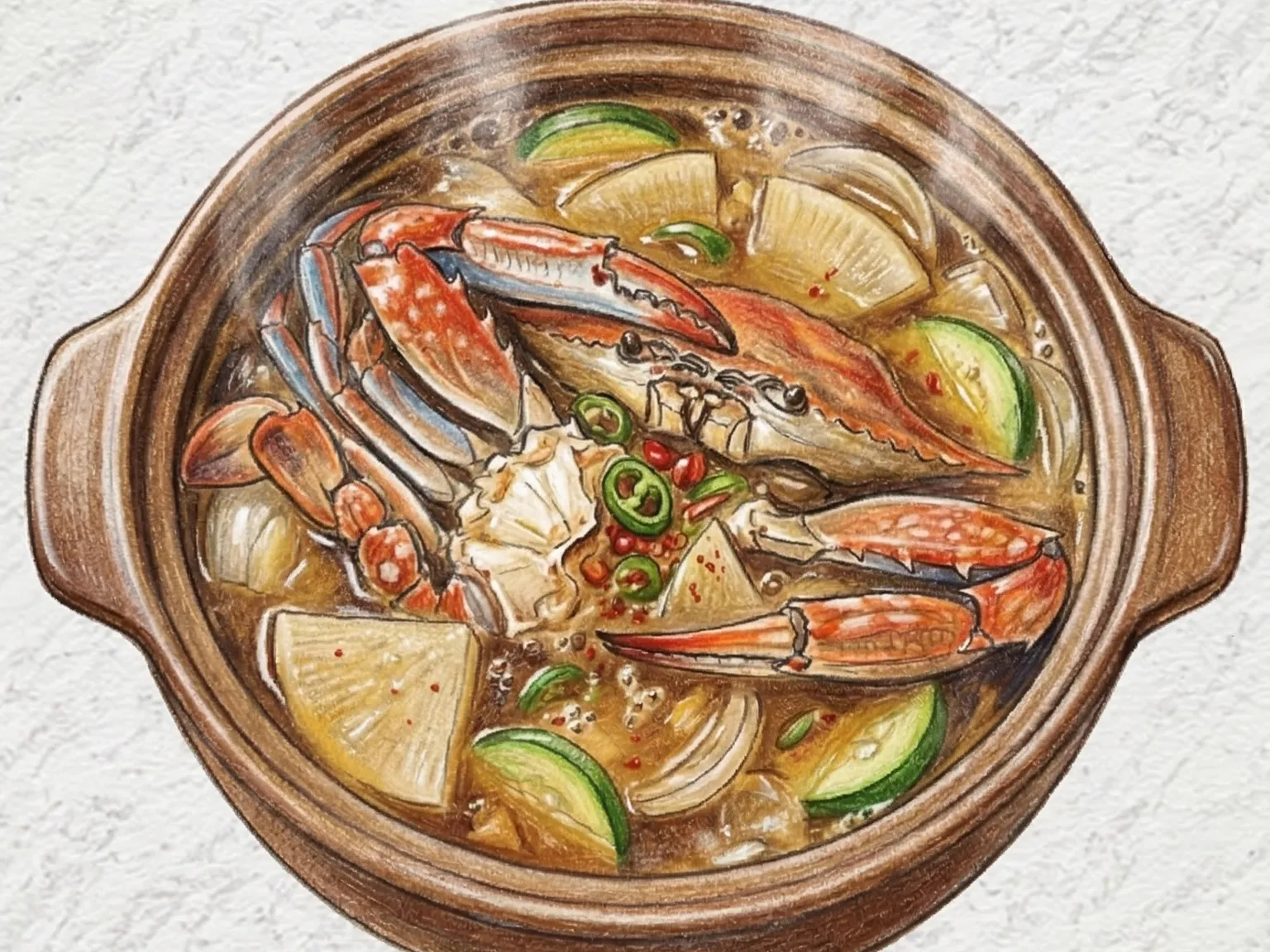
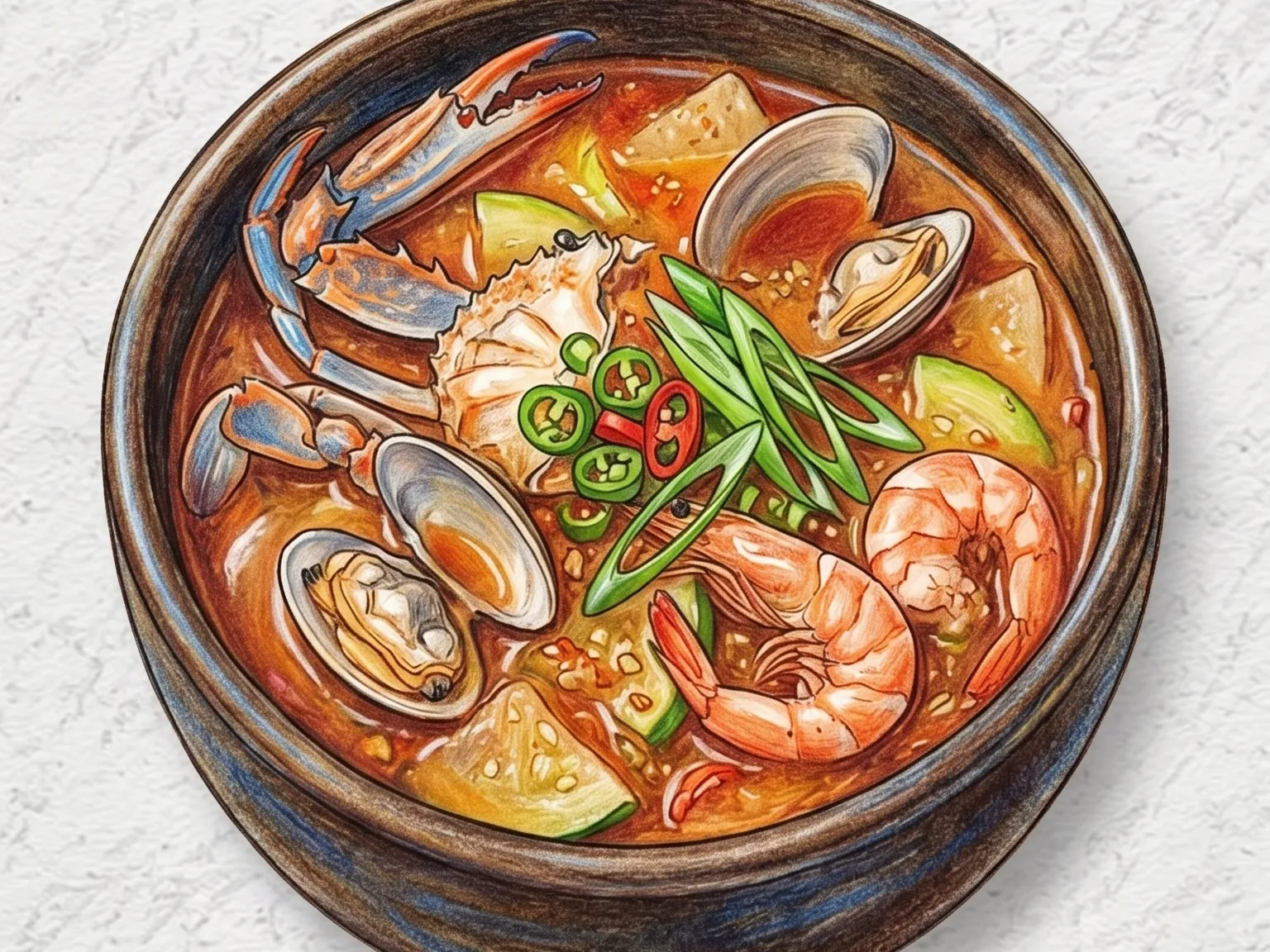
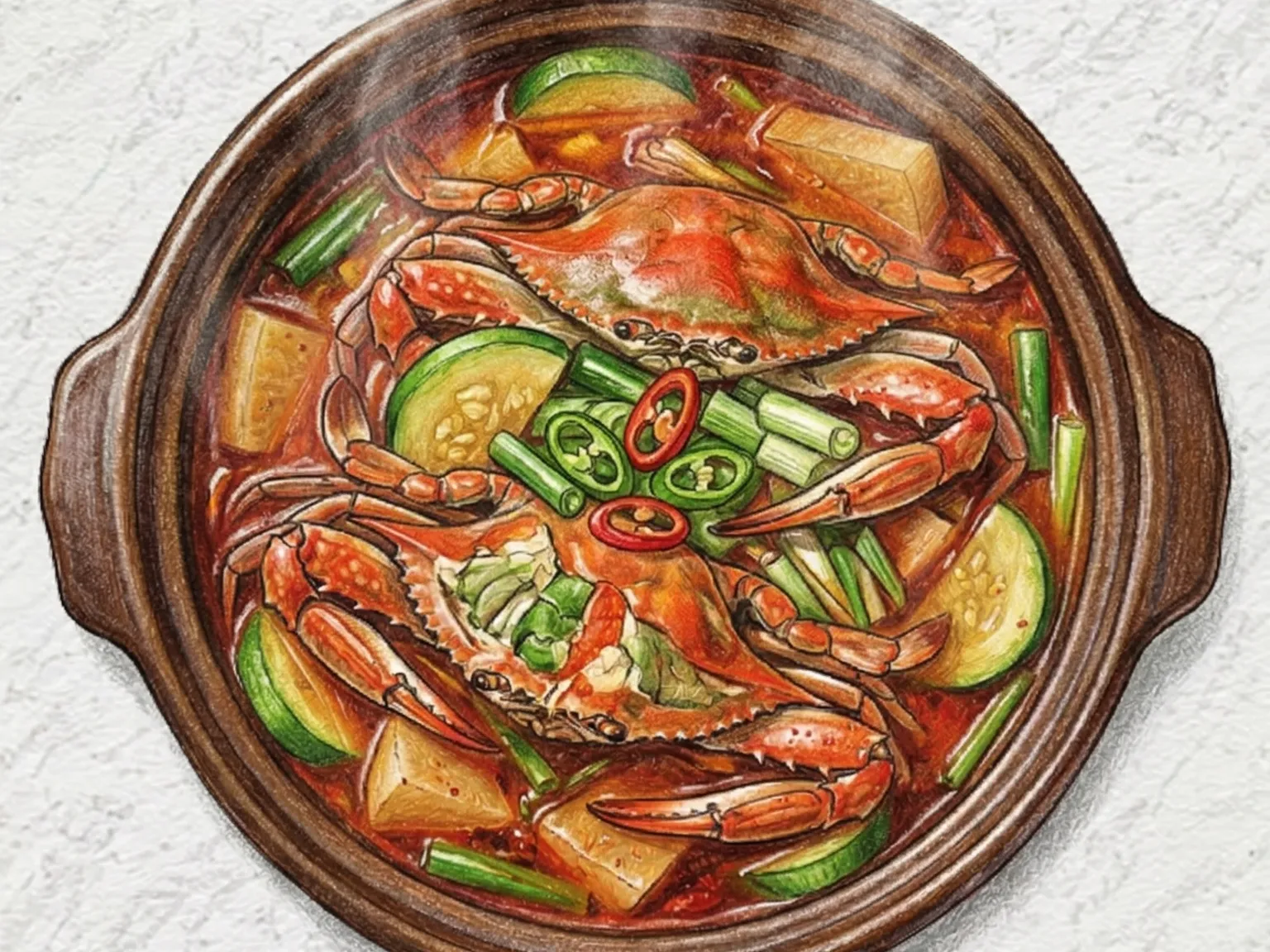
Kkotgetang is a classic Korean spicy crab stew made with 600g of whole blue crab simmered until the shells release their full flavor into the broth.
What makes this special
- Kkotgetang concentrates the sweet essence of fresh spring blue crabs in a spicy broth supported by a savory touch of fermented soybean paste.
- 600g blue crab provides the concentrated crab stock base
- Spring season crab is flesh-full with noticeably sweeter meat
Key ingredients
Core cooking flow
- 1 Scrub 600g of blue crab under running water with a brush, especially around the legs and shell joints.
- 2 Slice 150g of Korean radish thinly so it softens quickly, and cut 80g of zucchini into 0.5cm pieces.
- 3 Put 900ml of water, the radish, and 0.5 tablespoon of doenjang in a pot, then dissolve the paste fully.
Kkotgetang is a classic Korean spicy crab stew made with 600g of whole blue crab simmered until the shells release their full flavor into the broth. Gochugaru and a touch of doenjang season the liquid with heat and fermented depth, while radish and zucchini turn sweet as they absorb the crab-infused stock. Two Cheongyang chilies push the spice level higher, and green onion adds a fresh finish. Picking the crab meat from the shell while sipping the hot, briny broth is half the enjoyment. Spring blue crabs are prized for their fuller flesh, making that the ideal season to prepare this dish.
Instructions
Read the steps as a cooking flow: prep, heat, seasoning, doneness control, and finish.
- 1Heat
Scrub 600g of blue crab under running water with a brush, especially around the legs and shell joints.
Remove the apron and gills, cut the bodies in half, and let excess water drain before cooking.
- 2Heat
Slice 150g of Korean radish thinly so it softens quickly, and cut 80g of zucchini into 0.5cm pieces.
Slice the onion, green onion, and 2 Cheongyang chilies before the pot starts boiling.
- 3Control
Put 900ml of water, the radish, and 0.5 tablespoon of doenjang in a pot, then dissolve the paste fully.
Bring it to a strong boil over high heat and cook about 7 minutes until the radish looks partly translucent.
- 4Control
Add the prepared crab, 1 tablespoon of minced garlic, and 1.5 tablespoons of gochugaru.
When the broth returns to a boil, lower to medium heat and simmer 10 minutes, until the shells turn red and the broth smells rich.
- 5Control
Add the zucchini, onion, and Cheongyang chilies, then simmer 6 more minutes.
Once the zucchini edges soften, stir gently and only as needed so the crab meat does not break apart in the broth.
- 6Finish
Add 0.5 stalk of sliced green onion and simmer for 2 minutes to finish the aroma.
Skim off surface foam, check that the broth is not too salty or harsh, and serve the stew while hot.
After the steps
Pick a recipe that fits this dish.
Continue with shared ingredients, meal pairings, or a similar method.
Recipes That Go Well With This
More Stews →Based on shared ingredients and meal pairing
Korean Spicy Blue Crab Seafood Stew
Kkotge haemul jjigae is a Korean seafood stew that combines blue crab, Manila clams, and shrimp in 1.2 liters of anchovy-kelp stock to build the most layered possible ocean flavor. Each shellfish contributes a distinct profile to the broth: blue crab adds a sweet, nutty richness from the body and roe, clams release a clean briny depth, and shrimp fold in their characteristic sweetness and concentrated umami. Together they create a broth with complexity that no single ingredient could produce on its own. Radish and zucchini absorb the seafood-infused liquid as they cook, becoming tender and carrying the flavor deep into their flesh. Doenjang and gochugaru form the seasoning backbone, layering fermented savoriness and spice into what would otherwise be a straightforward clear broth. Cheongyang chili and sliced green onion go on last, brightening the surface and extending the clean, cool finish that is the hallmark of well-made Korean seafood stew. Adding the crab first and letting it simmer before introducing the other shellfish is the key step -- it gives the stock time to take on the crab's full flavor before everything else goes in.
Korean Doenjang Kkotge Tang
Kkotge tang doenjang is a Korean blue crab stew that uses a full 800g of crab simmered in a doenjang-forward broth, where fermented soybean paste and the crab's natural essence are the two dominant flavors. As the shells cook, they release a deeply savory stock, and radish, zucchini, and onion simmer in that liquid and add layers of sweetness and body. Unlike the more common spicy gochujang-based crab stews, this version leads with doenjang's earthy depth and fermented complexity. Gochugaru and Cheongyang chili provide a secondary heat that balances the richness without taking over. Adding tofu keeps the texture varied and lightens the heaviness of the broth slightly. The crabs turn a vivid orange as they cook, a reliable visual cue that the meat is ready to pull cleanly from the shell. The fermented character of the doenjang suppresses any fishy edge from the crab, making the stew approachable even for those who do not normally gravitate toward shellfish. Served with rice to soak up the broth, it makes a satisfying complete meal.
Korean Clam and Radish Pot Rice
Baekhap mu sotbap is a Korean pot rice dish where soaked rice is cooked with radish, shiitake mushrooms, and hard clam meat using kelp-infused water. The kelp water establishes a deeper umami base than plain water, and the glutamic acid released by shiitake mushrooms compounds with the clams' briny character to build layered savory depth. Radish sits on top of the rice and steams as the pot cooks, losing moisture while concentrating its natural sweetness into the surrounding grains. The clam meat must be added just before the resting phase rather than at the start, because prolonged heat toughens shellfish; residual steam finishes the cooking gently while keeping the clams firm. The resting period is critical - ten minutes with the lid sealed after the flame is turned off allows steam to redistribute evenly through the rice and all the toppings. A seasoning sauce of soy sauce, sesame oil, and chopped scallion is mixed in at the table, adding a salty richness that ties the seafood and vegetable components together. Hard clams require thorough purging before use; soaking in salted water for at least two hours removes sand, and any clam that does not open during this process should be discarded.
Korean Spicy Blue Crab Soup
Ggotge-tang is a spicy Korean crab soup built around whole blue crabs that infuse the broth with a concentrated, briny seafood depth. The shells release their marine richness as they crack apart during simmering, forming the structural foundation of the pot. Doenjang dissolved into the broth adds fermented complexity, while gochugaru delivers a persistent heat that compounds with each spoonful. Radish chunks sweeten and clarify the liquid, and zucchini with green onion fill the bowl with color and contrasting texture. Before cooking, the crabs should be scrubbed clean under cold water and cleaned of their sand pouches and gills, which eliminates any off-flavors. Scoring the claws lightly with the back of a knife before the pot goes on the heat makes extracting the claw meat easier at the table. Female crabs in season carry bright orange roe inside the top shell that dissolves into the broth and intensifies its richness. The real reward at the end of the meal is mixing leftover rice directly into the crab's top shell with the residual roe and braising juices, a practice Korean diners regard as the true finish of the meal. Blue crab season peaks in spring and autumn.
Serve with this
Crispy Mushroom Tangsu (Sweet & Sour)
Double-fried oyster mushrooms with the same two-stage frying technique used for Korean tangsu pork. Oyster mushrooms fully dried of moisture are coated in a potato starch and flour batter, fried at 170°C, rested to release steam, then returned to 180°C for a second fry that locks in a crisp exterior while keeping the interior chewy. A sweet-sour sauce of soy sauce, vinegar, and sugar is simmered with onion, bell pepper, and carrot, then thickened with a starch slurry. Pouring the sauce over the mushrooms in advance softens the crust quickly, so serving the sauce separately and ladling it on at the table preserves the crunch. The technique produces a texture comparable to the pork version without any meat.
Korean Chive Clam Jeon (Garlic Chive and Clam Seafood Pancake)
Buchu-bajirak-jeon is a seafood pancake of garlic chives and clam meat, pan-fried in a batter made with a mix of all-purpose pancake flour and rice flour. The rice flour addition increases the chew and gives the finished jeon a slightly more resilient texture than plain flour batters. Clam meat releases a briny, oceanic liquid as it cooks that seeps into the batter and flavors it throughout, while the chives add a sharp, grassy counterpoint. Minced garlic and diagonally sliced cheongyang chili worked into the batter suppress any fishiness and build a layered fragrance. A generous amount of oil in the pan over medium heat produces edges that crisp and brown like the outside of a fritter. Waiting until the bottom is fully set before flipping prevents the pancake from tearing. Served with soy dipping sauce or a seasoned soy mixture, the clean salinity of the clams comes through clearly.
Korean Pickled Shishito Peppers
Kkwarigochu jangajji is a Korean pickled shishito pepper side dish made by pricking each pepper all over with a toothpick, blanching briefly in salted boiling water for thirty to sixty seconds, and submerging them with sliced garlic and optional cheongyang chili in a brine of soy sauce, vinegar, and sugar brought to a boil. Pricking the peppers before blanching ensures the brine penetrates evenly through the hollow interior, eliminating any difference in seasoning between the skin and the flesh inside. Blanching for only thirty seconds to one minute wilts the peppers just enough to make them pliable while keeping a firm, springy bite and their natural mild heat. Pouring the brine hot, then letting the jar cool before refrigerating, helps the peppers hold their green color rather than browning. Vinegar cuts through the saltiness of the soy sauce and prevents the pickle from tasting heavy, while sugar smooths the sharpness into a balanced, clean finish. Ready after at least one day of refrigeration and keeps well for over a week, making it a reliable banchan to have on hand when the weeknight table needs one more dish.
Similar recipes
Korean Spicy Blue Crab Hot Pot
Maeun kkotge jeongol is a fiery blue crab hot pot made with two whole crabs broken down and simmered in a gochujang and gochugaru-laced broth. The crab shells and innards gradually release a deep, concentrated shellfish essence into the pot, which layers with the fermented chili paste to produce a broth that is bold and complex rather than simply hot. Daikon radish and tofu absorb the spicy liquid as they cook, becoming flavorful in their own right, while thick green onion stalks add fragrance near the end. This is a communal dish meant to be placed in the center of the table over a portable burner and shared as it simmers, with a little water added as the broth reduces to keep it going through the meal. Stirring the crab innards directly into the broth deepens the umami considerably.
Korean Spicy Fish Roe Stew
Altang is a Korean stew built around pollock roe - the egg sacs that are the defining ingredient, distinguishing this dish from the many other spicy Korean seafood stews. The dish originated in east coast fishing towns where fresh roe is available in large quantities during the winter spawning season and must be used quickly. Anchovy-kelp stock simmers first with radish to create a clean, sweet foundation before the roe and tofu are added. Once the roe goes into the broth, something visible happens: the egg sacs release their contents as they cook, turning the liquid cloudy and enriching it with marine oils that give the broth a noticeably heavier, more unctuous body. This transformation is specific to altang and is part of what makes it a different eating experience from other spicy Korean stews. Gochugaru and doenjang season the stew together - the chili bringing direct heat and the fermented paste adding depth - and together they neutralize the fishy edge that pollock roe would otherwise carry. Crown daisy, ssukgat, is added in the final moments. Its sharp, almost medicinal herbal fragrance is the correct counterpoint to the heavy, briny broth. In Korean drinking culture, altang occupies a specific role as a late-night restorative consumed at the end of a long evening. The image of a stone pot of altang arriving at the table still vigorously boiling, at two or three in the morning, is a recognizable part of Korean urban nightlife.
Korean Freshwater Crab Spicy Soup
This spicy freshwater crab soup is a traditional Korean regional dish featuring halved crabs simmered in a rich broth. The preparation starts by scrubbing the crabs and soaking them in light saltwater for five minutes to reduce any muddy odor. A base broth is made by boiling sliced radish and soybean paste, which is strained through a sieve to keep the texture smooth. The crabs are then added and boiled for ten minutes while skimming the foam. A combination of red pepper flakes and Cheongyang chilies builds a double layer of heat, complemented by minced garlic and soup soy sauce. Zucchini, green onions, and chili peppers are added during the final five minutes of cooking, allowing their natural sweetness to balance the spicy broth. Simmering for forty minutes in total extracts the deep, briny flavor of the freshwater crab.
Tips
Nutrition (per serving)
Variations
Blue Crab Stew with Doenjang Base
This blue crab stew uses doenjang for earthy depth with sweet sea flavor. Fresh chili adds clean heat and sharper umami.