Korean Honey Bread Balls (Fried Yeast Dough Balls Glazed with Honey and Peanut)

Korean Honey Bread Balls (Fried Yeast Dough Balls Glazed with Honey and Peanut)

Quick answer

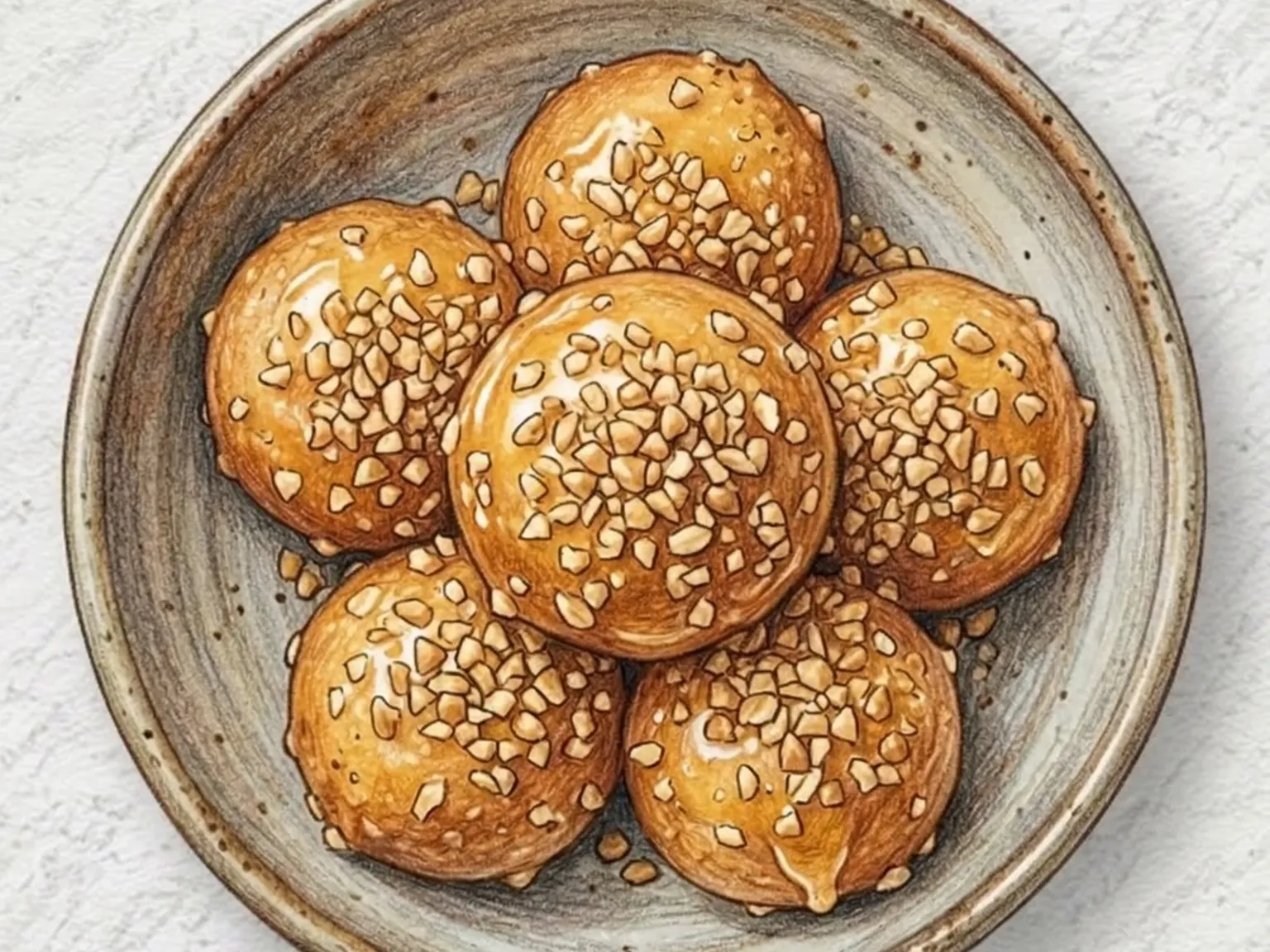
Kkul-ppang is a regional street snack from Tongyeong made by deep-frying yeast-leavened dough balls at 170 degrees Celsius until the outside firms into a thin, crisp shell.

What makes this special

  • Kkul-ppang coats deep-fried dough balls in a sticky honey peanut glaze over an airy interior.
  • Yeast fermentation bubbles keep the inside airy not dense
  • Brushing honey while hot lets it seep deep into the dough
Total time
45 min
Level
Medium
Servings
4 servings
Ingredients
8
Calories
430 kcal
Protein
7 g

Key ingredients

flourdry yeastmilksugarsalt

Core cooking flow

  1. 1 Warm 180 ml milk until it feels just warm to the touch, then stir in 1 tsp dry yeast and 1 tbsp sugar.
  2. 2 In a bowl, mix 2 cups flour, the remaining 2 tbsp sugar, and 1/2 tsp salt evenly.
  3. 3 If the dough sticks heavily to your hands, add flour only 1 tbsp at a time so it does not become dry.

Kkul-ppang is a regional street snack from Tongyeong made by deep-frying yeast-leavened dough balls at 170 degrees Celsius until the outside firms into a thin, crisp shell. The fermentation process fills the interior with air pockets, producing a soft, bread-like crumb rather than the dense texture of unbaked dough. Whole dough is fried without any batter coating, which is what keeps the shell thin and crackly rather than puffy or thick. Immediately after frying, while still hot, the balls are brushed generously with warm honey so it soaks into the crust, then rolled in finely chopped peanuts for a layer of roasted nuttiness. Using rice syrup instead of honey softens the sweetness and brings the flavor closer to traditional Korean confectionery. Once cooled the shell stiffens and loses some of its snap, so these are best eaten fresh from the oil.

Prep 25min Cook 20min 4 servings
Recipes by ingredient → flour milk honey

Instructions

Read the steps as a cooking flow: prep, heat, seasoning, doneness control, and finish.

6 steps
  1. 1
    Season

    Warm 180 ml milk until it feels just warm to the touch, then stir in 1 tsp dry yeast and 1 tbsp sugar.

    Let it stand for 5 minutes, and use it when small bubbles appear on the surface.

  2. 2
    Season

    In a bowl, mix 2 cups flour, the remaining 2 tbsp sugar, and 1/2 tsp salt evenly.

    Pour in the yeast milk and knead until no dry flour is visible and the dough gathers together.

  3. 3
    Control

    If the dough sticks heavily to your hands, add flour only 1 tbsp at a time so it does not become dry.

    When the surface looks smoother, cover it and proof in a warm place for 30 minutes.

  4. 4
    Heat

    Press the proofed dough gently to release large air pockets, then divide it into 16 pieces.

    Shape each piece into a round ball with the seam tucked underneath so it does not open while frying.

  5. 5
    Heat

    Heat 700 ml cooking oil to 170C, and do not add too many dough balls at once.

    Keep the heat at medium, turn them as they fry, and cook for 4-5 minutes until a thin, firm golden brown shell forms.

  6. 6
    Finish

    Drain the fried balls briefly, then brush them evenly with 4 tbsp warmed honey while they are still hot so it can soak into the crust. Roll them in 40 g chopped peanuts and serve right away.

After the steps

Pick a recipe that fits this dish.

Continue with shared ingredients, meal pairings, or a similar method.

Recipes That Go Well With This

More Street food →

Based on shared ingredients and meal pairing

Korean Peanut Bread (Mold-Baked Peanut-Studded Street Snack)
Shared ingredient: milk Street food

Korean Peanut Bread (Mold-Baked Peanut-Studded Street Snack)

Ttangkong-ppang is Korean peanut bread baked in a shaped mold from a batter of flour, eggs, milk, and melted butter mixed with roughly chopped roasted peanuts. The natural oils in the peanuts infuse the batter with a toasted, nutty richness, and each peanut chunk provides a crunchy interruption in the soft crumb. Cooking on medium-low heat and flipping regularly develops a thin crust on both sides while butter keeps the interior moist. Sugar supplies sweetness and a pinch of salt balances against the nuttiness, resulting in a flavor profile that stays engaging bite after bite.

Korean Sweet Pancake (Chewy Yeast Dough with Brown Sugar Cinnamon Filling)
Shared ingredient: flour Street food

Korean Sweet Pancake (Chewy Yeast Dough with Brown Sugar Cinnamon Filling)

Hotteok is a pan-fried Korean street snack made from yeast-risen dough blended with wheat flour and glutinous rice flour, stuffed with a filling of brown sugar, cinnamon powder, and chopped peanuts. The glutinous rice flour gives the dough a distinctly chewier bite than plain wheat dough, and the brown sugar filling melts into hot syrup during cooking as the dough presses flat against the pan. Flattening the ball with a spatula caramelizes the outer surface to a golden crust while the cinnamon-scented liquid pools inside. A variation called ssiat hotteok incorporates sunflower seeds and mixed grains into the filling, adding a nutty crunch alongside the sweet syrup. Proper fermentation of the dough is critical for a tender, elastic skin; pressing too thin risks the filling leaking onto the pan and burning. Street vendors serve hotteok straight off the griddle in a small paper cup, and the challenge is eating it before the syrup drips out.

Korean Dalgona Coffee (Whipped Instant Coffee Foam Milk)
Serve together Drinks

Korean Dalgona Coffee (Whipped Instant Coffee Foam Milk)

Dalgona coffee is made by whipping equal parts instant coffee, sugar, and hot water with a hand mixer for three to five minutes until stiff, caramel-colored peaks form, then spooning the foam over iced milk. The whipped layer carries a concentrated, bittersweet coffee flavor that gradually blends into the cold, neutral milk below as you stir. A light dusting of cocoa powder on top introduces a faint chocolate note, and increasing the sugar slightly helps the whipped cream hold its stiff structure longer.

Korean Sweet Spicy Dakgangjeong
Similar recipe Street food

Korean Sweet Spicy Dakgangjeong

Yangnyeom dakgangjeong is Korean sweet-spicy fried chicken made by cutting boneless thigh meat into bite-size pieces, dredging them in potato starch, and running them through a two-stage fry. The first fry at 170 degrees Celsius cooks the meat through; the second fry at 185 degrees drives off the residual moisture the crust absorbed during the first pass, hardening the exterior into a shell that can withstand sauce tossing without collapsing. The glaze is a reduction of gochujang, gochugaru, corn syrup, and soy sauce, simmered down until the mixture is thick enough to coat a spoon without dripping off. Tossing the finished chicken in the hot glaze must happen off the heat and within twenty seconds, because the steam trapped between sauce and crust will turn the coating soggy if the process drags on. When done correctly, the result is a glossy, sticky exterior that crackles audibly at first bite even after the dish has cooled to room temperature, surrounding thigh meat that stays juicy inside.

Serve with this

Candied Sweet Potato
Desserts Easy

Candied Sweet Potato

Goguma mattang is a Korean candied sweet potato snack made by cutting peeled sweet potatoes into large chunks and deep-frying them at 170 degrees Celsius until the interior turns floury and soft. A syrup of sugar, corn syrup, water, and a measured splash of soy sauce is cooked separately until large, foamy bubbles form - the visual cue for adding the fried sweet potatoes. Everything must be coated within thirty seconds to lock in a thin, glass-like caramel shell that crisps and turns translucent as it cools. The soy sauce shifts the flavor from purely sweet to a rounded, slightly savory depth. Pre-draining surface moisture from the cut sweet potatoes reduces oil splatter during frying and helps the syrup grip the pieces evenly. Black sesame seeds are scattered over the finished pieces for a toasted, nutty note, and each piece is spread individually on parchment paper while still warm so they cool without sticking together.

🏠 Everyday 🧒 Kid-Friendly
Prep 15min Cook 20min 4 servings
Korean Stir-fried Butterbur Stems
Side dishes Medium

Korean Stir-fried Butterbur Stems

Meowi-namul-bokkeum stir-fries boiled butterbur stems in perilla oil, adding a cooking step that distinguishes it from the cold-dressed muchim version. While the muchim blanches and seasons immediately without further heat, the bokkeum takes the boiled stems into a pan with soup soy sauce and water for five minutes or more, driving the seasoning deep into the plant fibers. This additional cooking time also volatilizes more of the butterbur's bitter compounds, producing a milder flavor compared to the cold preparation. Perilla oil, though more prone to oxidation than sesame oil, is the traditional choice because its earthy, grassy aroma harmonizes with the herb's character in a way sesame oil cannot. Adding perilla seed powder in the last minute causes its starch to partially gelatinize, giving the sauce a thicker consistency, but leaving it on the heat too long makes the dish chalky and heavy. Timing this final step precisely is what separates a well-made version from an overcooked one. This banchan appears on spring mountain-village tables alongside gondeure-namul and chwinamul as part of the seasonal wild greens spread that marks the transition out of winter.

🏠 Everyday 🍱 Lunchbox
Prep 18min Cook 12min 4 servings
Korean Spicy Pork Mixed Noodles
Noodles Medium

Korean Spicy Pork Mixed Noodles

Jeyuk bibim-guksu tops cold mixed noodles with stir-fried spicy pork, combining two popular Korean preparations into one bowl. Pork shoulder is marinated in gochujang and gochugaru, then seared quickly so the edges caramelize while the inside stays moist and tender. Shredded cabbage and onion provide a crisp contrast to the sauced pork, and soy sauce with sugar balances the heat with savory sweetness. The temperature contrast between chilled somyeon noodles and hot, sizzling pork creates a distinctive eating experience that is one of the dish's defining pleasures. Keeping the noodles and the pork separate until the moment of serving prevents the somyeon from absorbing moisture and going soft. A final drizzle of sesame oil adds a nutty send-off.

🍺 Bar Snacks 🌙 Late Night
Prep 20min Cook 15min 2 servings

Similar recipes

Korean Roasted Sweet Potato
Street food Easy

Korean Roasted Sweet Potato

Gun-goguma is a Korean winter snack made by roasting whole sweet potatoes in their skins at 200 degrees Celsius for 35 to 40 minutes. The slow heat converts the starches inside the potato into maltose, concentrating the sweetness and producing a sticky, honey-like layer just beneath the skin. Lower-temperature roasting is preferred over high heat because it extends the window of enzyme activity, allowing sugars to accumulate gradually rather than burning off at the surface. Korean pumpkin sweet potatoes, called hobak-goguma, have a higher moisture content and more pronounced natural sweetness, so they turn creamy and almost runny when fully roasted. Resting the potatoes at room temperature for a day or two before roasting further boosts sugar levels, since starch conversion continues during storage. The potato is satisfying on its own, but adding a pat of butter or a dusting of cinnamon layers in a rich, aromatic contrast. Eating the skin along with the flesh adds fiber and a slightly earthy counterpoint to the pure sweetness of the interior.

🧒 Kid-Friendly 🏠 Everyday
Prep 5min Cook 40min 2 servings
Honey Ginger Pastry (Korean Deep-Fried Layered Wheat Honey Cookie)
Desserts Hard

Honey Ginger Pastry (Korean Deep-Fried Layered Wheat Honey Cookie)

Yakgwa is a traditional Korean honey pastry made from wheat flour rubbed with sesame oil, then mixed with rice wine, ginger juice, and rice syrup, folded and rolled repeatedly to build up laminated layers before frying. A two-stage frying method is essential to the texture: first at 140 degrees Celsius to cook the dough through slowly without coloring, then briefly at 170 degrees to develop a golden, crisp exterior over a layered, flaking interior. Soaking the fried pastries in a warm syrup of honey, water, and ground cinnamon for at least two hours allows the sweetness to penetrate deep between the laminated layers, saturating each piece with moist, fragrant honey flavor from edge to center. Ginger juice surfaces gently in the finish, providing just enough warmth to temper the concentrated sweetness and keep the flavor from feeling cloying. The sesame oil rubbed into the dough from the start adds a persistent nutty backbone that ties together the honey, spice, and wheat flavors into the complex, layered profile that defines well-made yakgwa. Pine nuts or jujubes placed as garnish add visual elegance, and the pastry pairs particularly well with Korean teas, where its sweetness finds proper balance.

🎉 Special Occasion 🧒 Kid-Friendly
Prep 35min Cook 30min 4 servings
Dasik (Korean Honey-Pressed Roasted Grain Confection)
Baking Easy

Dasik (Korean Honey-Pressed Roasted Grain Confection)

Dasik is a traditional Korean pressed confection made by kneading roasted grain or nut powders with honey and pressing the mixture into carved wooden molds. Unlike baked goods, dasik holds its shape entirely through the binding power of honey, with no heat applied during preparation. This technique produces a texture that is slightly resistant at first contact, then dissolves gently at body temperature in a way that releases the full aroma of the main ingredient. Roasted soybean powder yields a nutty version, black sesame produces a deeply aromatic one, and additions of pine nut powder or cinnamon develop the flavor in different directions. The wooden molds carve decorative patterns into the surface of each piece, giving dasik a visual refinement that matches its restrained sweetness. For centuries, dasik has been a standard offering at Korean tea gatherings, and its subtle flavor remains a natural match for the gentle bitterness of green tea.

🧒 Kid-Friendly ⚡ Quick
Prep 20min 4 servings

Tips

If dough is too wet, add flour 1 tbsp at a time.
Use rice syrup instead of honey for a more traditional flavor.

Nutrition (per serving)

Calories
430
kcal
Protein
7
g
Carbs
52
g
Fat
21
g