Korean Braised Potatoes with Shishito Peppers
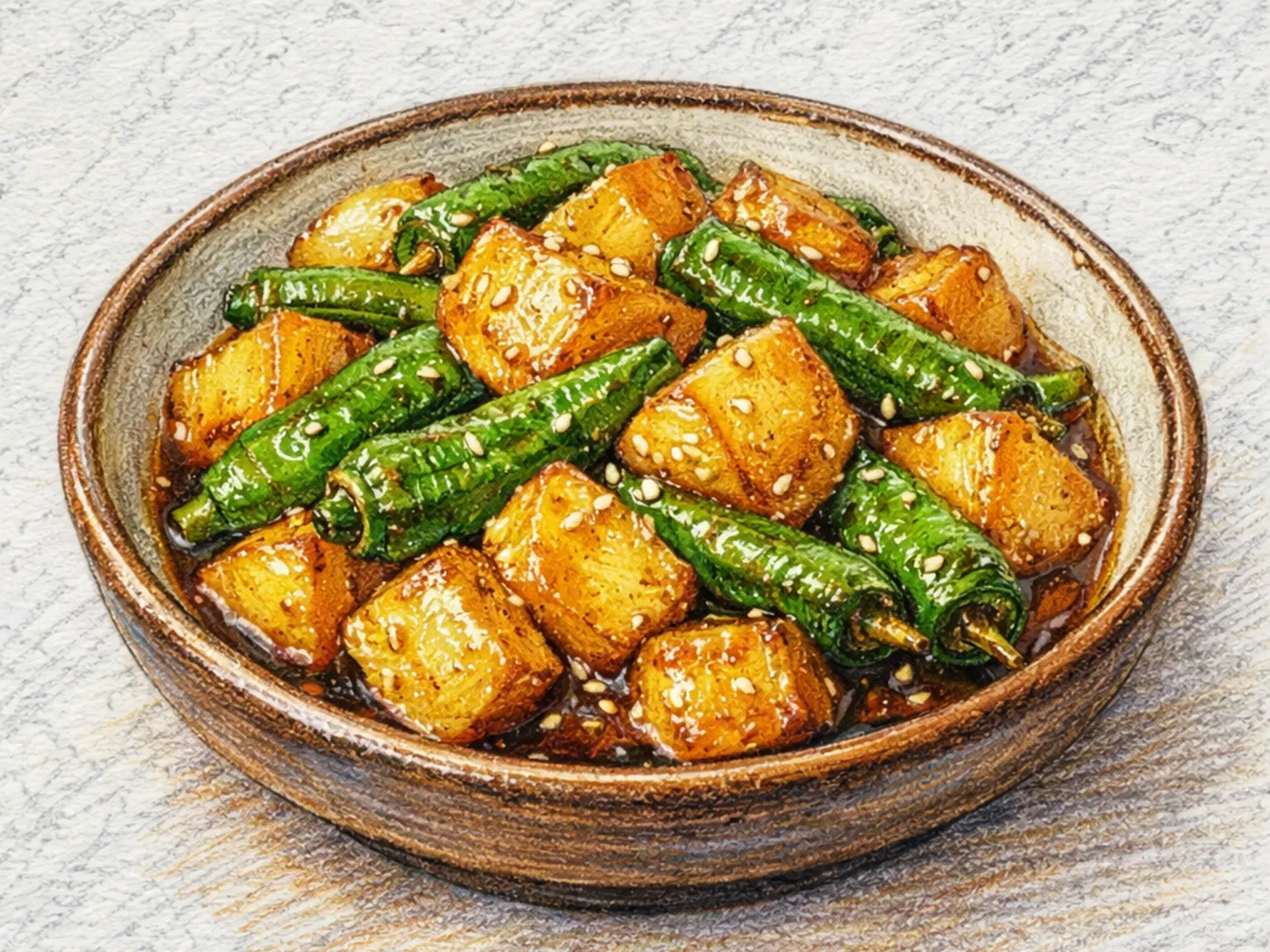
Kkwari-gamja-jorim is a Korean side dish of potatoes and shishito peppers braised in soy sauce with oligosaccharide syrup and minced garlic. The potato pieces absorb the sweet-salty glaze and turn fluffy inside with a lightly sticky exterior, while the shishito peppers wrinkle slightly but keep their snap. A drizzle of sesame oil at the end brings a nutty aroma, and scattered sesame seeds add visual contrast. The heat level stays mild enough for children, and this banchan holds up well at room temperature, making it a practical addition to packed lunches.
Adjust Servings
Instructions
- 1
Dice potatoes bite-size and soak in cold water for 5 minutes to remove excess starch.
- 2
Trim shishito stems and prick each pepper once or twice.
- 3
Add potatoes, water, soy sauce, and garlic to a pan; cover and simmer 12 minutes.
- 4
When potatoes are half-cooked, add peppers and braise 6 more minutes.
- 5
When liquid reduces, add syrup and glaze for 2 minutes.
- 6
Turn off heat and toss with sesame oil and sesame seeds.
As an Amazon Associate, we may earn from qualifying purchases.
Tips
Nutrition (per serving)
More Recipes

Korean Braised Mackerel with Potatoes
Godeungeo gamja jorim is a quintessential Korean home-cooked dish of mackerel and potato braised in a soy sauce and gochugaru seasoning. The oily mackerel fillets release their rich flavor into the sauce, while the potato chunks soak up the spicy, savory liquid as they cook to a fluffy consistency. Onion and green onion contribute natural sweetness and aroma that balance the bold seasoning. This is one of Korea's most beloved fish dishes, often served family-style with the braising sauce spooned generously over rice.

Korean Braised Tofu with Shishito Peppers
Kkwarigochu-dubu-jorim is a Korean braised dish of pan-fried tofu and shishito peppers in a soy sauce, gochugaru, and garlic seasoning. The tofu is seared first to create a firm, golden crust that contrasts with its soft interior once it finishes braising in the sauce. Shishito peppers absorb just enough liquid to carry the seasoning while adding their own fresh, vegetal note. Soy sauce and sesame oil pull the flavors together into a cohesive, savory whole, making this a satisfying plant-based banchan that holds its own on any table.

Korean Braised Squid with Shishito Peppers
Kkwari-ojingeo-jorim is a Korean braise of squid and shishito peppers simmered in a gochujang and soy sauce seasoning. The squid retains its chewy bounce while soaking in the bold sauce, and the peppers absorb enough flavor to stand on their own while keeping a slight crunch. Gochujang brings a warm spiciness that combines with soy sauce's depth into a multilayered seasoning, and garlic with ginger neutralizes any seafood odor. As the liquid reduces, it coats each piece in a concentrated glaze that makes this banchan work especially well spooned over a bowl of steamed rice.

Korean Braised Potato and Fish Cake
Gamja eomuk jorim is a Korean home-style side dish of potatoes and fish cake sheets braised in soy sauce with a touch of oligosaccharide syrup for mild sweetness. The potato chunks turn starchy and absorb the seasoning as they cook, while the fish cake pieces add a chewy contrast. Garlic and a finishing drizzle of sesame oil give the dish its characteristic savory aroma. This is one of the most common Korean lunchbox and daily banchan items, simple to prepare and universally enjoyed.

Korean Braised Potatoes (Soy-Glazed Braised Potato Banchan)
Gamja-jorim - soy-braised potatoes - is among the top five most frequently made banchan in Korean households, alongside kimchi, kongnamul, and gyeran-mari. Small potatoes are parboiled whole until just fork-tender, then transferred to a mixture of soy sauce, sugar, rice syrup, garlic, and water. The braising happens over medium-low heat for fifteen minutes with the lid off, allowing the sauce to reduce gradually into a thick, syrupy glaze. Constant gentle stirring prevents the soft potatoes from sticking or breaking apart. As the liquid evaporates, each potato develops a dark amber, lacquered surface while the interior remains starchy and yielding. The taste is straightforwardly sweet-salty with a garlic undertone - comfort food in its most elemental form. Korean mothers often make a large batch on weekends, refrigerating it to serve cold throughout the week. The dish improves overnight as the glaze continues to penetrate the potato's interior.

Korean Braised Beltfish with Potatoes
Galchi-gamja-jorim is a Korean braise of beltfish chunks and potatoes in a soy-based sauce. The beltfish has naturally oily, flaky flesh that enriches the braising liquid with deep seafood umami. The potatoes soak up this concentrated liquid, becoming fluffy and well-seasoned throughout. Onions dissolve into the sauce as it reduces, adding background sweetness. It is best served when the sauce has thickened to a glossy consistency alongside steamed rice.