Korean Braised Quail Eggs and Shishito Peppers
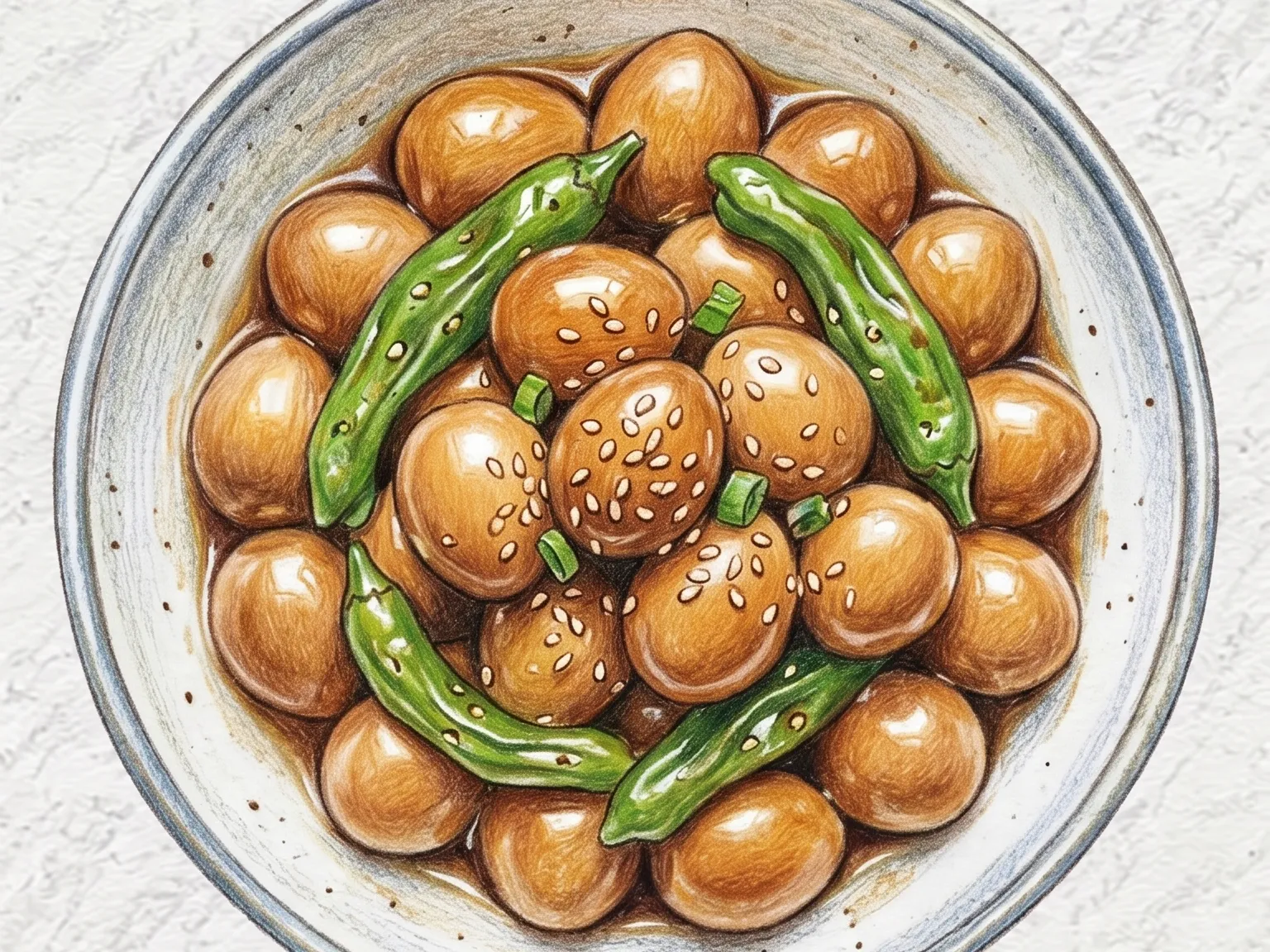
Kkwari-mechurial-jorim is a Korean banchan of boiled quail eggs and shishito peppers braised in soy sauce and oligosaccharide syrup until glossy. The eggs turn a deep chestnut brown as the seasoning penetrates through to the yolk, and the peppers contribute a mild grassy note along with their crisp texture. The syrup gives the glaze a natural sheen and rounded sweetness, while sesame oil and seeds complete the flavor profile. This side dish keeps well refrigerated for several days, which is why it appears so frequently in Korean lunchboxes and on everyday dinner tables.
Adjust Servings
Instructions
- 1
Boil and peel quail eggs; trim stems from shishito peppers.
- 2
Bring soy sauce, water, sugar, cooking wine, and garlic to a boil.
- 3
Add quail eggs and braise for 10 minutes on medium heat.
- 4
Add peppers and braise 5-7 more minutes until softened.
- 5
When the sauce becomes glossy and reduced, finish with sesame seeds.
As an Amazon Associate, we may earn from qualifying purchases.
Tips
Nutrition (per serving)
More Recipes

Korean Soy-Braised Quail Eggs
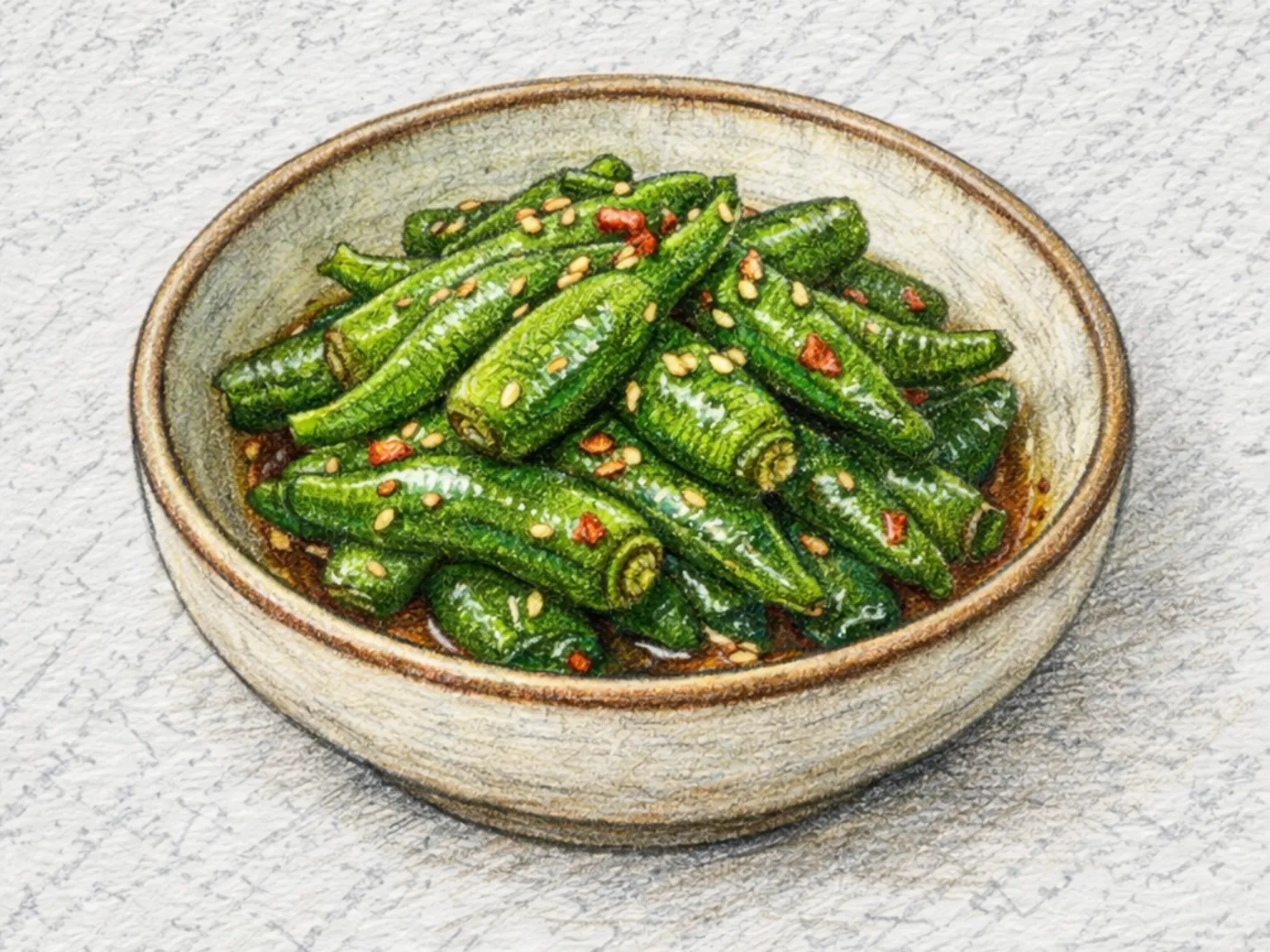
Mechurial-jangjorim is a Korean soy-braised quail egg dish simmered slowly with garlic and shishito peppers in a soy sauce base. The eggs gradually take on a deep brown color as the seasoning works its way through the egg white and into the yolk, flavoring them evenly throughout. Shishito peppers contribute a mild green note and textural variety, while the garlic enriches the braising liquid with added savory depth. Each egg is a single, self-contained bite, which makes this banchan popular in lunchboxes and as a snack for children, and it remains one of the most recognizable Korean everyday side dishes.

Korean Anchovy & Shishito Braise
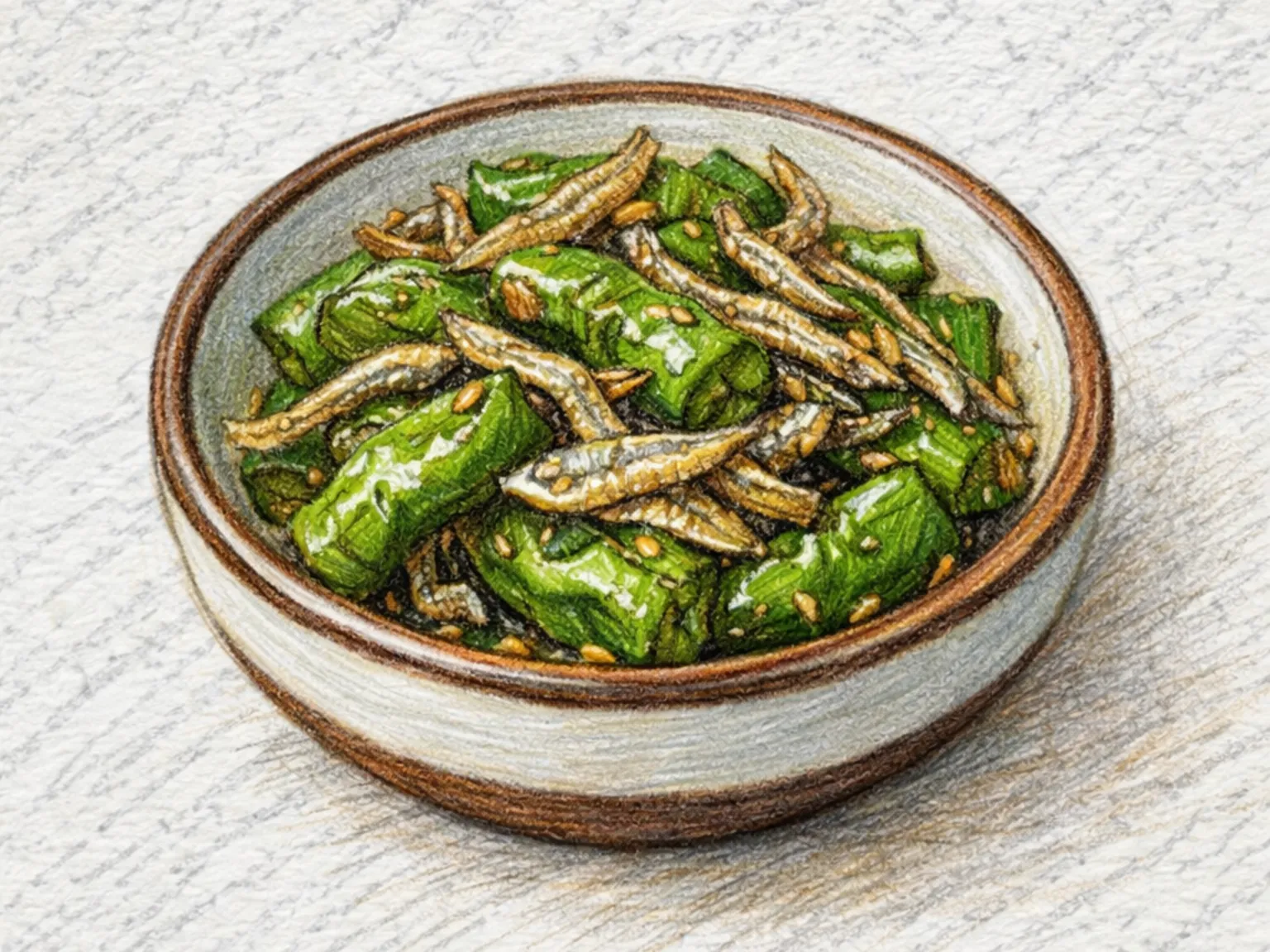
Myeolchi kkwari jorim is a Korean side dish of dry-toasted small anchovies and shishito peppers glazed in a sweet soy sauce with corn syrup and cooking wine. Toasting the anchovies first drives off any fishy smell and brings out their nuttiness, while the peppers are stir-fried in oil to release a mild, lingering heat. The glaze coats everything in a shiny, sweet-salty finish, and sesame oil with sesame seeds add a final toasted aroma. This banchan tastes even better the next day after the sauce has fully settled in, making it one of the most reliable lunchbox staples in Korean home cooking.

Korean Sogogi Jangjorim (Soy-Braised Beef)
Sogogi jangjorim is one of Korea's essential make-ahead side dishes, made by boiling lean beef round until tender, shredding it along the grain, and braising the shreds with quail eggs in soy sauce, sugar, and garlic. Using the beef cooking broth as the braising base means every spoonful of liquid carries concentrated meat flavor. The quail eggs take on a deep brown color as they simmer and absorb the soy seasoning throughout. Cooling the pot completely before storing is a critical step because the meat and eggs continue to draw in flavor as the temperature drops. Refrigerated, this banchan lasts well over a week, making it a staple of Korean meal prep.

Korean Braised Potatoes and Quail Eggs
Glossy, soy-glazed potatoes and bite-sized quail eggs braised until deeply caramelized -- Korea's favorite make-ahead lunchbox side dish. The quail eggs take on a deep brown color and absorb the soy-garlic seasoning throughout, while the potato pieces become starchy and glossy from the reduced sauce. Oligosaccharide syrup contributes a natural sheen and gentle sweetness that appeals to all ages. Topped with sesame seeds and sesame oil, this banchan is a lunchbox favorite that stores well in the refrigerator for several days.

Korean Braised Burdock and Beef
Ueong-soegogi-jorim is a Korean braised side dish of julienned burdock root and beef simmered in soy sauce, sugar, cooking wine, and garlic until the liquid nearly evaporates. The burdock is soaked in vinegar water beforehand to prevent browning, then cooked with beef and water before the braising seasonings are added. As the dish reduces, the burdock absorbs the soy sauce and develops its characteristic earthy sweetness, while thin beef strips distribute meaty flavor throughout. Finished with sesame oil and stored well under refrigeration, it serves as a make-ahead banchan that lasts several days.

Korean Beef & Quail Egg Soy Braise
Jangjorim is how Korean cooks make beef last all week. Eye-round is simmered, shredded along the grain, and braised in concentrated soy sauce with sugar, garlic, and whole black peppercorns. Quail eggs absorb the dark liquid until chestnut brown throughout. Low heat reduces the sauce to a thick, glossy coating on every strand. Served cold, jangjorim is intensely salty - meant for small bites with plain rice, where one piece of soy-stained beef carries an entire mouthful of grain.