Korean Braised Squid with Shishito Peppers
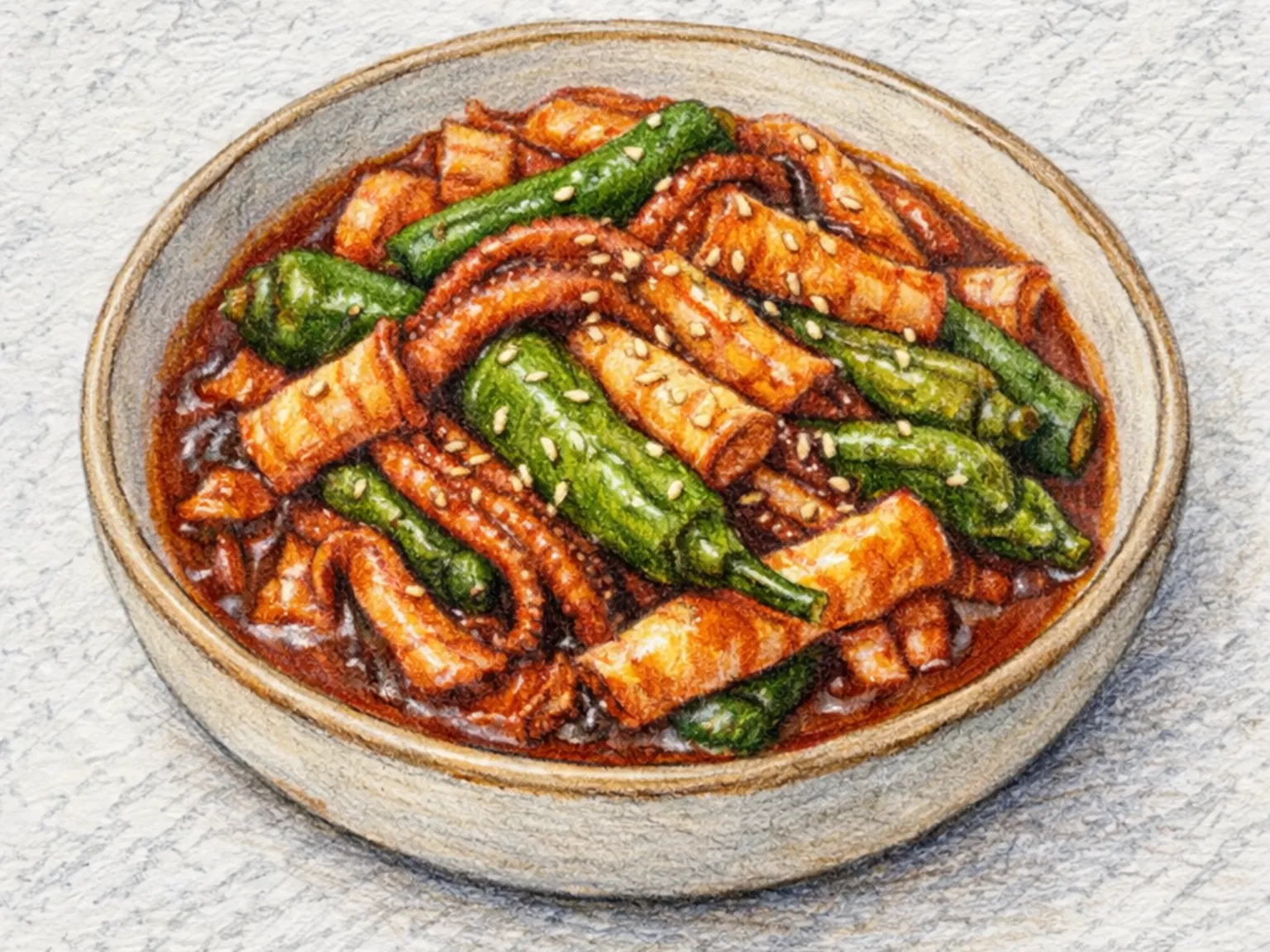
Kkwari-ojingeo-jorim is a Korean braise of squid and shishito peppers simmered in a gochujang and soy sauce seasoning. The squid retains its chewy bounce while soaking in the bold sauce, and the peppers absorb enough flavor to stand on their own while keeping a slight crunch. Gochujang brings a warm spiciness that combines with soy sauce's depth into a multilayered seasoning, and garlic with ginger neutralizes any seafood odor. As the liquid reduces, it coats each piece in a concentrated glaze that makes this banchan work especially well spooned over a bowl of steamed rice.
Adjust Servings
Instructions
- 1
Clean squid, slice bodies into rings, and cut tentacles into 5 cm pieces.
- 2
Remove pepper stems and prick each pepper 1-2 times so sauce penetrates.
- 3
Add soy sauce, gochujang, chili flakes, garlic, sugar, and water; simmer 2 minutes.
- 4
Cook onion and peppers first for 3 minutes, then add squid.
- 5
Braise quickly over high heat for 4 minutes, then reduce heat and cook 2 more minutes.
- 6
Finish with sesame oil, toss briefly for gloss, and serve immediately.
As an Amazon Associate, we may earn from qualifying purchases.
Tips
Nutrition (per serving)
More Recipes

Korean Braised Potatoes with Shishito Peppers
Kkwari-gamja-jorim is a Korean side dish of potatoes and shishito peppers braised in soy sauce with oligosaccharide syrup and minced garlic. The potato pieces absorb the sweet-salty glaze and turn fluffy inside with a lightly sticky exterior, while the shishito peppers wrinkle slightly but keep their snap. A drizzle of sesame oil at the end brings a nutty aroma, and scattered sesame seeds add visual contrast. The heat level stays mild enough for children, and this banchan holds up well at room temperature, making it a practical addition to packed lunches.

Korean Braised Tofu with Shishito Peppers
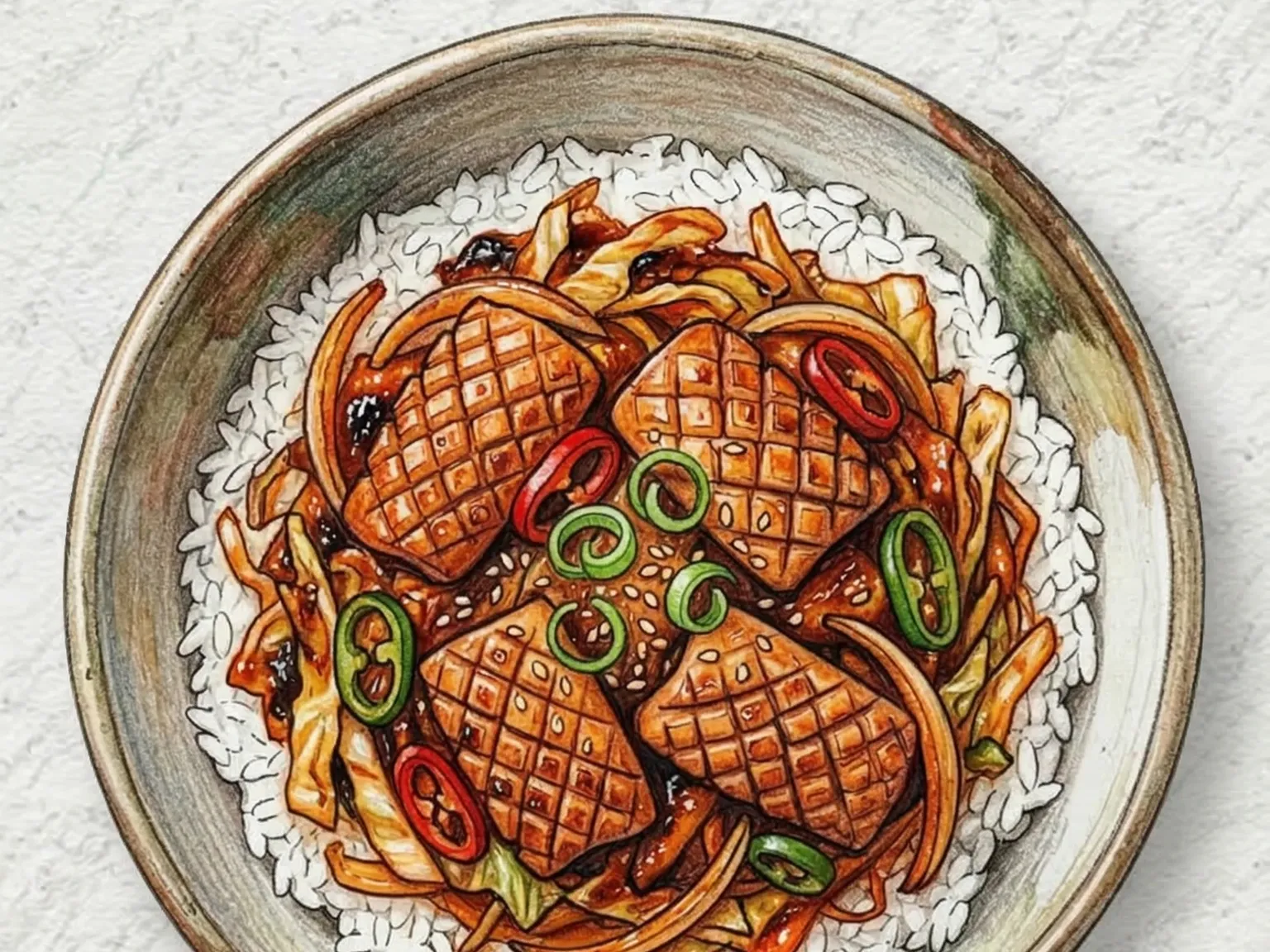
Kkwarigochu-dubu-jorim is a Korean braised dish of pan-fried tofu and shishito peppers in a soy sauce, gochugaru, and garlic seasoning. The tofu is seared first to create a firm, golden crust that contrasts with its soft interior once it finishes braising in the sauce. Shishito peppers absorb just enough liquid to carry the seasoning while adding their own fresh, vegetal note. Soy sauce and sesame oil pull the flavors together into a cohesive, savory whole, making this a satisfying plant-based banchan that holds its own on any table.

Korean Anchovy & Shishito Braise
Myeolchi kkwari jorim is a Korean side dish of dry-toasted small anchovies and shishito peppers glazed in a sweet soy sauce with corn syrup and cooking wine. Toasting the anchovies first drives off any fishy smell and brings out their nuttiness, while the peppers are stir-fried in oil to release a mild, lingering heat. The glaze coats everything in a shiny, sweet-salty finish, and sesame oil with sesame seeds add a final toasted aroma. This banchan tastes even better the next day after the sauce has fully settled in, making it one of the most reliable lunchbox staples in Korean home cooking.

Korean Braised Squid with Radish
Ojingeo mu jorim is a Korean braised squid and radish dish where the radish is simmered first in soy broth to soften and release its natural sweetness, then squid is added with a spicy sauce of gochugaru, gochujang, and garlic. Cooking the radish ahead allows it to absorb the seasoned liquid thoroughly, and the squid goes in only for the last five minutes to maintain its firm, springy bite. Green onion stirred in at the end lifts the aroma. The sauce reduces to a shallow, concentrated pool at the bottom that is meant to be mixed into steamed rice, pulling together the ocean flavor of the squid and the mellow sweetness of the radish.

Korean Braised Mackerel in Spicy Sauce
Godeungeo-jorim is one of the most frequently cooked fish banchan in Korean homes, pairing mackerel's assertive flavor with a spicy braising sauce that demands steamed rice. Mackerel is cut into steaks and salted for ten minutes to draw out fishy odors, then arranged over thick radish slices that line the pot bottom. The radish serves dual duty: preventing the fish from sticking and releasing its natural sweetness into the braising liquid. A sauce of gochugaru, gochujang, soy sauce, garlic, ginger, and sugar is spooned over and the pot simmers covered for twenty minutes, during which the seasoning penetrates the flesh while the radish absorbs enough sauce to rival the fish itself. Green onion added in the final minutes lifts the heavy spice with a fresh sharpness.

Korean Spicy Fermented Squid Jeotgal
Ojingeo jeotgal is a Korean fermented squid preserve made by salting cleaned, finely chopped squid for one hour to firm the flesh and extract moisture, then dressing it in a paste of gochugaru, minced garlic, ginger, fish sauce, and corn syrup. The salt cure intensifies the squid's natural chewiness, and cutting the pieces small accelerates seasoning absorption during the two-to-three-day cold fermentation. Chili flakes coat every surface in a vibrant red layer that delivers steady heat, while corn syrup adds gloss and a mild sweetness that prevents the salt from dominating. Spooned over steamed rice, each piece offers a firm, springy chew followed by a wave of fermented umami. Mixing in a touch of sesame oil before serving softens the saltiness.