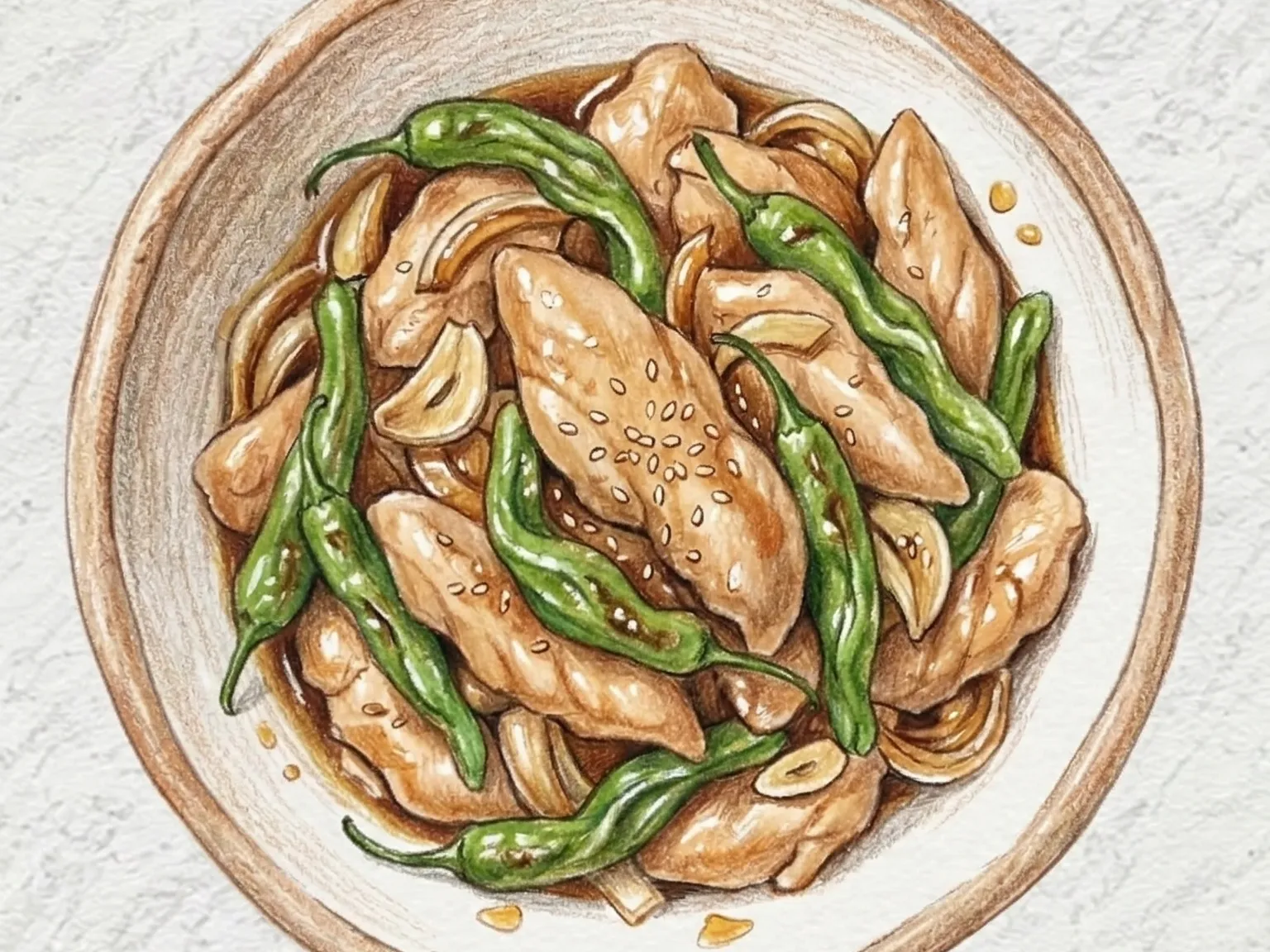
Korean Stir-Fried Shishito Peppers and Chicken Tenderloin
Kkwarigochu dak ansim bokkeum is a stir-fry of chicken tenderloin marinated in soy sauce and cooking wine, cooked first, then combined with shishito peppers and onion in a glaze of soy sauce and oyster sauce. The lean tenderloin provides a clean protein base, and oyster sauce deepens the umami so the seasoning does not feel thin. Scoring the shishito peppers lightly lets the sauce penetrate without bursting them, keeping each bite neat. Sesame oil at the end ties the flavors together, and the high protein content makes this a practical lunchbox option.
Adjust Servings
Instructions
- 1
Cut chicken tenderloin into bite-size pieces and marinate for 10 minutes with 0.5 tbsp soy sauce and 1 tbsp cooking wine.
- 2
Remove stems from shishito peppers and halve large ones; thinly slice the onion.
- 3
Heat oil in a pan over medium-high heat and stir-fry garlic for 20 seconds until fragrant.
- 4
Add the chicken and stir-fry for about 3 minutes until the surface turns white.
- 5
Add onion and shishito peppers, cook 2 more minutes, then add remaining soy sauce and oyster sauce.
- 6
When the sauce coats everything evenly, finish with sesame oil and stir for 30 seconds.
As an Amazon Associate, we may earn from qualifying purchases.
Tips
Nutrition (per serving)
More Recipes

Korean Stir-fried Anchovies with Shishito Peppers
Kkwarigochu myeolchi bokkeum is a Korean pantry side dish of small dried anchovies dry-toasted to remove fishiness, then combined with oil-blistered shishito peppers and glazed in soy sauce and oligosaccharide syrup. The anchovies stay crunchy and salty while the syrup adds a gentle sweetness, and the peppers' mild heat keeps the flavor from becoming one-note. Adding the syrup on reduced heat prevents burning and produces a glossy coat. Sesame oil and sesame seeds finish the dish, which stores well refrigerated for several days of banchan service.

Korean Stir-fried Aged Kimchi and Tofu
Mukeunji-dubu-bokkeum brings together aged kimchi's deep sourness and firm tofu's neutral mildness in a single pan. The tofu is pan-fried to golden first, building a crust that prevents breakage and absorbs sauce more effectively. Meanwhile, onion and aged kimchi are stir-fried with gochugaru until the kimchi's moisture evaporates and its flavor concentrates, then soy sauce and sugar balance the acidity. The tofu returns to the pan to soak up the seasoning, and a final addition of perilla oil softens the kimchi's sharpness while green onion lifts the aroma.

Korean Garlic Scape Bacon Stir-fry
Maneuljjong bacon bokkeum is a side dish built on rendered bacon fat, in which garlic scapes and onion are stir-fried and finished with soy sauce and oligosaccharide syrup for a glossy coat. The bacon's smoky saltiness provides a deep flavor base that requires no additional complex seasoning, and the garlic scapes counter it with a sharp, crisp bite. The syrup creates a thin lacquer on the surface that balances the salt with gentle sweetness. Sesame seeds top the finished dish, and reducing the soy sauce compensates if the bacon runs particularly salty.

Korean Garlic Scape Chicken Breast Stir-fry
Maneuljjong dakgaseumsal bokkeum is a stir-fry of soy-marinated chicken breast cooked with ginger and garlic, then combined with garlic scapes cut to 5 cm and julienned carrot, finished in a glaze of oyster sauce and soy sauce. Chicken breast is naturally lean, and the oyster sauce compensates for its low fat by adding concentrated umami. The garlic scapes' crisp texture and the carrot's mild sweetness break up the chicken's plainness, while ginger neutralizes any poultry odor. The high-protein, low-fat profile makes this a practical option for meal prep and calorie-conscious eating.

Korean Stir-Fried Garlic Scapes
Maneuljjong-bokkeum is stir-fried garlic scapes - the curling flower stalks cut from garlic plants before they bloom - seasoned with soy sauce and oligosaccharide syrup. Garlic scapes carry the plant's growth energy in a concentrated, milder form: they deliver a gentle garlic fragrance without the sharp bite of the bulb. Cutting into 4 to 5 cm pieces and blanching for thirty seconds softens the outer fibrous skin while keeping the interior crisp. Skipping the blanch and going straight to the pan creates an uneven result - tough outside, undercooked inside. The syrup-and-soy combination builds a sweet-salty glaze on the scape surfaces, and sesame oil is added only after the heat is off to preserve its fragrance. This banchan keeps in the refrigerator for about five days, making it a reliable weekday side dish. Spring through early summer is peak garlic scape season.

Korean Seasoned Shishito Pepper Banchan
Kkwarigochu-muchim is a Korean banchan made by briefly blanching shishito peppers and dressing them in doenjang-based seasoning - distinct from the braised version (jjim) that simmers the peppers until soft. The key is keeping blanching under forty seconds so the peppers retain their snap. Those characteristic wrinkles on the pepper skin trap the doenjang-soy-sesame dressing, delivering concentrated flavor even with minimal sauce. Shocking the peppers in cold water after blanching locks in their vivid green color. Tearing one end slightly allows the seasoning to seep inside. Among Korean diners, part of the appeal is the occasional surprise - most shishito peppers are mild, but one in every handful packs unexpected heat. This banchan releases very little liquid, making it a practical choice for packed lunches.