Korean Grilled Shishito with Doenjang
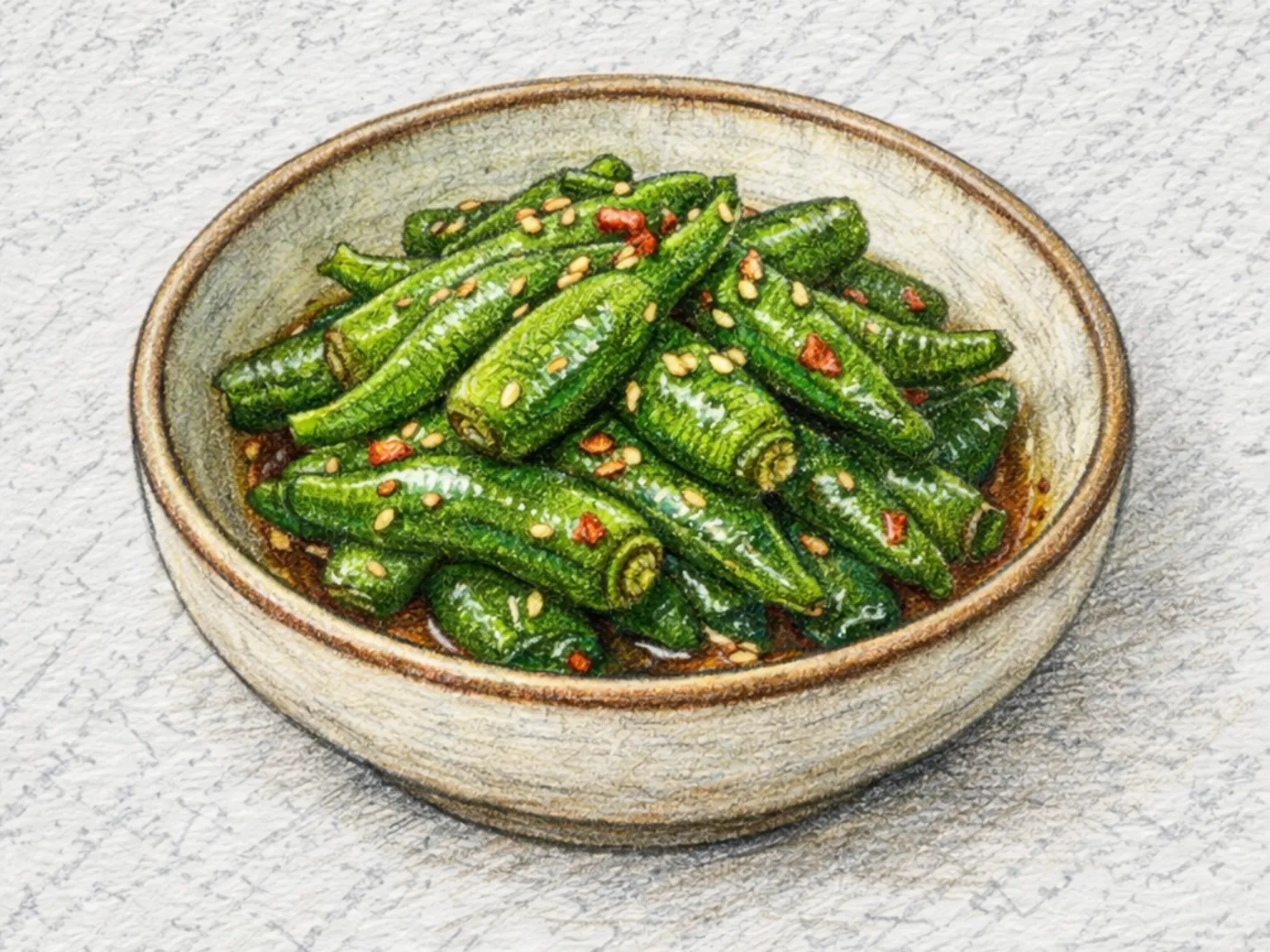
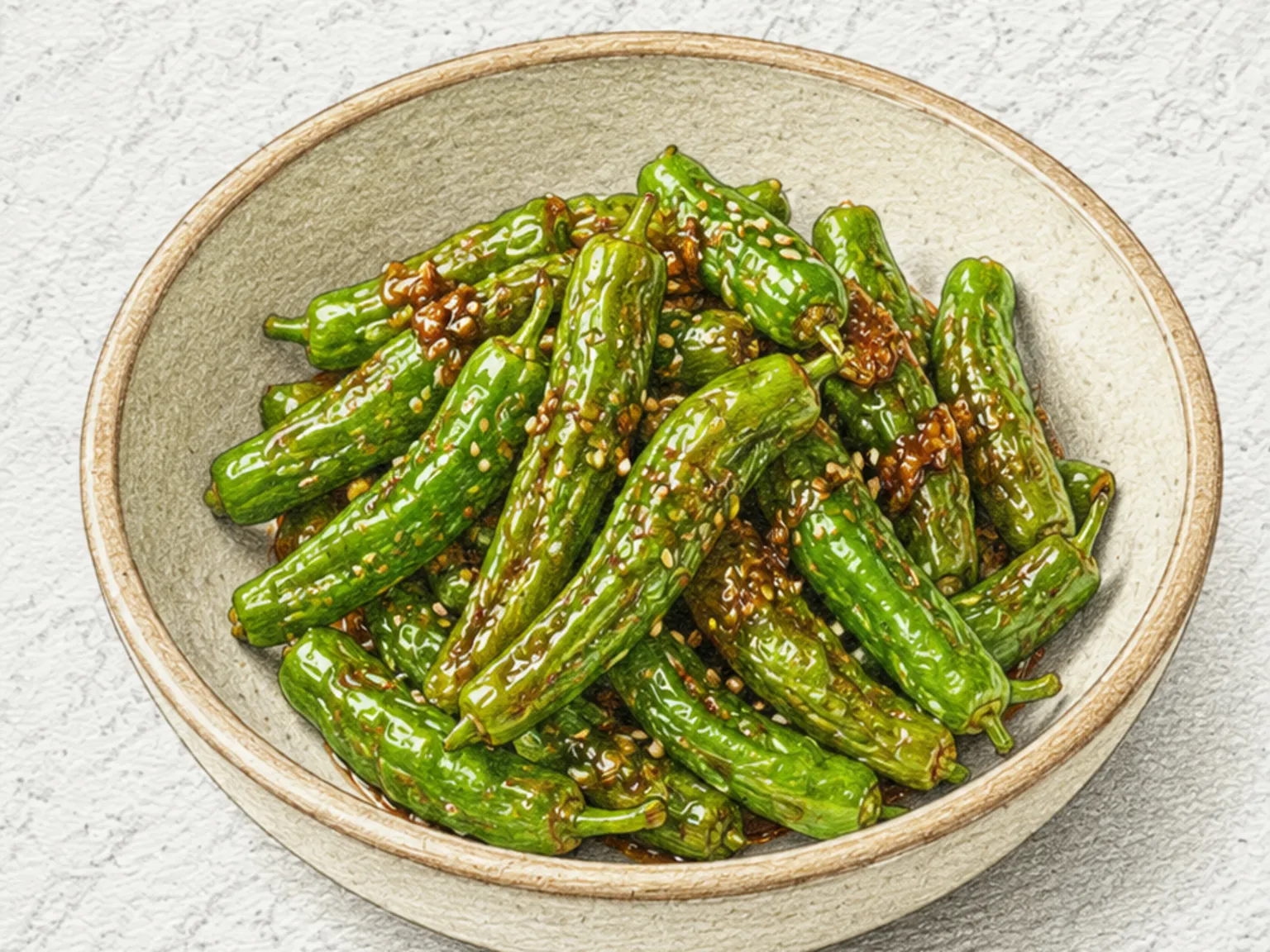
Kkwarigochu-doenjang-gui is a Korean grilled shishito pepper dish where the peppers are first dry-blistered in a hot pan until their skins wrinkle and char, then quickly tossed with a sauce of doenjang, gochujang, oligosaccharide syrup, and minced garlic. Blistering the peppers without oil first drives off moisture, removes the raw grassy taste, and concentrates their natural sweetness before any sauce is introduced. Pricking each pepper with a fork before cooking lets the seasoning penetrate the interior and prevents them from ballooning and bursting from steam. The sauce goes in only for the final two minutes so the fermented soybean paste keeps its full aroma, and a drizzle of sesame oil with toasted seeds at the end adds a roasted nuttiness.
Adjust Servings
Instructions
- 1
Trim stems and prick each pepper once or twice with a fork.
- 2
Mix doenjang, gochujang, syrup, and minced garlic into a sauce.
- 3
Preheat pan over medium-high and blister peppers for 3 minutes, turning often.
- 4
Reduce to medium, add sauce, and toss quickly for 2 minutes.
- 5
Turn off heat, coat with sesame oil, and finish with sesame seeds.
As an Amazon Associate, we may earn from qualifying purchases.
Tips
Nutrition (per serving)
More Recipes

Korean Seasoned Shishito Pepper Banchan
Kkwarigochu-muchim is a Korean banchan made by briefly blanching shishito peppers and dressing them in doenjang-based seasoning - distinct from the braised version (jjim) that simmers the peppers until soft. The key is keeping blanching under forty seconds so the peppers retain their snap. Those characteristic wrinkles on the pepper skin trap the doenjang-soy-sesame dressing, delivering concentrated flavor even with minimal sauce. Shocking the peppers in cold water after blanching locks in their vivid green color. Tearing one end slightly allows the seasoning to seep inside. Among Korean diners, part of the appeal is the occasional surprise - most shishito peppers are mild, but one in every handful packs unexpected heat. This banchan releases very little liquid, making it a practical choice for packed lunches.

Korean Grilled Doenjang Onions
Onions are sliced into 2 cm rings, secured with skewers, and grilled over medium heat while being brushed with a sauce of doenjang, gochujang, minced garlic, perilla oil, and water. Over eight to ten minutes of flipping and re-brushing, the onion's moisture evaporates and its natural sugars concentrate into pronounced sweetness, while the doenjang chars lightly at the edges to add a toasted, earthy note. Perilla oil softens the salt intensity of the doenjang, and a finish of sliced green chili and ground sesame layers in mild heat and nuttiness. At 146 calories per serving, this is a low-calorie side dish that also works as a light accompaniment to drinks.

Korean Salt-Grilled Green Onion
Daepa-sogeum-gui is a minimalist Korean dish of green onion whites cut into 7-8 cm lengths, brushed with olive oil, sprinkled with coarse salt, and grilled over high heat. The outer layers char slightly, developing a light smokiness, while the inner core softens and turns remarkably sweet as starch converts to sugar under intense heat. Only the white parts are used because the green tops burn too quickly, and pressing each piece flat against the grill for two to three minutes per side ensures the center cooks through. A drizzle of sesame oil, a scattering of toasted sesame seeds, and a pinch of lemon zest layer nuttiness and citrus brightness over the onion's caramelized sweetness.

Korean Grilled Eggplant (Soy Garlic Glazed Charred Eggplant)
Gaji-gui is Korean grilled eggplant, halved lengthwise and scored before cooking over medium heat until the flesh turns creamy while the skin retains slight firmness. Salting the cut surface for ten minutes draws out bitter moisture through osmosis, which also reduces how much oil the eggplant absorbs during grilling, and the score marks let heat penetrate evenly so the interior softens uniformly. A sauce of soy sauce, sesame oil, Korean chili flakes, minced garlic, and sliced green onion is spooned over the hot grilled surface, where the residual heat releases the aroma of garlic and sesame while the liquid seeps into the scored channels. A final scatter of toasted sesame seeds adds a nutty layer that gives the otherwise mild eggplant enough complexity to stand as a proper banchan.

Korean Pan-fried Zucchini Jeon
Hobak-jeon is a Korean pan-fried zucchini pancake made by slicing Korean zucchini into even half-centimeter rounds, salting them for five minutes to draw out excess moisture, then dusting in flour, dipping in beaten egg, and frying over medium heat for two to three minutes per side. The salting step is essential-it removes water that would otherwise make the jeon soggy, and it simultaneously concentrates the zucchini's mild natural sweetness into a more pronounced flavor. The egg coating acts as a gentle heat buffer, keeping the interior soft and moist while the exterior develops a pale golden crust with a subtle nuttiness from the cooked egg. It is one of the most versatile banchan in Korean cooking, equally at home in a child's lunchbox, on an everyday dinner table alongside soup or stew, or stacked on a holiday platter.

Korean Steamed Shishito Pepper Banchan
Kkwarigochu-jjim steams flour-dusted shishito peppers rather than frying them, yielding an oil-free banchan with a moist, tender bite. The wrinkled surface of shishito peppers catches flour naturally, and that thin coating traps steam during cooking to keep the flesh juicy - but too much flour causes the peppers to clump into a sticky mass, so the trick is to toss them in a sieve with a light dusting. Five to six minutes of steaming wilts the peppers and turns the flour coat translucent. A quick toss in soy sauce, gochugaru, garlic, and sesame oil layers savory-spicy seasoning over the pepper's own mild sweetness. Because no oil is used, the calorie count stays low, and the steaming method preserves more of the pepper's vitamin C compared to stir-frying. This is a go-to for anyone looking for a lighter approach to shishito pepper banchan.