Korean Braised Tofu with Shishito Peppers
Quick answer
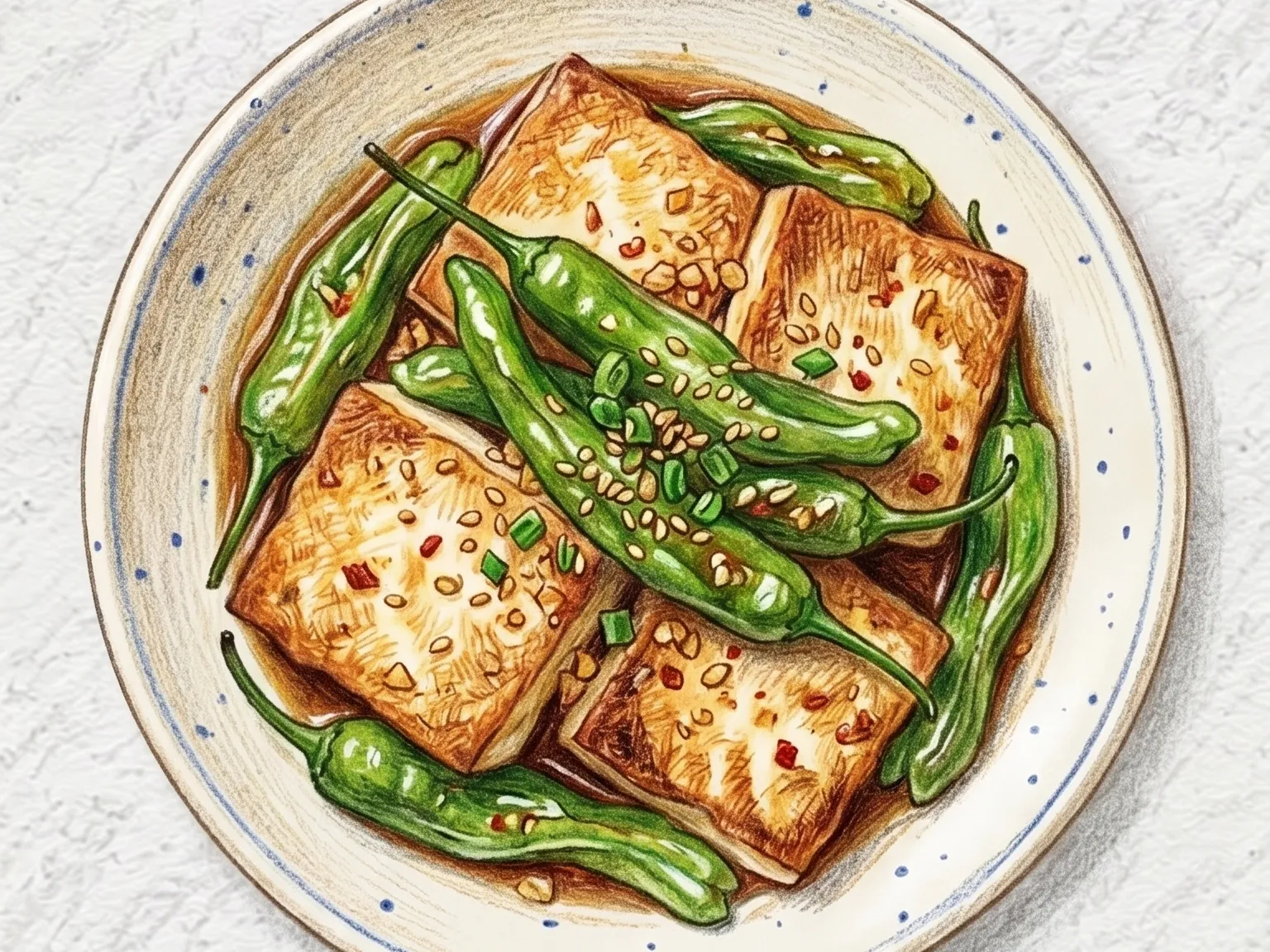
Kkwarigochu-dubu-jorim is a Korean braised dish of pan-fried tofu and shishito peppers in a soy sauce, gochugaru, and garlic seasoning.
What makes this special
- Kkwarigochu-dubu-jorim provides a firm pan-fried tofu crust that absorbs savory, spicy soy glaze.
- Pan-frying tofu first firms the surface so it holds shape during braising
- Crispy-outside, silky-inside contrast is the textural signature of this dish
Key ingredients
Core cooking flow
- 1 Cut the 320 g firm tofu into thick slices and wrap them in paper towels for 5 minutes.
- 2 Remove the stems from 90 g shishito peppers, halving only the larger ones.
- 3 In a small bowl, mix 2.5 tablespoons soy sauce, 1 tablespoon corn syrup, 1 t...
Kkwarigochu-dubu-jorim is a Korean braised dish of pan-fried tofu and shishito peppers in a soy sauce, gochugaru, and garlic seasoning. The tofu is seared first to create a firm, golden crust that contrasts with its soft interior once it finishes braising in the sauce. Shishito peppers absorb just enough liquid to carry the seasoning while adding their own fresh, vegetal note. Soy sauce and sesame oil pull the flavors together into a cohesive, savory whole, making this a satisfying plant-based banchan that holds its own on any table. Mixing the braising sauce into a bowl of rice alongside makes for a simple but rewarding meal.
Instructions
Read the steps as a cooking flow: prep, heat, seasoning, doneness control, and finish.
- 1Heat
Cut the 320 g firm tofu into thick slices and wrap them in paper towels for 5 minutes.
If the surface still looks wet, press gently once more before cooking so the tofu browns instead of steaming.
- 2Prep
Remove the stems from 90 g shishito peppers, halving only the larger ones.
Slice 80 g onion not too thinly, so it softens in the braising liquid without disappearing or burning around the tofu.
- 3Season
In a small bowl, mix 2.5 tablespoons soy sauce, 1 tablespoon corn syrup, 1 teaspoon gochugaru, 1 teaspoon minced garlic, and 160 ml water. Break up any clumps of chili flakes so the sauce seasons evenly.
- 4Control
Heat a pan over medium heat, add 1 tablespoon cooking oil, and place the tofu in a single layer.
Sear each side for 2 to 3 minutes until golden and firm at the edges, turning gently to prevent breakage.
- 5Control
Add the onion between the tofu pieces and stir for 1 minute, then pour in the prepared sauce.
Once it starts bubbling, lower to medium low heat and spoon the liquid over the tofu so it absorbs seasoning.
- 6Season
Add the shishito peppers and braise for about 8 minutes.
When the sauce is shallow and glossy and the peppers still look vivid, turn off the heat, rest for 2 minutes, and transfer carefully.
After the steps
Pick a recipe that fits this dish.
Continue with shared ingredients, meal pairings, or a similar method.
Recipes That Go Well With This
More Steamed →Based on shared ingredients and meal pairing
Korean Braised Squid with Shishito Peppers
Kkwari-ojingeo-jorim is a Korean braise of squid and shishito peppers simmered in a gochujang and soy sauce seasoning. The squid retains its chewy bounce while soaking in the bold sauce, and the peppers absorb enough flavor to stand on their own while keeping a slight crunch. Gochujang brings a warm spiciness that combines with soy sauce's depth into a multilayered seasoning, and garlic with ginger neutralizes any seafood odor. As the liquid reduces, it coats each piece in a concentrated glaze that makes this banchan work especially well spooned over a bowl of steamed rice.
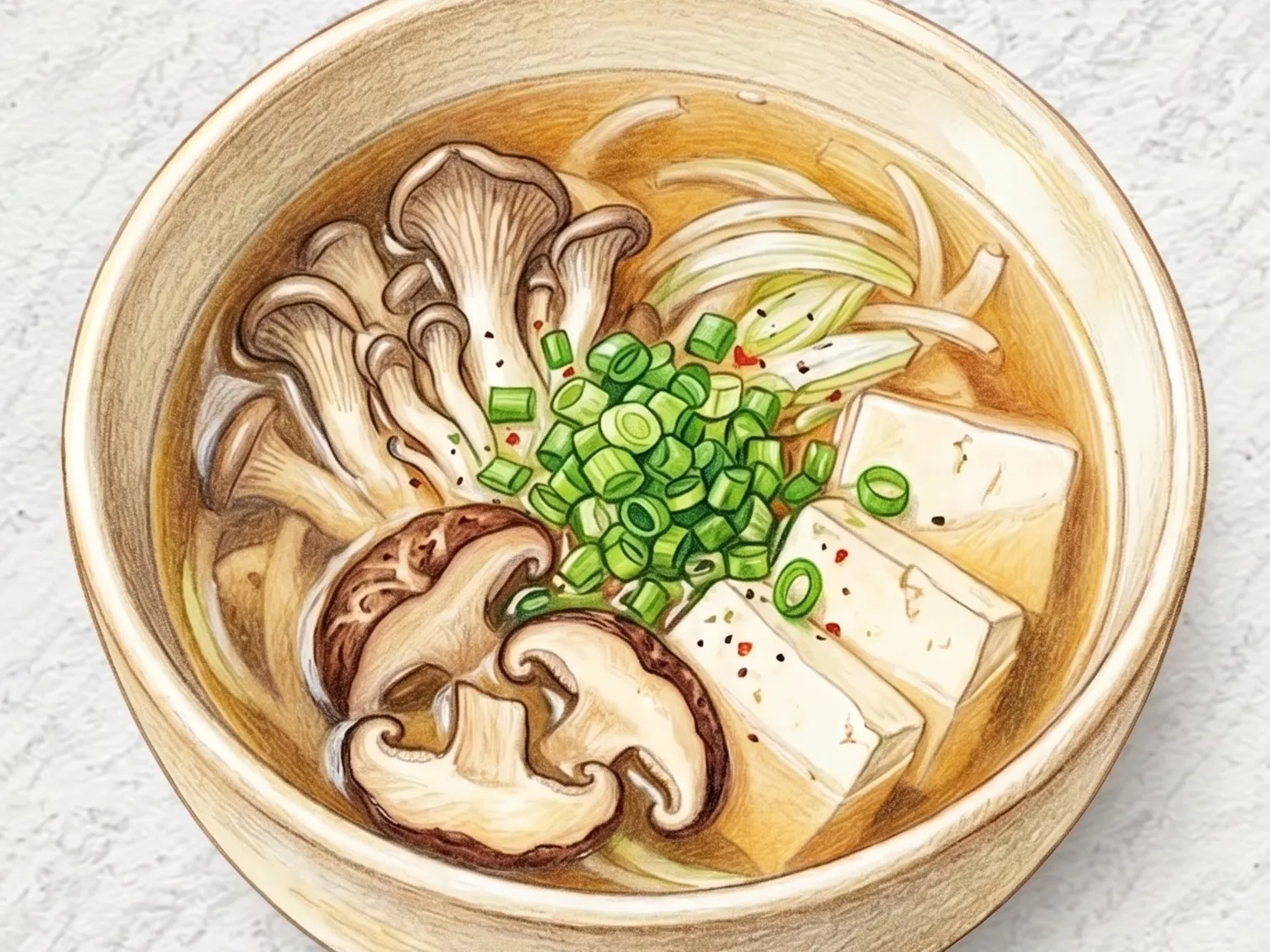
Korean Braised Tofu and Mushrooms
Dubu-beoseot-jorim is a Korean braised side dish of firm tofu and oyster mushrooms simmered in a soy-based sauce until the liquid reduces to a glossy, clinging coat. The tofu is pan-fried first in a lightly oiled skillet to form a firm outer crust before braising begins, which allows it to absorb the seasoned liquid without crumbling or losing its structure during cooking. The result is a cube with a slightly firmer exterior and a soft, custardy interior that holds together through each bite. Oyster mushrooms, torn along their natural grain rather than cut, contribute a pleasantly chewy texture and release their inherent umami into the braising liquid as they cook, adding depth without the need for separate stock. The sauce requires only soy sauce, water, garlic, gochugaru, and sesame oil, making this a straightforward braise that rewards careful heat management over elaborate preparation. When the sauce has reduced to just a small pool at the bottom of the pan, the dish is ready, well-seasoned enough to serve alongside plain rice or pack into a lunchbox.
Korean Seasoned Mung Bean Jelly Salad
Cheongpo muk - mung bean jelly - is made by dissolving starch in water, boiling it until thick, then leaving it to set into a translucent, firm block. It has appeared in Joseon-era palace banquet records as a traditional food. The jelly is blanched briefly, cut into matchstick strips, and tossed with julienned cucumber and carrot. A dressing of soy sauce, vinegar, and sugar gives a clean, sharp edge. The jelly itself is nearly flavorless, functioning as a cool, slippery carrier for the seasoning. The crunch of the vegetables contrasts with the smooth jelly, and the vinegar keeps the whole dish light. Gentle tossing is essential to avoid breaking the blocks apart. Served well-chilled, this is a classic Korean summer banchan.
Korean Braised Potatoes with Shishito Peppers
Kkwari-gamja-jorim is a Korean braised side dish of cubed potatoes and shishito peppers cooked down in soy sauce, oligosaccharide syrup, and minced garlic. The potatoes start in a sauce with enough moisture to cook through, and as the liquid reduces, the seasoning thickens into a glossy coating. By the time the pan is nearly dry, the outside of each potato piece has taken on a sweet-salty glaze while the inside stays floury and soft. Shishito peppers, with their wrinkled skins, hold the sauce well and require only brief cooking to stay crisp. A final drizzle of sesame oil and a scatter of sesame seeds add a nutty aroma and a visual finish that signals the dish is done. The heat level stays mild, suitable for children, and the glaze sets firmly enough that the dish travels well in a packed lunch without losing flavor at room temperature.
Serve with this
Korean Seasoned Tofu Pouch Sushi (Yubu Chobap)
Yubu chobap consists of seasoned tofu pouches filled with sushi rice. The preparation begins by mixing rice vinegar, sugar, and salt into hot rice, using a cutting motion to preserve the grains. Sesame oil and toasted sesame seeds are added for aroma, along with finely diced carrot and cucumber to bring color and a crisp texture. The tofu pouches are lightly pressed and filled to about 80 percent of their capacity, preventing the skin from tearing during shaping. With each bite, the pouch releases a sweet and savory sauce absorbed by the tofu, which goes well with the seasoned rice. Since they are convenient to carry and eat by hand, they are popular for lunchboxes, quick snacks, and picnics.
Korean Pepper Leaf Soy Pickle
Gochuip jangajji is a Korean soy pickle made from pepper leaves, a summer byproduct of chili cultivation, washed and submerged in a boiled brine of soy sauce, vinegar, and sugar. Unlike the chili fruit, pepper leaves carry almost no heat. What they bring instead is a grassy, mildly bitter fragrance that blends naturally with the savory and sour notes of the brine. Boiling the pickling liquid first and letting it cool before pouring it over the leaves preserves some of their texture while ensuring even seasoning throughout. Garlic and cheongyang chili contribute a sharp, pungent edge to the liquid, and the thin leaves absorb the brine fully within a single day. Over time, the pickling liquid penetrates deeper and the umami grows more pronounced. Laying one leaf over rice and folding it into a small parcel combines the roles of banchan and ssam in a single, compact bite.
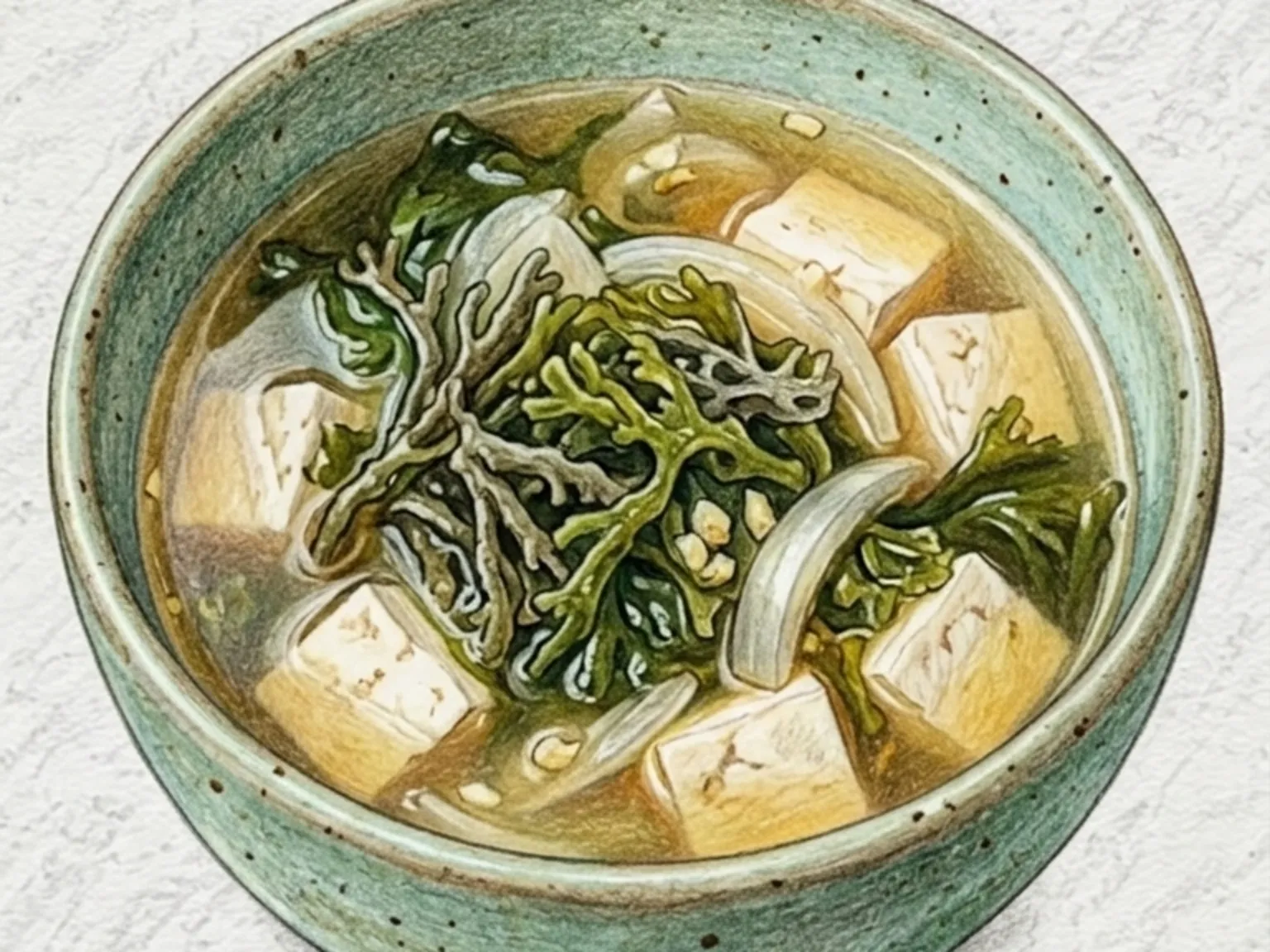
Korean Mussel Seaweed Soup
Honghap-maesaengi-guk is a winter specialty from Korea's southern coast that pairs fresh mussels with maesaengi, a hair-thin green seaweed harvested in cold water. The seaweed is briefly sautéed in sesame oil before water and mussels are added, and as the pot simmers, the broth turns a deep green with a mineral-rich ocean fragrance. Soup soy sauce and garlic provide just enough seasoning to frame the natural salinity without masking it. The textural contrast is central to the experience: maesaengi slides across the palate in silky strands while the mussels offer a firm, meaty chew. Each spoonful delivers both the vegetal depth of seaweed and the concentrated brininess of shellfish, making it a dish greater than the sum of its two main ingredients.
Similar recipes
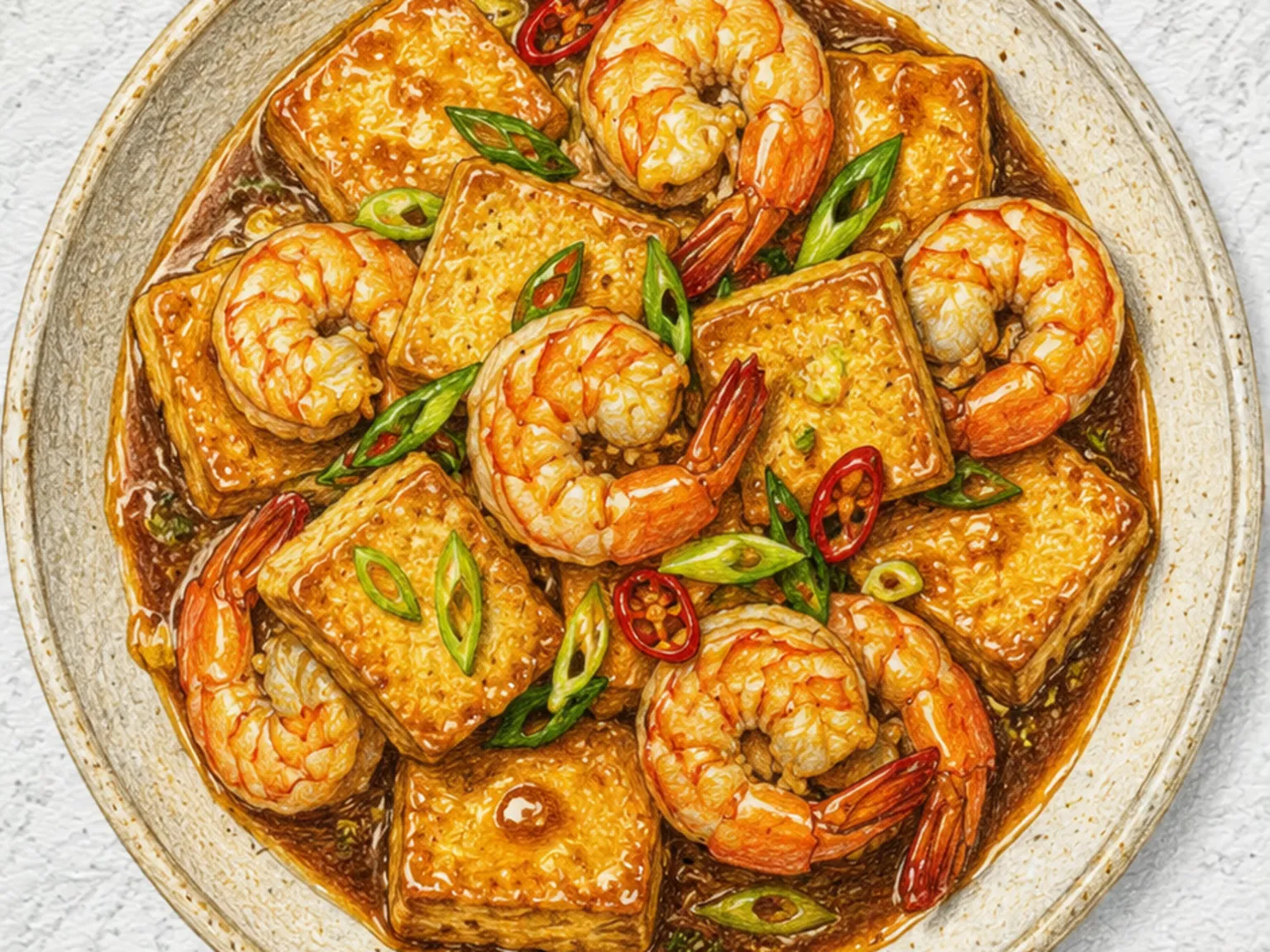
Korean Braised Tofu with Shrimp
Dubu-saeu-jorim pairs pan-seared tofu with whole shrimp in a soy-based braising sauce, stepping well beyond the usual tofu-only preparations that appear in everyday banchan. The tofu is seared first until golden on both sides to develop a lightly firm crust that resists breaking apart during the braising stage, then set aside while shrimp cook briefly in the same pan, picking up the fond left by the tofu. The braising liquid -- soy sauce, minced garlic, sugar, cooking wine, and a touch of gochugaru -- goes in next, and both proteins return to the pan to simmer together for five minutes over medium heat. The shrimp release their marine sweetness into the sauce as they tighten and curl, and the porous interior of the tofu absorbs that combined soy-seafood flavor throughout each cube. Adjusting the simmer time controls the final sauce concentration: shorter for a looser, silkier coat; longer for a more intensely reduced glaze. The textural pairing is the dish's central appeal -- yielding, custardy tofu against the springy, snapping bite of the shrimp. Adding sliced green onion or fresh chili introduces another layer of fragrance, and scaled up in quantity, the dish works just as well spooned over steamed rice as a satisfying one-bowl meal.
Korean Soy-Braised Deodeok Root
Deodeok-jorim is a Korean braised banchan made from deodeok root simmered in soy sauce, rice syrup, garlic, and sesame oil until each piece takes on a glossy, lacquered coating. The root's pronounced bitter-herbal aroma softens considerably as the sweet-salty glaze penetrates during cooking, while the interior stays dense and pleasantly chewy throughout. A single green chili stirred in near the end contributes a restrained background heat, and toasted sesame seeds with a final drizzle of sesame oil add a nutty dimension on top. Deodeok is a foraged mountain root prized for its earthy, slightly resinous character, and this preparation tames that wild quality just enough to make it approachable as a daily side dish. Paired with other vegetable banchan, it anchors the kind of traditional Korean table that prioritizes vegetables over protein.
Korean Braised Eggplant and Tofu
Gaji dubu jorim combines eggplant and firm tofu braised together in a soy sauce and gochugaru seasoning. The eggplant soaks up the sauce and turns silky soft, while the pan-seared tofu holds its shape with a slight firmness on the outside. Garlic and green onion round out the flavor, creating a lightly spicy, umami-rich side dish. Salting the eggplant briefly before cooking draws out excess moisture so the pieces absorb the seasoning more deeply without falling apart during braising. Draining the tofu and pan-frying it on both sides before adding it to the sauce keeps the blocks intact and gives the surface a slightly chewy resistance against the tender eggplant. A practical vegetarian-friendly banchan that delivers both protein and vegetables without any meat.