Charim

2686 Korean & World Recipes

2686+ Korean recipes, clean and organized. Ingredients to instructions, all at a glance.

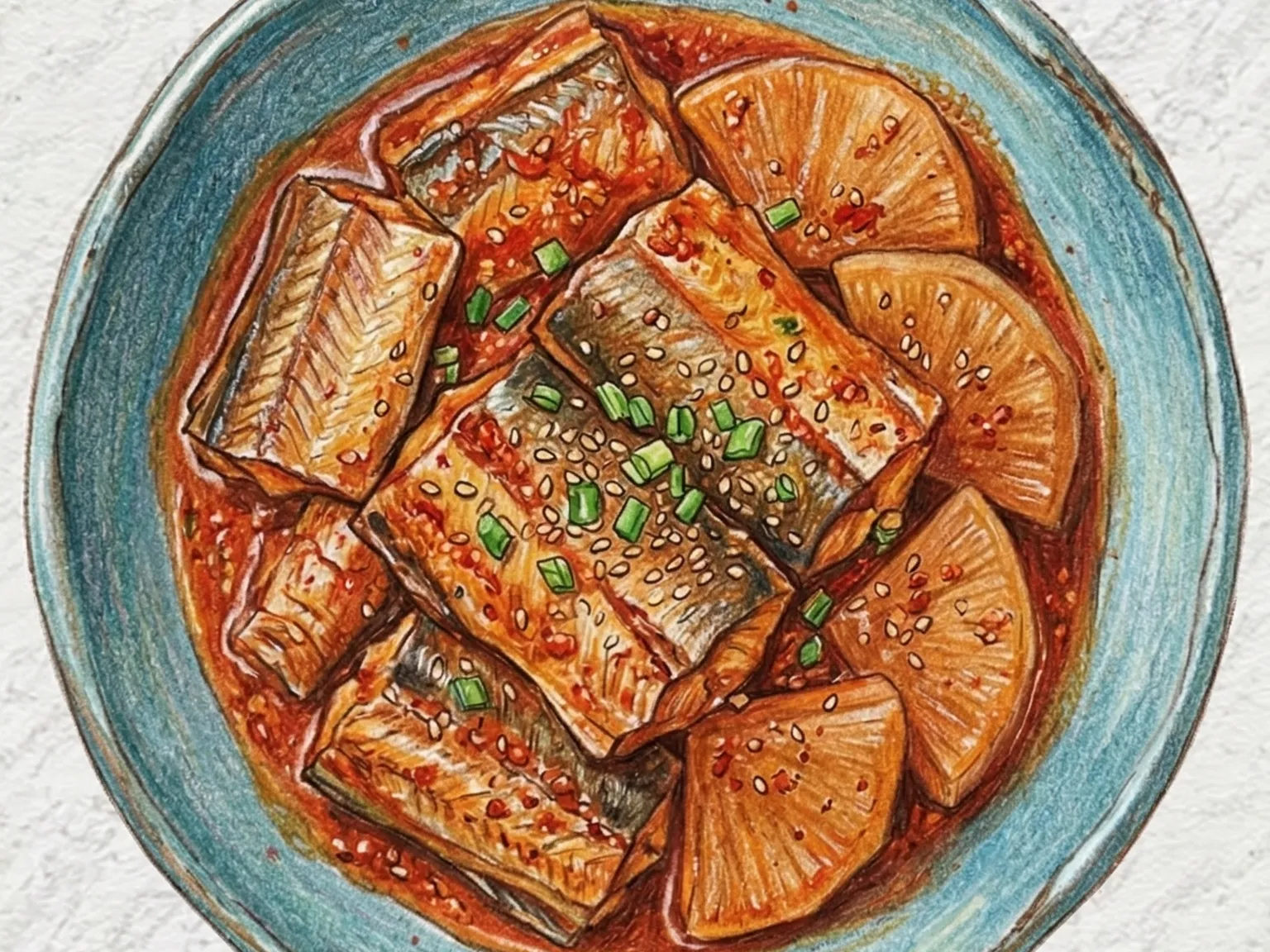
Korean Spicy Braised Semi-Dried Pollock
SteamedMedium

Korean Spicy Braised Semi-Dried Pollock

Kodari-jjim is a Korean braise of semi-dried pollock cooked with Korean radish and onion in a gochugaru and soy sauce seasoning. The drying process removes moisture and firms up the flesh, so the pollock absorbs the spicy sauce deeply while maintaining a chewy, dense bite. Radish mellows the chili heat and adds natural sweetness, and a small amount of doenjang in the sauce builds an extra layer of depth. When the liquid reduces to a thick, clinging consistency, it becomes the kind of sauce meant to be mixed directly into rice.

Prep 15minCook 30min4 servings

Adjust Servings

2servings
servings

Instructions

  1. 1

    Trim fins from codari and rinse lightly.

  2. 2

    Layer radish on the bottom, then add codari and onion.

  3. 3

    Mix gochugaru, gochujang, soy sauce, garlic, and water; pour in and boil.

  4. 4

    Reduce to medium, cover, and braise for 15 minutes.

  5. 5

    Add syrup and green onion, then reduce for 5-7 minutes.

  6. 6

    Finish when the sauce is glossy and coats the fish well.

🛒Shop Ingredients on Amazon

As an Amazon Associate, we may earn from qualifying purchases.

Tips

Soaking codari for 10 minutes first gives a softer texture.
Radish on the bottom prevents sticking and enriches the sauce.

Nutrition (per serving)

Calories
320
kcal
Protein
38
g
Carbs
13
g
Fat
11
g

More Recipes

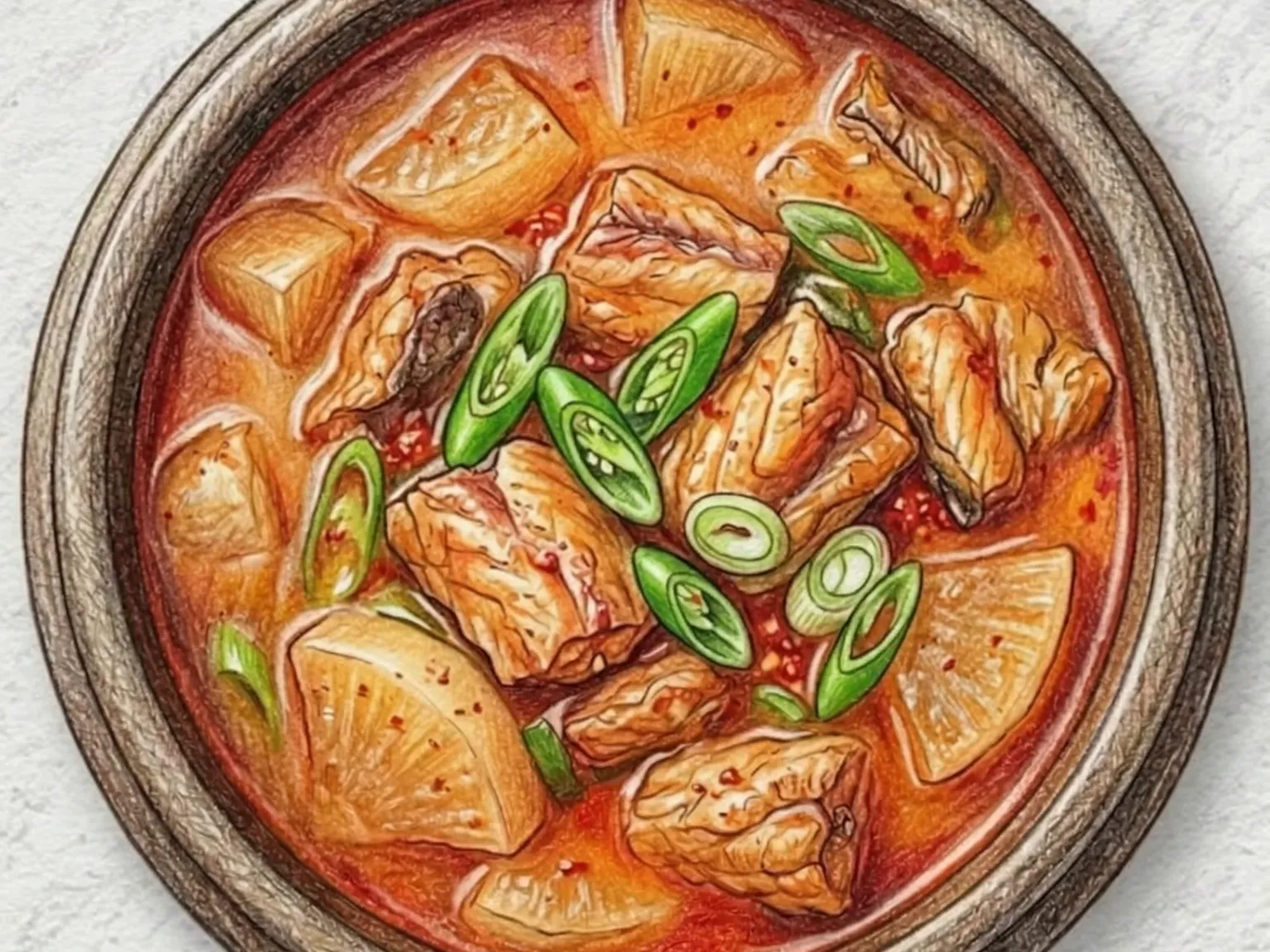
Korean Braised Pollock (Frozen Pollock with Radish in Spicy Sauce)
SteamedMedium

Korean Braised Pollock (Frozen Pollock with Radish in Spicy Sauce)

Dongtae-jjim is frozen pollock braised with Korean radish and bean sprouts in a sauce of gochugaru, soy sauce, garlic, and ginger. Using frozen rather than fresh pollock is traditional - the freezing-and-thawing process gives the flesh a firm, slightly spongy texture that holds up well in the spicy broth. Radish soaks up the chili-laced liquid and turns sweet against the heat, while bean sprouts contribute crunch and a clean, refreshing aftertaste. The sauce reduces to a shallow pool at the bottom, meant to be spooned over rice as a wintertime staple.

🎉 Special Occasion
Prep 20minCook 30min4 servings
Korean Spicy Braised Pufferfish
SteamedHard

Korean Spicy Braised Pufferfish

Cleaned pufferfish fillets are steamed with bean sprouts and water dropwort in a spicy gochugaru and gochujang sauce. The pufferfish meat is lean with a firm, bouncy texture that holds up well under the bold chili seasoning. Bean sprouts add crunch and a refreshing counterpoint, while water dropwort contributes its distinctive herbal fragrance. Seasoned with soy sauce and garlic, this is a coastal Korean fish dish with considerable heat.

🎉 Special Occasion
Prep 25minCook 35min4 servings
Korean Spicy Fish Roe Braise
SteamedMedium

Korean Spicy Fish Roe Braise

Al-jjim is a Korean fisherman's dish that turns the parts most people discard - pollock roe sacs and milt - into a rich, intensely flavored braise. The roe has a grainy, dense texture that firms up when heated, while the milt is creamy and custard-like, breaking apart into soft curds in the simmering sauce. Radish slices line the pot bottom, providing a sweet buffer that tempers the aggressive saltiness of the gochugaru-soy braising liquid. The dish cooks at low heat for fifteen minutes, during which the roe and milt release their marine oils into the sauce, creating a broth that is simultaneously spicy, briny, and rich. Green onion added in the final minutes brings a fresh sharpness. Al-jjim is a winter specialty in Korea's east coast fishing ports, where fresh roe is available during the pollack spawning season.

🎉 Special Occasion
Prep 20minCook 25min4 servings
Korean Spicy Braised Monkfish
SteamedHard

Korean Spicy Braised Monkfish

Agu-jjim is a signature dish of Masan, a port city in Korea's Gyeongsang-do province, where monkfish has been landed and cooked in spicy preparations for generations. The dish involves braising monkfish pieces over high heat with a thick layer of bean sprouts, all drenched in a paste of gochugaru, gochujang, soy sauce, and garlic. The monkfish flesh, which has a firm, gelatinous texture unlike any other white fish, absorbs the fiery red seasoning while the bean sprouts release enough moisture to create a natural braising liquid. Water dropwort - minari - goes in at the very end, contributing a celery-like herbal note that cuts through the heavy chili-garlic coating. Traditionally served communal-style on a large platter, agu-jjim is a staple of Korean drinking gatherings where the bold spice demands cold beer or soju.

🍺 Bar Snacks🎉 Special Occasion
Prep 20minCook 25min4 servings
Korean Grilled Semi-dried Pollock
GrilledEasy

Korean Grilled Semi-dried Pollock

Kodari-gui is a Korean grilled semi-dried pollock where the fish is pan-fried while being repeatedly brushed with a glaze of soy sauce, gochujang, oligosaccharide syrup, minced garlic, and sesame oil. Semi-drying concentrates the pollock's protein and draws out moisture, giving it a chewy, dense texture that absorbs seasoning more readily than fresh fish. The sugar in the glaze caramelizes as it cooks, building up a glossy, dark coating with each brushing. Applying the sauce gradually in thin layers rather than all at once prevents burning, and briefly soaking the dried fish before cooking softens the interior while maintaining that characteristic firm bite. Sesame seeds scattered on at the end add a toasted accent.

🍺 Bar Snacks🍱 Lunchbox
Prep 20minCook 14min2 servings
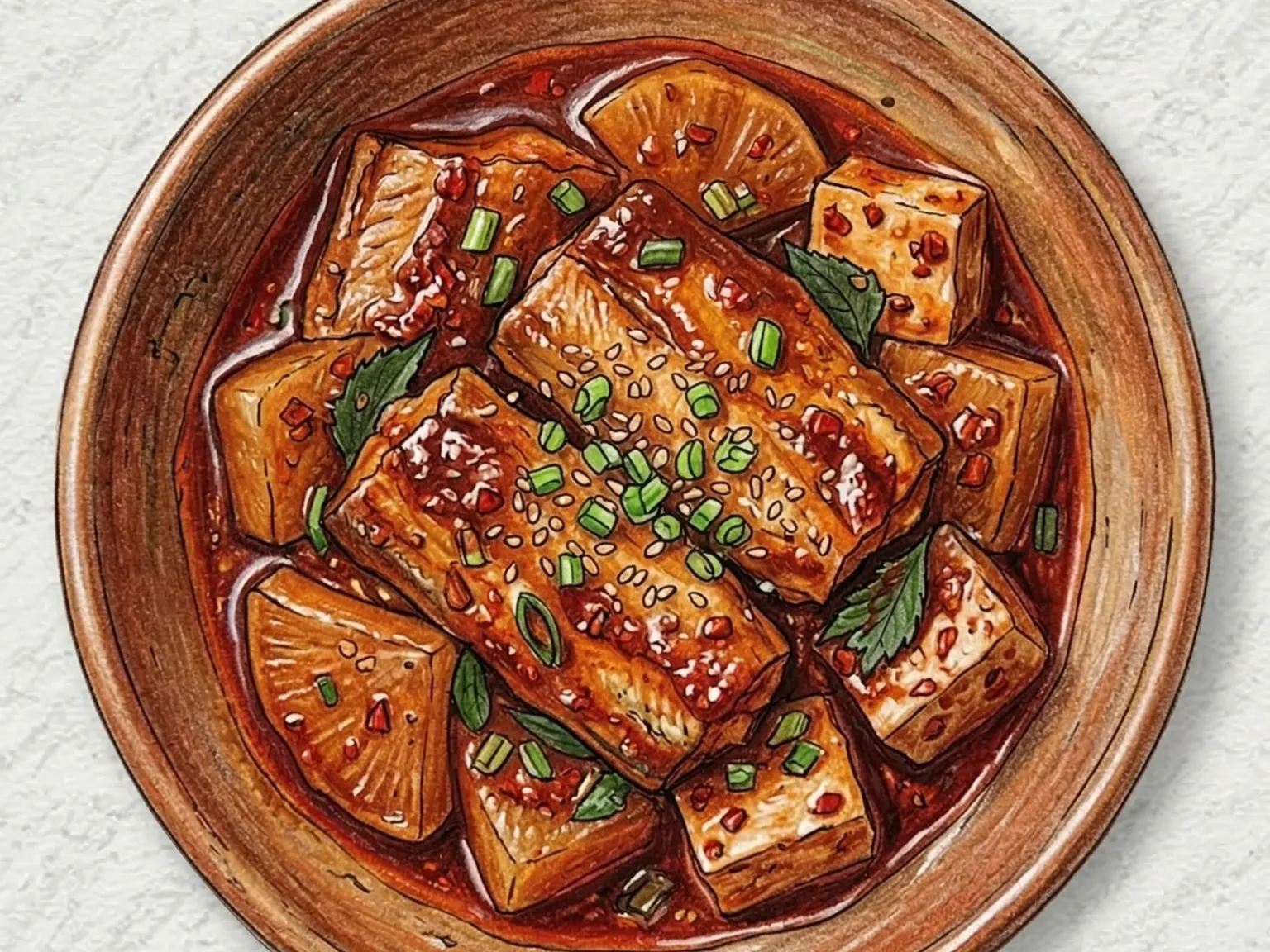
Korean Braised Semi-Dried Pollock
Side dishesMedium

Korean Braised Semi-Dried Pollock

Kodari-jorim braises semi-dried pollock with radish in a gochujang-soy glaze, occupying a middle ground between fresh fish stew and fully dried fish preparations. Kodari is whole pollock gutted and hung in pairs along the East Sea coast, air-dried for two to three weeks - halted before full dehydration so the flesh retains enough moisture to stay supple after cooking, unlike the spongy texture of fully dried hwangtae. Layering radish on the bottom of the pot serves a structural purpose: it prevents the fish from sitting directly on the heat source and scorching. A sauce of soy, gochujang, gochugaru, sugar, and garlic is poured over and brought to a boil, then reduced to medium heat for about thirty minutes, spooning the liquid over the fish periodically. Overnight refrigeration lets the seasoning penetrate evenly and deepens the flavor. The leftover sauce is potent enough to repurpose as a bibimbap dressing.

🏠 Everyday🍱 Lunchbox
Prep 25minCook 35min4 servings
More Steamed