Korean Spicy Pork Bean Sprout Stir-fry (Kongbul)
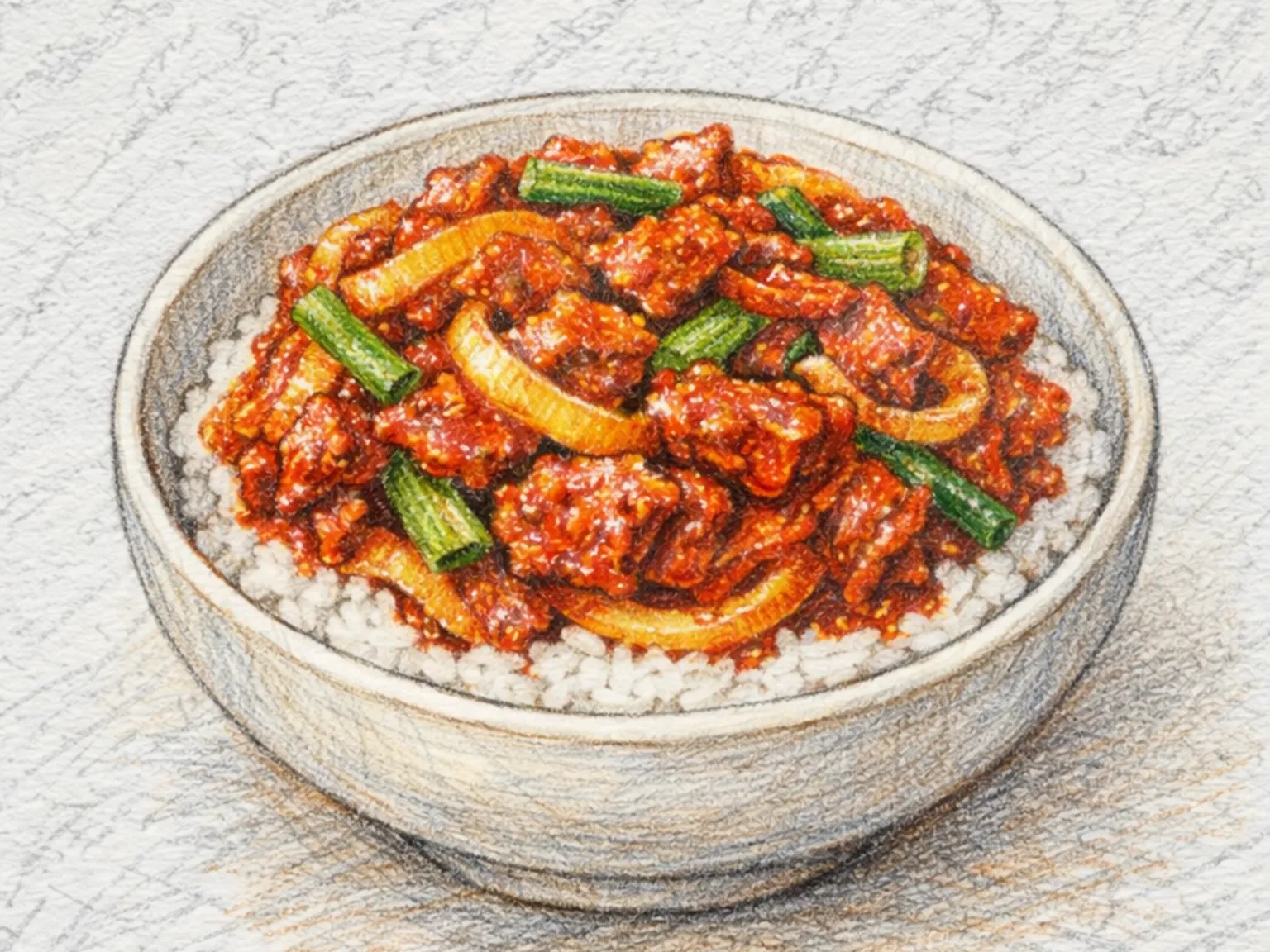
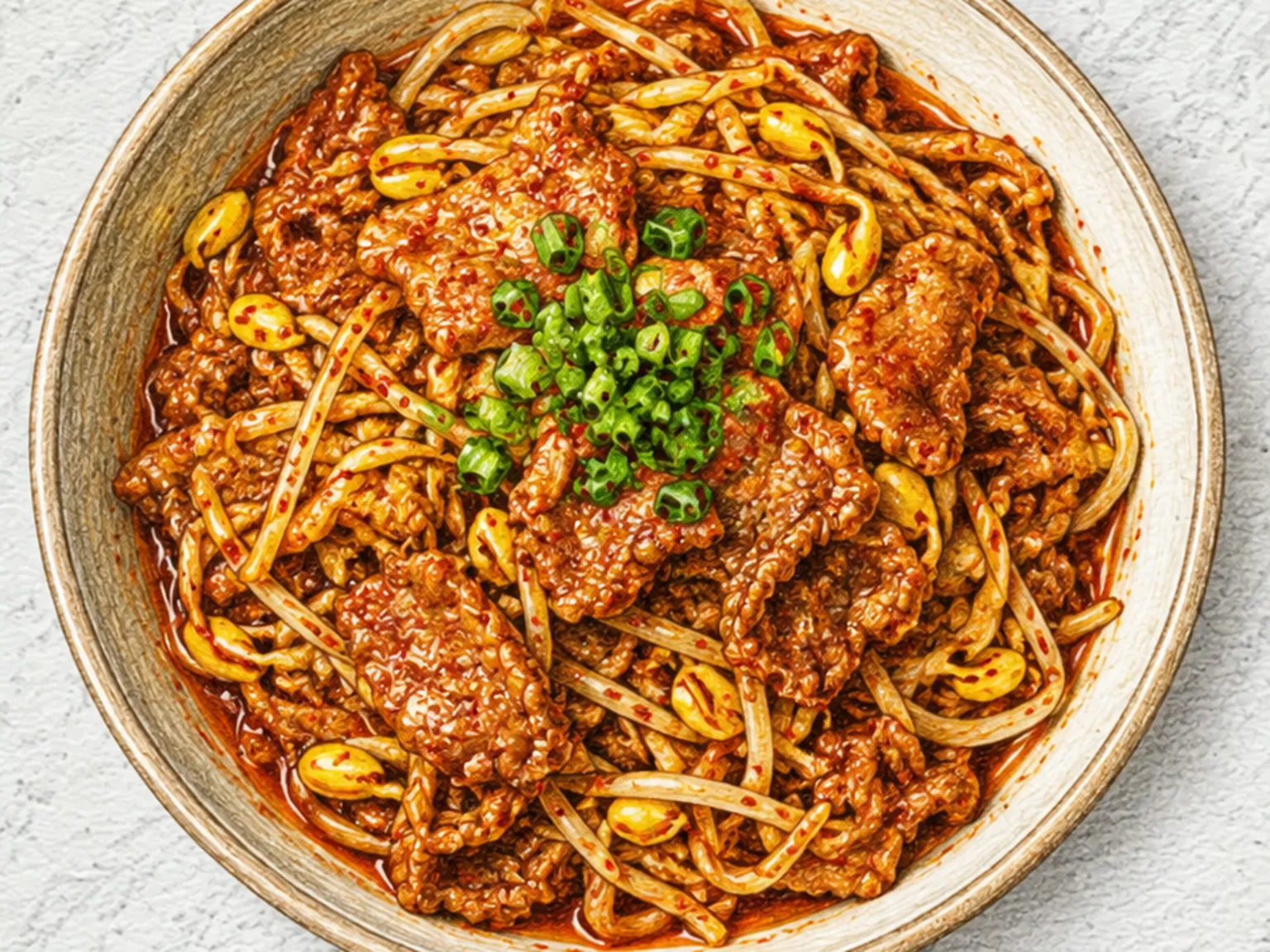
Kongbul is a fiery Korean stir-fry of pork shoulder tossed in a gochujang-gochugaru-soy sauce blend and cooked over high heat, with bean sprouts added at the very end to preserve their crunch. The gochujang's thick spiciness combines with rendered pork fat for an intense, mouth-coating savoriness, while the bean sprouts release just enough moisture to keep the sauce from scorching. The sprouts must be stir-fried only until barely wilted to maintain their snap. Chopped scallion goes in last, and mixing the whole thing into a bowl of rice stretches this into a full, hearty meal.
Adjust Servings
Instructions
- 1
Slice pork into bite-size pieces and thinly slice the onion.
- 2
Mix gochujang, gochugaru, soy sauce, and sugar to make the sauce.
- 3
Stir-fry pork in a hot pan until the surface is mostly cooked.
- 4
Add onion and sauce, then cook over medium heat for 2 minutes.
- 5
Add bean sprouts and toss quickly over high heat until just wilted.
- 6
Add chopped green onion and stir-fry 30 seconds to finish.
As an Amazon Associate, we may earn from qualifying purchases.
Tips
Nutrition (per serving)
More Recipes

Korean Spicy Pork Stir-fry
Jeyuk-bokkeum is a Korean spicy pork stir-fry where sliced pork is marinated in a blend of gochujang, soy sauce, sugar, and garlic, then wok-tossed with vegetables over high heat. The marinade sinks into the meat, combining chili heat with caramelized sweetness, while onions and scallions release moisture that balances the bold seasoning. Quick cooking at high temperature lets the pork develop a lightly charred exterior that adds another layer of flavor. It is commonly served over rice as a donbap or wrapped in lettuce leaves.

Korean Spicy Beef Stir-Fry
Sogogi gochujang-bokkeum marinates thin-sliced beef in a paste of gochujang, soy sauce, sugar, and minced garlic, then stir-fries it over high heat. The chili paste's spiciness and the sugar caramelize together on the meat's surface, building a dark, sticky glaze with layered heat. Onion cooked alongside the beef releases moisture that helps the seasoning distribute evenly across every slice. A finish of sesame oil adds a roasted nuttiness on top of the bold, spicy-sweet profile -- intensely flavored enough that a small portion carries a full bowl of rice.

Korean Spicy Pork Duruchigi
Duruchigi is a Korean spicy pork stir-fry made by flash-cooking sliced pork shoulder with onions and scallions in a gochujang-based sauce over high heat. The intense heat sears the meat, imparting a smoky wok flavor that elevates the dish beyond its simple ingredients. Gochujang provides fermented chili heat while sugar balances with sweetness, and scallions add a sharp, fresh finish. It is one of the most popular everyday pork dishes in Korean restaurants and home kitchens alike.

Korean Spicy Gochujang Bulgogi
This spicy gochujang pork bulgogi builds its bold flavor from a marinade of gochujang, Korean chili flakes, soy sauce, garlic, and corn syrup applied to thick-cut pork neck. Stir-frying on medium-high heat drives off moisture first, allowing the sauce to caramelize and develop depth rather than turn watery. Onion goes in next, contributing natural sweetness that tempers the chili heat, followed by green onion for a fresh aromatic lift. Scoring thicker slices helps the marinade penetrate more evenly. The generous four-serving yield makes it a practical centerpiece for family dinners.

Korean Steamed Spicy Pork and Bean Sprouts
Kongbul-jjim is a steamed version of the popular Korean spicy pork and bean sprout dish, cooked covered rather than stir-fried. The bean sprouts release their own moisture under the lid, creating a natural broth that evenly distributes the gochujang and gochugaru seasoning into every piece of pork. The double-chili heat is intense, but the crunchy sprouts cut through the spice and lighten each bite. Using less oil than the stir-fried version makes the seasoning taste sharper and more direct, and adding rice or thin noodles at the end makes good use of the flavorful liquid left in the pot.

Korean Spicy Stir-Fried Squid Rice Bowl
Scored squid is stir-fried with onion, cabbage, and scallion in a gochujang-based sauce over high heat, then served on steamed rice. The squid's chewy texture and smoky wok char pair with the sweet-salty-spicy glaze, while the vegetables bring natural sweetness that tempers the heat. Vegetables go into the pan first to drive off moisture, then the squid cooks quickly for just 3 to 4 minutes to stay tender. Leaving a little sauce in the pan lets it soak into the rice when mixed, coating every grain.