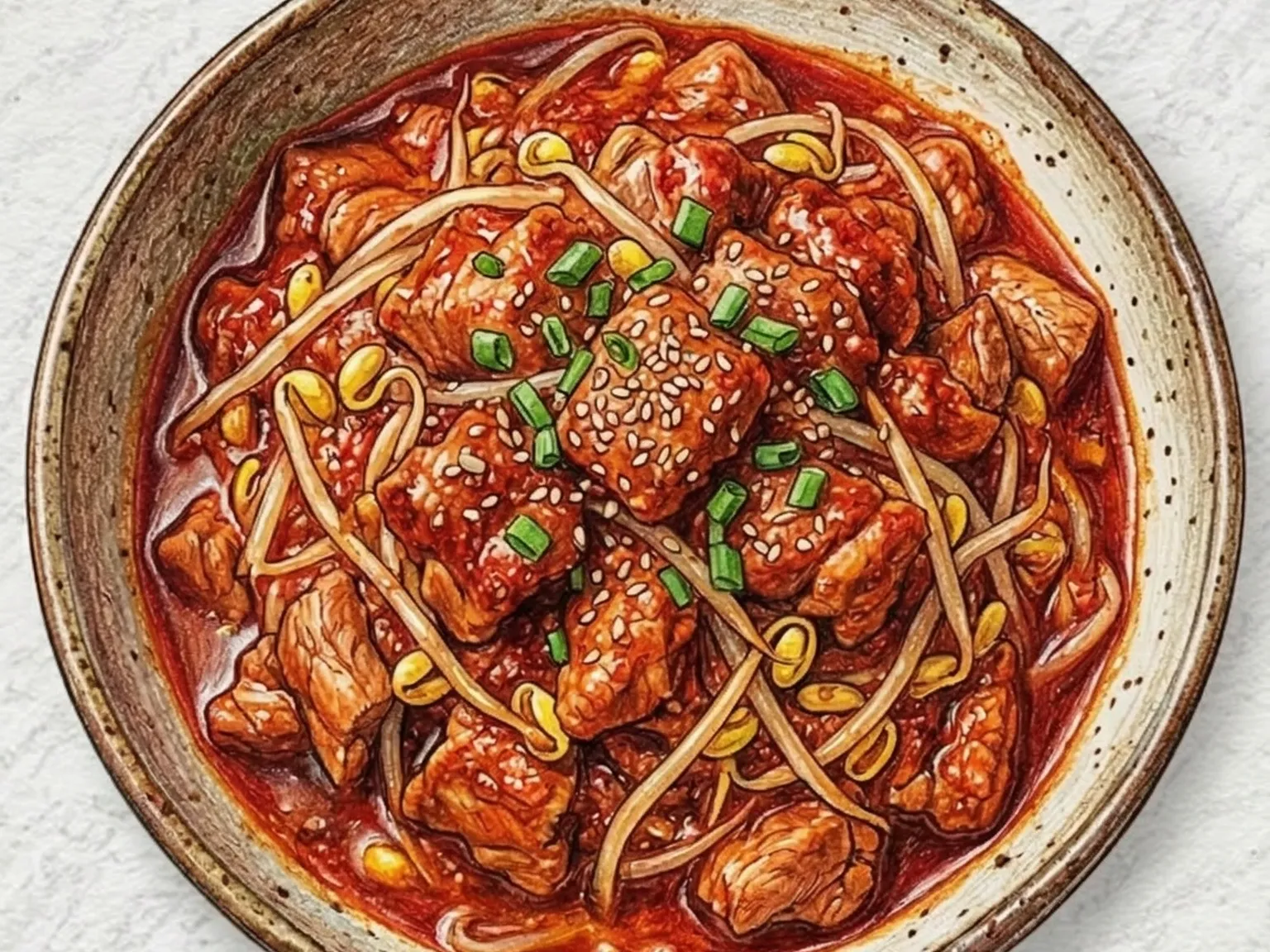
Korean Steamed Spicy Pork and Bean Sprouts
Drain 350 g bean sprouts well, spread them with 1 sliced onion on the steaming plate, and lay the seasoned pork over them in a thin layer, since thick overlaps cook slowly in the center. Once the steamer is producing steady steam, cover tightly and steam over medium-high heat for 15 minutes, leaving the lid alone because the trapped moisture becomes the broth. When the pork has turned pale and the sprouts have just softened, add half a green onion and steam only 3 more minutes so the sprouts stay crisp.
Quick answer
- Total time
- 40 min
- Level
- Medium
- Servings
- 3 servings
- Ingredients
- 8
About this dish
Spicy pork and bean sprouts, usually a stir-fry, are steamed in this version, which uses no oil and lets the gochujang and gochugaru seasoning come through more directly.
Read more
As the sprouts wilt under the lid they release water that turns into a light broth and carries the seasoning into the pork shoulder, while their remaining crunch eases the heat. Spreading the meat thin and low over the sprouts lets it cook at the same pace throughout. The dish is served as soon as it is done, before the sprouts give off too much water and turn limp. Rice or thin somyeon noodles stirred into the leftover broth finish the pot.
Ingredients
Instructions
- 1
Separate 400 g pork shoulder slices into bite-size pieces so they do not clump.
Add 1 tablespoon each gochujang, gochugaru, soy sauce, and minced garlic, then mix until every slice is lightly coated.
- 2
Rinse 350 g bean sprouts and drain them well so excess water does not dilute the seasoning.
Thinly slice 1 onion, then spread the sprouts and onion in an even layer on the steaming plate.
- 3
Lay the seasoned pork over the bean sprouts in a thin, even layer.
Avoid thick overlaps, because crowded slices cook slowly in the center and can leave unevenly seasoned, undercooked spots.
- 4
When the steamer is producing steady steam, set in the plate, cover tightly, and steam over medium-high heat for 15 minutes.
Do not lift the lid often, because trapped moisture becomes the cooking broth.
- 5
Check that the pork has turned pale and the bean sprouts have just softened but still hold shape.
Add 0.5 green onion, cover again, and steam only 3 more minutes to keep the sprouts crisp.
- 6
Turn off the heat and gently lift the broth and seasoning from the bottom through the pork and sprouts.
Serve immediately before the bean sprouts release too much water and lose their light crunch.
Use-up ingredient planner
Turn these ingredients into two more meals
The overlap excludes basic seasonings. Open the next recipe and your selected dishes will stay with you.
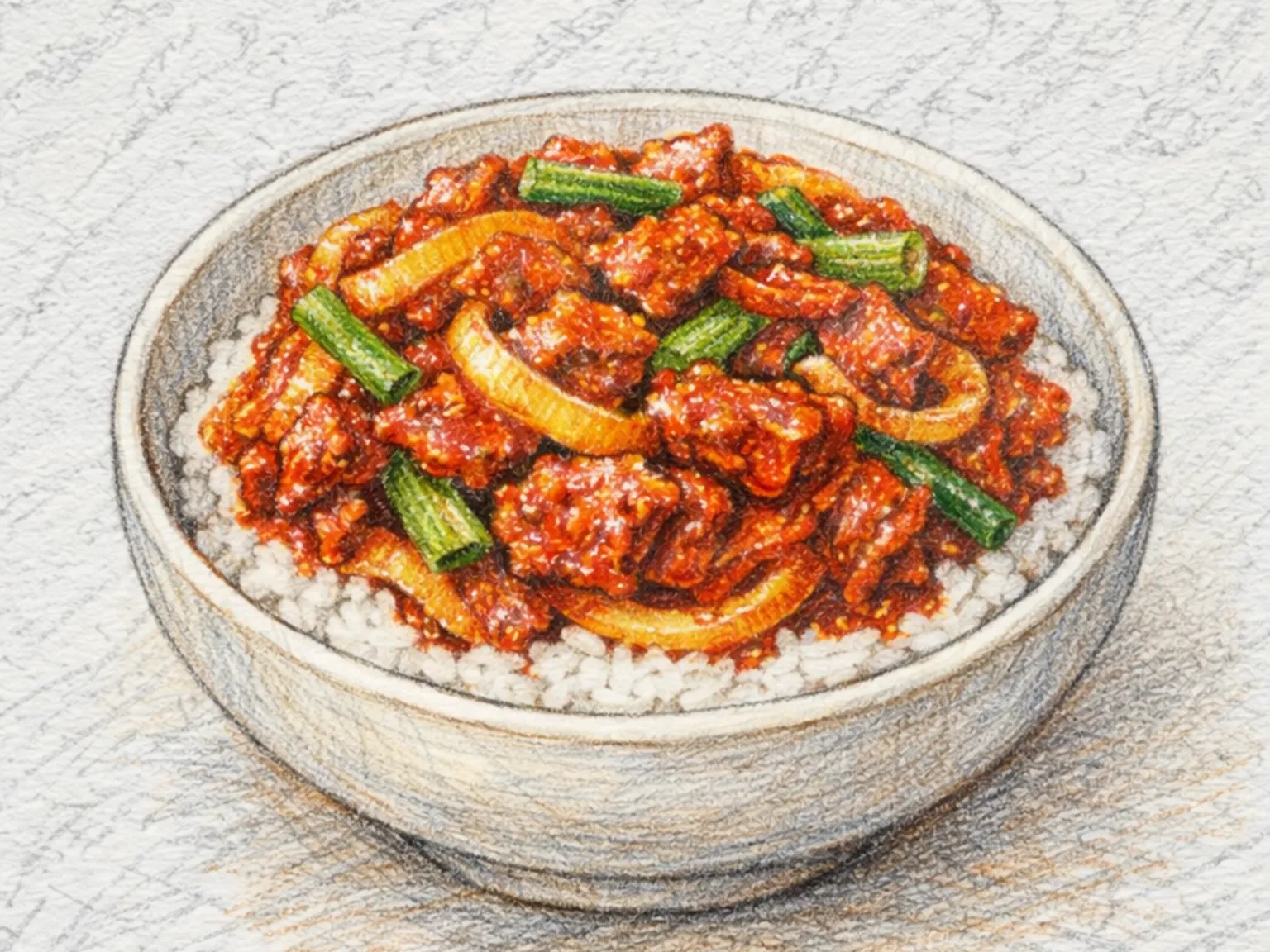
Korean Spicy Pork Rice Bowl
pork shoulder slices, onion
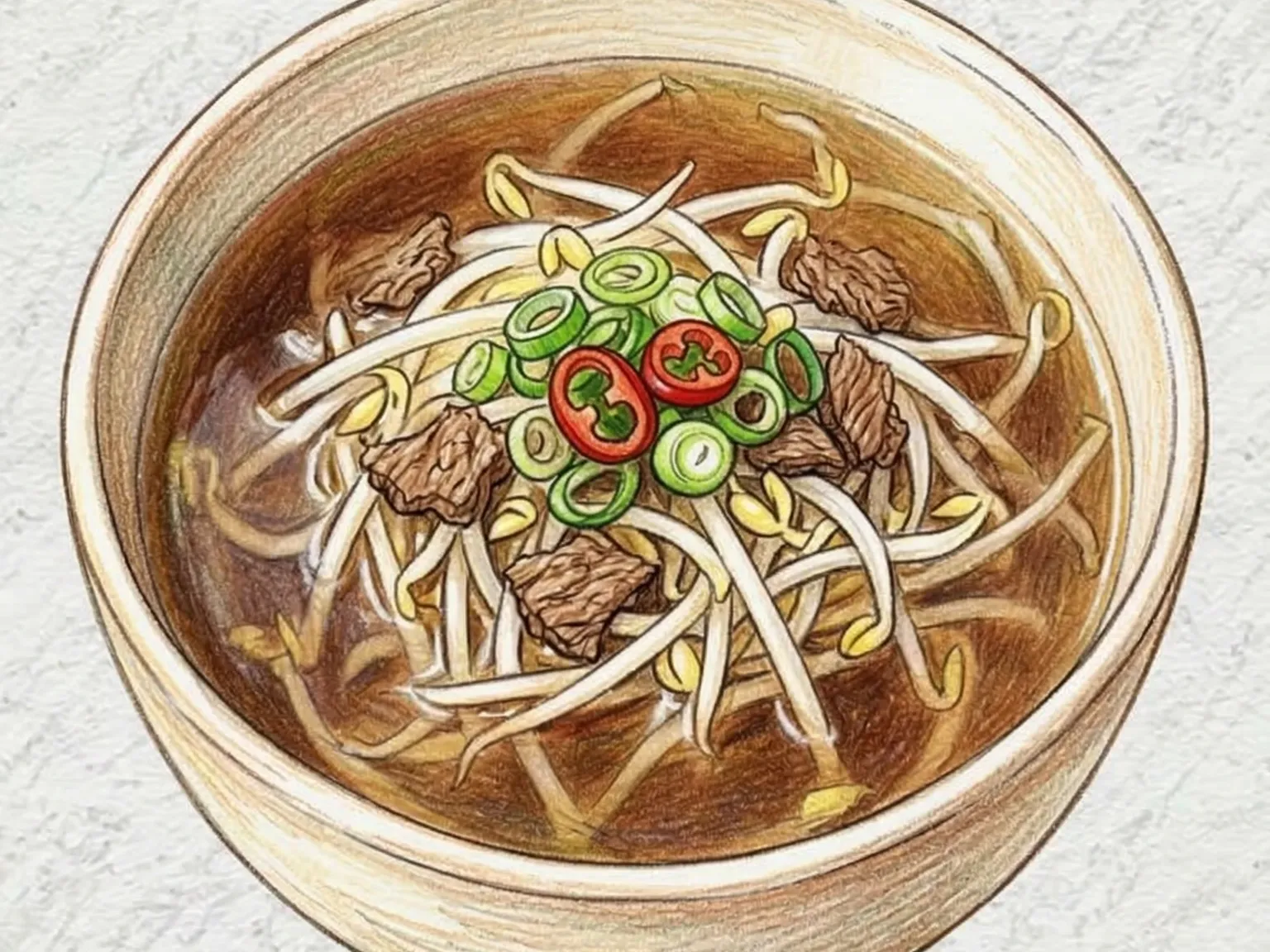
Korean Beef Bean Sprout Soup
bean sprouts, onion
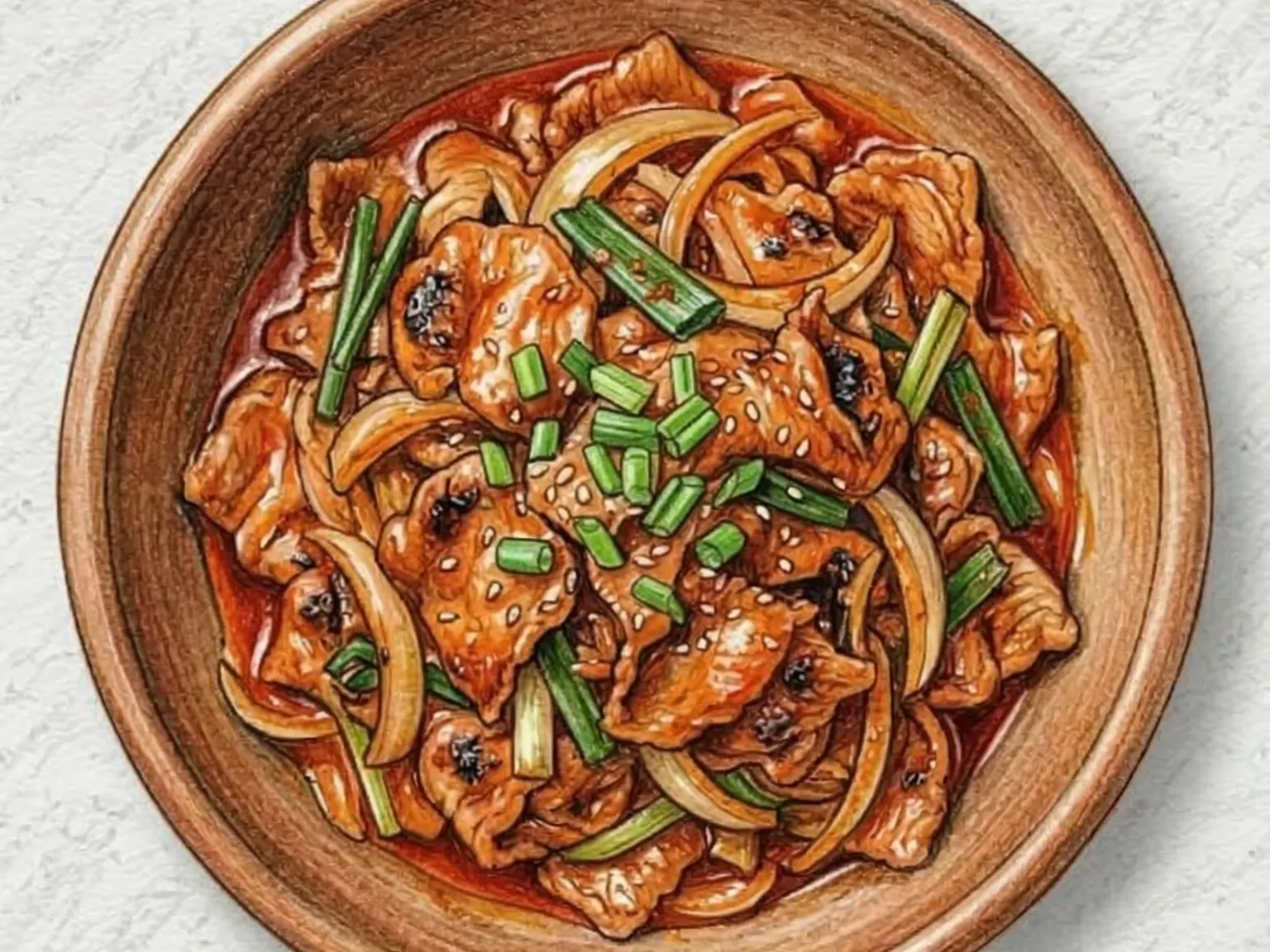
Korean Spicy Pork Duruchigi
pork shoulder slices, onion