Korean Cold Soy Milk Noodles
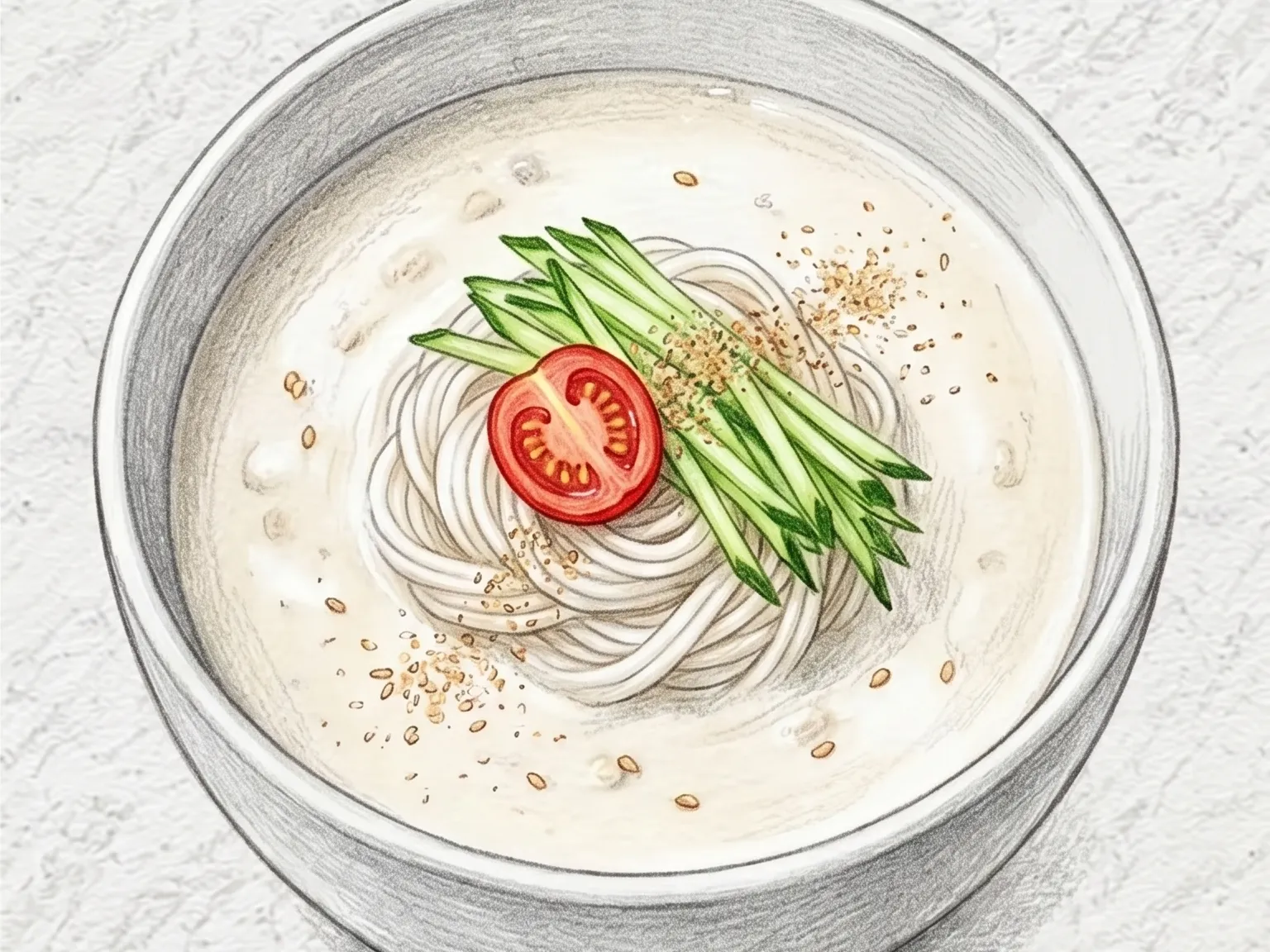
Kongguksu is a Korean cold noodle dish served in a chilled broth made entirely from ground soybeans. Cooked white soybeans are peeled as thoroughly as possible, then blended with cold water, sesame seeds, and salt until the mixture is smooth and creamy. The resulting soy broth is refrigerated until very cold - adding ice would thin it out, so proper chilling beforehand is essential. Thin somyeon noodles are boiled, rinsed vigorously under cold water, and dipped in ice water to tighten their texture before being placed in the bowl. The cold soy broth is poured over, and julienned cucumber goes on top. Seasoning is left to personal preference: some eat it with salt alone, others add a touch of sugar. Straining the broth once through a fine sieve produces a noticeably silkier texture.
Adjust Servings
Instructions
- 1
Rinse cooked soybeans in cold water and remove as much skin as possible.
- 2
Blend soybeans, water, sesame seeds, and salt until very smooth.
- 3
Chill the soy broth thoroughly in the refrigerator.
- 4
Boil noodles, rub-rinse in cold water, then chill in ice water for firmness.
- 5
Place noodles in bowls, pour over chilled soy broth, and top with cucumber.
- 6
Adjust taste with a little extra salt or sugar if desired.
As an Amazon Associate, we may earn from qualifying purchases.
Tips
Nutrition (per serving)
More Recipes

Kongguksu-Style Cold Linguine
Kongguksu-style cold linguine reinterprets Korea's chilled soy noodle soup using Italian linguine instead of wheat noodles. Unsweetened soy milk is blended with toasted sesame seeds and peanut butter into a thick, nutty broth that is served cold. The linguine is cooked al dente, then shocked in ice water to firm up its texture and chill it completely before the broth is poured over. Julienned cucumber and halved cherry tomatoes add fresh crunch and color on top. Salt and sugar are adjusted to balance the broth's natural bean flavor. The entire preparation takes about 10 minutes, with stovetop time limited to boiling the pasta.

Korean Dongchimi Buckwheat Noodles
Dongchimi makguksu is a Gangwon-do cold noodle dish of buckwheat noodles served in well-fermented dongchimi radish water kimchi broth. The broth is strained and chilled in the freezer until ice crystals begin to form, which sharpens its tangy, lactic acidity to its peak. The noodles must be rinsed several times in cold water after boiling to strip all surface starch and keep the broth clear. Julienned Korean pear adds a fruit sweetness, and Korean mustard delivers a nasal heat that punctuates the cold liquid. With no oil or fat anywhere in the bowl, this is an exceptionally clean and light dish, well suited to hot summers or as a palate cleanser after a meat-heavy meal.

Korean Cold Buckwheat Noodles
Mul naengmyeon is a Korean cold noodle dish where chewy buckwheat noodles are served in an icy, clear broth chilled to a near-slushy state. Placing the broth in the freezer for about an hour creates a thin layer of ice crystals that maximizes the first-sip chill. The noodles are boiled briefly and rubbed under cold running water to strip away excess buckwheat starch and its distinctive odor, then rinsed once more in ice water for a firm, springy bite. Julienned cucumber and pickled radish contribute crunch, while a halved boiled egg adds a creamy yolk richness to the otherwise lean broth. Vinegar and Korean mustard are added at the table to taste, sharpening the overall flavor with bright acidity and a nasal kick.

Korean Yuja Chicken Cold Somyeon
Yuja chicken naeng somyeon is a Korean cold noodle dish served in a clear chicken-radish broth brightened with yuja (citron) syrup. The broth is chilled before serving, and its combination of mild chicken flavor and floral citrus aroma sets it apart from other cold noodle soups. Shredded poached chicken breast is placed on top of the cold somyeon along with cucumber or cherry tomatoes. The broth is deliberately kept lean, with no heavy oils. If the broth is prepared in advance, the final assembly takes under 30 minutes.

Korean Spicy Mixed Wheat Noodles
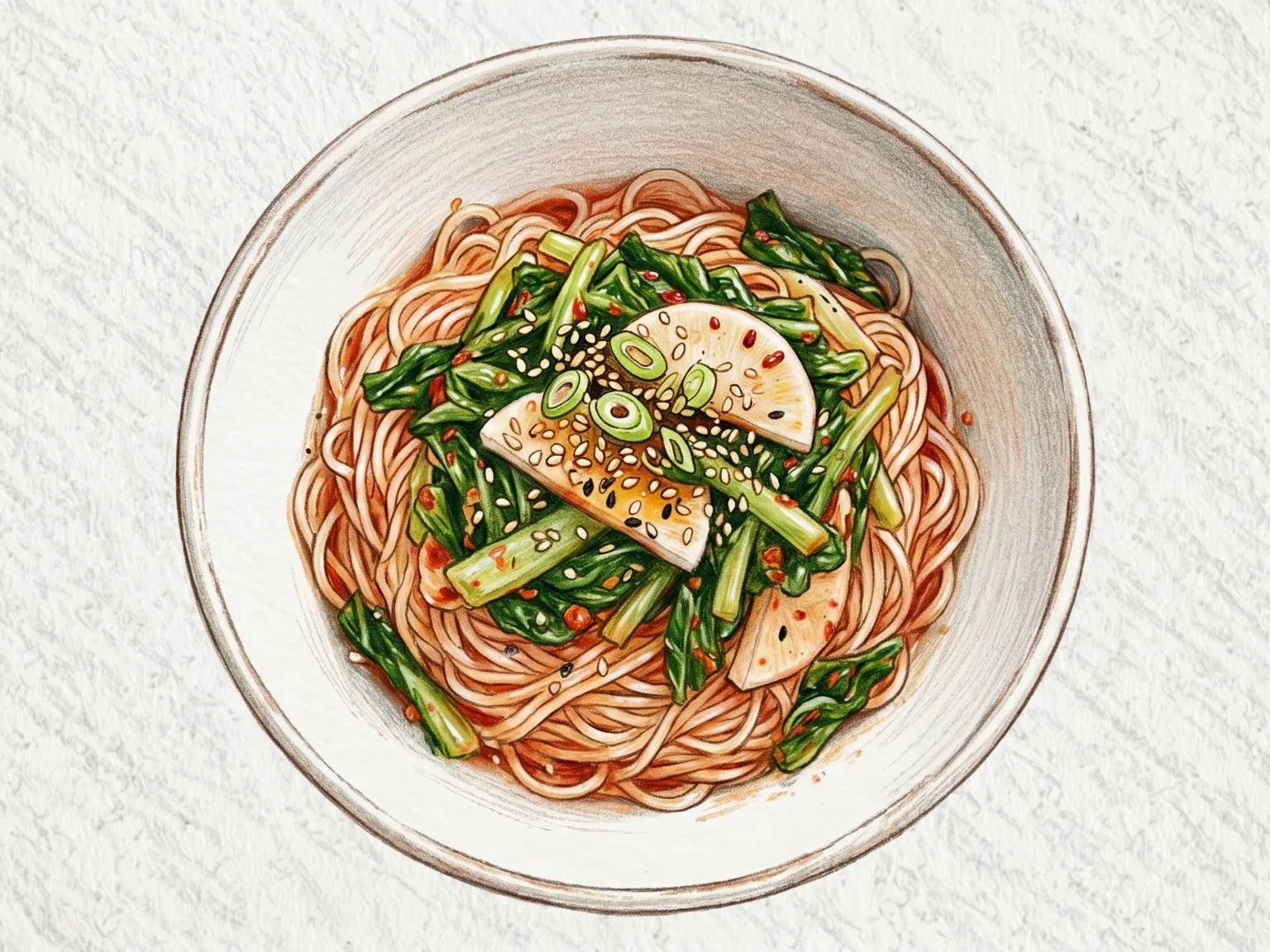
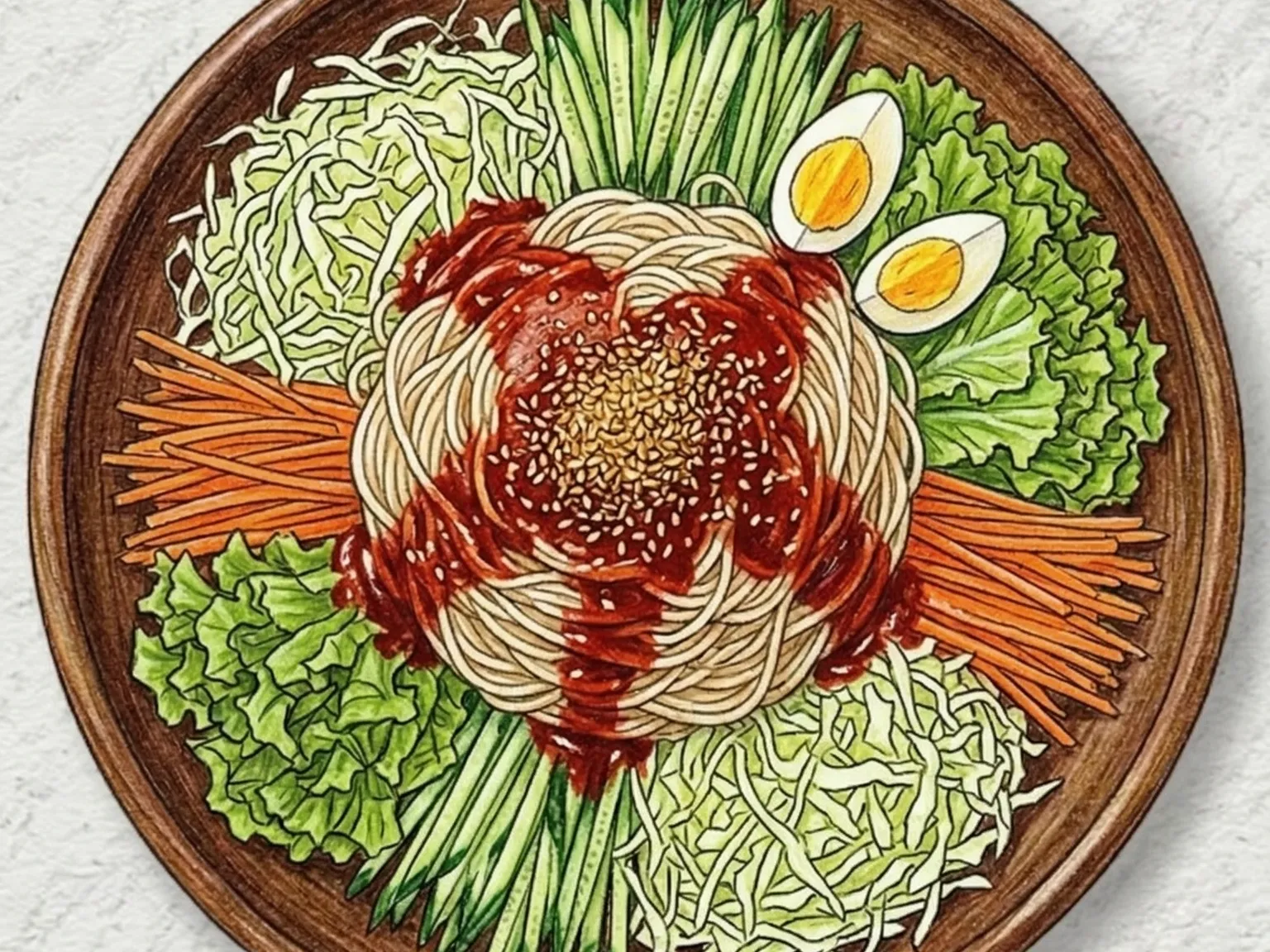
Bibim guksu is a chilled Korean noodle dish in which boiled and cold-rinsed somyeon wheat noodles are tossed in a sauce of gochujang, chili flakes, plum syrup, vinegar, soy sauce, and sesame oil. The heat from the gochujang, the sweetness of plum syrup, and the brightness of vinegar layer together into a multi-dimensional flavor in every bite. Rinsing the noodles thoroughly in cold water removes excess starch, giving them a bouncy chew and allowing the sauce to cling evenly. Torn lettuce and julienned cucumber folded in at the end contribute crunch and moisture that loosen the thick sauce just enough. A tablespoon of noodle cooking water can thin the sauce if it feels too heavy.

Korean Black Soybean Noodle Cup
Seori-kongguksu-cup serves chilled black soybean broth over thin somyeon noodles in a cup-sized portion. The broth is made by blending boiled black soybeans with milk and cold water, then straining for a silky-smooth consistency. Black soybeans give the broth a grayish hue and a deeper, more intensely nutty flavor compared to regular soybean versions. Sliced cucumber, cherry tomatoes, and ice cubes are placed on top, adding crunch and keeping the dish cold so the rich soybean flavor stays sharp.