Korean Soybean Drink (Creamy Blended Soybean Milk)
Quick answer
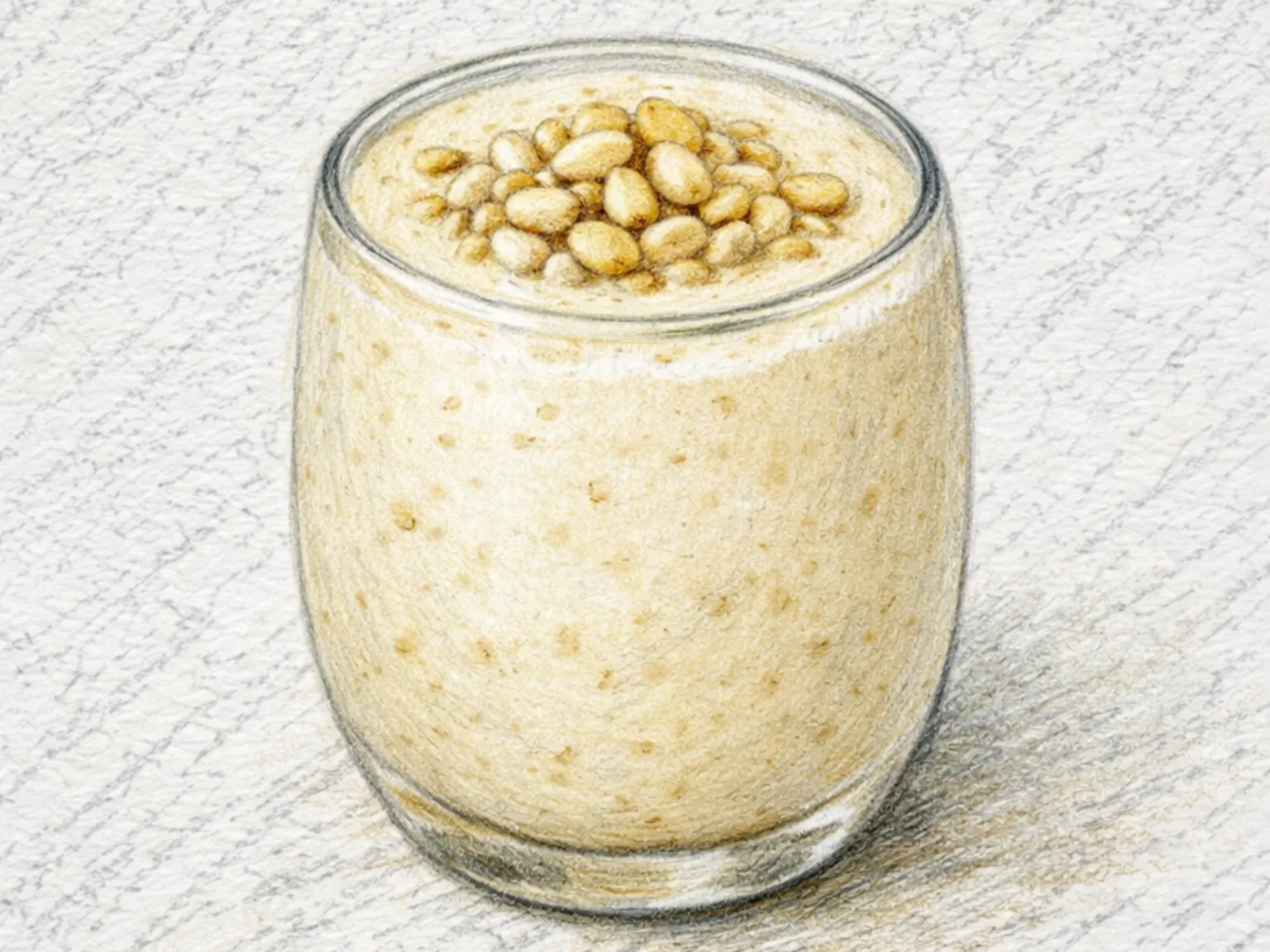
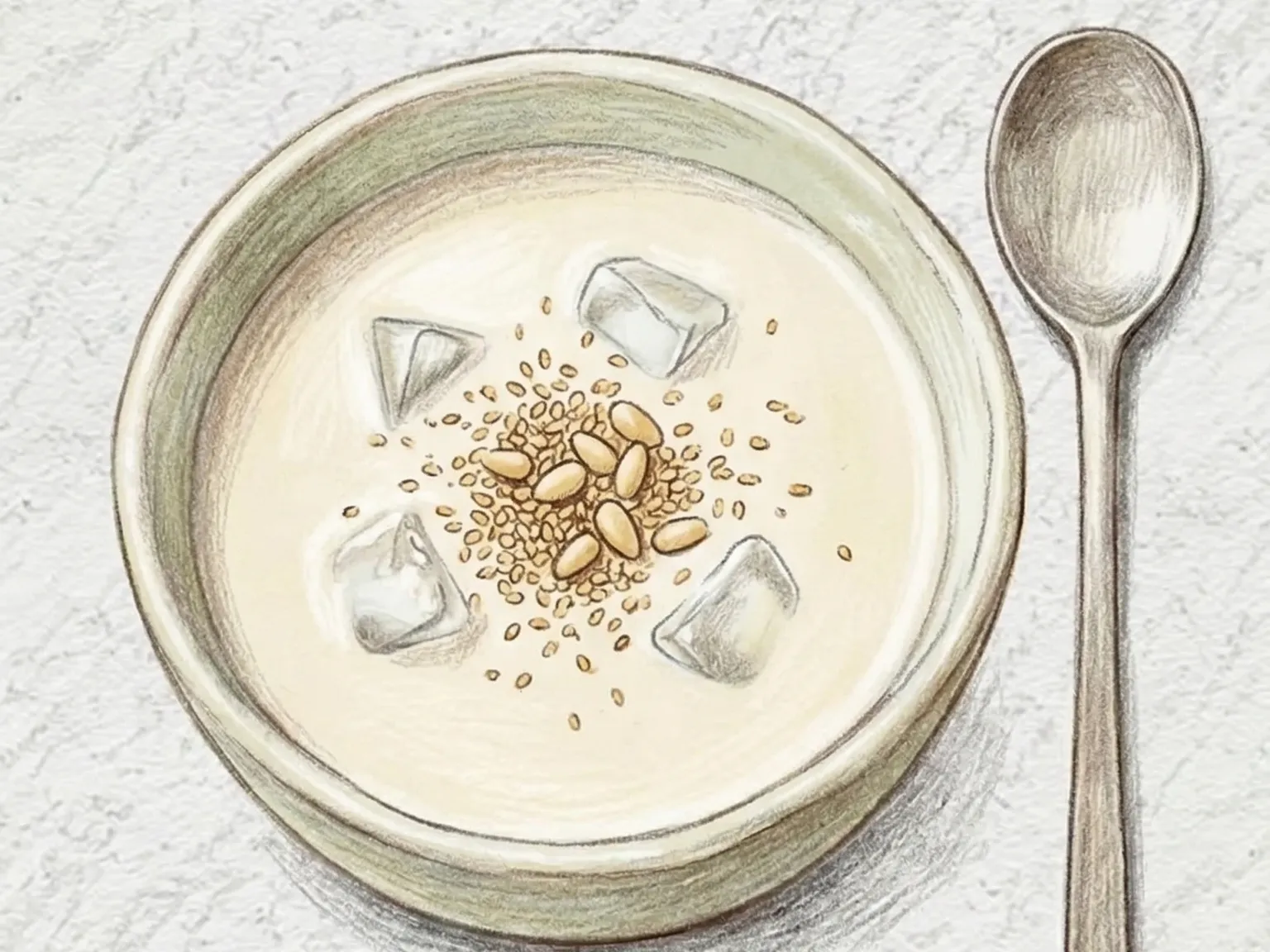
Kongmul is a traditional Korean soybean drink made by soaking dried white soybeans for at least eight hours, boiling them until fully tender, and blending them smooth tog...
What makes this special
- Rubbing away as much skin as possible after boiling removes the beany aroma that would otherwise overpower the clean soybean flavor.
- Peeling as much skin as possible removes beany odor before blending
- Toasted sesame and pine nuts ground together double the nuttiness depth
Key ingredients
Core cooking flow
- 1 Rinse 300g of dried white soybeans and soak them in a large bowl of water fo...
- 2 Rub the soaked beans gently between your hands to remove the outer skins and...
- 3 Place the beans in a pot of boiling water and cook over medium heat for exac...
Kongmul is a traditional Korean soybean drink made by soaking dried white soybeans for at least eight hours, boiling them until fully tender, and blending them smooth together with toasted sesame seeds and pine nuts. Straining the blended mixture through a fine cloth produces a silky, cream-colored liquid with a deep, layered nuttiness. A pinch of salt and a drizzle of honey clarify and sharpen the clean bean flavor without masking it. Served chilled over ice, it functions as a protein-rich meal replacement during hot months. Kongmul is also used as the cold broth for noodle dishes, where plain cooked noodles are served submerged in the chilled liquid. Unlike commercial soy milk, kongmul contains no additives and captures only the flavor of the bean itself.
Instructions
Read the steps as a cooking flow: prep, heat, seasoning, doneness control, and finish.
- 1Step
Rinse 300g of dried white soybeans and soak them in a large bowl of water for at least 8 hours until they expand and become fully hydrated.
- 2Step
Rub the soaked beans gently between your hands to remove the outer skins and rinse multiple times in cold water to eliminate any raw beany flavor profile.
- 3Control
Place the beans in a pot of boiling water and cook over medium heat for exactly 15 minutes, then drain immediately in a strainer to prevent overcooking.
- 4Heat
Combine the boiled beans, 1200ml of fresh water, 1tbsp of sesame seeds, and 15g of pine nuts in a blender and process until completely smooth and creamy.
- 5Season
Strain the blended milk through a fine sieve or cheesecloth to reach your preferred thickness, then season with 1tsp of salt and 1tbsp of honey until dissolved.
- 6Finish
Adjust the final thickness with the remaining water, chill thoroughly, and serve in cups over 200g of ice cubes for a refreshing and nutritious protein rich drink.
After the steps
Pick a recipe that fits this dish.
Continue with shared ingredients, meal pairings, or a similar method.
Recipes That Go Well With This
More Drinks →Based on shared ingredients and meal pairing
Schisandra Fruit Punch (Korean Cold-Brewed Berry Fruit Bowl)
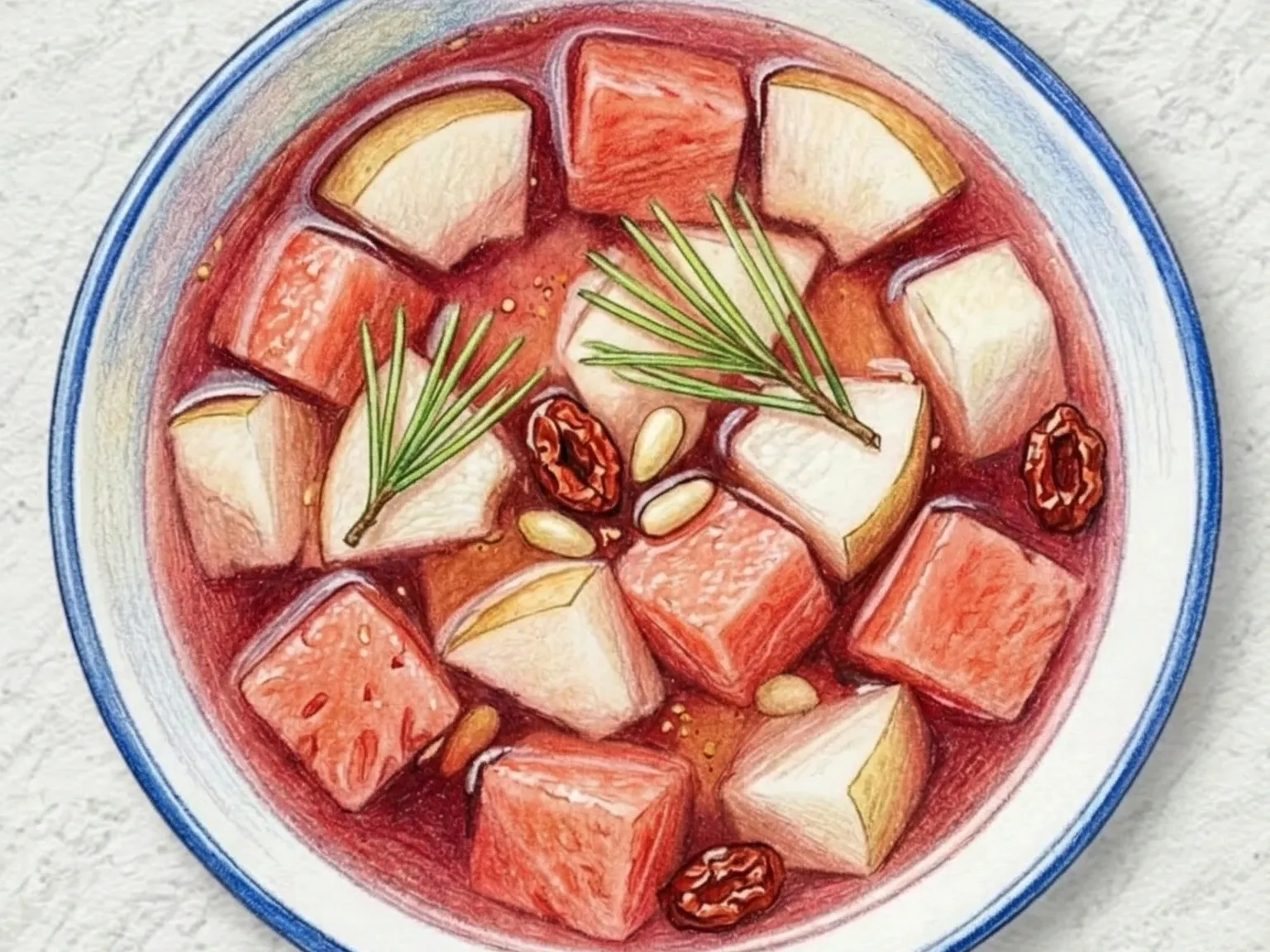
Omija hwachae is a traditional Korean fruit punch made by cold-infusing dried schisandra berries in water for at least two hours to extract a vivid red liquid, then sweetening with honey. Cold extraction is not optional: hot water pulls excess astringency from the berries and makes the liquid harsh rather than bright. Only a small portion of the infusion is gently warmed to dissolve the honey before the two are combined. Scooped balls of Korean pear and watermelon sit submerged in the chilled omija broth, so each spoonful delivers a crisp, juice-filled bite against the tart-sweet liquid. Pine nuts floated on the surface add a mild fatty richness that tempers the sharpness of the schisandra acid, and serving the hwachae over generous ice keeps every component at its most vivid.
Korean Schisandra Berry Tea
Omijacha is a traditional Korean cold-steeped tea made by soaking dried schisandra berries in cold water for at least eight hours to draw out their vivid crimson color and layered flavor. Hot water amplifies the astringent notes, making cold steeping in the refrigerator overnight the only correct method. By morning the liquid holds the interplay of sourness, sweetness, and subtle bitterness that gives schisandra its Korean name meaning five flavors, a reference to the full five tastes said to exist within a single berry. Traditional Korean medicine has long used the berry to replenish energy and support lung function, and the tea carries that heritage alongside its visual appeal. Once strained, honey and sugar are dissolved into the clear ruby liquid to soften the acidity without masking it. Thin pear slices and pine nuts floated in each cup add crisp fruit fragrance and a nutty counterpoint that complements the tartness. The tea is best consumed the same day it finishes steeping, when both the deep red color and the fragrance are at their peak. Oxidation clouds the color and dulls the aroma within a day.
Crispy Seaweed Chips
Crispy and healthy traditional seaweed bugak made at home.
Korean Traditional Spiced Honey Drink
Jehotang is a traditional Korean royal summer drink prepared by the court medical office and presented to the king as a cooling remedy against the summer heat. Cinnamon sticks, fresh ginger, and licorice root are simmered together over a low flame for an extended period to draw out the full depth of each spice, then the liquid is strained and blended with plum syrup and honey once it has cooled. The result is a chilled, aromatic drink that balances sweet and tart notes while layering the warmth of multiple spices underneath. Cinnamon and ginger were considered warming in nature even when drunk cold, believed to revive a body worn down by summer heat from the inside. A few floating pine nuts on top add a subtle nuttiness that rounds out each sip. Adjusting the amount of honey or water to account for the sweetness of the plum syrup allows the drink to be tuned to personal preference.
Serve with this
Gotgam Cream Cheese Roll (Dried Persimmon Rolls)
Gotgam cream cheese roll is a no-cook Korean dessert that requires nothing more than a knife, a bowl, and a refrigerator. Dried persimmons are slit open and flattened into thin sheets, each one acting as the outer wrapper. The filling is cream cheese mixed with honey and fresh lemon juice to balance its natural richness with acidity, and finely chopped walnuts are folded in throughout to add a crunchy, nutty element to every bite. The filling is spread across the opened persimmon, which is then rolled tightly and wrapped in plastic wrap. Twenty minutes in the refrigerator firms the roll enough to slice cleanly. Dipping the knife in warm water and wiping it dry before each cut produces the smoothest cross-sections. The finished slices reveal clearly defined layers: the chewy, caramel-sweet dried persimmon on the outside, the tangy cream cheese in the middle, and flecks of walnut distributed throughout. The combination makes it a natural pairing with wine or a polished addition to a traditional holiday table.
Korean Steamed Mandu (Pork and Tofu Dumplings Steamed in Half-Moon Shape)
Jjin mandu are Korean steamed dumplings filled with a mixture of ground pork, thoroughly squeezed tofu, soaked glass noodles, garlic chives, and onion, seasoned with soy sauce and sesame oil, then folded into crescent shapes and steamed for 12 to 15 minutes. The steaming method sets these apart from pan-fried or boiled dumplings in a fundamental way: no oil is added, so the wrapper stays moist and clings to the filling rather than crisping, and the filling's own flavors come through without the richness that frying introduces. Removing as much moisture as possible from the tofu before mixing it in is one of the most important steps - tofu that has not been squeezed dry will release liquid during steaming and make the filling watery and the wrapper soggy. Once the moisture is gone, the tofu blends into the pork and gives the filling a softer, more yielding texture than ground meat alone. Garlic chives provide a pungent, grassy bite that naturally cuts through the fat in the pork, while the glass noodles add a slippery, chewy element that contrasts with the tender meat. At the end of steaming, the wrappers turn translucent and the filling becomes just visible through the dough - a reliable sign that the dumplings are fully cooked. A dipping sauce of soy sauce, rice vinegar, and red chili flakes provides acidity and heat that lifts the mild, clean flavor of the filling.
Mugwort Red Bean Muffin (Korean Herbal Sweet Bean Muffin)
This muffin combines mugwort powder and cooked sweet red beans in a soft, fluffy batter that bridges Korean traditional flavors with Western baking technique. Mugwort contributes a distinctive herbal fragrance - faintly bitter, grassy, and deeply aromatic - that permeates the entire crumb and gives it a muted green hue. The red beans, folded in whole, add pockets of grainy sweetness that burst with each bite. Cake flour and baking powder keep the rise gentle and the texture light, while melted butter adds moisture without heaviness. The combination of mugwort and red bean is deeply familiar from Korean rice cakes, but baking it as a muffin introduces a crisp top and a pillowy interior that the steamed rice cake format cannot offer. Mixing the batter in no more than ten to twelve strokes prevents toughness - visible streaks of flour are acceptable and even preferred over a smooth, overworked batter. The beans should be folded in last with a gentle spatula motion to preserve their shape. These muffins pair naturally with grain-based lattes, where the roasted notes in the drink echo the earthy quality of the mugwort.
Similar recipes
Korean Melon Smoothie (Chamoe Korean Melon Yogurt Blend)
Chamoe smoothie blends peeled and seeded Korean melon flesh with plain yogurt, milk, honey, lemon juice, and a pinch of salt. The melon's clean, juicy sweetness meets the yogurt's tanginess to create a refreshing, well-rounded flavor, while the lemon brightens the finish and prevents the drink from tasting flat. The pinch of salt is a small but functional addition that amplifies sweetness across the whole glass. Ice goes in only at the final thirty seconds of blending - adding it earlier dilutes the flavor and produces a watery consistency. When the melon is particularly sweet, halving the honey maintains balance without masking the fruit's natural character. The smoothie should be poured immediately into a chilled glass so the fresh melon fragrance does not fade before serving.
Korean Wild Soy Grain Smoothie
Deulkkong misut smoothie is a Korean grain-based drink made by blending wild soybean powder and roasted brown rice powder with milk, plain yogurt, and banana. Mixing the dry powders into the liquid first prevents clumps from forming, and briefly freezing the banana beforehand creates a thick, shake-like consistency without any added thickeners. Wild soybean powder contributes a deep, nutty soybean flavor, and roasted brown rice powder adds a toasted, grainy undertone on the finish; the two powders have distinct characters that reinforce each other. Honey adjusts the sweetness, and a pinch of salt sharpens the grain flavors noticeably. Wild soybeans are higher in protein and isoflavones than common cultivated soybeans, making this smoothie substantial enough to serve as a full breakfast.
Sweet Rice Punch (Traditional Korean Malted Barley Grain Drink)
Sikhye is a traditional Korean sweet rice punch made by steeping malted barley powder in lukewarm water, straining the liquid, adding cooked rice, and holding the mixture at around 60 degrees Celsius for one hour until the rice grains float to the surface. The amylase enzymes in the malt break down the rice starch, producing a distinctly malty, clear sweetness with grain depth that no sugar alone can replicate. Only the clear top liquid is used after settling -- discarding the sediment keeps the punch from turning cloudy. Simmering with sugar and sliced ginger for 20 minutes rounds the sweetness and adds a gentle, spiced warmth to the finish. Served well chilled with the reserved floating rice grains and pine nuts on top, the cold temperature sharpens the malty aroma and makes each sip crisp. Temperature control during the steeping stage is critical: if the mixture exceeds 70 degrees Celsius, the amylase denatures and the grains will not float, so keeping a steady 60-degree hold determines whether the preparation succeeds.