Korean Beef Brisket and Bean Sprout Stir-fry
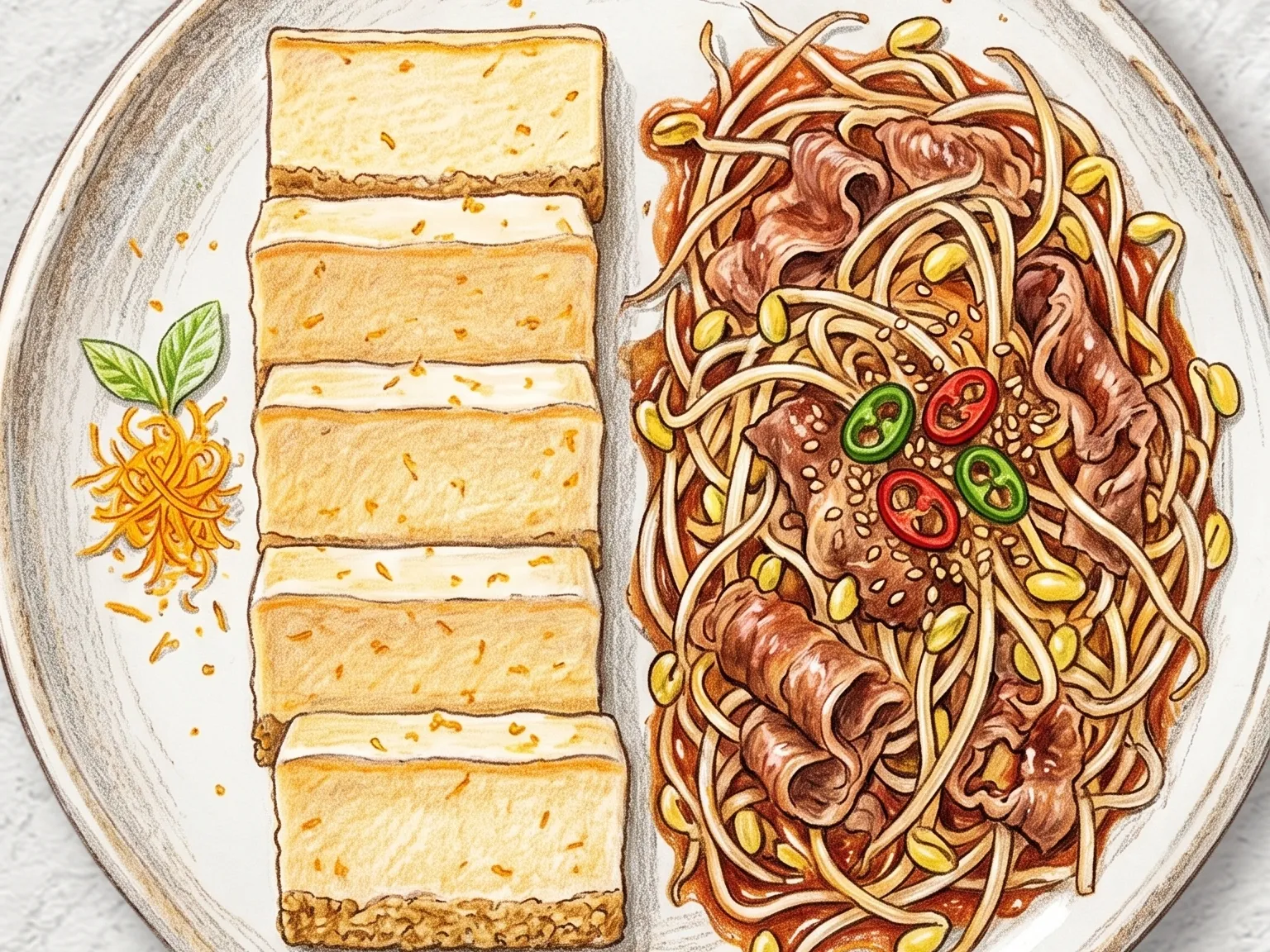
Kongnamul chadol bokkeum starts by rendering thin beef brisket slices over high heat to release their fat, then uses that fat as the cooking medium for bean sprouts and a gochujang-gochugaru sauce. The brisket's chewy bite contrasts with the sprouts' crispness, and the rendered beef fat merges with the chili paste to create a rich base without added oil. Moisture released from the bean sprouts thins the sauce just enough to coat everything evenly. Sesame oil finishes the dish, which is a common choice for a drinking snack or late-night meal.
Adjust Servings
Instructions
- 1
Rinse bean sprouts and drain well; slice green onion diagonally.
- 2
Mix gochujang, chili flakes, soy sauce, and minced garlic to make a sauce.
- 3
Stir-fry brisket in a hot pan for 1-2 minutes to render some fat.
- 4
Add bean sprouts and sauce, then stir-fry over high heat for 3 minutes.
- 5
Add green onion and cook 1 more minute for aroma.
- 6
Turn off heat, drizzle sesame oil, toss briefly, and serve immediately.
As an Amazon Associate, we may earn from qualifying purchases.
Tips
Nutrition (per serving)
More Recipes

Korean Steamed Beef Brisket and Bean Sprouts
Thin-sliced marbled beef brisket is layered over bean sprouts and steamed with a simple soy sauce, garlic, and sesame oil dressing. As the brisket cooks, its rendered fat bastes the sprouts below, infusing them with beefy richness. The bean sprouts stay crunchy beneath the wilted onion and chive topping. Lightly sweetened with a touch of sugar, this is a quick, minimal-ingredient side dish where the quality of the beef brisket does most of the work.

Korean Beef and Bean Sprout Stir-fry
Sukju-sogogi-bokkeum stir-fries thinly sliced lean beef and mung bean sprouts in soy sauce over high heat. The beef goes into a well-heated pan first to develop wok hei, then the sprouts are added for just one to two minutes to keep their crunch and moisture. Seasoning stays minimal with soy sauce, black pepper, and a finish of sesame oil, letting the ingredients speak for themselves. The result is a light stir-fry where the smoky sear of the beef meets the cool, watery snap of the sprouts.

Korean Stir-Fried Zucchini and Beef Brisket with Doenjang
This dish pairs two everyday Korean ingredients - thinly sliced beef brisket and young zucchini - in a doenjang-based stir-fry that comes together in under fifteen minutes. Brisket goes into the hot pan first, rendering its fat into a cooking medium that carries the fermented paste's flavor into the vegetables. The doenjang and soup soy sauce create a funky, salty glaze that clings to each half-moon of zucchini as it softens but keeps a slight resistance at the center. Cheongyang chili sliced in at the end adds a sharp, clean heat that lifts the heaviness of the beef fat. A final drizzle of perilla oil off-heat gives an herbal finish. It is a weeknight banchan that packs enough protein to double as a main course over steamed rice.

Korean Selleri Sogogi Bokkeum (Celery Beef Stir-fry)
Selleri sogogi-bokkeum stir-fries soy-marinated lean beef round with celery, onion, and bell pepper over high heat. The beef is seared first for about two and a half minutes then set aside, and the vegetables are cooked separately in the same pan to keep them crisp before everything is combined. Oyster sauce and soy sauce give the beef a deep umami character, while celery's herbal freshness and firm crunch lighten the overall dish. Adding celery leaves at the very end intensifies the aromatic, almost grassy fragrance.

Korean Beef Brisket Jjolmyeon
Seared beef brisket crowns a bowl of chewy jjolmyeon noodles dressed in a spicy gochujang sauce. The brisket is cooked fast over high heat so the outside crisps while the marbled fat inside renders just enough to leave each slice rich and fragrant. That beefy aroma mingles with the sweet-spicy dressing, elevating what is already a bold noodle dish. Jjolmyeon's signature rubbery chew traps sauce in every crevice, ensuring consistent flavor from the first bite to the last. Julienned cucumber and a halved boiled egg are the standard accompaniments, adding cool crunch and mild richness. Bean sprouts or perilla leaves can be tossed in for extra texture. The dish works equally well as a refreshing summer meal or a satisfying late-night bowl.

Korean Beef Brisket & Water Parsley Chili Stew
Rich, marbled beef brisket melts into a fiery gochujang broth while fresh water parsley cuts through the heat with its herbal brightness. The brisket's marbling melts into the broth, tempering the heat with a fatty richness, while the water parsley adds an herbal freshness that cuts through the spice. Chunks of potato and firm tofu absorb the red-tinged broth, making the stew both filling and flavorful.