Korean Bean Sprout Dried Pollock Soup
Quick answer
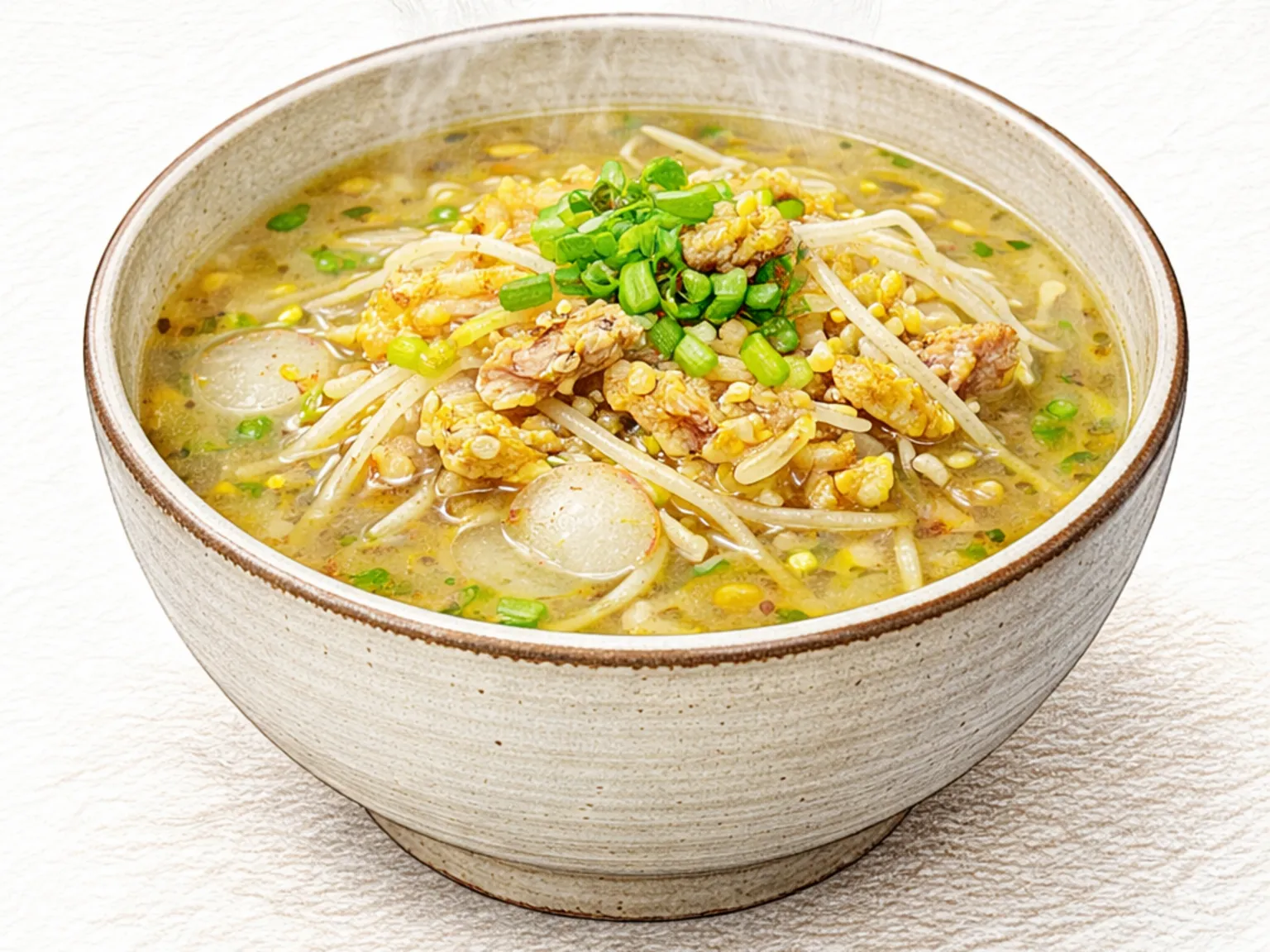
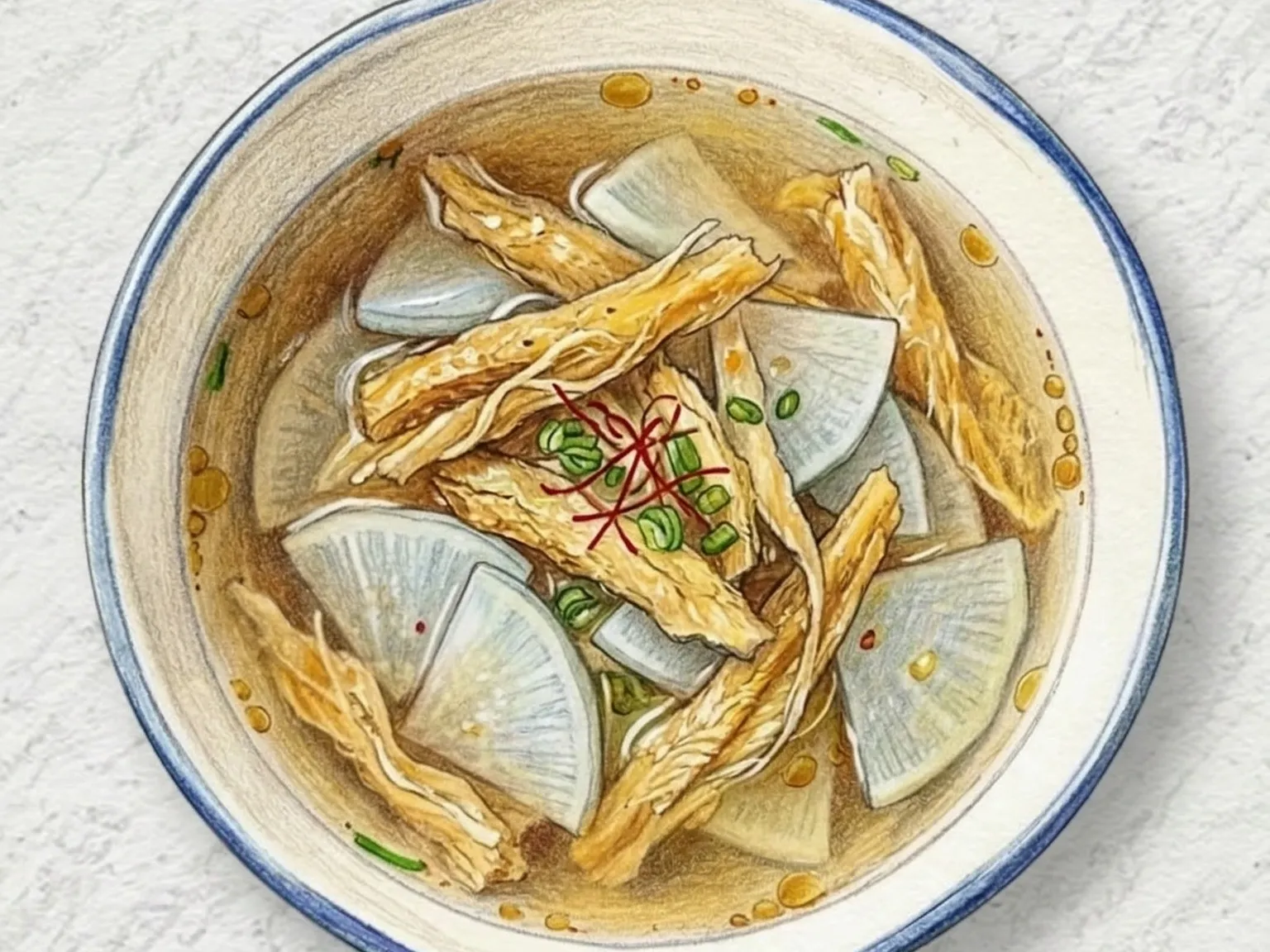
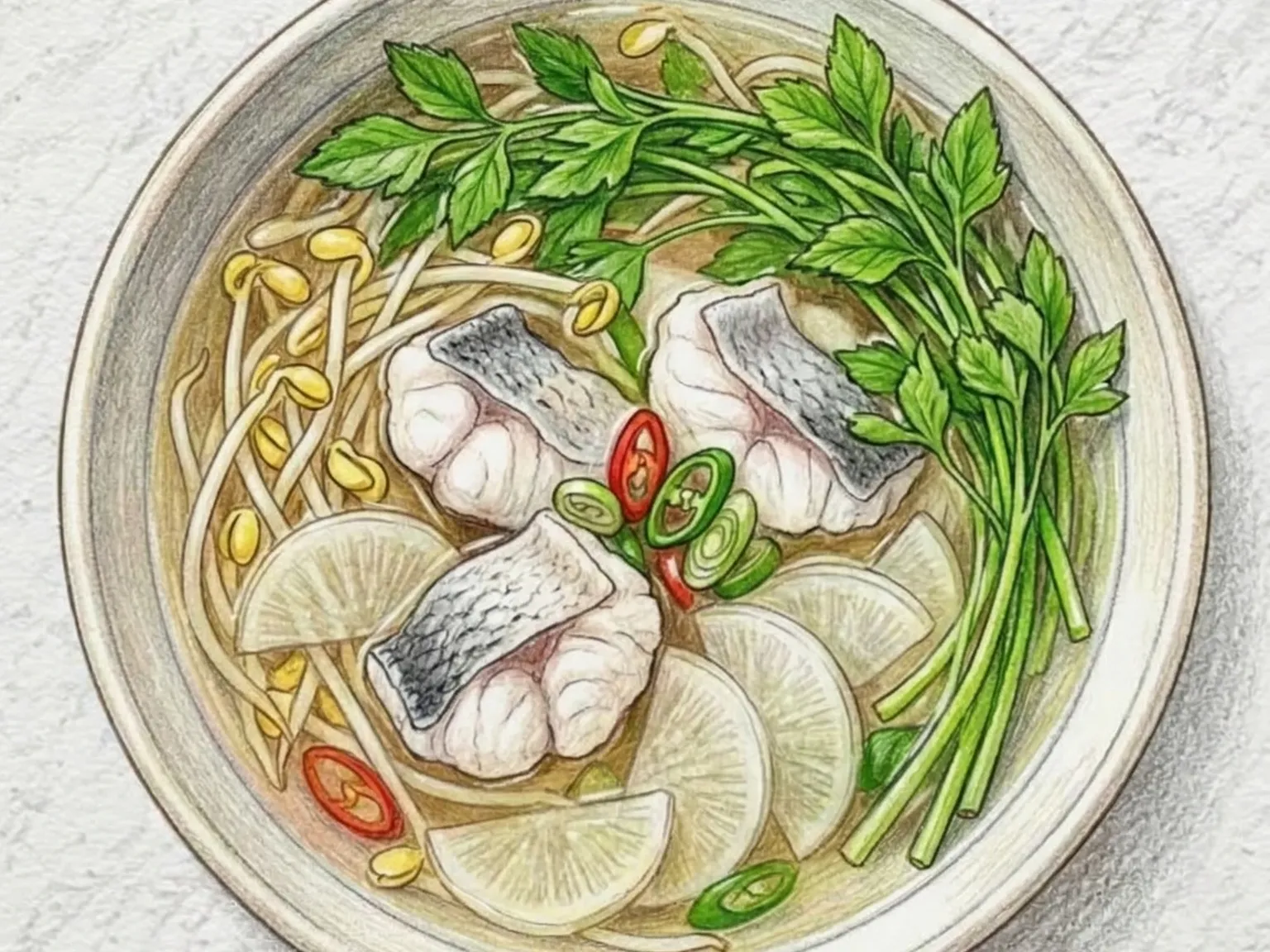
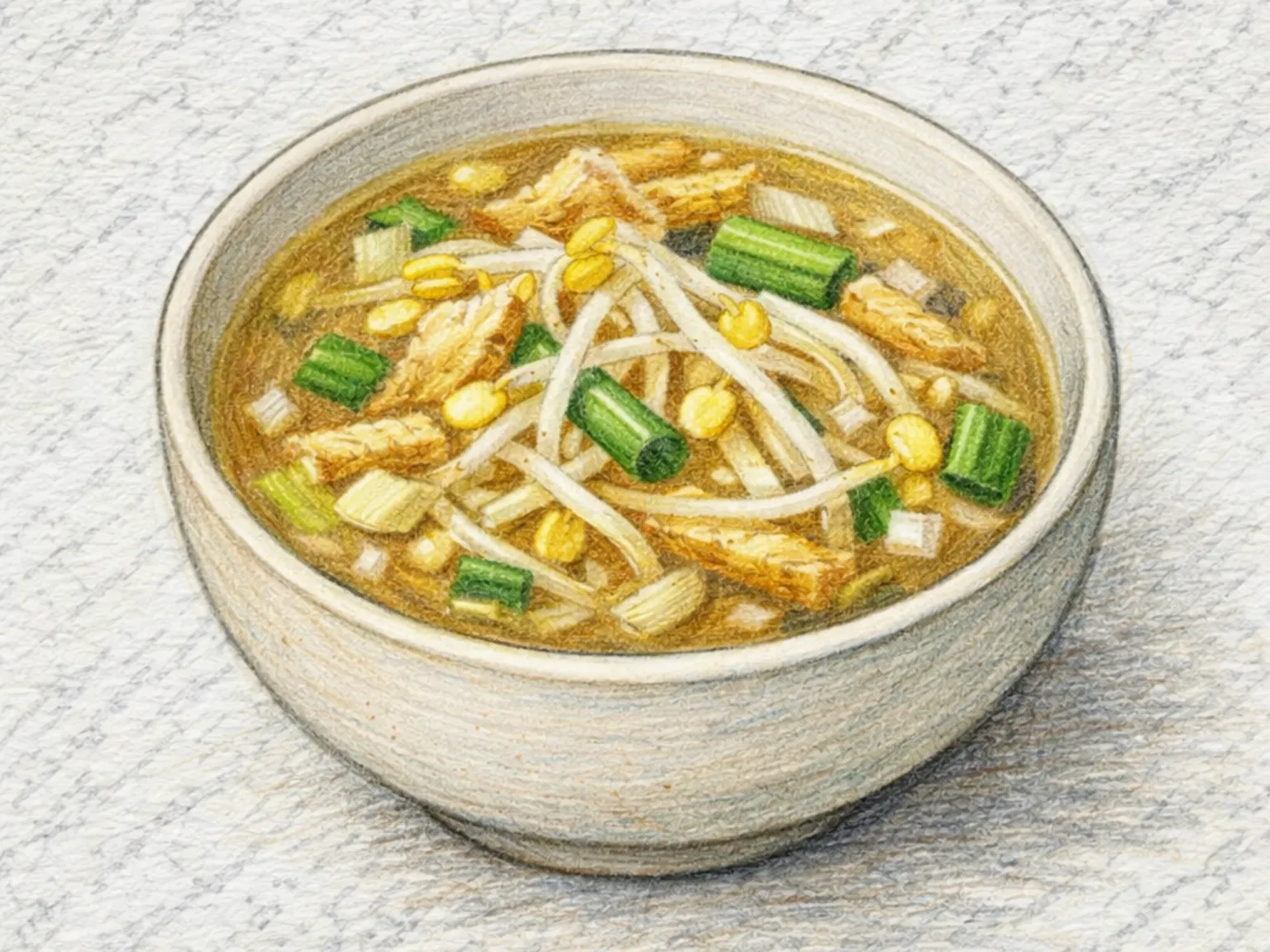
Kongnamul-hwangtae-guk pairs dried pollock strips with soybean sprouts in a clear broth that is widely eaten as a morning-after remedy.
What makes this special
- Kongnamul-hwangtae-guk highlights dried pollock and soybean sprouts in a restorative clear broth.
- Broth turning milky-white signals pollock protein fully dissolved
- Pollock rinsed in cold water 1 minute only to preserve chewy texture
Key ingredients
Core cooking flow
- 1 Rinse 60 g dried pollock strips in cold water for just 1 minute, shaking off grit, then squeeze firmly.
- 2 Slice 120 g radish thinly and cut 1 green onion into small rounds, keeping t...
- 3 Warm 1 teaspoon sesame oil in a pot over medium heat.
Kongnamul-hwangtae-guk pairs dried pollock strips with soybean sprouts in a clear broth that is widely eaten as a morning-after remedy. The pollock is toasted briefly in sesame oil to coax out a nutty, savory aroma before radish slices and water are added for ten minutes of simmering, which forms the foundational stock. Rinsing the pollock quickly in cold water rather than soaking it for a long time keeps the strands pleasantly chewy rather than soft and falling apart. Bean sprouts and minced garlic are added uncovered for five more minutes: leaving the lid off is essential, as the open steam carry away the raw beany smell while preserving the sprouts' characteristic crunch. Soup soy sauce and a pinch of salt finish the seasoning, and sliced green onion goes on just before serving. The broth turns a milky, pale white as the pollock proteins leach into the liquid, which is the visual marker of a properly cooked bowl.
Instructions
Read the steps as a cooking flow: prep, heat, seasoning, doneness control, and finish.
- 1Step
Rinse 60 g dried pollock strips in cold water for just 1 minute, shaking off grit, then squeeze firmly.
Do not soak them longer, or the strands will soften and lose their pleasantly chewy texture.
- 2Prep
Slice 120 g radish thinly and cut 1 green onion into small rounds, keeping the green onion aside for the end.
Rinse 180 g bean sprouts lightly and drain so they do not dilute the soup.
- 3Control
Warm 1 teaspoon sesame oil in a pot over medium heat.
Add the pollock and radish, then stir-fry for 1 to 2 minutes until the oil smells nutty and the pollock edges look lightly glossy.
- 4Control
Pour in 900 ml water and bring it to a boil over high heat.
Once boiling, lower to medium heat and simmer for 10 minutes, checking that the broth turns pale and slightly milky.
- 5Finish
Add the bean sprouts and 1 tablespoon minced garlic, then boil uncovered for 5 minutes.
Keep the lid off so the raw beany smell escapes, and avoid rough stirring to preserve crunch.
- 6Finish
Season with 1.5 tablespoons soup soy sauce and 0.3 teaspoon salt, tasting before adding more.
Add the sliced green onion, simmer 1 more minute, and serve hot while the sprouts remain crisp.
After the steps
Pick a recipe that fits this dish.
Continue with shared ingredients, meal pairings, or a similar method.
Recipes That Go Well With This
More Soups →Based on shared ingredients and meal pairing
Korean Dried Pollock Bean Sprout Soup Rice
Hwangtae kongnamul gukbap is a hangover-recovery rice soup built on a broth of stir-fried dried pollock strips, bean sprouts, and radish. The dried pollock is soaked briefly in water to restore some moisture, then stir-fried in sesame oil. The frying step drives off any fishiness and releases a deep, toasted aroma that becomes the flavor backbone of the entire broth. Without this step, the soup tastes thin and vaguely fishy; with it, the broth has a satisfying nuttiness even before any other ingredients are added. Sliced radish goes into the water next and simmers until it softens and releases its natural sweetness into the liquid. Bean sprouts go in after the radish, and here a small detail matters: the lid stays on throughout the bean sprout cooking. If the lid is removed while the sprouts cook, their distinctive raw smell rises with the steam and lingers in the broth. Keeping the lid sealed lets the sprouts cook in their own steam and the smell dissipates harmlessly. Soup soy sauce seasons the broth with a clean saltiness that does not darken the liquid as much as regular soy sauce would, keeping the broth pale and clear-looking. Sliced green onion goes in at the very end for a fresh accent. The soup is poured over a bowl of rice to serve.
Korean Dried Pollock Potato Soup
Hwangtae-gamja-guk is a clear Korean soup built around dried pollock strips that have been wind-dried and then sauteed in sesame oil before any liquid is added. That initial stir-fry step is what separates this soup from simpler broth dishes: the heat releases a toasty, nutty fragrance from the pollock that permeates the entire pot and melds with the anchovy-kelp stock poured in afterward. Potato slices simmer alongside radish, and as they soften their edges gradually break down, giving the broth a mild, natural body without the use of starch or thickener. Radish contributes a clean, cooling sweetness that tempers the concentrated umami of the dried pollock. Soup soy sauce and minced garlic handle the seasoning, keeping the flavor profile clear and uncluttered. The pollock itself stays pleasantly chewy even after prolonged simmering, providing a protein-rich bite that makes the bowl genuinely filling. This soup is a fixture on Korean breakfast tables, valued for its ability to settle the stomach and restore energy.
Korean Spinach Soybean Paste Porridge
Sigeumchi doenjang-juk is a Korean porridge built on the deep, fermented savoriness of doenjang and the clean, mild green flavor of finely chopped spinach. Soaked rice is toasted in sesame oil first, which coats each grain with a nutty warmth before anchovy stock is poured in. Doenjang and minced garlic are stirred in early in the cooking process, giving the porridge time to develop a rich, rounded base flavor as the grains slowly break down into a thick, spoonable consistency. Spinach goes in at the very end and stays in the heat for no longer than thirty seconds, which is exactly enough time for the leaves to wilt while keeping their bright color and delicate grassy aroma intact. The fermented paste wraps around the slight bitterness naturally present in raw spinach, smoothing it out so the finished bowl tastes clean rather than sharp. This is a porridge that works as a restorative meal when the body needs something gentle, and it doubles just as well as a light, warming breakfast that does not demand much from the stomach in the morning.
Korean Dried Pollock Hangover Soup
Buk-eo Haejang-guk is a traditional Korean soup frequently consumed in the morning to soothe the digestive system. It relies on dried pollock strips as the primary ingredient. Before beginning the cooking process, the dried pollock requires a brief soaking period in cold water lasting approximately five minutes. This step is necessary to soften the texture while ensuring that the inherent flavors of the fish are not washed away. Keeping the soaking time to a strict minimum prevents the fish from becoming overly soft or weakening the resulting broth. The prepared fish is first stir-fried in sesame oil. This initial sautéing step functions to neutralize any lingering fishy aromas and establishes a toasted, nutty foundation for the liquid. Once the fish is fragrant, soybean sprouts and minced garlic are added to the pot to simmer for fifteen minutes. The addition of soybean sprouts introduces a clean and refreshing quality to the soup. For seasoning, soup soy sauce is used to achieve a clear and balanced flavor profile. Just before the pot is removed from the heat, a thin stream of whisked egg is poured into the simmering liquid along with sliced green onions. People preferring a more intense savory profile can mix a small spoonful of fermented soybean paste, known as doenjang, into the base to deepen the flavor. The final result is a mild soup that has long been used as a restorative morning-after remedy in Korea.
Serve with this
Korean Braised Tofu with Shrimp
Dubu-saeu-jorim pairs pan-seared tofu with whole shrimp in a soy-based braising sauce, stepping well beyond the usual tofu-only preparations that appear in everyday banchan. The tofu is seared first until golden on both sides to develop a lightly firm crust that resists breaking apart during the braising stage, then set aside while shrimp cook briefly in the same pan, picking up the fond left by the tofu. The braising liquid -- soy sauce, minced garlic, sugar, cooking wine, and a touch of gochugaru -- goes in next, and both proteins return to the pan to simmer together for five minutes over medium heat. The shrimp release their marine sweetness into the sauce as they tighten and curl, and the porous interior of the tofu absorbs that combined soy-seafood flavor throughout each cube. Adjusting the simmer time controls the final sauce concentration: shorter for a looser, silkier coat; longer for a more intensely reduced glaze. The textural pairing is the dish's central appeal -- yielding, custardy tofu against the springy, snapping bite of the shrimp. Adding sliced green onion or fresh chili introduces another layer of fragrance, and scaled up in quantity, the dish works just as well spooned over steamed rice as a satisfying one-bowl meal.
Korean Fresh Eggplant Kimchi
Gaji kimchi is a fresh eggplant kimchi that requires no fermentation and can be eaten immediately after preparation. Eggplant is steamed until it becomes pliable and soft throughout, then torn by hand along the grain rather than cut with a knife. Tearing along the natural fibers creates a rough, open surface that allows the seasoning of gochugaru, fish sauce, garlic, and sesame oil to penetrate deep into the flesh rather than merely coating the outside. The result is an even distribution of spicy, salty flavor throughout every bite rather than concentrated only at the surface. Scallions folded in at the end add a fresh, sharp lift, and toasted sesame seeds provide a nutty, fragrant finish. Because no fermentation is involved, this kimchi is best suited to seasons when eggplant is at its peak, particularly summer, when the vegetable is widely available and a quick, no-cook banchan is most welcome. Piled over a bowl of cold leftover rice and mixed together, the seasoning soaks into the grains while the soft steamed eggplant adds body, making it a satisfying one-bowl meal without needing additional soup or side dishes.
Korean Dried Radish Greens Pancake
Boiled dried radish greens are combined with doenjang and pan-fried into a dense, rustic jeon with deep fermented character. The fibrous texture of the radish greens gives the pancake a satisfying chew, and the soybean paste saturates the batter so thoroughly that no dipping sauce is necessary. Buckwheat flour adds an earthy coarseness that suits the greens well. Cheongyang chili provides a spicy accent throughout. Minced garlic benefits from a brief saute in oil before being mixed into the batter-the raw edge cooks off and the garlic's savory depth integrates fully into the finished pancake. Cooking over low heat lets the inside set without burning the outside, producing a crisp surface and a tender, flavorful center.
Similar recipes
Korean Dried Pollack Egg Soup
Hwangtae-gyeran-guk is a Korean clear soup that pairs dried pollock with silken egg threads in the same bowl. Toasting the pollock strips in sesame oil at the start is what gives the broth its foundation: the oil absorbs the nutty, roasted fragrance and carries it throughout the liquid as it simmers. Radish and green onion add a clean sweetness and mild sharpness, and once the broth is seasoned with soup soy sauce and garlic, beaten egg is streamed in slowly to form wispy, floating ribbons. The chewy pollock and the soft egg offer a changing texture from one spoonful to the next. Hwangtae is produced on outdoor racks in the Gangwon-do mountains through a winter-long cycle of freezing and thawing that breaks down the protein into a more digestible form and increases the amino acid content. In Korean households this soup appears at both the breakfast table and the post-drinking recovery meal, favored because the protein-rich pollock is gentle on a tired stomach and the whole pot comes together in under twenty minutes.
Kongnamul-guk (Bean Sprout Anchovy Soup)
Kongnamul-guk is a clear Korean soup built on bean sprouts, water, soup soy sauce, and garlic, and its central technique is boiling the sprouts with the lid firmly closed for seven minutes. The reason behind the closed lid is a long-standing Korean kitchen belief: the compounds responsible for the raw, beany smell in soybean sprouts are volatile, and if the lid is left open, they do not escape with the steam but instead condense back into the pot. Whether the chemistry fully supports this, keeping the lid closed has been the standard method for generations and consistently produces a clean-tasting broth. Green onion goes in at the very end to keep its bright, mild bite without overcooking. Trimming the fine root tails from each sprout improves the texture and presentation, though it does not change the flavor and is often skipped on weekdays. Adding chili flakes and a cracked egg transforms the soup into a spicy, restorative hangover version, and a handful of clams deepens the broth with extra umami. From start to finish the soup takes about fifteen minutes, which makes it one of the fastest soups in the Korean repertoire, and the directness of its flavor -- clean, cool, and vegetal -- is exactly what makes it worth returning to.
Korean Dried Pollock Napa Stew
This stew pairs dried pollock strips with napa cabbage for a mild, comforting bowl built on clean, unhurried flavors. The pollock releases a savory, slightly sweet depth into the broth as it rehydrates during cooking. Soaking the pollock briefly in water before adding it loosens the stiff fibers and helps the broth extract faster. The cabbage softens slowly and adds its own natural sweetness, while firm tofu and zucchini round out the ingredients with body and texture. A touch of perilla oil lends a nutty fragrance to the finished bowl. Seasoned simply with soup soy sauce, it works well as a hangover remedy or a light weekday meal that settles the stomach.