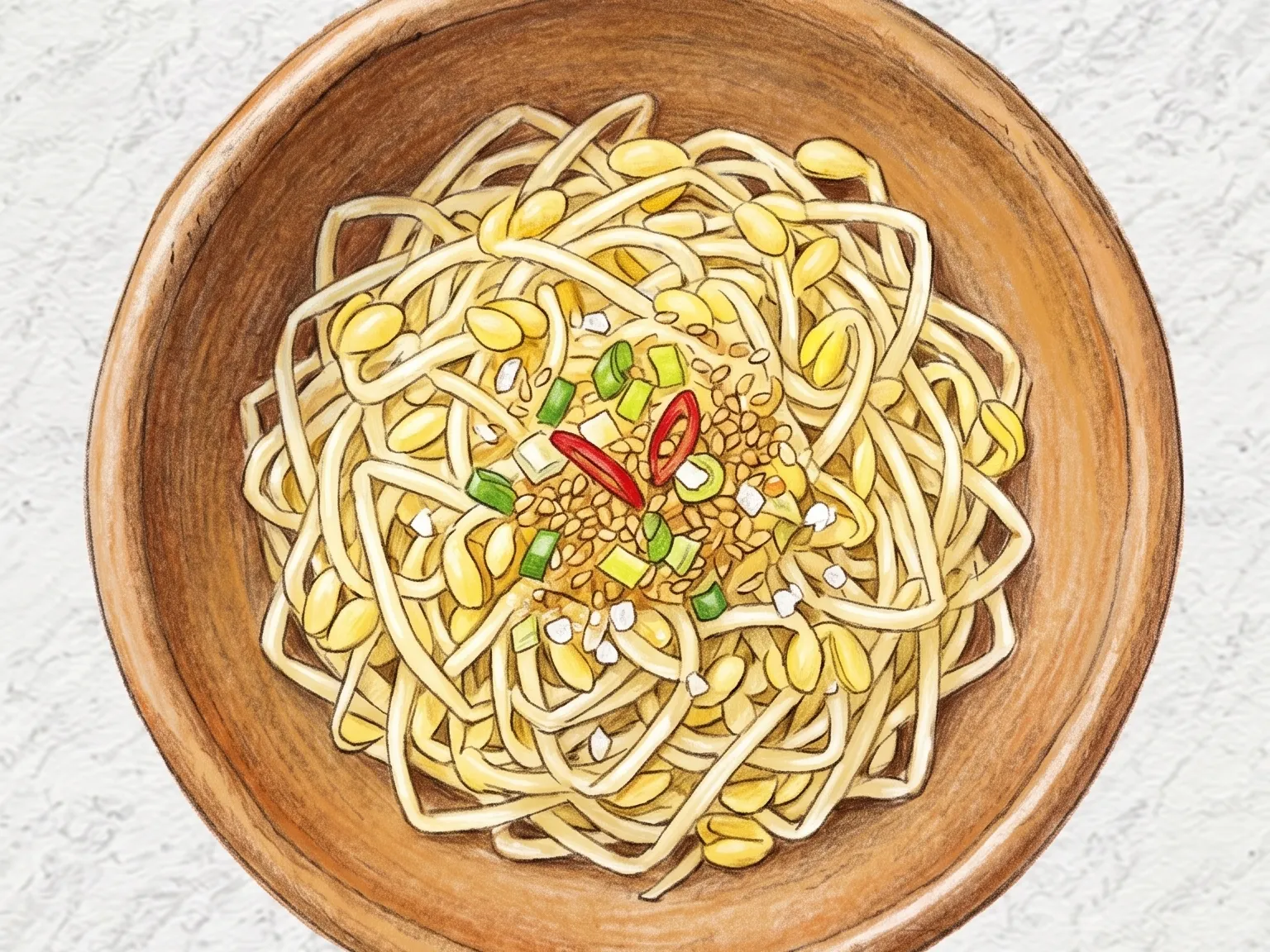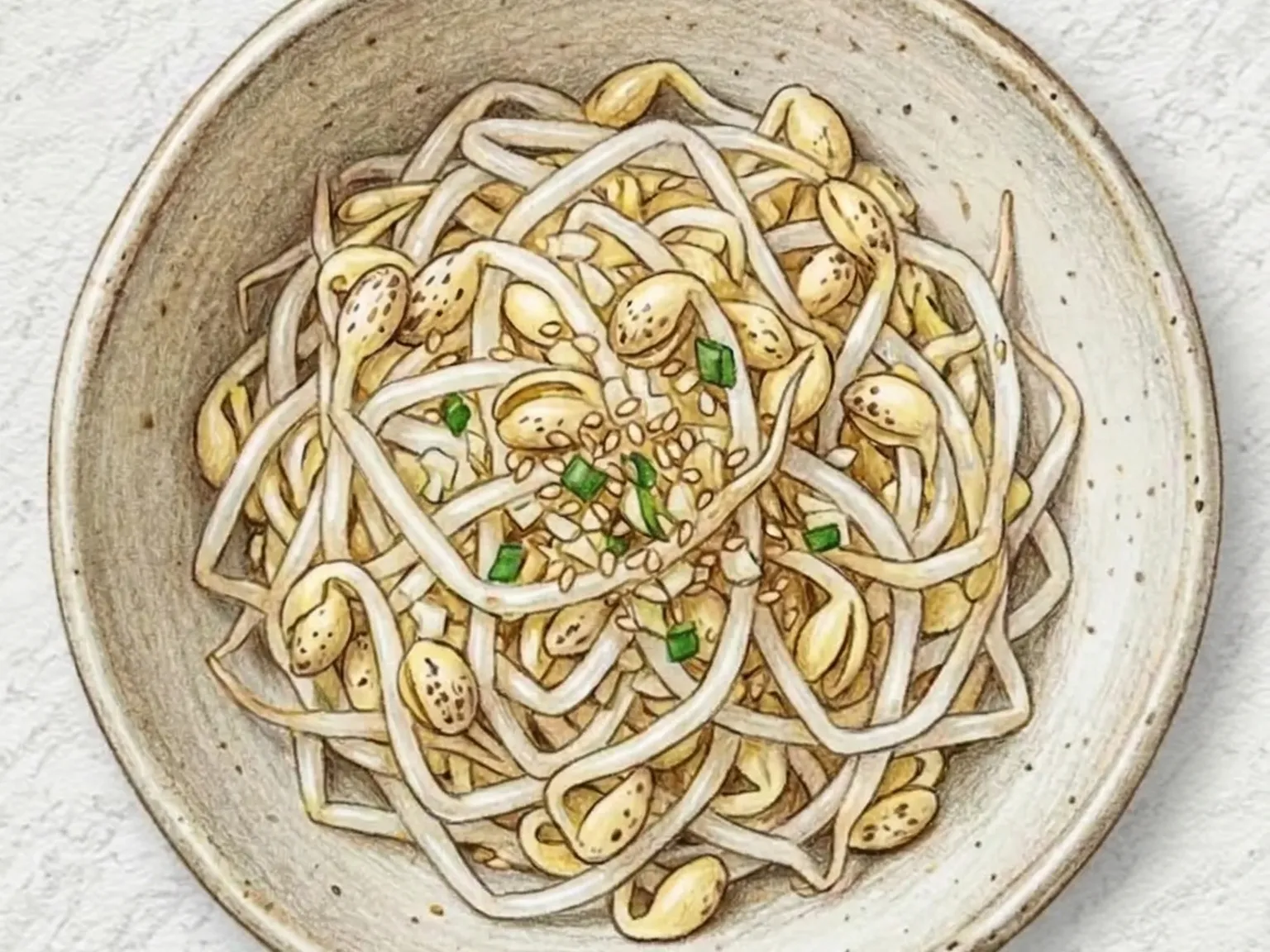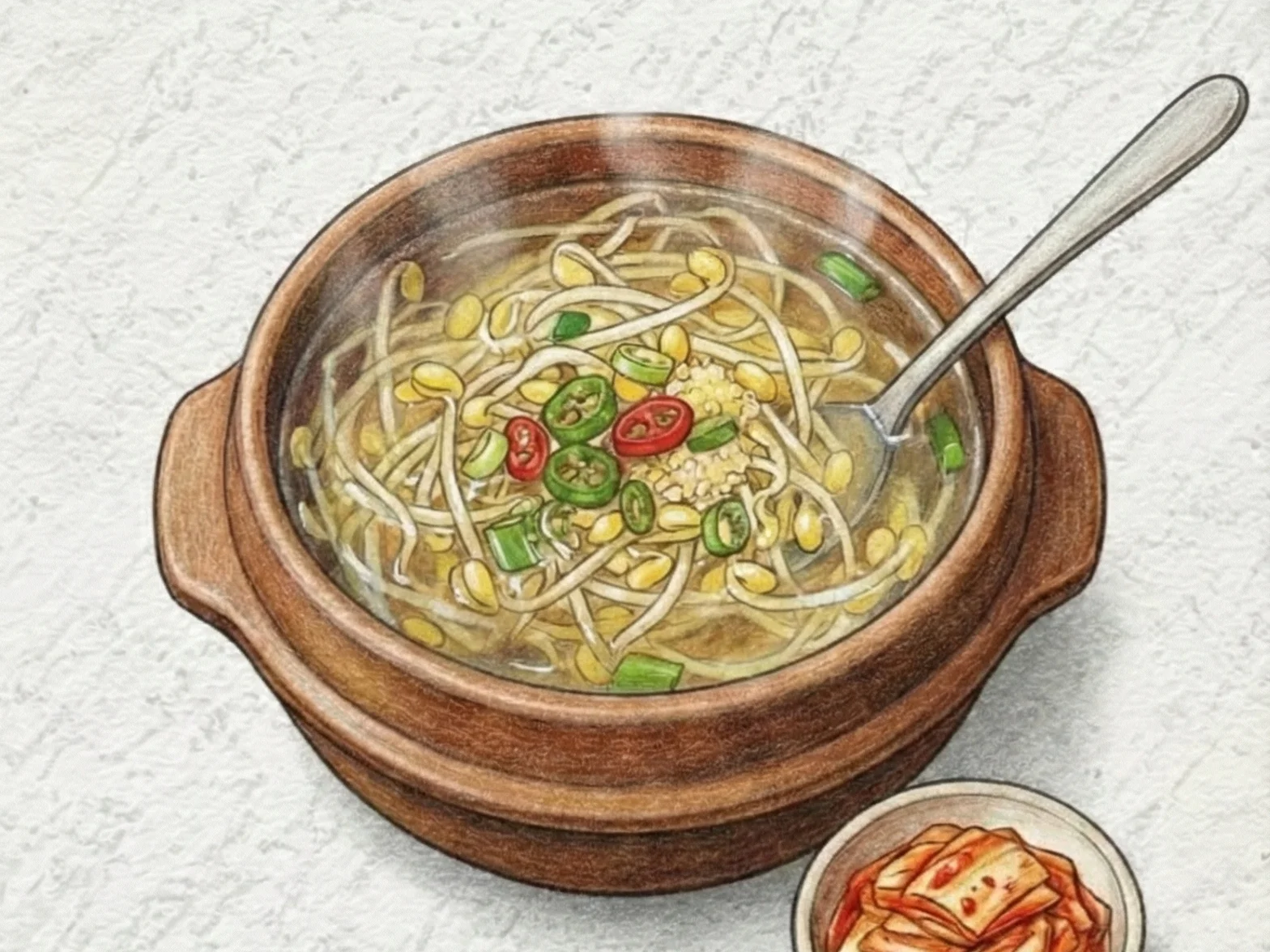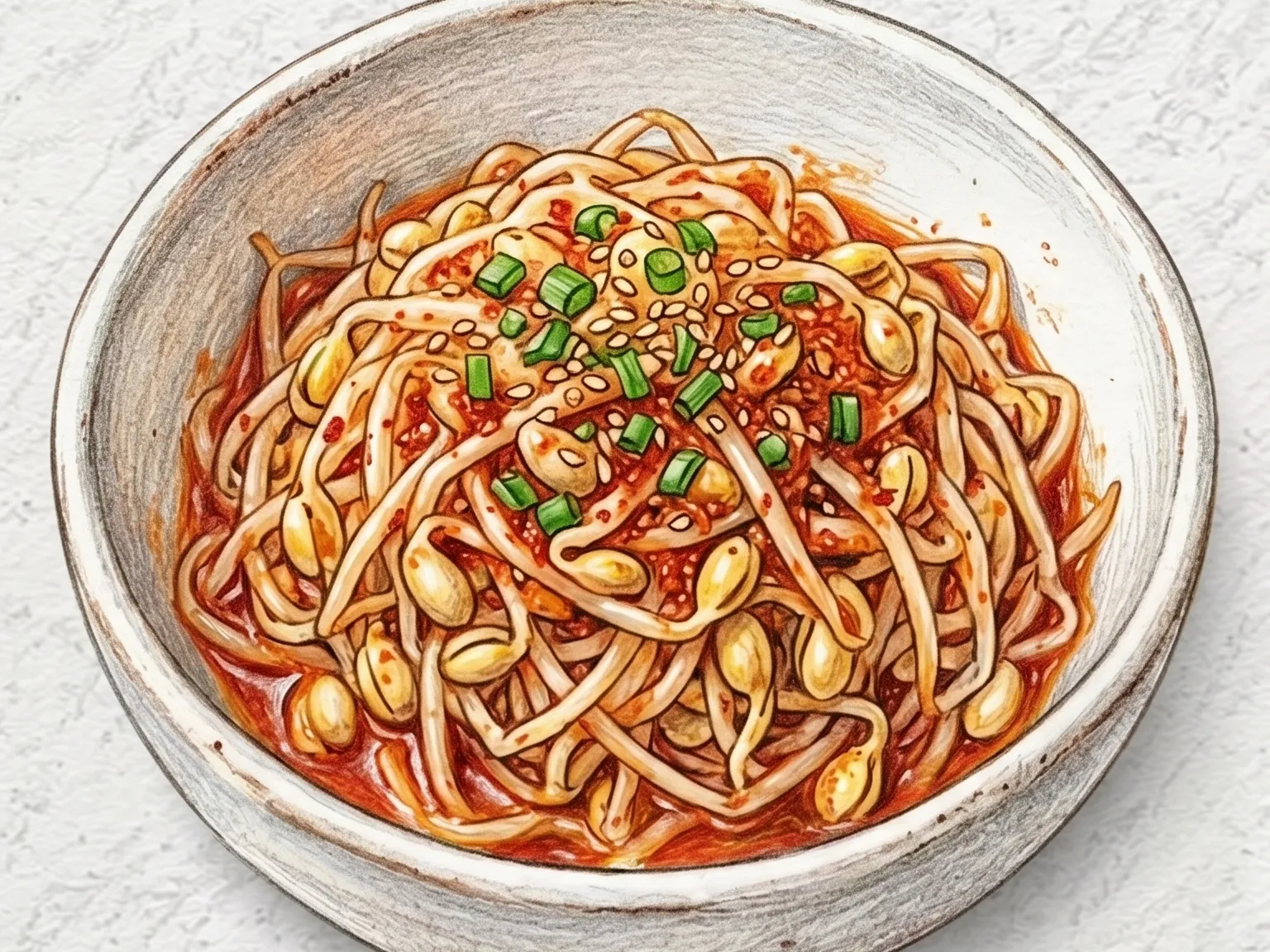
Korean Steamed Soybean Sprouts

Korean Steamed Soybean Sprouts

Quick answer

Kongnamul-jjim is a traditional Korean side dish centered on steamed soy bean sprouts.

What makes this special

  • Kongnamul-jjim keeps soybean sprouts crisp by trapping steam during a bold gochugaru braise.
  • Never lifting the lid during cooking traps steam that keeps bean sprouts crisp
  • Swapping sesame for perilla oil shifts the finish to a darker, herbaceous nuttiness
Total time
20 min
Level
Easy
Servings
2 servings
Ingredients
7
Calories
125 kcal
Protein
7 g

Key ingredients

soybean sproutsKorean chili flakessoy sauceminced garlicsesame oil

Core cooking flow

  1. 1 Rinse 300 g soybean sprouts under running water, lifting and shaking them lightly instead of squeezing.
  2. 2 In a bowl, mix 1.5 tablespoons Korean chili flakes, 1.5 tablespoons soy sauc...
  3. 3 Pour 80 ml water into a pot, spread the drained sprouts evenly, and place the seasoning mixture on top.

Kongnamul-jjim is a traditional Korean side dish centered on steamed soy bean sprouts. The preparation involves layering fresh bean sprouts with a mixture of red chili flakes, soy sauce, and finely minced garlic before placing them in a pot. A critical aspect of the cooking process is keeping the lid tightly closed from the beginning until the sprouts are fully cooked. This sealed environment creates a build-up of steam that is essential for maintaining the natural crispness of the sprouts while ensuring that the savory and spicy seasoning permeates each individual strand. The resulting flavor profile features a sharp heat from the red pepper that complements the clean and refreshing qualities of the bean sprouts, resulting in a light and clear finish. To finish the dish, a generous drizzle of sesame oil and a handful of sliced scallions are added to provide a fragrant, toasted aroma and a layer of savory depth. Because the primary ingredients are inexpensive and the entire process from preparation to plating takes less than fifteen minutes, this dish serves as a dependable addition to any meal when the table requires an extra side dish on short notice. For a different aromatic profile, perilla oil can be substituted for sesame oil to introduce an earthy and more herbaceous scent. Individuals seeking a more intense level of spice can add sliced Cheongyang chilies during the cooking stage to elevate the heat.

Prep 10min Cook 10min 2 servings

Instructions

Read the steps as a cooking flow: prep, heat, seasoning, doneness control, and finish.

6 steps
  1. 1
    Step

    Rinse 300 g soybean sprouts under running water, lifting and shaking them lightly instead of squeezing.

    Drain in a colander for 3-5 minutes, leaving a little surface moisture so the steaming liquid does not dry out too fast.

  2. 2
    Season

    In a bowl, mix 1.5 tablespoons Korean chili flakes, 1.5 tablespoons soy sauce, 1 teaspoon minced garlic, and 2 tablespoons chopped green onion. Stir until the chili flakes are evenly moistened and no dry patches remain.

  3. 3
    Season

    Pour 80 ml water into a pot, spread the drained sprouts evenly, and place the seasoning mixture on top.

    Do not toss at this stage, because early stirring can bring out a raw bean smell.

  4. 4
    Control

    Cover the pot tightly and cook over medium-low heat for 6-7 minutes.

    Keep the lid closed the whole time, letting steam build until the sprouts look slightly translucent and begin to soften while staying crisp.

  5. 5
    Season

    Lower the heat, open the lid, and quickly toss the sprouts with the liquid and seasoning from the bottom.

    Use tongs or chopsticks with a light hand so the sprouts are coated but not broken.

  6. 6
    Finish

    Drizzle in 1 teaspoon sesame oil and cook for 1 more minute to set the aroma.

    Taste the seasoning, spoon over any sauce left in the pot if needed, and finish with sesame seeds if using them.

After the steps

Pick a recipe that fits this dish.

Continue with shared ingredients, meal pairings, or a similar method.

Recipes That Go Well With This

More Steamed →

Based on shared ingredients and meal pairing

Korean Steamed Spicy Pork and Bean Sprouts
Shared ingredient: green onion Steamed

Korean Steamed Spicy Pork and Bean Sprouts

Kongbul-jjim is a steamed rather than stir-fried take on the classic spicy pork and bean sprout combination, cooked with a lid on to trap moisture inside the pot. As the bean sprouts release their liquid under the sealed lid, a natural broth forms and carries the gochujang-and-gochugaru seasoning evenly into every piece of pork. The double-layer chili heat is assertive, but the bean sprouts, still holding a light crunch, soften the impact of each bite. Because far less oil is used than in a stir-fry, the seasoning comes through cleaner and more direct. Stirring rice into the remaining broth at the end, or dropping in thin somyeon noodles, makes full use of the deeply flavored liquid at the bottom of the pot. Adding extra garlic builds additional layers of savory depth, and a cut like pork shoulder with some texture stays noticeably more moist through the steaming process than a leaner loin cut.

Korean Steamed Eggplant with Seasoning
Shared ingredient: green onion Steamed

Korean Steamed Eggplant with Seasoning

Steaming whole eggplants preserves the moisture trapped inside the purple skin, creating a silky and soft texture that sliced pieces cannot replicate. This traditional Korean side dish relies on the technique of tearing the cooked eggplant by hand along its natural grain rather than using a knife. The resulting irregular surface area allows the dressing of soy sauce, garlic, and red pepper flakes to cling effectively to every fiber. Sesame oil and toasted seeds contribute a nutty fragrance while sliced green onions provide a fresh finish to the light seasoning. Adding perilla powder increases the nuttiness, and incorporating canned tuna provides enough protein to serve the dish as a primary component of a meal. Adding minced cheongyang chilies into the sauce increases the heat for a spicier version. Since the preparation takes less than thirty minutes, it remains a common choice during hot summer months. The dish keeps its consistency well in the refrigerator for about twenty-four hours after cooling.

Korean Crisp Chili Pepper Salad
Serve together Side dishes

Korean Crisp Chili Pepper Salad

Asakigochu is a specific variety of Korean pepper characterized by its thick walls and a distinct snap when bitten. This pepper was developed to prioritize texture over spiciness, resulting in a vegetable that offers a significant crunch without the heat of other varieties. The preparation of this dish involves a brief blanching process where the peppers are submerged in boiling water for a duration of exactly twenty seconds. This short exposure to heat is sufficient to eliminate the raw, grassy aroma often found in uncooked peppers, yet it is not long enough to soften the cellular structure. Consequently, the characteristic crispness remains unchanged. The seasoning sauce is a mixture of two traditional fermented pastes. Doenjang provides a salty and fermented depth, while gochujang adds complexity. To balance these heavy flavors, vinegar is added for sharpness and oligosaccharide syrup is used to adjust the consistency and add a subtle sweetness. This combination creates a contrast between the deep, funky notes of the fermented beans and a bright acidity that highlights the clean taste of the pepper. Timing is important for the final result. It is best to allow the seasoned peppers to rest for five minutes before serving. This pause allows the flavors from the thick sauce to soak into the pepper walls instead of simply sitting on the exterior. This side dish functions well as a standard accompaniment to a bowl of rice or as a more fullly flavored snack to be consumed while drinking soju.

Korean Stir-Fried Soybean Sprouts
Similar recipe Side dishes

Korean Stir-Fried Soybean Sprouts

Kongnamul-bokkeum is stir-fried soybean sprouts cooked over high heat, and while the ingredients are identical to kongnamul-muchim, the cooking method produces a fundamentally different result. Muchim blanches the sprouts gently and seasons them cold, whereas bokkeum exposes them directly to a hot oiled pan surface, creating a faint caramelized char on the outside of each sprout that a steamed preparation never achieves. The single non-negotiable rule is to never put a lid on the pan. A covered pan traps the steam released by the cooking sprouts, effectively turning the stir-fry into a steamed dish. That trapped moisture not only destroys the crunch but also locks in the raw bean smell that correct technique is supposed to eliminate entirely. Garlic goes into the oil first for twenty seconds to lay an aromatic foundation before any sprouts touch the pan. Once the sprouts are added, two minutes of constant tossing over maximum heat is the upper limit before the stems begin to soften and lose their snap. Any longer and the texture slides toward mushy. Gukganjang, the lighter Korean soup soy sauce, seasons the dish with a cleaner, less assertive saltiness than standard soy sauce and leaves the color pale enough that the finished dish looks fresh rather than dark and heavy. Sliced scallions added in the final seconds contribute green color and a mild allium note. When a bag of bean sprouts is the only vegetable left in the refrigerator, this five-minute banchan is the most practical solution, and the technique, once learned, applies to almost any tender leafy vegetable.

Serve with this

Refreshing Spicy Mulhoe Broth
Soups Easy

Refreshing Spicy Mulhoe Broth

Refreshing Spicy Mulhoe Broth is a Korean cold soup base for raw fish dishes. This recipe combines red pepper paste, red pepper powder, vinegar, sugar, plum syrup, and minced garlic. The mixture of six tablespoons of vinegar and two of plum syrup provides a double acidity that blocks fishy notes from seafood. Adding one hundred milliliters of lemon-lime soda introduces carbonation that lifts a bright, airy note in the broth. Alternatively, using pear juice instead of soda offers a sophisticated sweetness. To prepare, mix the paste first to remove dry pockets, stir in water, and add the soda last to preserve carbonation. Chill the broth for at least two hours or ferment it for a day to deepen the flavor. Serving it semi-frozen as a slushy lets the ice dilute the seasoning gradually as sashimi thaws.

🔥 Trending Now ⚡ Quick
Prep 15min Cook 5min 2 servings
Korean Spicy Dakgalbi Rice Bowl
Rice Easy

Korean Spicy Dakgalbi Rice Bowl

Dakgalbi deopbap serves the core flavors of Chuncheon's famous spicy chicken in a single rice bowl. Boneless chicken thigh is stir-fried alongside cabbage, onion, and green onion in a gochujang-based marinade balanced with sugar and a splash of soy sauce. The chicken is cooked over high heat throughout -- this creates a caramelized crust on the meat's surface and keeps the vegetables at a slight crunch rather than softening them completely. Sesame oil is added off the heat as a final step, contributing a toasty fragrance that rounds out the bold seasoning without overpowering it. At traditional dakgalbi restaurants in Chuncheon, the meal ends with fried rice made by mixing cooked rice directly into the residual sauce left on the hot iron plate -- this bowl captures that same moment in a format that can be made at home without a cast-iron griddle. The dish requires no banchan; the seasoned protein and vegetables together with the rice form a self-contained meal.

🏠 Everyday 🍱 Lunchbox
Prep 15min Cook 14min 2 servings
Korean Green Onion Kimchi
Kimchi Medium

Korean Green Onion Kimchi

Daepa kimchi is made by cutting large green onions into six- to seven-centimeter lengths and coating them in a paste of gochugaru, anchovy fish sauce, soy sauce, plum extract, and glutinous rice paste. The rice paste acts as a binding agent that keeps the seasoning adhered to the onion surfaces through the entire fermentation period rather than pooling at the bottom of the container. Handling the stalks carefully so they do not bend or split is important for keeping each piece intact, and splitting the thicker white portions lengthwise down the center gives the paste more exposed surface area to penetrate. Eight hours of room-temperature fermentation followed by two days in the refrigerator brings the kimchi to its best point, when the sharp bite of the green onion and the deep fermented umami of the fish sauce have worked fully into each stalk. Daepa kimchi is a natural pairing with grilled pork belly or boiled pork, and it also makes a practical use for green onions before they go past their prime.

🍱 Lunchbox 🏠 Everyday
Prep 25min Cook 5min 4 servings

Similar recipes

Korean Perilla Soybean Sprout Namul
Side dishes Easy

Korean Perilla Soybean Sprout Namul

Kongnamul, soybean sprouts, are among the most consumed vegetables in Korea, and this perilla-dressed version adds a nutty, full-bodied depth that the plain sesame oil variety lacks. The sprouts are steamed with the lid sealed for five minutes, which drives off the raw bean smell while keeping the heads firm and crunchy. Tossed with perilla powder, soup soy sauce, garlic, and sesame oil while still warm, the powder absorbs the moisture and dissolves into a pale coating that makes each sprout feel creamy on the tongue. Chopped scallion contributes a sharp, grassy contrast that balances the richness, and resting the finished dish for five minutes before serving lets the seasoning penetrate evenly so the flavor comes together more completely.

🥗 Light & Healthy 🏠 Everyday
Prep 10min Cook 8min 4 servings
Korean Steamed Whole Garlic
Steamed Easy

Korean Steamed Whole Garlic

Maneul-jjim is a Korean steamed whole garlic dish where cloves are slowly braised in soy sauce, oligosaccharide syrup, and sesame oil until completely tender. The raw garlic's sharp bite disappears entirely with heat, transforming into a mellow sweetness with a creamy, almost buttery texture. The syrup creates a glossy coating on each clove, and the sesame oil wraps everything in a nutty fragrance. This banchan works as a side to grilled meats or as a drinking snack, offering all of garlic's depth without any of its usual pungency. Placing a softened clove on a spoonful of rice is the simplest and most satisfying way to enjoy it.

🍱 Lunchbox 🏠 Everyday
Prep 10min Cook 20min 2 servings
Korean Steamed Mixed Mushrooms
Steamed Easy

Korean Steamed Mixed Mushrooms

Three types of mushrooms - oyster, shiitake, and enoki - are steamed in a soy sauce and garlic seasoning. Oyster mushrooms should be torn by hand along the grain so the rough surface absorbs the seasoning, and shiitake caps should be sliced thick after removing the stems to preserve their dense bite even after steaming. Enoki are trimmed at the base and loosened before going in. Sesame oil is added immediately after steaming, before the mushroom moisture evaporates, so the nutty aroma coats the surface properly. Because the three varieties have different densities and thicknesses, steaming time should stay within ten minutes to prevent the enoki from going limp.

🥗 Light & Healthy 🍱 Lunchbox
Prep 12min Cook 12min 2 servings

Tips

Avoid stirring too early to prevent a raw bean smell.
Finish with sesame seeds for extra nuttiness.

Nutrition (per serving)

Calories
125
kcal
Protein
7
g
Carbs
10
g
Fat
6
g