Charim

2686 Korean & World Recipes

2686+ Korean recipes, clean and organized. Ingredients to instructions, all at a glance.

Korean Soybean Sprout Cold Salad

Korean Soybean Sprout Cold Salad

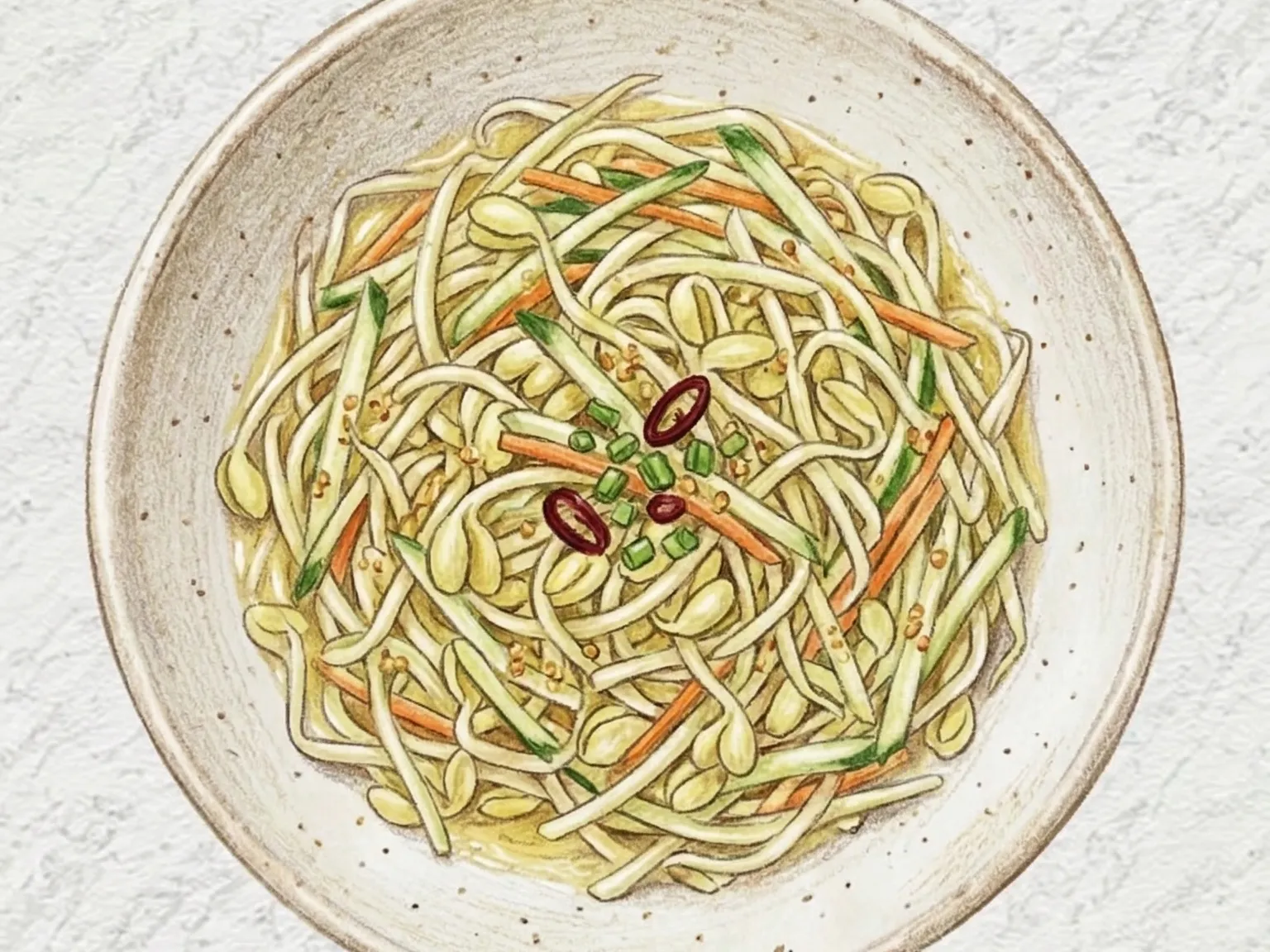
Kongnamul-naengchae is a chilled Korean salad of boiled soybean sprouts and vegetables tossed in mustard dressing - conceptually distinct from regular kongnamul-muchim because it is designed to be served cold. The mustard sauce defines the dish: mustard powder (or tube mustard) mixed with vinegar, sugar, and salt creates a sharp, nose-tingling heat alongside a sweet-sour brightness. Prepared mustard needs five to ten minutes of resting after hydration for the allyl isothiocyanate compound to fully develop its pungency. Julienned cucumber and carrot release moisture, so they should be briefly salted or patted dry to prevent diluting the sauce. Chilling for at least ten minutes before serving maximizes the refreshing effect, and cold temperatures actually sharpen the mustard's bite. This banchan excels as a palate cleanser alongside fatty main dishes like samgyeopsal or bulgogi.

Prep 15min Cook 6min 4 servings

Adjust Servings

2servings
servings

Instructions

  1. 1

    Cook soybean sprouts with water covered for 5 minutes.

  2. 2

    Rinse in cold water, cool completely, and drain.

  3. 3

    Julienne cucumber and carrot.

  4. 4

    Mix mustard paste, vinegar, sugar, salt, and sesame oil.

  5. 5

    Combine sprouts and vegetables, then toss with dressing.

  6. 6

    Chill for 10 minutes before serving.

🛒Shop Ingredients on Amazon

As an Amazon Associate, we may earn from qualifying purchases.

Tips

Overcooked sprouts lose crunch.
Activated mustard develops better pungency.

Nutrition (per serving)

Calories
79
kcal
Protein
5
g
Carbs
10
g
Fat
2
g

More Recipes

Korean Perilla Soybean Sprout Namul
Side dishesEasy

Korean Perilla Soybean Sprout Namul

Kongnamul - soybean sprouts - are Korea's most consumed vegetable, and this perilla-dressed version adds nutty depth missing from the plain sesame oil variety. Sprouts are steamed lid-sealed for five minutes, eliminating raw bean smell while keeping heads crunchy. Tossed with perilla powder, soup soy sauce, garlic, and sesame oil, the powder dissolves into a pale coating that turns each sprout creamy on the tongue. Chopped scallion adds green sharpness as contrast.

🥗 Light & Healthy🏠 Everyday
Prep 10minCook 8min4 servings
Korean Stir-Fried Soybean Sprouts
Side dishesEasy

Korean Stir-Fried Soybean Sprouts

Kongnamul-bokkeum is stir-fried soybean sprouts cooked over high heat for a result that differs fundamentally from the blanched-and-dressed kongnamul-muchim. While the muchim version is cold and gentle, the bokkeum version introduces direct contact with a hot oiled pan, creating a faint wok char on the sprout surfaces. The critical rule is to never cover the pan - trapped steam converts the stir-fry into a boiled dish and locks in the raw bean smell that proper cooking should eliminate. Garlic goes into the oil first for twenty seconds to build an aromatic foundation, then the sprouts are tossed for no more than two minutes on high heat to preserve their crunch. Soup soy sauce (gukganjang) seasons more lightly and keeps the color clean compared to regular soy sauce. When a bag of bean sprouts is the only vegetable in the refrigerator, this five-minute banchan is the pragmatic answer.

🏠 Everyday🍱 Lunchbox
Prep 8minCook 7min2 servings
Korean Chilled Cucumber Soup
Side dishesEasy

Korean Chilled Cucumber Soup

Oi-naengguk is a Korean chilled cucumber soup served in summer as a cold alternative to the hot soups (guk) that normally accompany Korean meals. When midsummer heat makes a steaming bowl of doenjang-guk unappealing, this icy broth takes its place at the table. Cucumber is sliced paper-thin and submerged in a broth of water seasoned with rice vinegar, soup soy sauce, salt, and sugar - a higher vinegar ratio intensifies the refreshing, palate-clearing sharpness. Ice cubes floated on top or at least thirty minutes of refrigeration are essential to achieve the chilling effect that defines the dish. Thinly sliced garlic infuses a mild pungency into the broth, and sesame seeds sprinkled on top add a nutty accent. Some versions include rehydrated dried seaweed, whose slippery texture contrasts with the cucumber's crisp snap. Alongside bibimbap or spicy banchan, oi-naengguk serves as a cooling counterbalance that tempers chili heat between bites.

🏠 Everyday🍱 Lunchbox
Prep 10minCook 2min4 servings
Korean Steamed Soybean Sprouts
SteamedEasy

Korean Steamed Soybean Sprouts

Kongnamul-jjim is a Korean steamed bean sprout dish cooked covered with gochugaru, soy sauce, and minced garlic. Keeping the lid on throughout cooking preserves the sprouts' characteristic crunch while allowing the seasoning to permeate evenly. The chili heat meets the sprouts' refreshing quality, leaving a clean aftertaste, and sesame oil with chopped scallions finish the dish with fragrance. Inexpensive and quick to prepare, this is a practical banchan that delivers reliable flavor when side dishes are needed in a hurry.

🥗 Light & Healthy🏠 Everyday
Prep 10minCook 10min2 servings
Korean Tofu Yuja Salad (Pan-Fried Tofu Citrus Dressing)
Side dishesEasy

Korean Tofu Yuja Salad (Pan-Fried Tofu Citrus Dressing)

Dubu yuja muchim brings an uncommon citrus dimension to Korean tofu banchan by using yuja-cheong - a preserve of yuzu-like Korean citrus rind in honey or sugar. Soft tofu is blanched briefly to warm through and firm up slightly, then cut into bite-sized pieces and dressed while still warm so the pores open to absorb the vinaigrette. The dressing blends yuja-cheong with soy sauce, vinegar, and sesame oil - the citrus peel's fragrant bitterness cutting through the tofu's blandness in a way that soy sauce alone cannot. The dish sits in a category between Korean and Western salad sensibilities, light enough to serve as a starter. Yuja has been cultivated on Korea's southern coast - especially Goheung and Namhae - since the Joseon era. Best eaten cold or at room temperature within a few hours of assembly.

🏠 Everyday🍱 Lunchbox
Prep 12minCook 5min2 servings
Smoked Duck Chive Salad (Korean Chive Salad)
SaladsEasy

Smoked Duck Chive Salad (Korean Chive Salad)

Smoked duck chive salad sears smoked duck in a hot pan for two to three minutes to render excess fat, then combines it with Korean chives cut into four-centimeter lengths, shredded cabbage, and sliced bell pepper in a soy-mustard dressing. The duck's dense smokiness and fatty richness are tempered head-on by the chives' sharp, pungent grassiness, and a dressing of soy sauce, mustard, vinegar, honey, and sesame oil layers a nose-clearing heat with sweet-sour acidity to clean the palate after each oily bite. Crisp cabbage provides textural relief against the chewy duck meat, and toasted sesame seeds finish with a nutty fragrance. Adding the chives last preserves their fresh aroma, and keeping the searing time short prevents the duck from turning tough.

🍺 Bar Snacks🥗 Light & Healthy
Prep 15minCook 8min2 servings
More Side dishes →