Korean Mozzarella Cheese Sticks
Quick answer
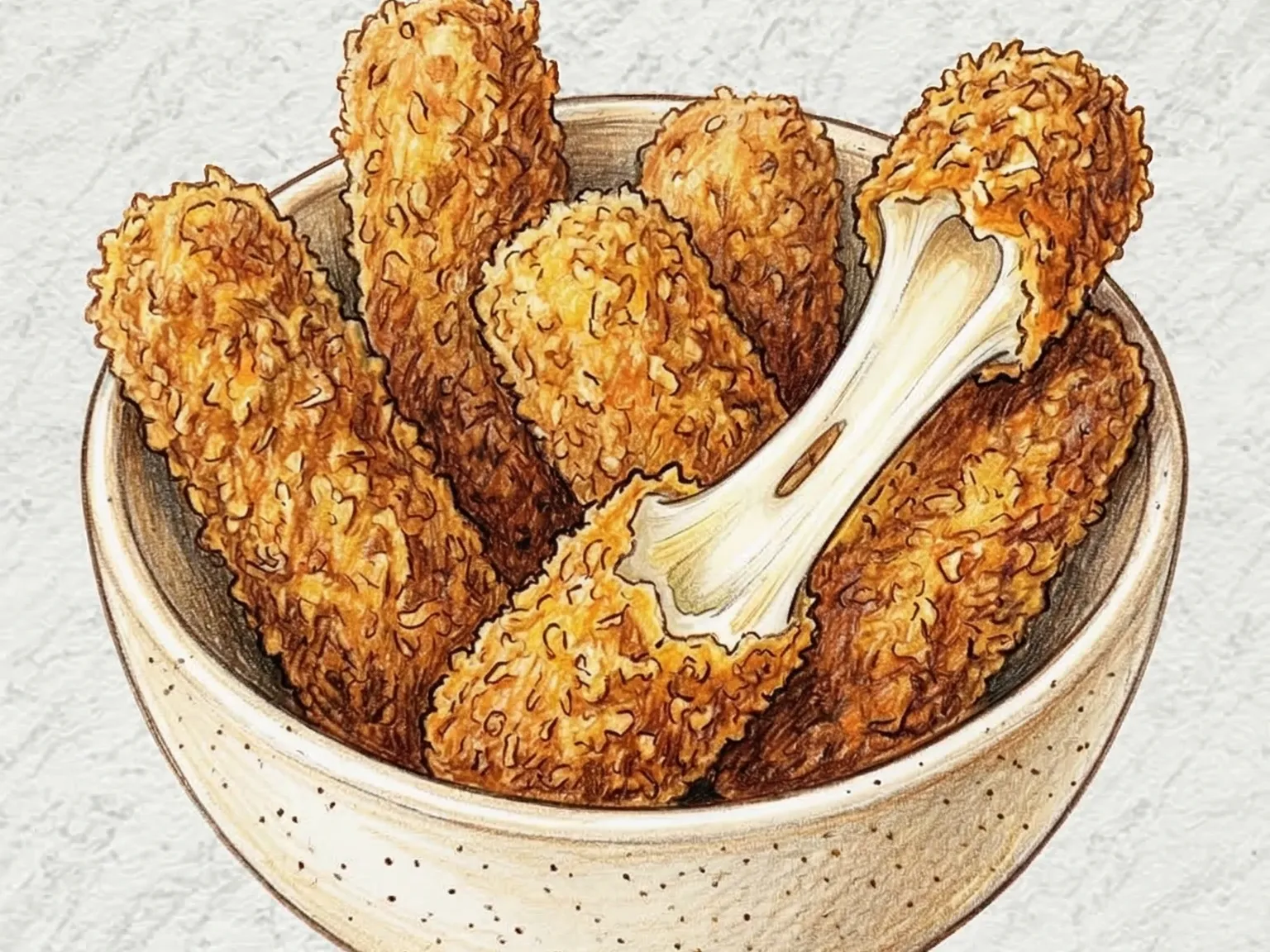
Mozzarella blocks are cut into sticks, double-coated in flour, beaten egg, and parsley-seasoned breadcrumbs, then frozen for 20 minutes before a brief deep-fry at 170 deg...
What makes this special
- Korean cheese sticks utilize a double-coated breadcrumb shell to keep the mozzarella from bursting.
- Double coat plus 20-minute freeze prevents cheese from bursting
- 90-120 second fry window keeps cheese melted but not leaking
Key ingredients
Core cooking flow
- 1 Cut the 250 g mozzarella block into even sticks, then press the surfaces dry with paper towels.
- 2 Mix 1/2 cup flour with 1/4 teaspoon salt in one dish, beat 2 eggs in another...
- 3 Coat each cheese stick in flour, egg, and breadcrumbs, pressing gently so the crumbs cling.
Mozzarella blocks are cut into sticks, double-coated in flour, beaten egg, and parsley-seasoned breadcrumbs, then frozen for 20 minutes before a brief deep-fry at 170 degrees Celsius. The double coating and freezing step prevent the cheese from bursting out during frying, and pulling the sticks from the oil within one and a half to two minutes keeps the shell crunchy while the cheese inside remains stretchy rather than fully melted out. A touch of dried parsley in the breadcrumbs adds a mild herbal note, and dipping into tomato sauce or sweet chili sauce provides a pleasant contrast to the salty, crispy coating.
Instructions
Read the steps as a cooking flow: prep, heat, seasoning, doneness control, and finish.
- 1Heat
Cut the 250 g mozzarella block into even sticks, then press the surfaces dry with paper towels.
If the cheese feels wet, keep blotting because moisture makes the coating slide off during frying.
- 2Season
Mix 1/2 cup flour with 1/4 teaspoon salt in one dish, beat 2 eggs in another, and combine 1.5 cups breadcrumbs with 1/2 teaspoon dried parsley in a third dish.
- 3Control
Coat each cheese stick in flour, egg, and breadcrumbs, pressing gently so the crumbs cling.
Repeat the same flour, egg, and breadcrumb order once more, covering corners and ends with no exposed cheese.
- 4Control
Arrange the coated sticks so they do not touch, then freeze them for 20 minutes.
Frying while the outside is firm helps the shell set quickly and reduces cheese leaks in the hot oil.
- 5Heat
Heat 700 ml cooking oil to 170°C, then add only a few sticks at a time.
Keep the heat around medium and fry for just 1 minute 30 seconds to 2 minutes.
- 6Finish
Remove the sticks as soon as the coating turns golden and crisp, before the cheese starts escaping.
Drain briefly, rest for 1 minute, and serve with 3 tablespoons tomato dipping sauce.
After the steps
Pick a recipe that fits this dish.
Continue with shared ingredients, meal pairings, or a similar method.
Recipes That Go Well With This
More Street food →Based on shared ingredients and meal pairing
Potato Mozzarella Korean Corn Dog
Gamja mozzarella hotdog is a Korean street food that skewers a sausage and a mozzarella cheese stick together, coats them in a batter of flour, milk, and baking powder, then presses half-centimeter potato cubes across the entire surface before deep-frying. The potato cubes cook into a bumpy, golden-brown shell on the outside while the mozzarella inside melts and stretches into long, elastic strands when pulled apart. Sugar in the batter gives the whole corn dog a faintly sweet undertone throughout, and sprinkling additional sugar on the finished hotdog before eating is a common practice at street stalls. Each bite stacks the sausage's saltiness, the mozzarella's creamy stretch, and the crisp snap of the potato crust into one compact, layered structure.
Korean Sweet Potato Mozza Corn Dog
Sweet potato mozza corn dog is a Korean street food made by skewering mozzarella and sausage end to end, coating the skewer in pancake batter, pressing diced sweet potato cubes and breadcrumbs into the surface, and deep-frying at 170 degrees Celsius. Freezing the mozzarella until hard before assembly is not optional: room-temperature cheese melts too quickly during frying and breaks through the batter before the exterior sets, causing the filling to leak. Biting through the sausage-cheese boundary delivers a sharp contrast between the salt of the sausage and the pull of the stretched cheese. The batter needs to hold a moderate thickness so the sweet potato pieces adhere evenly rather than sliding off before hitting the oil. In the fryer, the sweet potato cubes caramelize against the batter, forming a naturally sweet outer layer with slightly crisped edges. Breadcrumbs fill the gaps between the potato pieces and add crunch wherever the potato does not cover. Dusting the finished corn dog with granulated sugar immediately after it exits the fryer lays a thin sweet coating over the already-caramelized surface, amplifying the sweet-salty contrast with the savory interior. The visual of cheese pulling as the corn dog is bitten through became widely associated with Korean street food content on social media.
Candied Sweet Potato
Goguma mattang is a Korean candied sweet potato snack made by cutting peeled sweet potatoes into large chunks and deep-frying them at 170 degrees Celsius until the interior turns floury and soft. A syrup of sugar, corn syrup, water, and a measured splash of soy sauce is cooked separately until large, foamy bubbles form - the visual cue for adding the fried sweet potatoes. Everything must be coated within thirty seconds to lock in a thin, glass-like caramel shell that crisps and turns translucent as it cools. The soy sauce shifts the flavor from purely sweet to a rounded, slightly savory depth. Pre-draining surface moisture from the cut sweet potatoes reduces oil splatter during frying and helps the syrup grip the pieces evenly. Black sesame seeds are scattered over the finished pieces for a toasted, nutty note, and each piece is spread individually on parchment paper while still warm so they cool without sticking together.
Korean Soy Garlic Dakgangjeong
Soy-garlic dakgangjeong is Korean fried chicken made from boneless thigh pieces coated in potato starch and fried twice before being tossed in a soy-garlic glaze. The first fry runs at 170 degrees Celsius for five minutes to cook the meat through to the center. The second fry raises the temperature to 190 degrees and runs for two minutes to push residual moisture out of the crust and harden the surface. Both fries are necessary to achieve a crust firm enough to stay crisp under the wet glaze. Using only potato starch rather than a wheat-starch blend produces a thinner, more transparent coating that crisps harder and absorbs less oil. The sauce is reduced for no more than thirty seconds to one minute so the saltiness does not concentrate excessively. Vinegar is a key component: it cuts through the grease and leaves the palate clean after each bite. The fried chicken must go into the sauce while it is still loose, then be tossed over high heat quickly so the coating never has time to steam and soften. Sesame seeds scattered on top add a nutty fragrance and a textural contrast against the lacquered surface.
Serve with this
Korean Crispy Glazed Tofu Bites
Dubu gangjeong applies the double-coating logic of Korean fried chicken to tofu, pressing each cube dry before dredging in potato starch, frying until the shell turns shattering crisp, then tossing in a concentrated sticky glaze. The dish originated in temple cuisine as a meatless adaptation of gangjeong and has since become a staple anju in Korean bars. Pressing the tofu is non-negotiable: at least twenty minutes under a heavy weight wrapped in paper towels removes enough moisture to prevent oil from splattering and allows the starch coating to adhere evenly. Potato starch produces a noticeably thinner and more translucent crust than wheat flour, which cracks cleanly rather than bending when bitten. The glaze is made by boiling gochujang, soy sauce, sugar, and rice syrup together until large bubbles break on the surface, signaling that the mixture has concentrated and will cling rather than pool. Pouring the hot glaze over the fried tofu and tossing quickly coats every surface in an even, lacquer-like finish. The defining quality of a well-made dubu gangjeong is the contrast between the caramelized shell with its slight chew and the soft, almost custard-like interior. Once made, it must be eaten within ten minutes before the coating absorbs moisture and goes soft.
Kongguksu (Korean Cold Soy Milk Noodles)
Kongguksu is a Korean cold noodle dish in which thin somyeon noodles are served in a chilled broth made entirely from blended soybeans. Cooked white soybeans are peeled as thoroughly as possible to reduce any bitterness, then blended with cold water, sesame seeds, and salt until the mixture is smooth and creamy. The resulting soy broth is refrigerated until genuinely cold before use -- adding ice directly to the bowl would thin it out, so proper chilling in advance is the standard approach. Somyeon noodles are boiled until just cooked through, then rinsed vigorously under cold running water and briefly submerged in ice water to firm up their texture before being placed in the serving bowl. The cold soy broth is poured generously over the noodles, and julienned cucumber is arranged on top for color and crunch. Seasoning is personal: some eat it with salt only, others stir in a small amount of sugar. Straining the broth once through a fine mesh sieve eliminates any remaining gritty bits and gives the finished soup a noticeably silkier mouthfeel. High in plant protein and relatively light on the stomach despite its richness, it is exactly the kind of cold dish that makes summer heat more bearable. Black soybeans blended in alongside white ones deepen both the color and the toasty, nutty flavor.
Korean Job's Tears Walnut Latte
Yulmu-hodu latte is a traditional Korean grain-based beverage prepared by combining job's tears and walnuts with milk to create a thick and consistent texture. The preparation begins by soaking the job's tears in water for a minimum of two hours. This extended soaking period is necessary to soften the grains thoroughly, ensuring they pulverize completely during the blending process to avoid a gritty or sandy mouthfeel. Once softened, the job's tears are dry-toasted along with the walnuts in a pan. This heat application serves to caramelize the starches within the grains, which effectively removes the scent of raw grain and replaces it with a concentrated, roasted aroma. After the toasted ingredients are blended with milk, the liquid is passed through a fine strainer to achieve a smooth and silky finish. Sweetness is added using honey, accompanied by a small amount of salt to highlight the deep profile of the roasted nuts. A light sprinkle of ground cinnamon is applied to the surface to provide a subtle spice that balances the grounded flavor of the grain base. For cold servings, it is important to dissolve the honey while the liquid is still warm to ensure it distributes thoroughly throughout the drink instead of settling at the bottom of the container. The resulting beverage offers a depth of flavor and a rounded profile that is far more prominent than what is found in mass-produced, packaged versions of similar grain drinks.
Similar recipes
Korean Crispy Kimchi Fried Dumplings
Kimchi gun mandu are pan-fried dumplings filled with finely chopped kimchi, squeezed tofu, ground pork, and green onion seasoned with soy sauce and garlic, shaped into half-moons. The bottoms are first crisped in oil, then water is added and the pan is covered for four minutes to steam the tops, achieving a contrast of crunchy base and moist upper wrapper. The kimchi's acidity and heat permeate the pork fat to create a more assertive umami than plain dumplings, and the tofu smooths out the filling's texture. A splash of vinegar in the soy dipping sauce cuts any greasiness.
Korean Honeycomb Candy (Caramel Sugar Disc with Baking Soda Puff)
Ppopgi dalgona is a Korean street candy made by melting white sugar in a small ladle over low heat, then stirring in baking soda to trigger a rapid foaming expansion. When the sugar reaches a pale amber stage, the heat is cut and baking soda with a pinch of salt is mixed in quickly: carbon dioxide releases immediately, puffing the molten sugar to two or three times its original volume within seconds. The expanded mixture is poured onto parchment and pressed flat to roughly 5 mm with an oiled plate or press, then stamped with a shape cutter before it sets. Once fully cool and rigid, the candy snaps crisply when tapped - the hallmark texture. The caramel's color at the moment the heat is removed determines the final flavor: pull it too early and the candy stays flat-sweet; let it darken a shade too far and bitterness overtakes the sweetness. The narrow window of pale amber is where the sweet-bitter balance lands correctly.
Korean Fire Chicken Fried Rice
Buldak bokkeumbap is a Korean fried rice built around the fiery buldak sauce - a thick chili-based condiment with concentrated heat that became widely known through the instant noodle brand of the same name. Chicken breast cut into bite-sized pieces is marinated in the sauce, then stir-fried with cooked rice over high heat until the sauce caramelizes slightly and coats every grain. The spice hits immediately on the first bite and accumulates with each spoonful, producing the kind of sustained burn that spicy food enthusiasts seek. Laying mozzarella cheese across the top and covering the pan to melt it creates a layer of stretchy, creamy dairy that wraps around the rice and provides brief relief between bites without neutralizing the heat completely. The contrast between the fire of the sauce and the cooling effect of the cheese makes the dish more compelling than either element alone. Easy to assemble with a short ingredient list, it has become a go-to option for late-night cooking and solo meals.