Korean Choco Pie (Marshmallow Cream Chocolate Cake)
Quick answer
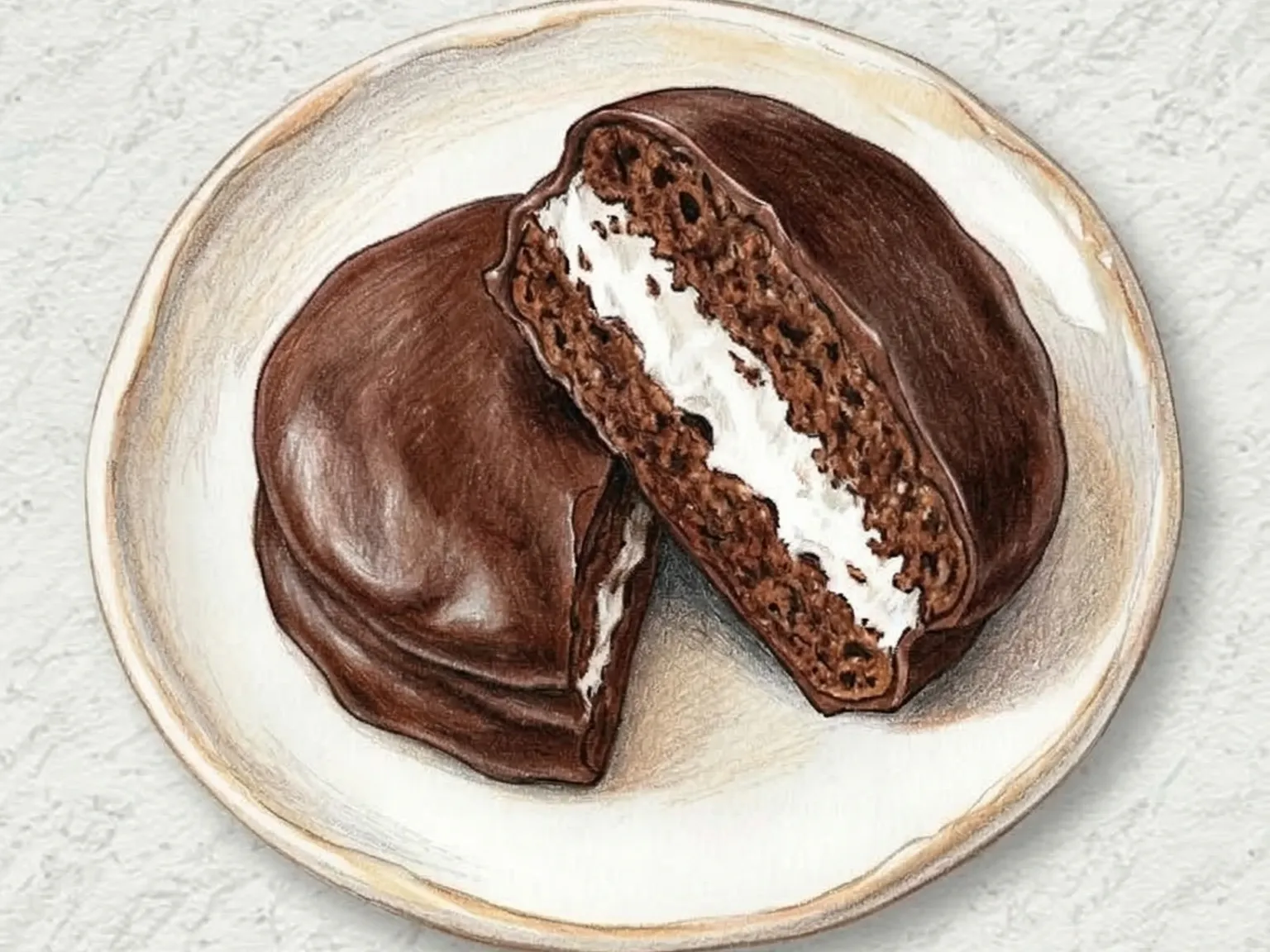
Two soft chocolate cake rounds sandwich a layer of melted marshmallow cream, and the whole assembly is dipped in dark chocolate to form a glossy shell.
What makes this special
- Korean Choco Pie layers melted marshmallow cream between cocoa sponge rounds under a dark chocolate coating.
- Melted marshmallow cream stretches slightly with each bite as a soft cushion
- A little butter in the dark chocolate coating keeps it thin and non-sticky
Key ingredients
Core cooking flow
- 1 Whisk 2 eggs with 110 g sugar until the mixture looks paler and slightly foamy.
- 2 Sift in 120 g cake flour and 20 g cocoa powder.
- 3 Spoon or pipe the batter into even small rounds and bake at 175C for a short time.
Two soft chocolate cake rounds sandwich a layer of melted marshmallow cream, and the whole assembly is dipped in dark chocolate to form a glossy shell. The cake batter combines cake flour with cocoa powder and is baked just until set; overbaking dries out the sponge and ruins the pillow-soft texture that defines this treat. Marshmallows melted over a water bath turn into a light, stretchy cream that acts as a cushion between the rounds, pulling slightly with each bite. Adding a small amount of butter to the melted coating chocolate produces a thinner, smoother shell that sets with a clean snap and resists fingerprints. Chilled, the chocolate hardens and adds a crisp layer of contrast; at room temperature, the entire piece softens into a unified, yielding bite. This is the homemade version of Korea's iconic convenience-store snack, and making it from scratch allows control over the chocolate quality and the generosity of the filling.
Instructions
Read the steps as a cooking flow: prep, heat, seasoning, doneness control, and finish.
- 1Season
Whisk 2 eggs with 110 g sugar until the mixture looks paler and slightly foamy.
Pour in 90 ml milk and the melted butter gradually, stirring slowly so the batter stays smooth instead of separating.
- 2Prep
Sift in 120 g cake flour and 20 g cocoa powder.
Fold just until no dry streaks remain; stop before the batter turns heavy, because overmixing makes the cake rounds tough.
- 3Heat
Spoon or pipe the batter into even small rounds and bake at 175C for a short time.
Remove them when the edges are set but the centers still feel moist, not dry or crisp.
- 4Control
Melt 140 g marshmallows over a water bath until sticky, glossy, and spreadable.
While warm, place the cream on one cake round and cover with a matching round, pressing lightly to keep the layer even.
- 5Step
Chill the assembled pies briefly so the filling firms and the shape stabilizes.
If the marshmallow squeezes out, the pieces can break during coating, so wait until they feel easy to lift.
- 6Prep
Melt 220 g dark chocolate and mix in a little of the remaining butter to make the coating thinner and smoother.
Dip each pie, let the excess drip off, then chill until the shell sets cleanly.
After the steps
Pick a recipe that fits this dish.
Continue with shared ingredients, meal pairings, or a similar method.
Recipes That Go Well With This
More Baking →Based on shared ingredients and meal pairing
Black Sesame Pound Cake (Dense Roasted Sesame Grey-Crumb Cake)
Black sesame pound cake is built on the classic equal-ratio formula of butter, eggs, sugar, and flour, with a generous addition of black sesame paste worked into the batter. The paste shifts the color to a deep grey-brown and fills the kitchen with a roasted, nutty fragrance as the loaf bakes. Only a small amount of baking powder is used, keeping the rise modest and the crumb tight - the result is a dense loaf that still yields softly when bitten, with a texture that holds together cleanly on the fork rather than crumbling apart. Milk regulates the moisture balance, preventing the dense structure from turning stiff or dry at the edges. When sliced, every cross-section shows finely ground sesame particles distributed evenly throughout, visible as tiny dark flecks against the grey crumb. The loaf pairs best with green tea or black coffee, beverages whose bitterness echoes and sharpens the sesame flavor without overwhelming it. Stored in an airtight container at room temperature, it holds its moisture for two to three days and often tastes better on the second day once the sesame has had time to settle fully into the crumb structure.
Ssuk Bam Crumble Bars (Mugwort Chestnut Bars)
A cookie-like base made with mugwort powder supports a layer of roasted chestnut pieces, all blanketed by a crumbly butter streusel and baked until golden. The mugwort infuses the entire bar with a subtle, herbal earthiness - green and faintly bitter, reminiscent of fresh spring grass - while the chestnuts lose moisture in the oven and concentrate into pockets of dense, natural sweetness. The bottom layer bakes firm and crisp, providing structural integrity, while the crumble on top breaks apart irregularly, delivering varying bursts of buttery crunch with every bite. Sugar and butter in the dough temper the mugwort's bitterness so it reads as aromatic depth rather than sharpness. Pairing these bars with warm green tea creates a resonance between the herbal notes, each reinforcing the other.
Mugwort Crumble Rice Cake
Ssuk beomuri is a traditional Korean spring rice cake made by tossing chopped fresh mugwort into a dry blend of rice flour, glutinous rice flour, and sugar, then steaming the loose mixture in a cloth-lined steamer. Water is worked in gradually by hand rather than poured all at once, a step that produces a texture that crumbles apart lightly while remaining moist inside rather than turning dense or gummy. Glutinous rice flour accounts for about a quarter of the blend and provides enough stickiness to hold the pieces together without making them chewy throughout. Using raw mugwort without blanching preserves the volatile aromatic compounds that would otherwise be lost in hot water, resulting in a deep, grassy fragrance that defines the cake. Steaming at full heat for fifteen minutes followed by a three-minute resting period with the lid on ensures the center cooks through evenly without the surface drying out. A generous topping of sweetened red bean crumble adds a thick, earthy sweetness that complements the clean herbal notes of mugwort. Young spring mugwort harvested between late March and April carries the most concentrated aroma, making that window the ideal season for this cake.
Whoopie Pie
Two dome-shaped cocoa cake cookies sandwich a generous swirl of marshmallow cream, creating an American classic that straddles the line between cookie and cake. The cookies are thicker and softer than standard drop cookies, with a moist, cakey crumb that yields gently when bitten. Cocoa provides a mild bitterness that grounds the filling, while the marshmallow cream is airy, sweet, and slightly sticky. Spacing the batter mounds well apart on the baking sheet is important, as they spread during baking into the flat, round shape that defines a whoopie pie. Filling must wait until the cookies are completely cool; warm cookies melt the cream and create a messy result. Matching pairs by size before assembly produces a uniform, professional look. Stored in the refrigerator, the cream firms and seeps into the cookies overnight, producing a denser, fudgier texture that many prefer to the freshly assembled version.
Serve with this
Korean Fish Cake Soup (Clear Anchovy Radish Broth)
Eomuk-tang is a Korean fish cake soup in which skewered fish cakes and thick radish slices simmer in a clear broth built from dried anchovies and kelp. The kelp must be removed the moment the water begins to boil, otherwise it releases a slimy texture that clouds the broth. Cutting the radish thick allows it to slowly release natural sweetness over the long simmer. Rinsing the fish cakes in hot water before adding them washes away surface oil and keeps the broth clear and clean. Soup soy sauce adjusts the seasoning, and green onion and black pepper finish the pot. Adding the radish before the fish cakes ensures it has enough time to fully soften and sweeten the broth, since it takes longer than the eomuk to cook through.
Fruit Salad (Fresh Seasonal Fruit in Yogurt)
Fruit salad dices apple, banana, kiwi, strawberries, and blueberries into uniform bite-sized pieces and folds them gently into a light dressing of plain yogurt, honey, and lemon juice. Cutting everything to a similar size ensures an even mix of crisp, soft, and juicy textures in every spoonful. The lemon juice serves two purposes - it adds a bright acidity that ties the different fruits together and slows the oxidation that turns apple flesh brown. Banana should be added last to prevent it from turning mushy under the weight of the other ingredients. Using unsweetened yogurt lets the natural sweetness of the fruit stand out more clearly, and chilling the finished salad for about ten minutes allows the fruit juices to merge with the dressing for a more cohesive flavor.
Clafoutis (French Baked Cherry Custard Dessert)
Clafoutis is a traditional French dessert from the Limousin region made by arranging fresh cherries in a buttered baking dish, then pouring over a thin batter of eggs, sugar, milk, and flour and baking at 180 degrees Celsius for thirty to thirty-five minutes. The batter is considerably thinner than pancake batter, and the result when baked is a texture that sits between a creamy custard and a light sponge -- the edges puff and turn golden while the center around the cherries stays moist and yielding. Using unpitted cherries is the traditional method: the pits release a faint almond scent during baking that perfumes the surrounding batter in a way that pitted fruit cannot replicate. The cherries also hold their shape better with the pits in. Vanilla extract deepens the egg-and-milk base, and the cherries' own tart juice seeps into the batter during baking, creating concentrated pockets of fruit flavor that balance the overall sweetness. Clafoutis is served directly from the baking dish, typically dusted with powdered sugar and brought to the table while still warm, because the custard texture softens and loosens slightly as it cools, making the warm version noticeably more appealing. Made with blueberries, plums, or apricots instead of cherries, the dessert takes a different name -- flaugnarde -- though the technique remains identical.
Similar recipes
Walnut Cakes (Korean Bite-Sized Red Bean Walnut Pastries)
Hodu-gwaja are bite-sized Korean walnut cakes baked in a dedicated walnut-shaped cast iron mold, made from a batter of cake flour, baking powder, eggs, milk, and melted butter. Each cavity is half-filled with batter, then topped with sweet red bean paste and a toasted walnut half, sealed with a second pour of batter, and cooked over medium-low heat for six to eight minutes per side. The result is a thin, lightly browned shell encasing a moist, soft interior. Toasting the walnut halves at 160 degrees Celsius for five minutes beforehand makes a noticeable difference: the finished cakes carry a deeper, more fragrant nut aroma compared to those made with untoasted walnuts. Resting the batter for ten minutes before using it relaxes the gluten, which reduces air pockets during pouring and produces a smoother exterior surface. The cake originated as a regional specialty of Cheonan in South Chungcheong Province and has since become one of the most recognized snacks sold at highway rest stops and traditional markets across the country.
Mugwort Red Bean Muffin (Korean Herbal Sweet Bean Muffin)
This muffin combines mugwort powder and cooked sweet red beans in a soft, fluffy batter that bridges Korean traditional flavors with Western baking technique. Mugwort contributes a distinctive herbal fragrance - faintly bitter, grassy, and deeply aromatic - that permeates the entire crumb and gives it a muted green hue. The red beans, folded in whole, add pockets of grainy sweetness that burst with each bite. Cake flour and baking powder keep the rise gentle and the texture light, while melted butter adds moisture without heaviness. The combination of mugwort and red bean is deeply familiar from Korean rice cakes, but baking it as a muffin introduces a crisp top and a pillowy interior that the steamed rice cake format cannot offer. Mixing the batter in no more than ten to twelve strokes prevents toughness - visible streaks of flour are acceptable and even preferred over a smooth, overworked batter. The beans should be folded in last with a gentle spatula motion to preserve their shape. These muffins pair naturally with grain-based lattes, where the roasted notes in the drink echo the earthy quality of the mugwort.
Honey-Filled Rice Cakes (Steamed Glutinous Rice with Brown Sugar Syrup)
Kkultteok are bite-sized Korean rice cakes made by kneading glutinous rice flour with hot water, wrapping each 20-gram round of dough around a filling of dark brown sugar, ground cinnamon, and chopped walnuts, then steaming for eight to ten minutes. After steaming, a light brush of sesame oil gives the surface a sheen and keeps the pieces from sticking together, and a final roll in roasted soybean powder adds a dry, nutty outer coating. Biting through the soft, chewy shell releases a pool of melted brown sugar syrup with cinnamon warmth, while the walnut fragments provide crunch against the sticky interior. The most critical step is pinching the dough seam shut as tightly as possible: if the seal fails during steaming, the molten brown sugar syrup leaks out and the rice cake ends up hollow and dry.