Japanese Korokke (Crispy Panko Potato and Beef Croquette)
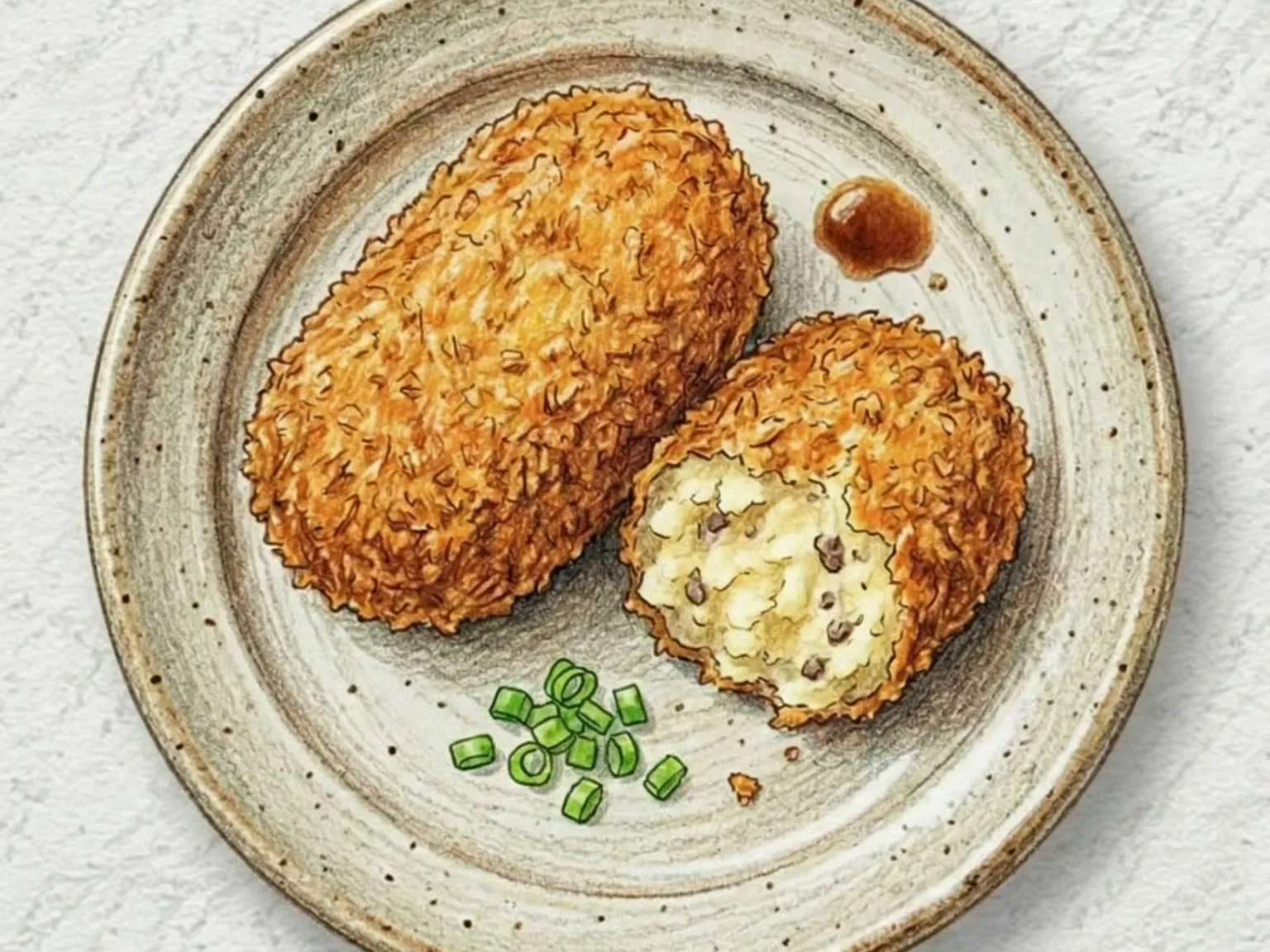
Korokke is a Japanese potato croquette that traces its roots to the French croquette but has evolved into something distinctly its own. Potatoes are boiled until completely soft, mashed while still hot, then mixed with sauteed onion and seasoned ground beef. The mixture is shaped into flat ovals, coated in flour, dipped in beaten egg, and rolled in panko breadcrumbs before frying at around 170 degrees Celsius. The panko crust turns an even golden brown and stays audibly crunchy, while the interior remains fluffy and starchy. A drizzle of Worcestershire or tonkatsu sauce is the standard condiment. In Japan, korokke are a staple of butcher shops and prepared-food counters, where they are fried to order and eaten on the spot or taken home still warm. Cream korokke filled with bechamel and crab, curry-flavored korokke, and pumpkin korokke are among the popular variations.
Adjust Servings
Instructions
- 1
Boil potatoes, mash while hot, and let cool slightly.
- 2
Saute onion and ground beef, seasoning lightly with salt.
- 3
Combine mashed potatoes with the meat mixture and shape into ovals.
- 4
Coat each piece in flour, egg, then panko.
- 5
Fry at 170°C until golden brown, then drain.
As an Amazon Associate, we may earn from qualifying purchases.
Tips
Nutrition (per serving)
More Recipes

Ebi Fry (Japanese Panko-Crusted Shrimp)
Ebi fry emerged during Japan's Meiji-era adoption of Western cuisine, evolving into a signature dish of yoshoku - the Japanese reinterpretation of European food. Preparation begins by snipping the tendons on the shrimp's belly side and pressing it flat so it holds a straight, elongated shape during frying rather than curling. The three-stage coating - flour, egg wash, then coarse panko breadcrumbs - is essential: panko's jagged, irregular flakes puff up in hot oil to create a golden, airy crunch distinctly lighter than fine Western breadcrumbs. Because the shrimp fries briefly at high temperature, the interior stays moist and springy, snapping cleanly when bitten. Tartar sauce, with its creamy acidity, counterbalances the richness of the fried coating, while tonkatsu sauce offers a sweeter, fruitier alternative dip. Ebi fry appears in bento boxes, perched atop curry rice as ebi fry curry, or tucked into soft bread as an ebi katsu sando - a versatility that makes it one of Japan's most enduring yoshoku dishes.

Buta Shogayaki (Japanese Ginger Pork Stir-Fry with Soy Mirin Glaze)
Buta shogayaki - pork ginger stir-fry - is one of the most frequently cooked dishes in Japanese home kitchens, appearing in bento boxes, teishoku set meals, and university cafeterias across the country. Thinly sliced pork loin or shoulder is marinated briefly in a mixture of soy sauce, mirin, sake, and a generous amount of freshly grated ginger. The ginger serves a dual purpose: its enzymes tenderize the meat during the short marinade, and its sharp, aromatic heat carries through the finished dish. The pork is seared quickly in a hot skillet - overlapping is avoided so each slice makes direct contact with the pan and develops a caramelized edge rather than steaming. The marinade is poured in during the final thirty seconds, reducing rapidly into a glossy, sweet-savory glaze that coats every piece. Served over shredded raw cabbage that provides a cool, crunchy contrast to the hot, saucy meat, shogayaki is the kind of meal that Japanese workers crave at the end of a long day - fifteen minutes from pantry to plate, deeply satisfying, and impossible to tire of.

Menchi Katsu (Japanese Deep-Fried Breaded Minced Meat Patty)
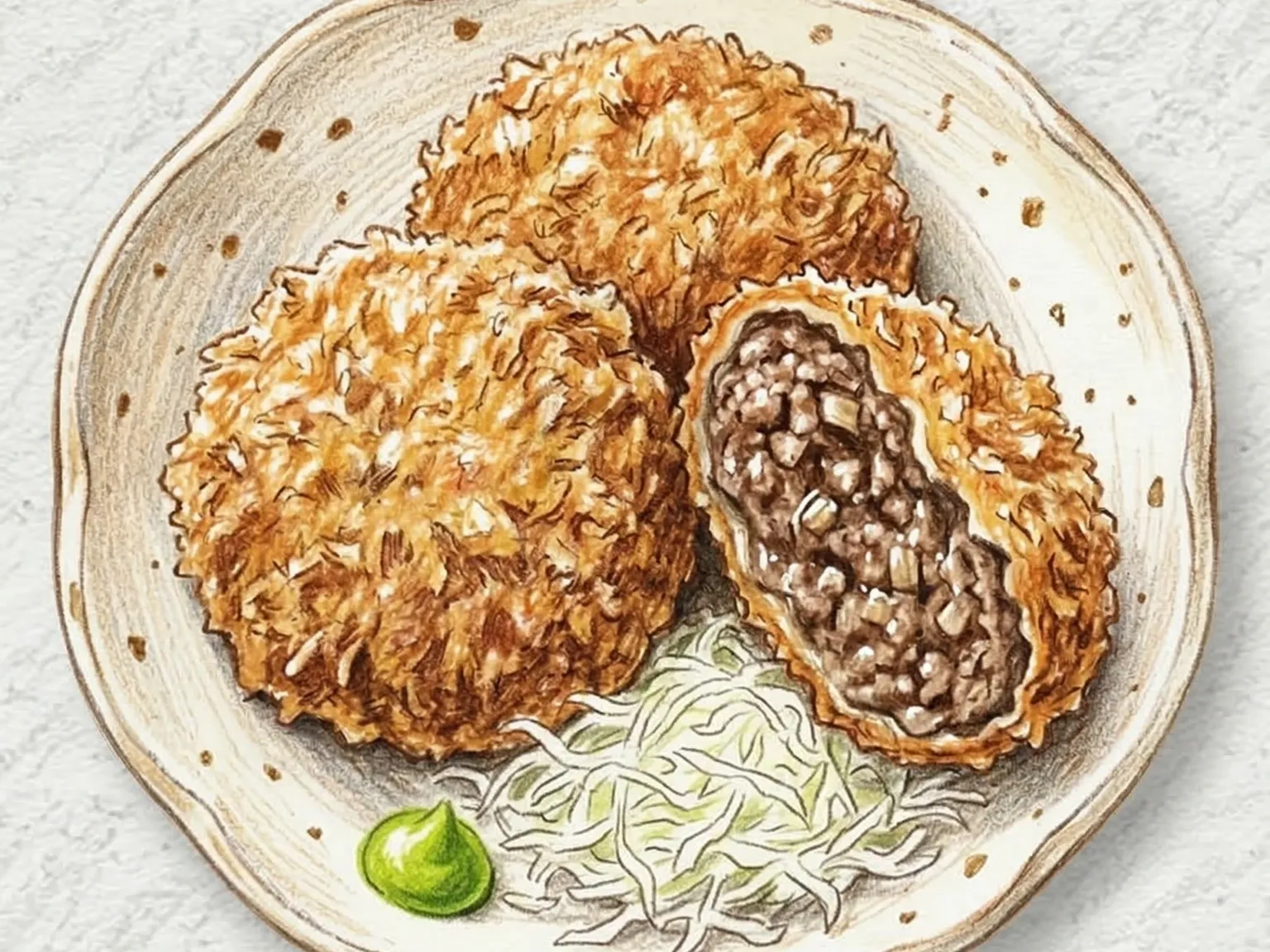
Menchi katsu is a Japanese deep-fried minced meat cutlet that combines ground pork and beef with finely diced onion, shaped into thick patties, coated in flour, egg, and coarse panko breadcrumbs, then fried until the crust turns a deep golden brown. The panko creates a layered, craggy shell that shatters on the first bite, revealing a steaming, juice-filled interior. Caramelized onion mixed into the meat adds a natural sweetness that balances the richness of the pork and beef. It is eaten with a drizzle of Worcestershire or tonkatsu sauce. In Tokyo, buying one fresh from a neighborhood butcher shop and eating it on the spot is a long-standing tradition, and the menchi katsu sandwich - pressed between slices of milk bread - has become a category of its own.

Japanese Savory Steamed Egg Custard
Eggs are beaten with dashi stock, soy sauce, and a splash of cooking wine, then steamed into a silky custard. The high ratio of dashi to egg produces an exceptionally smooth, almost pudding-like texture. Shrimp, shiitake mushroom, and ginkgo nuts are tucked inside, offering small surprises of flavor and texture in each spoonful. Served warm in individual cups, chawanmushi is a classic Japanese appetizer found in both home kitchens and izakaya restaurants.

Yuzu Karaage (Japanese Citrus-Marinated Fried Chicken)
Yuzu karaage is a citrus-accented variation of Japanese fried chicken that incorporates yuzu into the traditional soy-ginger marinade. Boneless chicken thighs are marinated in soy sauce, cooking sake, garlic, ginger, and yuzu marmalade, which infuses the meat with a floral citrus fragrance distinct from lemon or lime. After marinating, the pieces are coated in potato starch and deep-fried until the exterior turns shatteringly crisp while the inside stays moist and well-seasoned. The yuzu adds a bright, aromatic acidity that lifts the richness of the fried coating and dark soy marinade, giving each bite a clean finish rather than a heavy aftertaste.

Japanese Stir-Fried Udon
Yaki udon is a Japanese stir-fried noodle dish where thick udon noodles are tossed in a soy-based sauce over high heat with sliced pork or seafood and vegetables such as cabbage, carrot, and scallion. The high heat gives the noodles lightly charred edges while keeping their chewy center intact. Bonito flakes (katsuobushi) are often scattered on top just before serving, where they wave from the residual heat. The recipe takes about 25 minutes and depends on maintaining strong heat throughout the stir-fry to avoid steaming the noodles.