Charim

2686 Korean & World Recipes

2686+ Korean recipes, clean and organized. Ingredients to instructions, all at a glance.

Kottu Roti (Sri Lankan Shredded Flatbread Stir-Fry with Egg)
Asian Medium

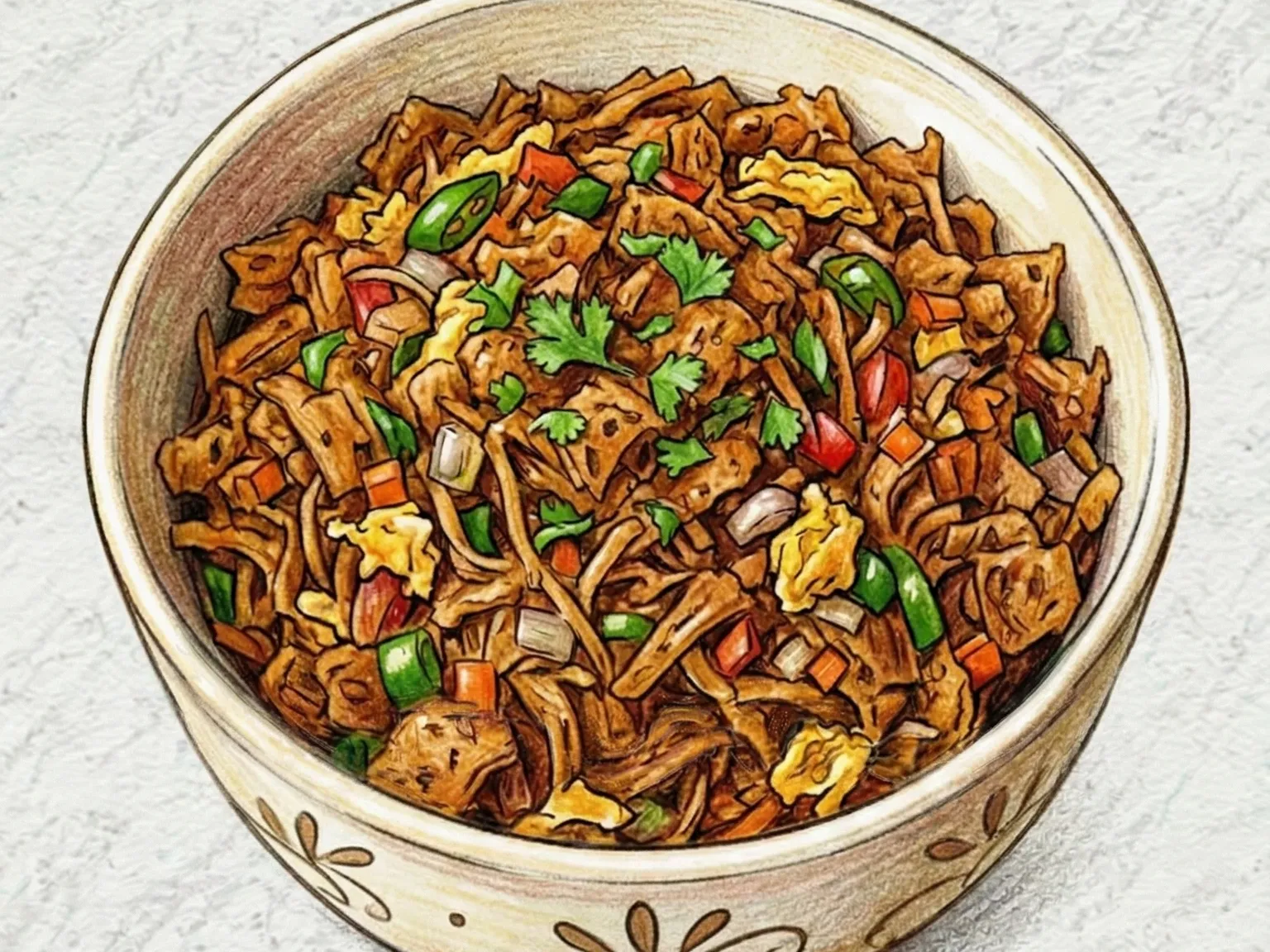
Kottu Roti (Sri Lankan Shredded Flatbread Stir-Fry with Egg)

Kottu roti is a Sri Lankan griddle dish in which flatbread is shredded and stir-fried with vegetables, egg, and spices on a heavy iron surface. The defining feature of its preparation is the sound produced when the cook uses two flat metal blades to simultaneously chop and scrape the ingredients across the griddle in a steady, rhythmic pattern. The metallic clanging carries far enough to be heard from the street and serves as the primary advertisement for kottu roti stalls, most of which operate well into the early hours of the morning. Godamba roti, a thin unleavened flatbread, is sliced into small pieces roughly one centimeter on each side before cooking begins. The griddle is oiled and onion, cabbage, and carrot are fried until wilted, after which eggs are cracked directly onto the surface and scrambled in place. The roti pieces go in next, followed by curry powder, chili flakes, and soy sauce, with the blades kept moving continuously so the heat distributes evenly and the bread absorbs the seasonings rather than sitting on top of them. Soy sauce deepens the color and adds umami, while a ladleful of curry gravy poured over near the end binds the ingredients and prevents dryness. Versions with chicken, lamb, or seafood are widely available, and the spice level can be adjusted to order. The dish is understood to be street food in the fullest sense: fast, loud, served hot off the griddle, and closely associated with late-night eating.

Prep 20min Cook 15min 2 servings

Adjust Servings

2servings
servings

Instructions

  1. 1

    Chop roti into small bite-size strips.

  2. 2

    Heat oil and stir-fry onion, cabbage, and carrot until softened.

  3. 3

    Push vegetables aside, scramble eggs, then combine.

  4. 4

    Add chopped roti, curry powder, chili flakes, and soy sauce; stir-fry on high heat.

  5. 5

    Serve once everything is evenly coated and lightly crisped.

🛒Shop Ingredients on Amazon

As an Amazon Associate, we may earn from qualifying purchases.

Tips

Day-old roti chops better and gives better texture.
Cook quickly over high heat to avoid chewiness.

Nutrition (per serving)

Calories
520
kcal
Protein
15
g
Carbs
62
g
Fat
22
g

Goes Well With

Garlic Olive Oil Pasta
NoodlesEasy

Garlic Olive Oil Pasta

Aglio e olio - garlic and oil - is the pasta Italians make at midnight with nothing in the kitchen but pantry staples. It originated in Naples, where olive oil was abundant and elaborate sauces were a luxury that working-class cooks could not afford. The entire dish depends on technique: garlic must be sliced thin and toasted slowly in generous olive oil over low heat until fragrant and barely golden - a matter of seconds past that point and it turns acrid and bitter. Peperoncino flakes go in briefly to release their capsaicin into the oil before the heat is adjusted. The real transformation happens when starchy pasta water hits the hot oil: it emulsifies into a silky, clinging sauce that coats every strand of spaghetti with a thin, even film rather than pooling at the bottom of the bowl. No cream, no cheese in the traditional version - just the clean triad of garlic, chili, and good olive oil. Flat-leaf parsley scattered on at the end contributes a fresh herbal brightness that lifts the whole dish.

🏠 Everyday🌙 Late Night
Prep 10minCook 15min2 servings
Korean Bacon Kimchi Fried Rice
RiceEasy

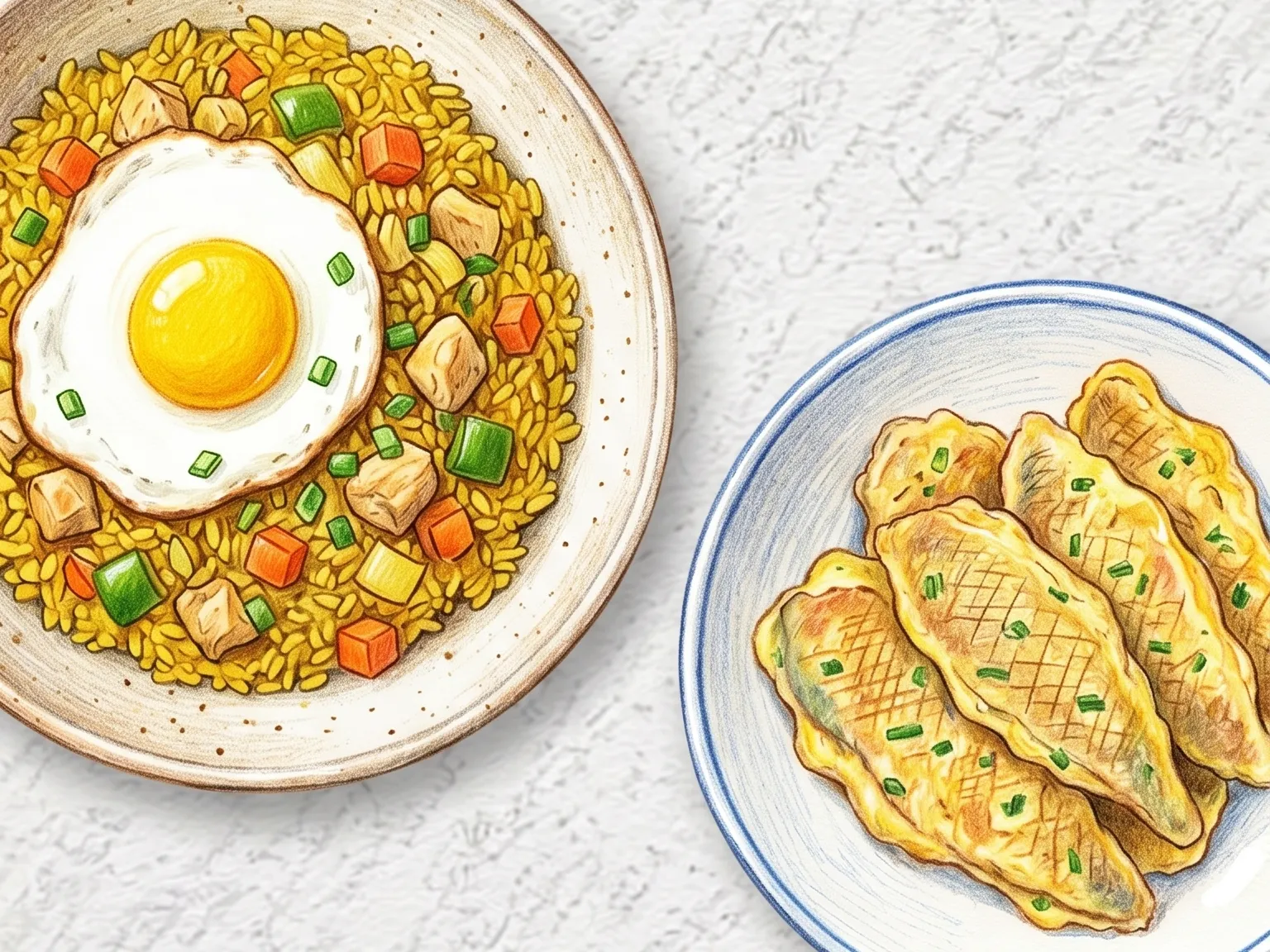
Korean Bacon Kimchi Fried Rice

Bacon kimchi fried rice takes the most common Korean leftover combination - cold rice and aging kimchi - and substitutes rendered bacon fat for the traditional sesame oil base. The bacon goes into a cold pan and cooks slowly so the fat renders completely before the meat crisps, creating a pool of smoky drippings that replace cooking oil entirely. Well-fermented kimchi, squeezed of excess juice and chopped roughly, goes into the hot fat and sizzles until its edges caramelize and the sharp lactic tartness mellows into a deeper, roasted sourness. Day-old rice is pressed flat against the pan to develop a crust reminiscent of nurungji - the scorched rice layer that fried rice enthusiasts seek. Soy sauce and a pinch of sugar season the dish, though both should be used in small amounts to avoid masking the interplay between the bacon's smokiness and the kimchi's fermented character. A fried egg on top, with a yolk still runny, becomes a sauce when broken and stirred through the rice. Bacon became a standard Korean grocery item in the 2000s, and this dish has since become a common home-cooking variation, with many cooks preferring its deeper, smokier flavor profile over the sesame oil original.

🏠 Everyday🍱 Lunchbox
Prep 10minCook 12min2 servings
Korean Poke Bowl Salad
SaladsMedium

Korean Poke Bowl Salad

Sashimi-grade tuna is cut into 1.5-centimeter cubes and kept well chilled before being arranged over brown rice in a Korean-inflected poke bowl. A sauce of soy sauce, sesame oil, and gochujang coats the tuna's clean, fatty flesh with the spicy and nutty character that defines Korean seasoning. Avocado provides a creamy, lush texture that envelops the lean fish, while seaweed salad contributes a slippery, chewy marine layer with a pronounced oceanic aroma. Thinly sliced cucumber adds a cool, crisp contrast, creating textural variety across every spoonful. Brown rice serves as the dense, slightly nutty foundation that anchors the toppings and transforms the bowl into a complete meal containing protein, healthy fats, and complex carbohydrates in a single serving. Salmon or flounder can substitute for tuna without changing the method, and adjusting the amount of gochujang in the sauce lets you dial the heat to your preferred level.

🥗 Light & Healthy🏠 Everyday
Prep 20min2 servings
Korean Spicy Stir-fried Cartilage
DrinksMedium

Korean Spicy Stir-fried Cartilage

Odolppyeo-bokkeum is a fiery Korean stir-fry of chicken cartilage marinated in a sauce of gochujang, gochugaru, soy sauce, garlic, and sugar, then cooked at maximum heat for a short burst. The cartilage delivers a distinctive crunch-then-chew that no other cut can replicate, and thorough drying with paper towels before marinating ensures the sauce clings directly to the surface. After ten minutes of marinating, the cartilage hits a ripping-hot oiled pan to pick up smoky wok char, followed by onion, green onion, and hot green chilies that are tossed until all moisture evaporates and the glaze turns glossy. Keeping the total stir-fry time brief is critical, since prolonged cooking turns the cartilage from pleasantly crunchy to unpleasantly tough.

🍺 Bar Snacks🌙 Late Night
Prep 15minCook 12min2 servings

More Recipes

Roti Canai (Malaysian Flaky Ghee Flatbread with Curry Dip)
AsianHard

Roti Canai (Malaysian Flaky Ghee Flatbread with Curry Dip)

Roti canai is a flaky, pan-fried flatbread served at mamak stalls across Malaysia from dawn until late at night. The dough is enriched with ghee and stretched by hand until nearly translucent, then folded back onto itself multiple times to create dozens of paper-thin layers. On a well-oiled griddle, the bread puffs and crisps on the outside while the interior stays chewy and layered. Each tear reveals the laminated structure inside. The standard pairing is a bowl of dhal curry for dipping, though sardine curry and chicken curry are equally common. Variations abound: roti telur folds in a beaten egg, roti pisang wraps sliced banana inside, and roti bom is a thicker, butterier version dusted with sugar. The bread is torn by hand, never cut, and the best versions leave a faint sheen of ghee on the fingers.

🎉 Special Occasion
Prep 40minCook 20min4 servings
Murtabak (Malaysian Stuffed Pan-Fried Flatbread with Spiced Beef and Egg)
AsianMedium

Murtabak (Malaysian Stuffed Pan-Fried Flatbread with Spiced Beef and Egg)

Murtabak is a stuffed pan-fried flatbread popular across Malaysia, Singapore, and Indonesia. Wheat dough is stretched paper-thin by hand, then folded around a filling of curry-spiced ground beef and beaten eggs before being pan-fried on a well-oiled griddle. The result is a multilayered parcel with a shatteringly crisp exterior and a moist, savory interior where the egg binds the spiced meat into a cohesive layer. Street vendors typically cut it into squares and serve it alongside a bowl of sweet curry dipping sauce. The aroma of curry powder and caramelized onion stays trapped inside the folds, releasing in waves with each bite.

🎉 Special Occasion
Prep 25minCook 20min2 servings
Beef Pad See Ew (Thai Wok-Fried Wide Rice Noodles in Dark Soy)
AsianEasy

Beef Pad See Ew (Thai Wok-Fried Wide Rice Noodles in Dark Soy)

Beef pad see ew is a Thai wok-fried noodle dish built around wide rice noodles and dark soy sauce. The name translates to 'fried with soy sauce,' and broad, silky noodles are stained deep brown by dark soy, balanced with light soy and oyster sauce for a sweet-savory glaze. Thinly sliced beef is seared first in a blazing wok, then noodles go in to absorb the sauce and char slightly against the hot metal. Chinese broccoli or kale adds crunch from its stems and softness from its leaves. The defining element is wok hei - the smoky flavor that only comes from letting noodles sit against the wok until they pick up toasted spots.

🏠 Everyday🌙 Late Night
Prep 15minCook 10min2 servings
Pav Bhaji (Mumbai Street Food Spiced Mashed Vegetable Curry with Bread)
AsianEasy

Pav Bhaji (Mumbai Street Food Spiced Mashed Vegetable Curry with Bread)

Pav bhaji is a street-food staple born on the pavements of Mumbai. A medley of boiled potatoes, cauliflower, peas, and carrots is mashed together on a hot griddle, then cooked down with generous amounts of butter and a proprietary spice blend called pav bhaji masala. Tomatoes and onions form the aromatic base, while the masala contributes warm, earthy heat that deepens with each pass of the spatula. The accompanying soft bread rolls are split and toasted on a buttered griddle until golden on the cut side. Raw onion rings, a wedge of lemon, and a knob of extra butter placed on top of the simmering bhaji are the traditional garnish. The dish is designed to be eaten fast and hot, scooped directly from the communal pan.

🧒 Kid-Friendly
Prep 20minCook 30min4 servings
Korean Egg Dumpling Pancakes
Street foodEasy

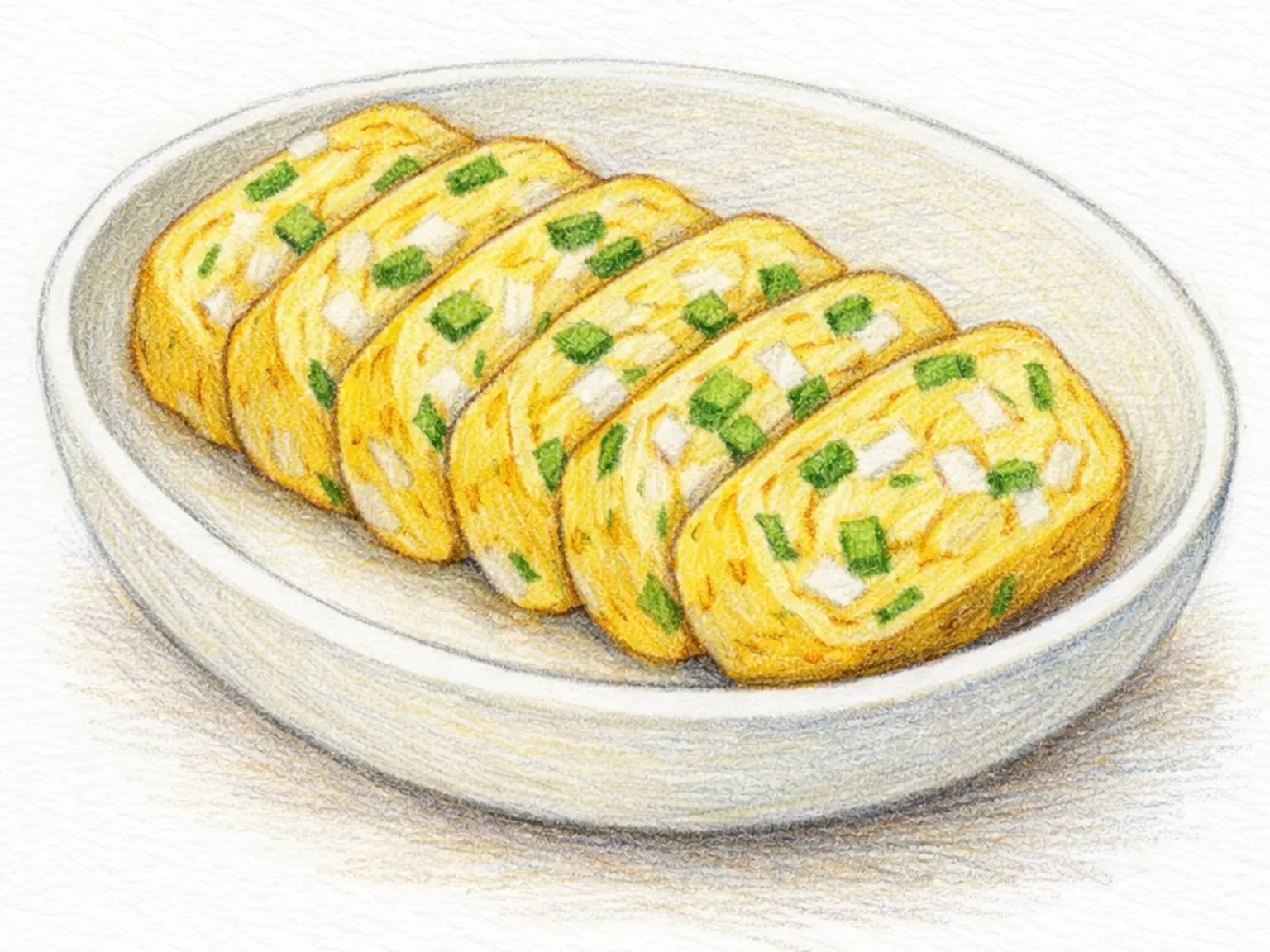
Korean Egg Dumpling Pancakes

Gyeran-mandu is a Korean market-style egg dumpling pancake made by mixing finely chopped cabbage, scallion, and soaked glass noodles into beaten egg, then pan-frying the mixture into flat, palm-sized rounds. Rather than using a traditional flour wrapper, the egg itself forms the outer shell that binds and seals the filling. The patties cook slowly over medium-low heat, giving the surface time to turn lightly golden while the interior stays moist and tender. Squeezing the excess moisture from the vegetables before mixing is the most critical step - too much water and the patties spread and lose their shape before the egg can set. Glass noodles must be cut into short lengths so the rounds hold together and flip without falling apart. A thin layer of oil in the pan and a lid placed on top help the egg cook evenly without burning. Dipping the finished patties into a sauce of soy sauce, vinegar, and a pinch of gochugaru brings a salty-tangy contrast that complements the mild richness of the egg.

🧒 Kid-Friendly
Prep 12minCook 10min2 servings
Korean Deep-Fried Egg (Battered Boiled Egg with Crispy Golden Shell)
Street foodEasy

Korean Deep-Fried Egg (Battered Boiled Egg with Crispy Golden Shell)

Gyeran-twigim is a Korean street snack of peeled boiled egg coated in a thin cold-water batter and fried at 170 degrees Celsius until the shell turns golden and crisp. The batter is mixed minimally, just enough to combine the frying powder and cold water without lumps, because a thinner coat lets the egg's own flavor carry through while a heavy coat buries it. When the egg is soft-boiled, the yolk stays semi-liquid inside the crunchy shell, creating a dramatic contrast the moment the outer crust breaks. Hard-boiling produces a crumbly, dry yolk with a dense, satisfying texture instead. A pinch of coarse salt is the only seasoning needed to bring out the egg's natural richness. Dipping the fried egg into the spicy-sweet broth from a bowl of tteokbokki transforms it entirely, as the porous batter absorbs the sauce and takes on the deep, savory-sweet heat of the stew.

🧒 Kid-Friendly🌙 Late Night
Prep 10minCook 8min2 servings
More Asian →