Kougelhopf (Alsatian Raisin Almond Bundt Cake)
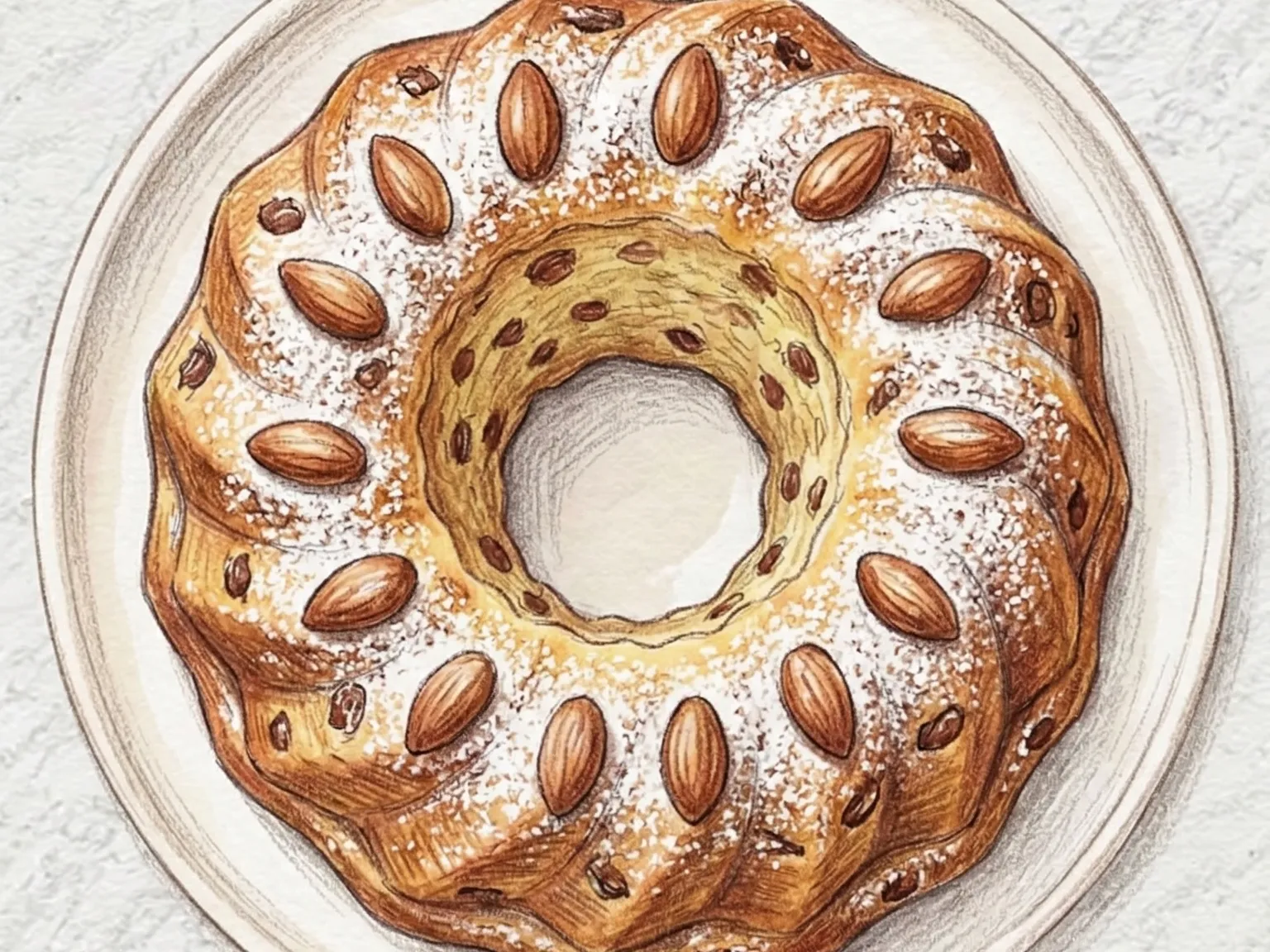
This yeasted cake from the Alsace region of France is baked in a distinctive fluted ring mold that gives it a crown-like silhouette. The dough is enriched with butter and eggs and kneaded until it develops a soft, brioche-like crumb that stays moist for days. Raisins are folded into the batter, releasing pockets of gentle sweetness with each bite, while whole almonds placed at the bottom of the mold become a decorative and crunchy topping once the cake is inverted. Two separate rises, the first to develop flavor and the second inside the mold to set the shape, require patience but reward the baker with an airy, delicate interior. Generously buttering every groove of the mold is essential for a clean release; any missed spot means the cake tears when turned out. A dusting of powdered sugar after cooling completes the presentation with an elegant, snow-capped look that makes the kougelhopf as appealing on the table as it is on the palate.
Adjust Servings
Instructions
- 1
Dissolve and activate yeast in milk.
- 2
Mix flour, sugar, and eggs, then knead in butter.
- 3
Add raisins and let the dough rise for 60 minutes.
- 4
Place almonds in a buttered mold, add dough, and proof again.
- 5
Bake at 180C for 35-40 minutes, cool, then dust with powdered sugar.
As an Amazon Associate, we may earn from qualifying purchases.
Tips
Nutrition (per serving)
Goes Well With

Clafoutis (French Baked Cherry Custard Dessert)
Clafoutis is a traditional French dessert from the Limousin region made by arranging fresh cherries in a buttered baking dish, then pouring over a thin batter of eggs, sugar, milk, and flour and baking at 180 degrees Celsius for thirty to thirty-five minutes. The batter is considerably thinner than pancake batter, and the result when baked is a texture that sits between a creamy custard and a light sponge -- the edges puff and turn golden while the center around the cherries stays moist and yielding. Using unpitted cherries is the traditional method: the pits release a faint almond scent during baking that perfumes the surrounding batter in a way that pitted fruit cannot replicate. The cherries also hold their shape better with the pits in. Vanilla extract deepens the egg-and-milk base, and the cherries' own tart juice seeps into the batter during baking, creating concentrated pockets of fruit flavor that balance the overall sweetness. Clafoutis is served directly from the baking dish, typically dusted with powdered sugar and brought to the table while still warm, because the custard texture softens and loosens slightly as it cools, making the warm version noticeably more appealing. Made with blueberries, plums, or apricots instead of cherries, the dessert takes a different name -- flaugnarde -- though the technique remains identical.

Apple Fennel Walnut Salad
This salad pairs three ingredients whose textures and flavors run in different directions - crisp apple, anise-scented fennel, and bitter walnuts - and unifies them with a honey-lemon dressing. Thinly sliced fennel bulb contributes a licorice-like fragrance that is more aromatic than sweet, while its celery-crisp texture holds a firm contrast against the apple's softer flesh. Toasted walnuts add a crunchy, tannic bitterness that anchors the lighter elements and keeps the salad from reading as merely sweet. The dressing is deliberately minimal - fresh lemon juice, honey, a small amount of olive oil, and a pinch of salt - so the ingredients carry the flavor rather than the sauce. Assembling just before serving prevents the apple from browning. Salads of this type appear on autumn and winter tables in France and Italy when local apples and fennel come into season together, and can be served as a standalone starter or alongside roasted poultry, where the anise note in the fennel cuts through the meat's richness. Fennel has a long association with digestive support in Mediterranean cooking, which is partly why it has traditionally been served alongside fatty meats, and this salad draws on the same pairing logic.

Chestnut Sweet Jelly (Korean Agar-Set Chestnut White Bean Confection)
Bam yanggaeng is built from three components: chestnut puree, white bean paste, and agar powder. Boiled chestnuts are mashed fine and combined with the bean paste, then dissolved agar, sugar, and honey are stirred into the mixture before it is brought to a brief boil. Poured into a mold and left to cool at room temperature, the agar sets the block into firm, clean-slicing slabs - a texture that comes from agar's sharp recrystallization as it cools, which produces a harder and more abrupt snap than gelatin-based confections. The starchy density of chestnuts gives the cross-section a smooth, fine-grained quality that plain bean paste lacks. A small amount of salt is critical: it draws the sweetness into focus rather than muting it. Skimming air bubbles before pouring ensures a flat, even surface. Prepared as a holiday gift in Korean households for generations, the finished block keeps in the refrigerator for about a week without losing texture.

Korean Sweet Corn Latte (Butter Sauteed Corn Milk Drink)
Sweet corn latte begins by sauteing cooked corn kernels in butter until fragrant, then simmering them in milk to draw out the corn's natural sugars before blending everything smooth. The butter amplifies the starchy, roasted aroma during the initial saute, coating each kernel so that the fat-soluble flavor compounds dissolve fully into the milk during the five-minute simmer. Blending the mixture until completely smooth and then straining it through a fine sieve removes any remaining hull pieces, producing a texture as silky as a custard sauce. This straining step makes a noticeable difference in the final quality. Condensed milk adds a rounded sweetness, and a small amount of white pepper introduces a faint spiced warmth that gives the drink depth beneath the sweetness. It works equally well served hot in a ceramic mug or chilled and poured over ice; the corn aroma remains vivid in both versions.
More Recipes

Vanilla Honey Madeleines (French Shell Cakes with Honey)
Eggs, sugar, and honey are whisked together, then combined with melted butter, cake flour, and vanilla to form a batter that bakes into small, shell-shaped French cakes with a characteristic bump on the back. The honey works alongside sugar to sweeten the madeleine while contributing a floral undertone that plain sugar cannot provide. Melted butter saturates the batter with richness, and vanilla bridges the honey and butter flavors into a cohesive aroma. Chilling the batter for at least thirty minutes is the key to the signature hump - the cold batter hitting the hot oven creates a rapid rise in the center while the edges have already begun to set. Each mold cavity should be well-buttered and filled to eighty percent to ensure clean edges and consistent shape. Baking time is brief, ten to twelve minutes, and the madeleines must be removed as soon as the rims turn golden to preserve the moist, spongy interior. They are best eaten within hours of baking, when the crust is still faintly crisp and the center yields softly.

Chestnut Madeleine (French Shell Cake with Chestnut Butter Batter)
Chestnut madeleine is a small French cake baked in shell-shaped molds with chestnut paste folded directly into the batter. The chestnut brings a warm, starchy sweetness that layers with butter and honey, producing a flavor that is understated but noticeably complex. The signature dome, known as the hump, rises properly only when the batter is rested in the refrigerator for at least an hour before baking, then transferred directly into a hot oven. This temperature shock is what drives the rapid rise in the center. The crumb is light and moist, and the chestnut flavor comes through clearly rather than being absorbed by the butter. Warm milk or a latte amplifies the roasted chestnut notes, and the compact size makes these ideal for packaging as gifts.

Honey Madeleines (Buttery Shell-Shaped French Cakes)
Honey madeleines are small French sponge cakes characterized by their shell-like shape and the prominent rounded mound that rises on their underside during the baking process. To successfully create this characteristic hump, the prepared batter must be rested in a refrigerator until it is thoroughly chilled before being placed into a preheated oven set to a high temperature. This specific thermal shock between the cold batter and the hot air causes the outer edges of the cake to set almost immediately. While the exterior firms up, the steam generated inside the batter is forced upward through the center, resulting in the distinct bump that separates a correctly baked madeleine from one that remains flat. The recipe utilizes a high proportion of melted butter to ensure the edges are crisp and develop a deep golden color. By substituting a portion of the standard granulated sugar with honey, the cakes gain a specific floral sweetness and a rounded flavor profile that sugar alone cannot provide. When served fresh from the oven, the exterior provides a light crunch that gives way to a moist and spongy texture inside. This combination releases the fragrance of toasted butter and warm honey as the cake is eaten. The addition of lemon zest to the batter introduces a sharp citrus quality. This component serves to balance the inherent richness of the butter and prevents the flavor from becoming overly heavy on the palate. Madeleines are best consumed within a very narrow window of time, ideally within thirty minutes of leaving the oven. During this period, the outer shell retains its crispness while the center of the cake is still warm. These cakes are commonly served alongside a cup of black tea or coffee as a simple afternoon snack.

Hallabong Marmalade Madeleines
These shell-shaped madeleines incorporate hallabong marmalade directly into the batter, delivering bursts of candied citrus peel and sweet mandarin flavor in every bite. A properly baked madeleine rises with a characteristic bump on top, and these are no exception. The marmalade adds extra moisture, keeping the crumb softer and more tender than a classic plain version. Small pieces of preserved hallabong rind within the batter provide occasional chewy texture against the otherwise pillowy cake. They are best eaten warm, minutes after leaving the oven, though they hold their softness well in an airtight container through the next day. Black tea or Earl Grey is the natural companion, as the bergamot in the tea echoes the hallabong's citrus character.

Chocolate Lava Cake
Chocolate lava cake bakes a batter of melted dark chocolate, butter, whole eggs, egg yolks, sugar, and a small measure of flour in buttered ramekins at 220 degrees Celsius for ten to twelve minutes, producing a set crust and molten center from a single brief baking window. The high oven temperature firms the outside and top of the batter into cake while the core stays liquid, so breaking the surface with a spoon releases a slow pour of concentrated warm chocolate. High-cacao dark chocolate provides a complex, bittersweet depth that pairs with the richness of butter fat, and vanilla extract softens and rounds the overall aroma. Timing controls everything in this recipe: overbaking by even two minutes sets the center solid and destroys the signature flow. The edges of each ramekin should feel just firm when pressed lightly through a towel at the ten-minute mark. Ramekins can be filled ahead and refrigerated, but the baking time then needs an extra one to two minutes to account for the colder starting temperature. Serving with a scoop of vanilla ice cream or a spoonful of cold heavy cream creates a striking contrast between the hot, dense chocolate interior and the chilled, lighter dairy.

Clafoutis (French Baked Cherry Custard Dessert)
Clafoutis is a traditional French dessert from the Limousin region made by arranging fresh cherries in a buttered baking dish, then pouring over a thin batter of eggs, sugar, milk, and flour and baking at 180 degrees Celsius for thirty to thirty-five minutes. The batter is considerably thinner than pancake batter, and the result when baked is a texture that sits between a creamy custard and a light sponge -- the edges puff and turn golden while the center around the cherries stays moist and yielding. Using unpitted cherries is the traditional method: the pits release a faint almond scent during baking that perfumes the surrounding batter in a way that pitted fruit cannot replicate. The cherries also hold their shape better with the pits in. Vanilla extract deepens the egg-and-milk base, and the cherries' own tart juice seeps into the batter during baking, creating concentrated pockets of fruit flavor that balance the overall sweetness. Clafoutis is served directly from the baking dish, typically dusted with powdered sugar and brought to the table while still warm, because the custard texture softens and loosens slightly as it cools, making the warm version noticeably more appealing. Made with blueberries, plums, or apricots instead of cherries, the dessert takes a different name -- flaugnarde -- though the technique remains identical.