Kung Pao Chicken
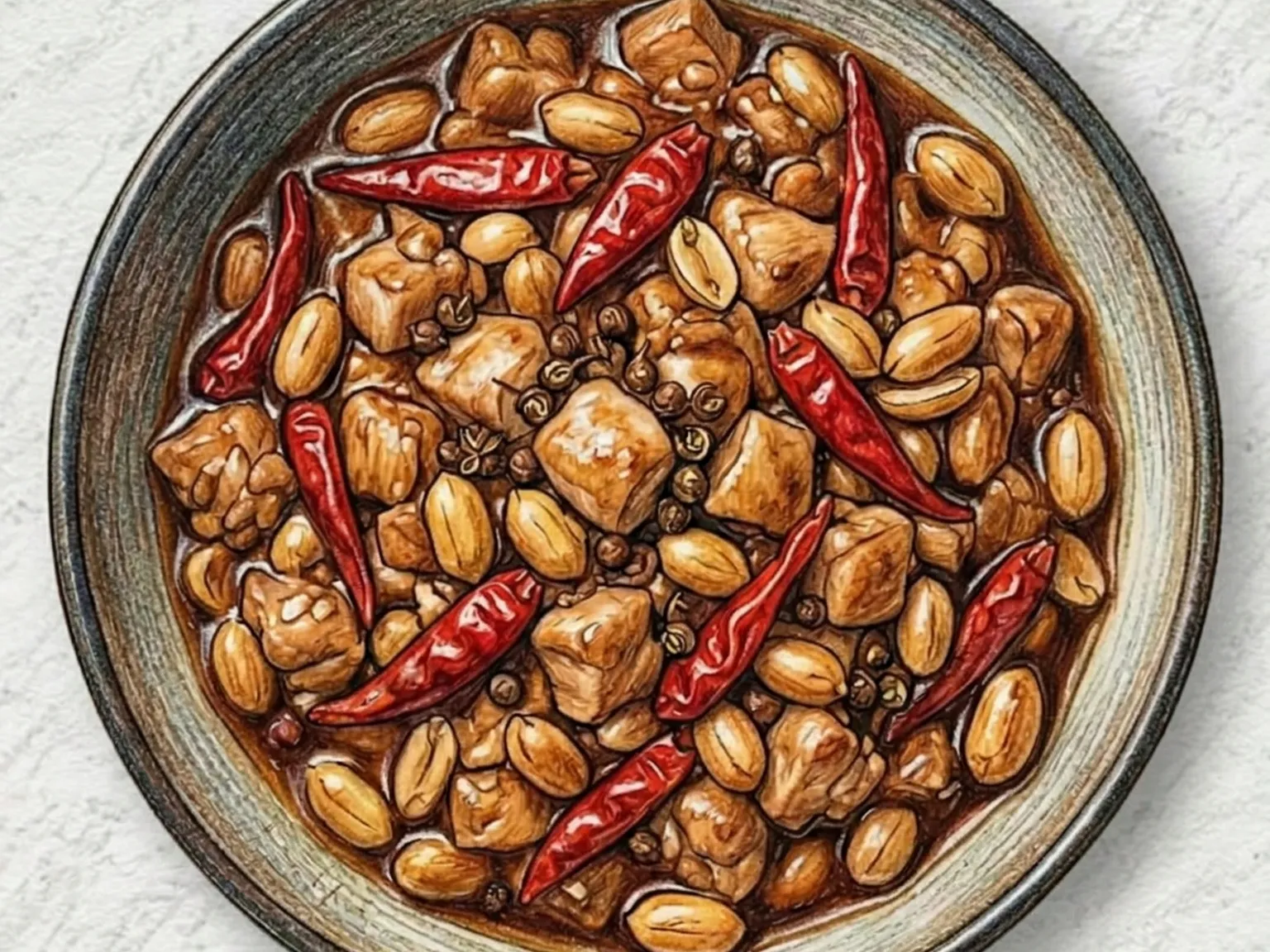
Kung pao chicken is a landmark dish of Sichuan cuisine, combining diced chicken, roasted peanuts, and dried chilies in a sauce that is simultaneously spicy, sweet, sour, and numbing. The chicken is cut into small cubes and marinated briefly in soy sauce and cornstarch, which creates a thin coating that seals in moisture when the meat hits the searing-hot wok. Dried red chilies and Sichuan peppercorns are fried in oil first, infusing it with their heat and the distinctive tingling sensation known as mala. The sauce - a balanced mixture of soy sauce, black vinegar, and sugar - is added at the end and reduced quickly into a glossy glaze that clings to every piece. Roasted peanuts are tossed in just before serving to preserve their crunch, and chopped scallion adds a final layer of freshness. The interplay of spice, tang, and nuttiness in each bite explains why this dish has traveled far beyond Sichuan to become one of the most recognized Chinese dishes worldwide.
Adjust Servings
Instructions
- 1
Cube chicken and marinate with cornstarch and soy sauce.
- 2
Stir-fry dried chilies and Sichuan peppercorns first on high heat.
- 3
Add chicken and stir-fry until cooked.
- 4
Add sauce of soy sauce, vinegar, sugar.
- 5
Add peanuts at the end and toss.
As an Amazon Associate, we may earn from qualifying purchases.
Tips
Nutrition (per serving)
More Recipes

Sichuan Spicy Tofu (Mapo Tofu)
Mapo tofu is the dish that defines Sichuan cooking for much of the world. Blocks of silken tofu are slid into a wok with ground pork, doubanjiang (fermented chili bean paste), and a generous measure of ground Sichuan pepper, then cooked until the sauce thickens and clings to every cube. The doubanjiang provides a deep, fermented heat and ruddy color, while the Sichuan pepper delivers the numbing sensation - ma - that makes the dish unmistakable. Spooned over steamed rice, the sauce soaks into every grain. The interplay of ma (numbing) and la (spicy) is Sichuan cuisine's signature, and no dish demonstrates it more directly than this one.

Pad Kra Pao (Thai Holy Basil Stir-Fried Minced Meat with Egg)
Pad kra pao is the single most common everyday meal in Thailand - a wok-fried dish of minced meat with holy basil and chilies, spooned over steamed rice and topped with a fried egg. Garlic and fresh chilies are roughly pounded and fried in a smoking-hot wok until fragrant, then ground pork goes in and is broken apart quickly. Oyster sauce, fish sauce, soy sauce, and a pinch of sugar create the seasoning base. A generous handful of holy basil leaves is tossed in at the end, releasing a peppery, clove-like aroma that defines the dish. The fried egg should have crispy lacy edges and a runny yolk that becomes a sauce when broken.

Guo Bao Rou (Sweet and Sour Crispy Pork)
Guo bao rou - literally 'pot-wrapped meat' - is the signature dish of Northeastern Chinese cuisine, created in late Qing Dynasty Harbin to entertain Russian diplomats who found traditional Chinese flavors too unfamiliar. Pork tenderloin or loin is sliced thin and coated heavily in potato starch, fried once to set the crust, then fried a second time at higher temperature to puff the starch into a shatteringly crisp shell - this double-frying technique is non-negotiable. A sauce of vinegar, sugar, and soy sauce is reduced rapidly in a hot wok until it caramelizes, then the crispy pork is tossed through in a motion that must take no more than thirty seconds - any longer and the starch absorbs the liquid, destroying the crunch. The original Harbin version leans heavily on vinegar's sharp tang with a pale color, while versions that migrated south or into Korean-Chinese kitchens often substitute ketchup for a sweeter, redder result. Each piece delivers a triple texture: a glassy sauce coating on the outside, a shattering starch layer beneath, and soft, yielding pork at the center.

Hui Guo Rou (Twice-Cooked Pork)
Hui guo rou, literally 'twice-cooked pork,' is a cornerstone of Sichuan cuisine where pork belly is first simmered whole until cooked through, then cooled and sliced thin before returning to the wok. The initial boiling renders some fat and firms the meat so it can be cut into uniform slices. In the wok, these slices fry until their edges curl and crisp slightly while the fat layers turn chewy rather than flabby. Doubanjiang, the fermented chili bean paste central to Sichuan cooking, goes in next along with fermented black beans, and together they create the dish's signature salty-spicy backbone. Soy sauce and a pinch of sugar round out the seasoning. Diagonally sliced leek and green bell pepper are added only in the final one to two minutes over high heat, keeping their crunch and fresh color against the deeply flavored pork.

Mala Biang Biang Noodles (Wide Numbing Chili Oil Noodles)
Mala biangbiang noodles are wide, thick Chinese noodles dressed in chili oil, doubanjiang, soy sauce, and black vinegar, delivering a layered heat that is both numbing and spicy. Sichuan peppercorn is briefly warmed in oil on low heat to release its characteristic tingling compound without turning bitter. The fermented saltiness of doubanjiang and the deep acidity of black vinegar combine into a sauce that goes well beyond simple heat. Cooking the noodles one minute under the package time keeps the broad strands bouncy and chewy, and tossing them vigorously ensures the sauce coats every surface. Bok choy blanched for forty seconds in the same pot adds a crisp, green contrast to the rich, oily noodles.

Crispy Chili Garlic Chicken
Kkanpunggi is a Korean-Chinese dish of chicken thigh pieces coated in potato starch and deep-fried until shattering-crisp, then tossed quickly over high heat in a sauce built from garlic, dried chilies, soy sauce, vinegar, and sugar. The thin glaze coats the crunchy exterior with a balance of salty, sour, and sweet notes without softening it. Intense garlic aroma and the slow burn of dried chilies define the dish's character, and speed is essential - the chicken must be served immediately to preserve its crunch. It is one of the most popular anju dishes, frequently ordered alongside beer or soju.