Singaporean Spicy Noodle Soup
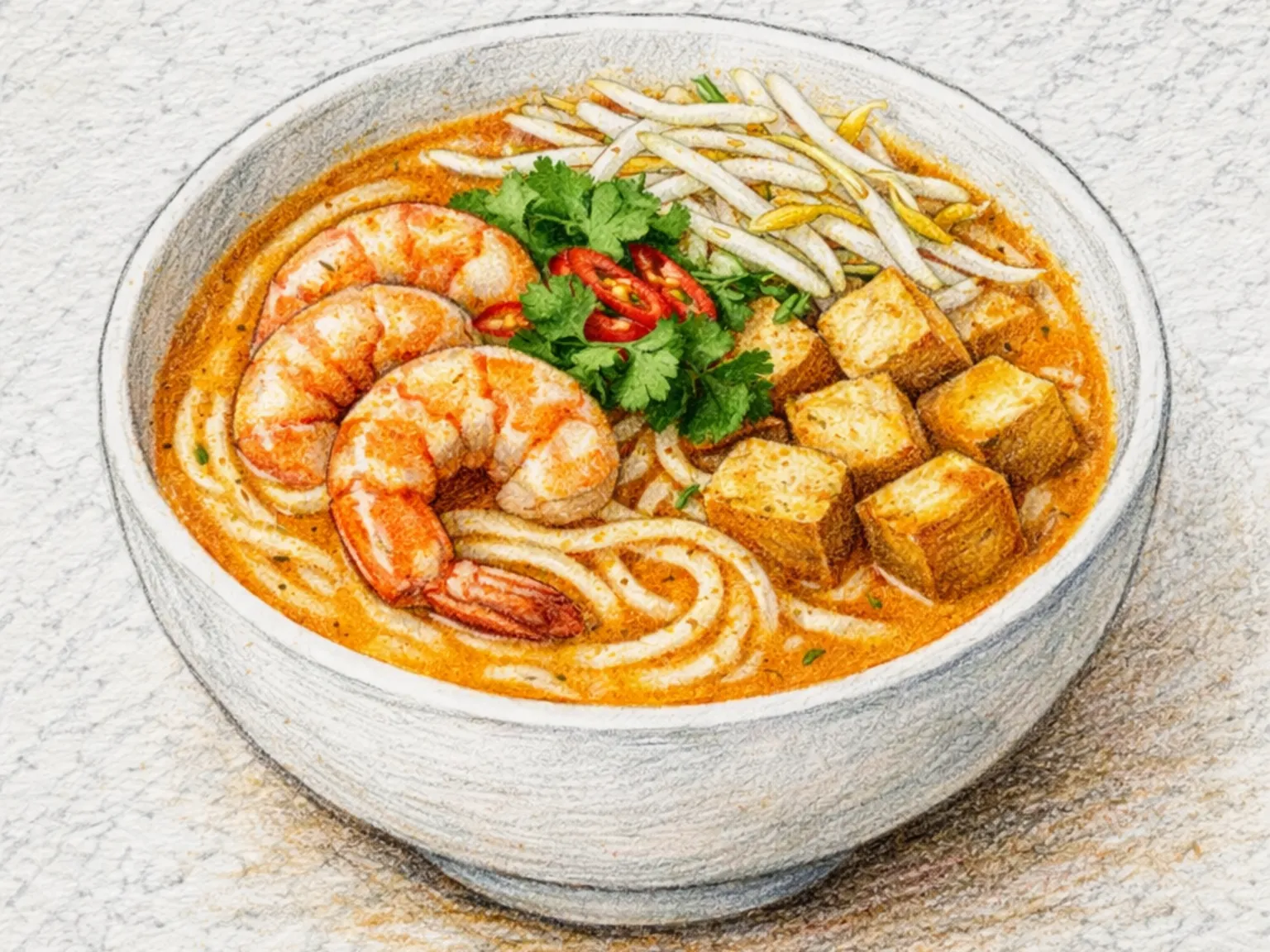
Laksa is a spicy coconut noodle soup from Singapore and Malaysia. The dish starts with a laksa paste - typically containing lemongrass, galangal, shrimp paste, and chili - stir-fried in oil until intensely fragrant. Coconut milk and shrimp stock are added to build a thick, aromatic broth, which is then seasoned with fish sauce. Shrimp and fried tofu puffs simmer briefly in the broth, providing protein without overcooking. Rice vermicelli is soaked in hot water until pliable and placed in the bowl before the broth is ladled over. Bean sprouts, halved boiled eggs, and a wedge of lime are arranged on top. Store-bought laksa paste works well for convenience, though homemade paste yields a more layered, complex flavor. Full-fat coconut milk is recommended over light versions for the proper creamy body.
Adjust Servings
Instructions
- 1
Soak rice vermicelli in hot water for 3~5 minutes.
- 2
Stir-fry laksa paste in a pan until fragrant.
- 3
Add shrimp stock and coconut milk, bring to a boil.
- 4
Add shrimp and tofu puffs, cook 3 minutes, season with fish sauce.
- 5
Place noodles in bowls, ladle soup over, top with bean sprouts, egg, and lime.
As an Amazon Associate, we may earn from qualifying purchases.
Tips
Nutrition (per serving)
More Recipes

Korean Spicy Beef Soup Noodles
Yukgaejang guksu starts with a deep broth made by simmering beef brisket until the liquid turns rich and full-bodied. The meat is shredded along the grain and returned to the pot alongside fernbrake, bean sprouts, and green onion that have been seasoned with gochugaru, sesame oil, and garlic before a brief stir-fry. This pre-seasoning step lets the chili heat dissolve into the oil, producing a rounded spiciness rather than raw powder burn. Korean soup soy sauce adjusts the salt level without clouding the broth's color. Thin wheat somyeon noodles are boiled separately and added at the end so they absorb the broth without turning mushy. Swapping in glass noodles changes the texture to a chewier, more slippery bite that holds onto the soup longer.

Coconut Shrimp Laksa (Spiced Coconut Broth Noodle Soup with Shrimp)
Coconut shrimp laksa is a Southeast Asian noodle soup built on a broth of coconut milk, spice paste, and chicken stock that manages to be simultaneously rich, spicy, and aromatic. The laksa paste - a pounded blend of lemongrass, galangal, turmeric, dried shrimp, dried chilies, and shrimp paste - is fried in oil until deeply fragrant before coconut milk and stock are poured in. The resulting broth is thick and creamy with visible pools of chili oil floating on the surface. Shrimp are cooked shell-on in the broth to extract maximum flavor, then peeled and placed back on top. Rice noodles form the base of each bowl, topped with bean sprouts, halved hard-boiled egg, and cubes of fried tofu puff that soak up the broth like sponges. A squeeze of lime and a drizzle of fish sauce finish the bowl, adding acid and salt that sharpen the richness of the coconut. In Singapore and Malaysia, laksa is eaten from early morning through late night, served at hawker stalls that often specialize in this single dish.

Tamarind Fish Noodle Soup
Asam laksa is Penang's signature noodle soup, recognized by UNESCO as one of Malaysia's cultural treasures. Unlike the coconut-rich curry laksa of Singapore, this version is built on a tamarind-soured fish broth - tart, briny, and intensely aromatic. Mackerel is poached whole, flaked, and returned to a broth infused with torch ginger flower, lemongrass, and galangal ground into a paste. The sourness from tamarind hits first, followed by a slow wave of chili heat and the ocean depth of fish sauce. Thick rice noodles sit in the bowl, their chewy resistance contrasting the thin, punchy broth. Shredded cucumber, mint, and a spoonful of sweet prawn paste stirred in at the table complete the balance.

Vietnamese Spicy Beef Noodle Soup
Born in the central Vietnamese city of Hue, this spicy beef noodle soup builds its character from a broth simmered low and slow with beef shank, lemongrass stalks, fermented shrimp paste, and dried chilies. A slick of bright-red chili oil floats on the surface, signaling the heat that follows. Each spoonful delivers the shrimp paste's deep umami alongside the citrusy lift of lemongrass, creating a layered spiciness that lingers without overwhelming. The noodles used are bun, a round rice vermicelli thicker and chewier than the flat strands found in pho, giving each strand enough body to hold up against the robust broth. Bean sprouts, shredded banana flower, and a squeeze of lime are added at the table, introducing crisp texture and acidity that cut through the richness. Adding sliced pork blood sausage brings the bowl closer to the version served on Hue's streets.

Korean Knife-cut Noodle Soup
Kalguksu is a Korean noodle soup made with hand-cut wheat noodles simmered in anchovy-kelp broth. The noodles are rolled flat and sliced with a knife, giving them a rough surface that absorbs broth and a satisfying chew distinct from machine-made pasta. Sliced potato, half-moon zucchini, and onion go into the pot, with the potato releasing starch that naturally thickens the broth as it cooks. Seasoning stays minimal - soup soy sauce, salt, minced garlic, and green onion added at the end - so the clean, savory depth of the stock comes through clearly. The dish is traditionally associated with rainy days in Korea, and adding clams turns it into a popular seafood variation.

Korean Clear Noodle Soup (Anchovy Broth Somyeon)
Mul guksu is a Korean noodle soup where thin somyeon noodles sit in a clear anchovy-kelp broth, served either warm or chilled as a light summer meal. The broth is made by simmering dried anchovies - heads and innards removed - with kelp for about fifteen minutes, producing a clean umami base without any off-flavors. Seasoning with salt and chilling the broth before serving heightens the refreshing quality. Somyeon noodles are boiled and rinsed several times in cold water to wash away surface starch, keeping the strands translucent and bouncy. Dried seaweed flakes and sesame seeds add a briny nuttiness, and sliced green onion provides a sharp aromatic point against the otherwise mild broth.