Coconut Shrimp Laksa (Spiced Coconut Broth Noodle Soup with Shrimp)
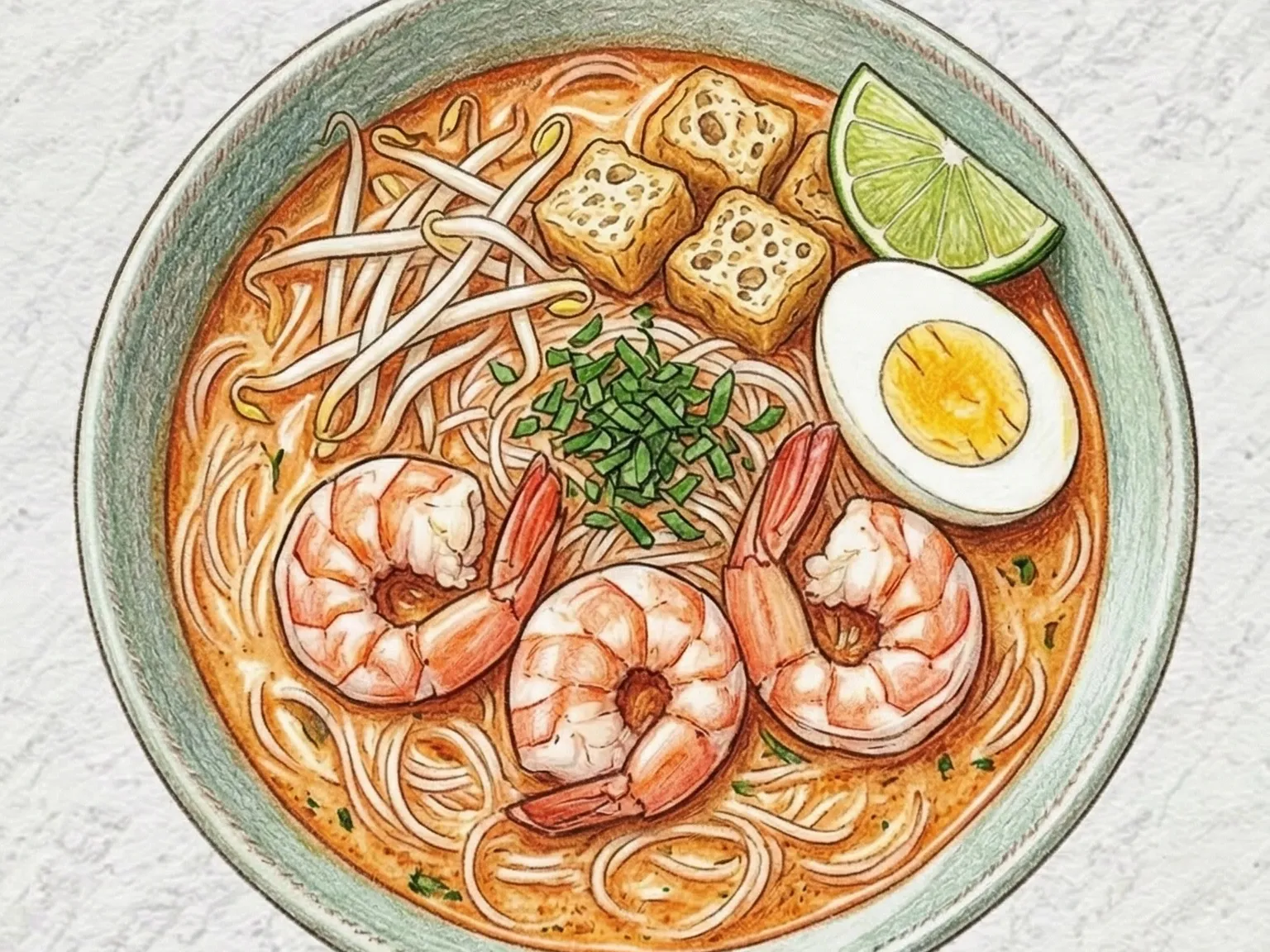
Coconut shrimp laksa is a Southeast Asian noodle soup built on a broth of coconut milk, spice paste, and chicken stock that manages to be simultaneously rich, spicy, and aromatic. The laksa paste - a pounded blend of lemongrass, galangal, turmeric, dried shrimp, dried chilies, and shrimp paste - is fried in oil until deeply fragrant before coconut milk and stock are poured in. The resulting broth is thick and creamy with visible pools of chili oil floating on the surface. Shrimp are cooked shell-on in the broth to extract maximum flavor, then peeled and placed back on top. Rice noodles form the base of each bowl, topped with bean sprouts, halved hard-boiled egg, and cubes of fried tofu puff that soak up the broth like sponges. A squeeze of lime and a drizzle of fish sauce finish the bowl, adding acid and salt that sharpen the richness of the coconut. In Singapore and Malaysia, laksa is eaten from early morning through late night, served at hawker stalls that often specialize in this single dish.
Adjust Servings
Instructions
- 1
Devein shrimp, rinse lightly in salted water, and drain.
- 2
Cook laksa paste in a little oil for 1 minute until fragrant.
- 3
Add chicken stock and coconut milk; simmer 8 minutes over medium heat.
- 4
Season with fish sauce, then add shrimp and tofu puffs for 3 minutes.
- 5
Cook noodles separately, place in bowls, and top with bean sprouts.
- 6
Pour hot laksa broth over and serve immediately.
As an Amazon Associate, we may earn from qualifying purchases.
Tips
Nutrition (per serving)
More Recipes

Hokkien Prawn Mee (Spicy Prawn Noodle Soup)
Hokkien prawn mee is a signature hawker noodle soup from Singapore, built on a dual-stock foundation of roasted shrimp shells and pork bones. The shrimp are separated into shells and meat; the shells are fried with garlic until deeply browned and fragrant, which is the step that determines the broth's intensity. Pork stock joins the pan and the mixture simmers for twenty minutes before straining, yielding a clear but concentrated liquid. Egg noodles and the reserved shrimp meat cook directly in this broth, and fish sauce is added to reinforce the marine umami. The traditional accompaniment is a spoonful of sambal chili paste that sits on top and gradually dissolves into the soup, introducing controlled heat with each successive sip. Chopped scallion provides a fresh, green contrast to the rich broth.

Singaporean Spicy Noodle Soup
Laksa is a spicy coconut noodle soup from Singapore and Malaysia. The dish starts with a laksa paste - typically containing lemongrass, galangal, shrimp paste, and chili - stir-fried in oil until intensely fragrant. Coconut milk and shrimp stock are added to build a thick, aromatic broth, which is then seasoned with fish sauce. Shrimp and fried tofu puffs simmer briefly in the broth, providing protein without overcooking. Rice vermicelli is soaked in hot water until pliable and placed in the bowl before the broth is ladled over. Bean sprouts, halved boiled eggs, and a wedge of lime are arranged on top. Store-bought laksa paste works well for convenience, though homemade paste yields a more layered, complex flavor. Full-fat coconut milk is recommended over light versions for the proper creamy body.

Mee Siam (Singaporean Tangy Tamarind Shrimp Rice Vermicelli)
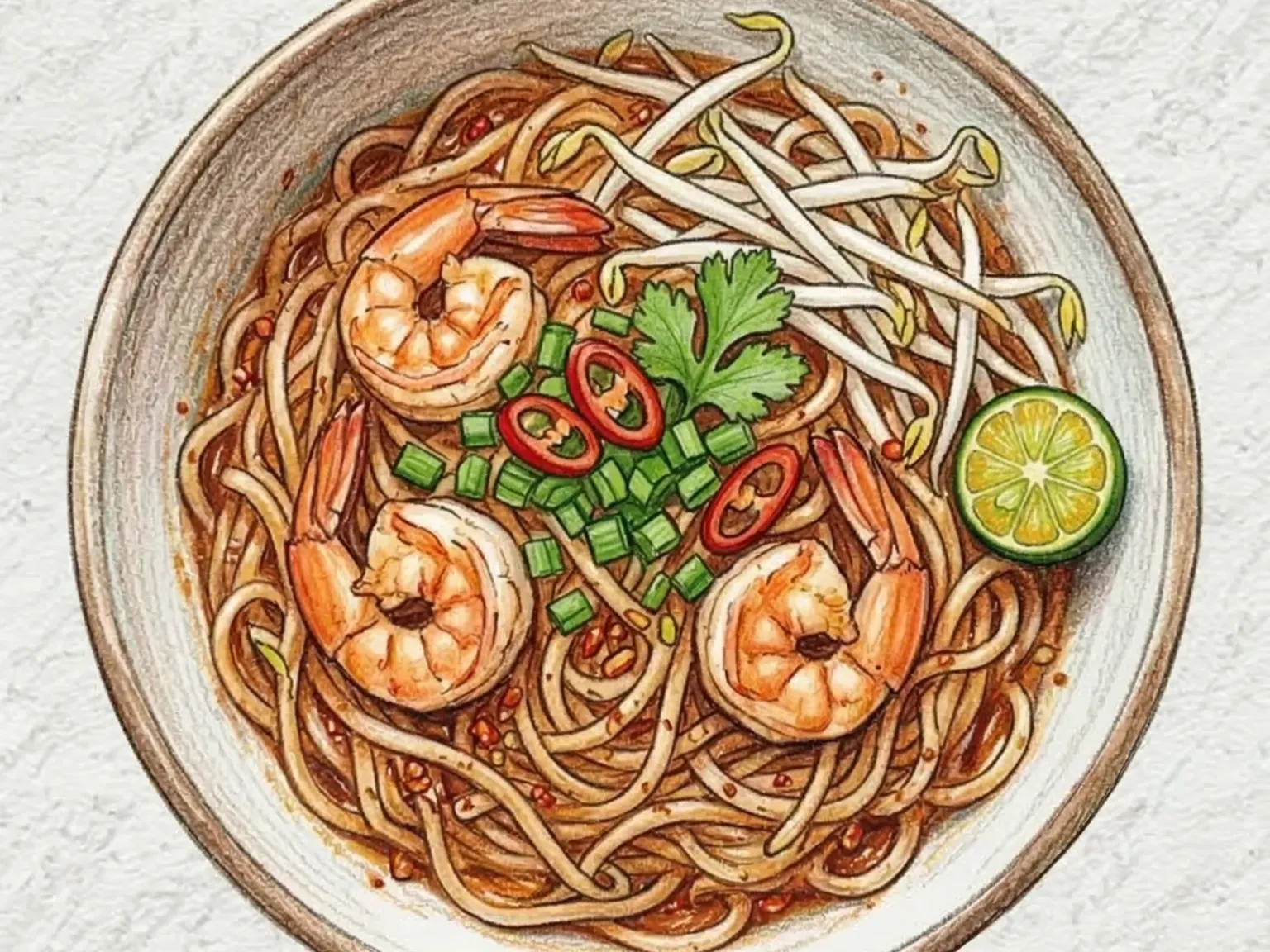
Mee siam is a Southeast Asian rice vermicelli dish popular in Singapore and Malaysia, defined by its tamarind-based sauce that walks a tightrope between sour, sweet, and spicy. Thin rice noodles are tossed with shrimp and bean sprouts in a rempah - a pounded spice paste of dried shrimp, shallots, and chili - then finished with tamarind water, sugar, and a squeeze of lime. The result is tangy and bright, with an underlying shrimp-forward depth. Despite its name referencing Siam, the dish is distinctly Malay-Singaporean rather than Thai. It appears most often at breakfast or as a light meal, served on banana leaf at hawker centers and home kitchens alike.

Bun Rieu (Vietnamese Crab and Pork Tomato Noodle Soup)
Bun rieu is a noodle soup from northern Vietnam built on two unlikely pillars - freshwater paddy crab and fermented shrimp paste - that together produce one of the most complex broths in Vietnamese cuisine. Small river crabs are pounded shell and all in a mortar, then strained through water to extract a murky liquid rich in crab essence. This liquid is heated gently until the crab protein coagulates into a soft, custard-like mass that floats to the surface - the oc, or crab cake, which is scooped and added to the finished bowl. Tomatoes dissolve into the broth during simmering, giving it a reddish hue and a fruity acidity that balances the crab's richness. Mam tom - fermented shrimp paste - is offered tableside and stirred in by each diner to taste, adding a pungent, funky depth that transforms the broth entirely. Rice vermicelli, fried tofu puffs, and a tangle of morning glory complete the bowl. Bun rieu vendors in Hanoi specialize in this single dish, ladling out hundreds of bowls each morning from a single pot.

Hokkien Mee (Prawn Broth Stir-Fried Noodles)
Hokkien mee is a Singaporean stir-fried noodle dish that uses two types of noodles, yellow egg noodles and thin rice vermicelli, cooked together in rich prawn stock. The stock, made by roasting shrimp heads and shells until deeply fragrant, is what separates this dish from ordinary stir-fried noodles. High wok heat is non-negotiable; insufficient heat leaves excess moisture and mutes the flavors. Shrimp and squid are seared quickly over maximum flame to avoid overcooking, then both noodle types are tossed in and drenched with the prawn stock and soy sauce, cooking until the liquid is nearly absorbed into the strands. Bean sprouts go in for the final thirty seconds to preserve their snap. A squeeze of lime just before eating brings acidity that lifts the rich, marine-heavy flavors.

Korean Knife-cut Noodle Soup
Kalguksu is a Korean noodle soup made with hand-cut wheat noodles simmered in anchovy-kelp broth. The noodles are rolled flat and sliced with a knife, giving them a rough surface that absorbs broth and a satisfying chew distinct from machine-made pasta. Sliced potato, half-moon zucchini, and onion go into the pot, with the potato releasing starch that naturally thickens the broth as it cooks. Seasoning stays minimal - soup soy sauce, salt, minced garlic, and green onion added at the end - so the clean, savory depth of the stock comes through clearly. The dish is traditionally associated with rainy days in Korea, and adding clams turns it into a popular seafood variation.