Charim

2686 Korean & World Recipes

2686+ Korean recipes, clean and organized. Ingredients to instructions, all at a glance.

Grilled Lamb Chops
Grilled Medium

Grilled Lamb Chops

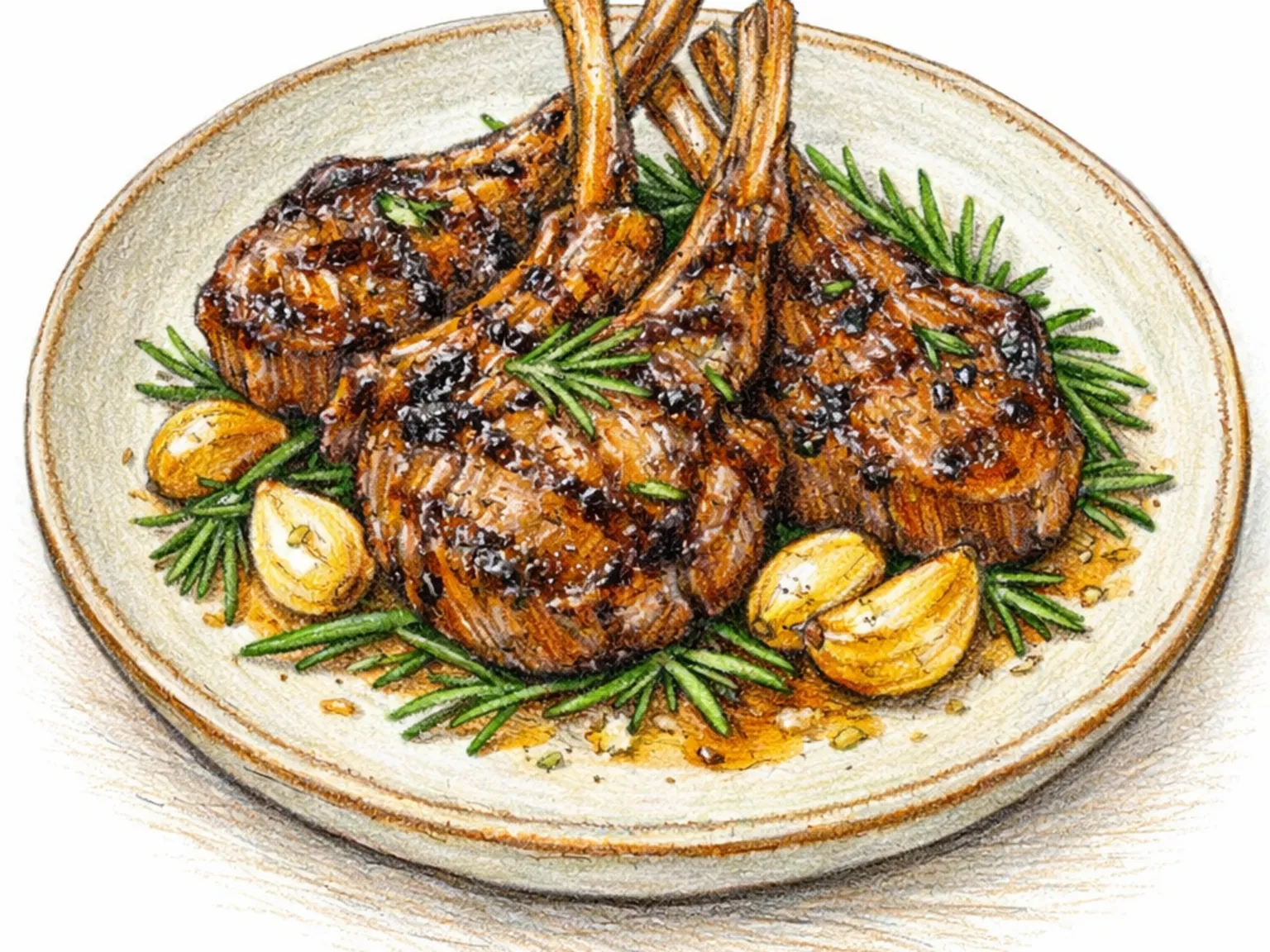
Lamb chop gui is a grilled lamb rib chop dish where a French rack is marinated for at least one hour in olive oil, crushed garlic, freshly chopped rosemary, salt, and black pepper before being seared on a blazing-hot grill. The rosemary's piney, resinous aroma tempers the lamb's gaminess effectively, while the garlic caramelizes gently on contact with the hot surface and builds a concentrated savory layer on the meat. Grilling each side for three to four minutes targets an internal temperature of 55 to 60 degrees Celsius for medium-rare, the point at which the intramuscular fat renders just enough to release abundant juices without drying the meat out. A squeeze of fresh lemon juice immediately after removing from the grill cuts through the richness of the rendered fat and brightens the overall flavor. The most satisfying way to eat these is holding the exposed rib bone and taking bites directly off it, and they pair naturally with mint yogurt sauce or a simple chimichurri-style accompaniment.

Prep 60min Cook 15min 2 servings
Recipes by ingredient → garlic

Adjust Servings

2servings
servings

Instructions

  1. 1

    Crush garlic and finely chop rosemary.

  2. 2

    Mix olive oil, garlic, rosemary, salt, and pepper for the marinade.

  3. 3

    Coat lamb chops and marinate for 1 hour.

  4. 4

    Heat grill to very high temperature and add lamb chops.

  5. 5

    Grill 3~4 minutes per side to desired doneness; serve with lemon.

🛒Shop Ingredients on Amazon

As an Amazon Associate, we may earn from qualifying purchases.

Tips

Lamb chops are best at medium-rare (55~60°C internal temperature).

Nutrition (per serving)

Calories
480
kcal
Protein
38
g
Carbs
2
g
Fat
35
g

Goes Well With

Honghap-tang (Korean Mussel Garlic Broth)
SoupsEasy

Honghap-tang (Korean Mussel Garlic Broth)

Honghap-tang is a Korean mussel soup that proves how much flavor a single shellfish can deliver with almost no help. Shell-on mussels are placed in water with sliced green onion, garlic, and a light dusting of gochugaru, then brought to a boil. As the shells open, they release a briny, faintly sweet liquor that becomes the broth itself, clear in appearance but surprisingly concentrated in taste. The entire process takes about fifteen minutes. Timing matters here: once the shells have opened and the flesh has puffed, the pot comes off the heat immediately or the meat turns rubbery. In Korea, honghap-tang is a standard drinking companion, sipped between shots of soju while the mussel meat is pulled from the shells and dipped in vinegary chojang sauce. The combination of the bold, oceanic broth and the chilled sauce creates a cycle that is hard to stop. Mussels caught during the colder months, when they are fatter and richer, produce the most intensely flavored broth.

🍺 Bar Snacks🏠 Everyday
Prep 10minCook 15min2 servings
Korean Paengi Beoseot Jeon (Enoki Pancake)
Side dishesEasy

Korean Paengi Beoseot Jeon (Enoki Pancake)

Paengibeoseot-jeon is a thin Korean pancake built around 200 grams of enoki mushrooms separated into loose strands and coated in a light batter of pancake mix, egg, and water. Cooked over medium-low heat, the batter spreads thin enough that the edges turn golden and crisp while the mushroom clusters in the center stay moist and chewy. Chopped scallions add color and a mild onion fragrance throughout. The pancake is served with a dipping sauce of soy sauce, vinegar, and a pinch of chili flakes, whose acidity and salt lift the subtle earthiness of the mushrooms. Keeping the heat moderate is essential - too high and the outside burns before the interior sets.

🍺 Bar Snacks🏠 Everyday
Prep 15minCook 12min2 servings
Korean Clam and Radish Pot Rice
RiceMedium

Korean Clam and Radish Pot Rice

Baekhap mu sotbap is a Korean pot rice dish where soaked rice is cooked with radish, shiitake mushrooms, and hard clam meat using kelp-infused water. The kelp water establishes a deeper umami base than plain water, and the glutamic acid released by shiitake mushrooms compounds with the clams' briny character to build layered savory depth. Radish sits on top of the rice and steams as the pot cooks, losing moisture while concentrating its natural sweetness into the surrounding grains. The clam meat must be added just before the resting phase rather than at the start, because prolonged heat toughens shellfish; residual steam finishes the cooking gently while keeping the clams firm. The resting period is critical - ten minutes with the lid sealed after the flame is turned off allows steam to redistribute evenly through the rice and all the toppings. A seasoning sauce of soy sauce, sesame oil, and chopped scallion is mixed in at the table, adding a salty richness that ties the seafood and vegetable components together. Hard clams require thorough purging before use; soaking in salted water for at least two hours removes sand, and any clam that does not open during this process should be discarded.

🎉 Special Occasion
Prep 18minCook 22min2 servings
Korean Coastal Hogfennel Kimchi
KimchiMedium

Korean Coastal Hogfennel Kimchi

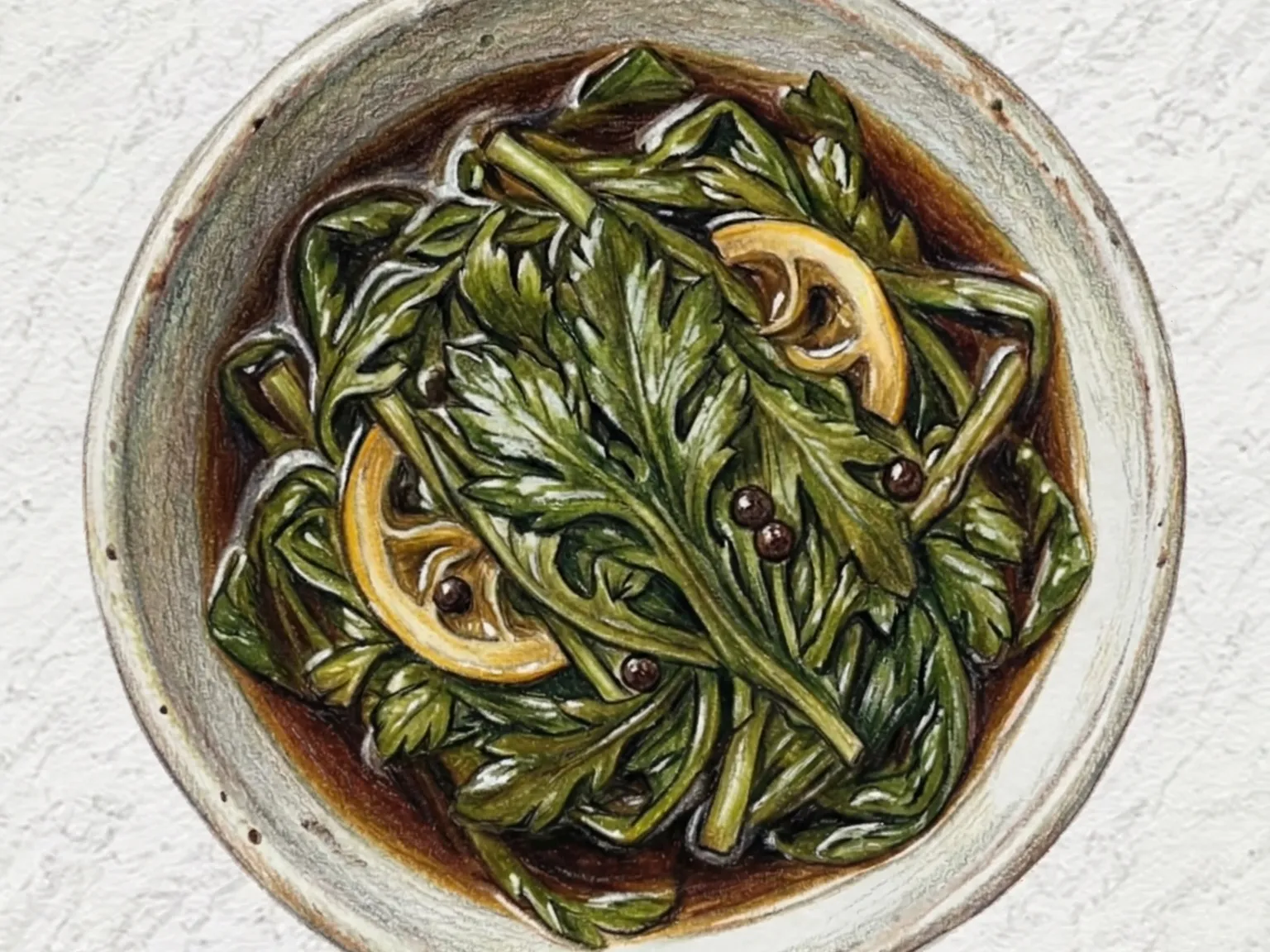
Bangpungnamul kimchi is a seasonal Korean kimchi made during spring by dressing coastal hogfennel in a chili-based seasoning paste. Bangpungnamul grows along coastal cliffs and mountain foothills, identifiable by its distinctive bitter-herbaceous aroma and mild sharpness. Traditional Korean medicine has long valued this plant for its properties in treating rheumatic conditions - its name literally combines the words for wind and prevention. The herb is lightly salted first to draw out excess moisture and soften its fibrous structure, then tossed with Korean chili flakes, anchovy fish sauce, soup soy sauce, minced garlic, and ginger. Sweet rice paste works as a binder, helping the thick seasoning cling evenly to each strand of herb rather than pooling at the bottom of the bowl. Sliced scallions add a crisp element that survives the marinating process intact. The herb's natural bitterness mellows considerably as lactic fermentation develops, producing a flavor profile unmistakably different from standard napa cabbage kimchi. One day at room temperature initiates fermentation without letting it run too far, after which refrigerated storage holds the kimchi at an ideal stage of acidity for two to three weeks.

🏠 Everyday🍱 Lunchbox
Prep 35minCook 8min2 servings

More Recipes

Korean Salted Mackerel Grill
GrilledEasy

Korean Salted Mackerel Grill

Gan-godeungeo-gui is grilled salt-cured mackerel, one of the most dependable side dishes on a Korean home table. The mackerel is sold already salted at the market, so it goes straight onto heat without any additional seasoning preparation. During the curing process, the salt draws out excess moisture and firms the flesh, which makes the fish easier to handle than fresh mackerel and far less prone to falling apart in the pan. Cooking skin-side down over medium heat for seven minutes allows the fat embedded under the skin to render slowly outward, crisping the skin until it becomes paper-thin and shatters with the first touch of a spoon. Flipping the fish for just four more minutes finishes the flesh through without drying it out. The mackerel's oily richness is substantial enough to carry a bowl of rice on its own, but a wedge of lemon on the side adds a bright acidity that cuts cleanly through the fat, and a small mound of shredded daikon provides a palate-cleansing contrast that removes any lingering fishiness from the aftertaste. Frozen gan-godeungeo should be moved to the refrigerator the night before to thaw slowly, preventing the fish from weeping water all at once when it hits the hot pan.

🍺 Bar Snacks
Prep 10minCook 15min2 servings
Korean Grilled Mixed Mushrooms
GrilledEasy

Korean Grilled Mixed Mushrooms

Mushroom-gui is a Korean grilled mixed mushroom dish combining king oyster, shiitake, and oyster mushrooms, seasoned simply with butter, minced garlic, salt, and black pepper. Each mushroom variety contributes a different texture: king oyster offers a dense, meaty chew from its thick stem, shiitake delivers concentrated umami from its cap, and oyster mushrooms add a delicate, silky shred. The key technique is to resist stirring the mushrooms after placing them in the pan-their high water content must evaporate first before the surfaces can brown and develop flavor. Adding butter partway through rather than at the start prevents it from burning while still infusing the mushrooms with its richness.

🍺 Bar Snacks Quick
Prep 10minCook 10min2 servings
Korean Grilled Octopus
GrilledMedium

Korean Grilled Octopus

Nakji-gui is a traditional Korean preparation of grilled small octopus that requires specific cleaning techniques and precise timing. The preparation begins by cleaning the small octopus through a process of vigorous rubbing with salt to remove impurities from the skin. Once cleaned, the octopus is coated in a marinade that includes gochujang, soy sauce, sesame oil, minced garlic, and corn syrup. This small octopus possesses significantly finer muscle fibers compared to a full-sized octopus, a physical trait that results in a very narrow window between a desirable springy texture and an undesirable rubbery one. A cooking time of only two minutes is frequently sufficient to push the protein past the point of no return, so the person cooking must stay attentive and remove the tentacles from the heat as soon as they firm up and take on color. The gochujang and corn syrup within the marinade undergo rapid caramelization when they come into contact with the hot surface of the pan or grill. This reaction forms a red, lacquered shell around each tentacle that provides a combination of fermented heat and sweetness in every bite. Using a direct flame for cooking introduces smoky and charred notes that increase the complexity of the flavor profile. If the dish is prepared in a pan rather than on a grill, the octopus must be dried thoroughly first. Any moisture remaining on the surface will generate steam and cause the octopus to braise instead of grill, which prevents the formation of the caramelized exterior. After the cooking process is complete, the octopus is usually snipped into bite-sized pieces with kitchen scissors. It can be served as a wrap with perilla or lettuce leaves, or it can be laid over a bowl of steamed rice.

🍺 Bar Snacks
Prep 20minCook 10min2 servings
Korean Grilled Spicy Chicken Ribs
GrilledMedium

Korean Grilled Spicy Chicken Ribs

Dakgalbi-gui is the original Chuncheon-style grilled chicken dish, where bone-in thigh and leg pieces marinate in a crimson paste of gochujang, soy sauce, sugar, garlic, sesame oil, and ginger before cooking directly over an open flame or on a very hot pan. Unlike the more widely known iron-plate dakgalbi stir-fried with vegetables, this grilled version focuses solely on the meat to maximize char and smoky flavor on the surface. Deboned thigh meat spread flat exposes more surface area to both the marinade and the heat, concentrating flavor throughout, and a minimum two-hour rest in the marinade ensures the spice penetrates deep into the flesh. The gochujang caramelizes at high temperatures, forming edges that are simultaneously spicy, sweet, and faintly bitter from the char.

🍺 Bar Snacks
Prep 60minCook 20min2 servings
Herb Roasted Whole Chicken
WesternMedium

Herb Roasted Whole Chicken

Herb roasted whole chicken is prepared by tucking herb butter - made with rosemary, thyme, and garlic - under the skin and stuffing the cavity with lemon and remaining herbs before roasting. Starting at 220 degrees Celsius for twenty minutes gives the skin an initial sear, then dropping to 180 degrees for sixty more minutes cooks the interior through while the skin crisps to a deep golden brown. The herb butter placed directly under the skin melts during roasting, basting the breast meat with fat and herb flavor from the inside, which prevents even the lean breast from drying out. Resting for fifteen minutes after roasting lets the juices redistribute into the muscle fibers so they stay inside when carved. The pan drippings left behind can be deglazed into a quick gravy that doubles the depth of flavor at the table.

🎉 Special Occasion
Prep 20minCook 80min4 servings
Korean Grilled Chicken Heart Skewers
Street foodMedium

Korean Grilled Chicken Heart Skewers

Dak-yeomtong-kkochi starts by soaking trimmed chicken hearts in milk for fifteen minutes to remove any off-flavors, then threading them onto skewers for direct grilling. A glaze of soy sauce, gochujang, sugar, garlic, and cooking wine is applied in stages during grilling, building up a salty-sweet coating with gentle heat. Unlike regular chicken meat, hearts have a firm, springy chew that deepens in nuttiness the more you bite into them. The milk soak combined with garlic and cooking wine in the glaze cleanly removes any organ taste, so the finished skewers carry only the char from the grill and the layered seasoning. A common sight at street stalls and pojangmacha tents, these skewers work equally well as a quick snack eaten on the spot or as drinking food alongside a cold beer.

🍺 Bar Snacks
Prep 30minCook 15min2 servings
More Grilled →