Shepherd's Pie
Quick answer
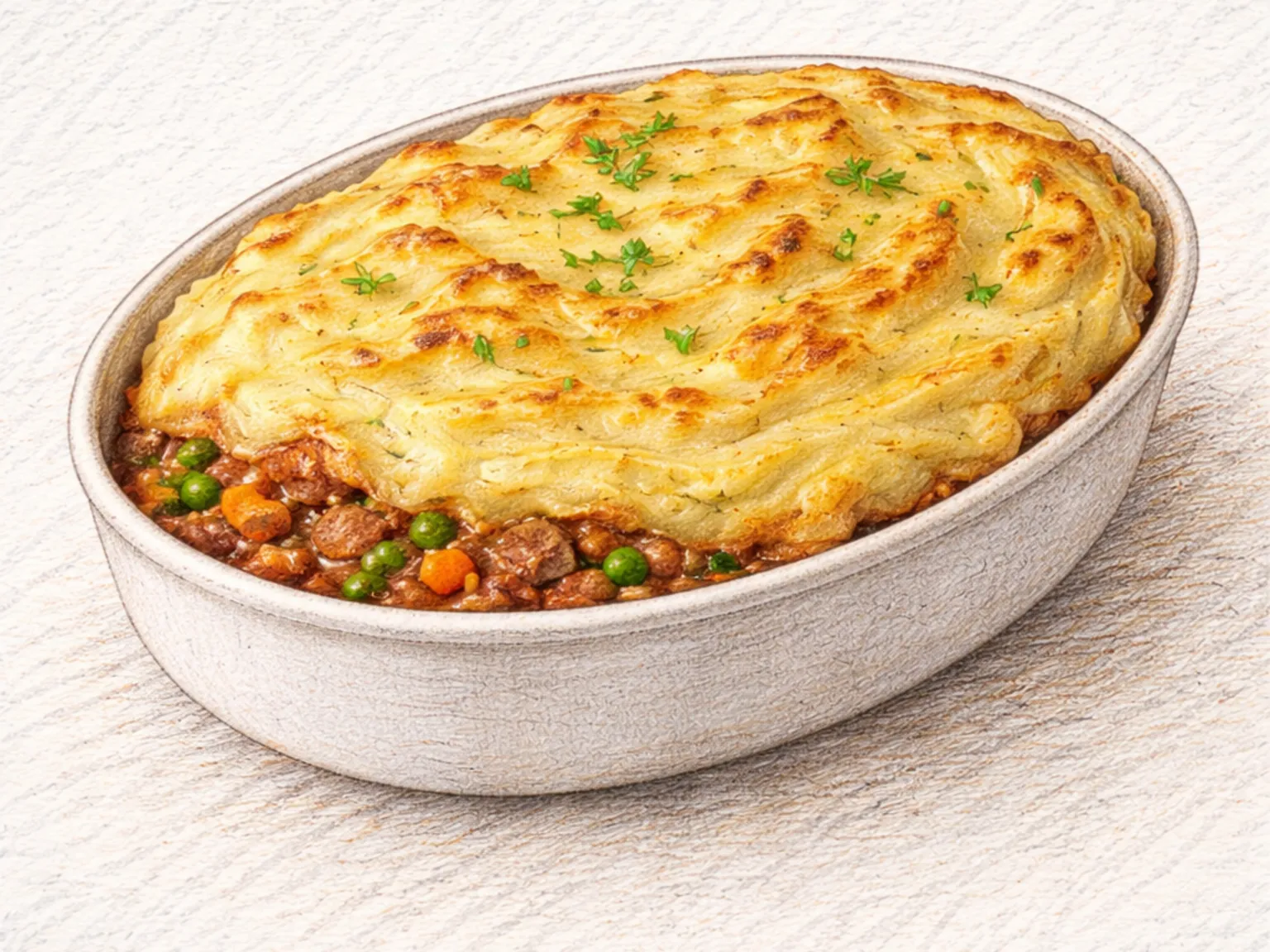
Shepherd's pie is a traditional British home dish where seasoned lamb mince is cooked with onion, carrot, and peas, deglazed with red wine and beef stock, then topped wit...
What makes this special
- Seasoned lamb mince and red wine simmer under a golden crust of mashed potatoes.
- Red wine and Worcestershire sauce add tannin and fermented umami depth to the lamb
- Fork-textured mashed potato surface crisps into a golden crust in the oven
Key ingredients
Core cooking flow
- 1 Finely chop the onion and carrots, and cut the potatoes into large even pieces for boiling.
- 2 Set a pan over medium-high heat, add 500 g ground lamb, and break it up as it browns.
- 3 Pour in 100 ml red wine and boil over high heat for 1 to 2 minutes to cook off the sharp alcohol aroma.
Shepherd's pie is a traditional British home dish where seasoned lamb mince is cooked with onion, carrot, and peas, deglazed with red wine and beef stock, then topped with creamy mashed potato and baked until golden. The wine evaporates its alcohol during cooking, leaving behind fruit depth and tannin that enrich the lamb, while Worcestershire sauce adds a layer of fermented umami. The potatoes are boiled, mashed with butter and milk until smooth, then spread evenly over the meat filling. Dragging a fork across the mashed potato surface creates ridges that brown and crisp in the oven, adding textural contrast to the creamy layer beneath. After twenty-five minutes at 200 degrees Celsius, the meat juices bubble up around the edges, signaling that the filling is hot throughout.
Instructions
Read the steps as a cooking flow: prep, heat, seasoning, doneness control, and finish.
- 1Heat
Finely chop the onion and carrots, and cut the potatoes into large even pieces for boiling.
Preheat the oven to 200°C so it is fully hot when the assembled pie is ready.
- 2Control
Set a pan over medium-high heat, add 500 g ground lamb, and break it up as it browns.
When the surface turns brown, add the onion and carrots and cook until they start to soften.
- 3Control
Pour in 100 ml red wine and boil over high heat for 1 to 2 minutes to cook off the sharp alcohol aroma.
Add 200 ml beef stock and the Worcestershire sauce, then reduce the heat to low.
- 4Control
Add 100 g frozen peas and simmer the filling for 20 minutes.
Stir occasionally so the bottom does not catch, and stop when the mixture is moist but thick enough not to run.
- 5Heat
Boil the potatoes until they are tender enough to break easily, then drain them well.
While still hot, mash with 3 tablespoons butter and 100 ml milk until smooth and creamy, without leaving dry lumps.
- 6Control
Spread the meat filling in a baking dish and cover it evenly with the mashed potato.
Drag a fork over the top to make ridges, then bake at 200°C for 25 minutes until the edges bubble and the top browns.
After the steps
Pick a recipe that fits this dish.
Continue with shared ingredients, meal pairings, or a similar method.
Recipes That Go Well With This
More Western →Based on shared ingredients and meal pairing
Cottage Pie
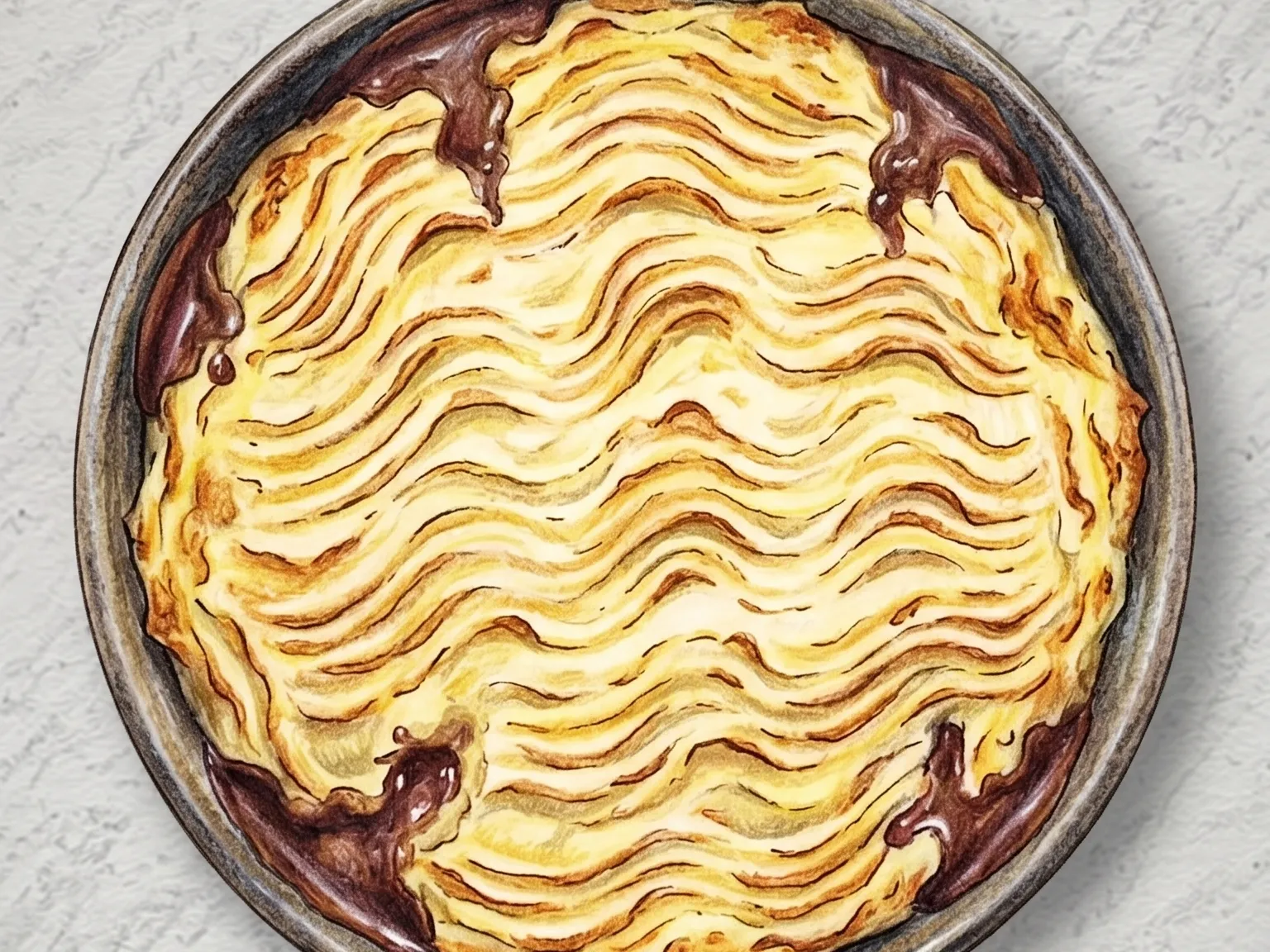
Cottage pie is a British comfort dish that layers a rich ground-beef filling under buttery mashed potatoes and bakes the whole thing until the top is golden and the interior is bubbling. The filling starts with beef browned alongside diced onion and carrot, then simmers with tomato paste, Worcestershire sauce, beef stock, and green peas until the liquid reduces to a thick, concentrated sauce that holds its shape in the dish. Adding beef stock to the simmer deepens the flavor considerably compared to water alone. The potatoes must be mashed immediately after draining while still steaming hot: mashing cool potatoes produces a gluey texture instead of a smooth, creamy layer. Scoring the surface with a fork before the dish goes into the oven creates ridges that catch the heat and brown in the oven at 200 degrees Celsius over twenty minutes, adding a lightly crisp layer over the soft interior. During baking, the heat from the filling rises through the potato crust, allowing the two layers to exchange aromas. The defining characteristic of the dish is the contrast between the deeply savory, umami-packed meat layer below and the soft, golden, buttery potato crust above.
Fish Pie
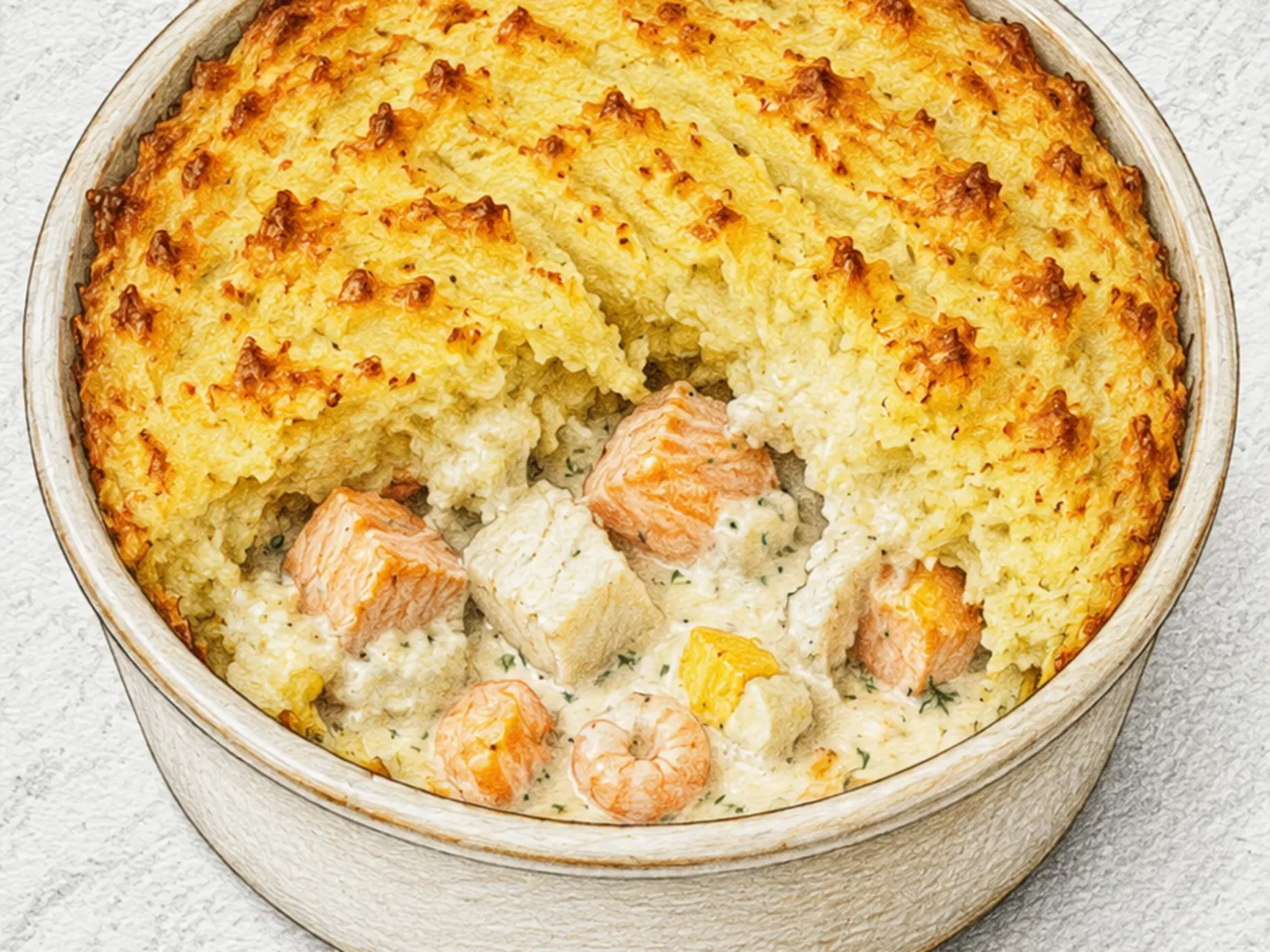
Fish pie is a staple of British home cooking, particularly during the colder months. Chunks of cod, salmon, and smoked haddock are folded into a cream sauce made with milk, butter, parsley, and a touch of English mustard, then topped with a thick layer of mashed potatoes and baked until the surface turns golden and slightly crisp. The combination of fresh and smoked fish creates layers of flavor - the cod contributes clean, mild sweetness, the salmon adds richness, and the smoked haddock provides a saline, smoky depth that permeates the sauce. Peeled prawns and halved boiled eggs are common additions that make the filling more substantial. In the oven, the sauce bubbles up around the edges of the potato crust, and the first scoop through the golden top reveals the creamy seafood filling beneath. It is a complete meal requiring nothing more than a side of steamed greens.
Black Tea Milk Tea (British Condensed Milk Sweet Tea)
Milk tea is prepared by steeping black tea bags in boiling water for exactly four minutes to extract a strong, tannic base, then combining it with whole milk and condensed milk over low heat. Steeping shorter than four minutes leaves the tea pale and thin; longer than four minutes introduces bitterness and astringency that no amount of milk can fully mask. The milk rounds out the tea's sharpness and adds a creamy body, while condensed milk layers on a dense, caramel-like sweetness that sets this version apart from tea simply sweetened with sugar. Regular sugar dissolved early provides the baseline sweetness, and the condensed milk fine-tunes the richness and texture in the final moments. Warming the milk before combining it with the brewed tea helps both blend more smoothly. For an iced version, the mixture must be cooled completely before pouring over ice, since adding hot liquid directly to ice dilutes the drink and washes out the flavor.
Toad in the Hole (British Sausages in Yorkshire Pudding)
Toad in the hole bakes pork sausages inside a risen Yorkshire pudding batter by first heating the sausages and oil in an oven pan at 220 degrees Celsius for 10 minutes, then quickly pouring cold batter into the scorching-hot fat. The temperature shock between cold batter and smoking oil is what drives the dramatic puff - if the pan cools before the batter goes in, the rise will be flat and dense. The batter itself is simple: flour, eggs, milk, salt, and pepper, rested for 10 minutes so the gluten relaxes and produces a more even rise. Once in the oven, the door must stay closed for the full 20 to 25 minutes - opening it drops the temperature and collapses the delicate air structure mid-bake. The finished dish has crisp, golden edges and a soft, custardy center cradling the browned sausages.
Serve with this
Gotgam Cream Cheese Roll (Dried Persimmon Rolls)
Gotgam cream cheese roll is a no-cook Korean dessert that requires nothing more than a knife, a bowl, and a refrigerator. Dried persimmons are slit open and flattened into thin sheets, each one acting as the outer wrapper. The filling is cream cheese mixed with honey and fresh lemon juice to balance its natural richness with acidity, and finely chopped walnuts are folded in throughout to add a crunchy, nutty element to every bite. The filling is spread across the opened persimmon, which is then rolled tightly and wrapped in plastic wrap. Twenty minutes in the refrigerator firms the roll enough to slice cleanly. Dipping the knife in warm water and wiping it dry before each cut produces the smoothest cross-sections. The finished slices reveal clearly defined layers: the chewy, caramel-sweet dried persimmon on the outside, the tangy cream cheese in the middle, and flecks of walnut distributed throughout. The combination makes it a natural pairing with wine or a polished addition to a traditional holiday table.
Chili Garlic Pork Belly Arrabbiata Penne
Chili garlic pork belly arrabbiata penne builds its flavor entirely from the fat rendered out of slowly crisped pork belly. Cooking the belly over medium-low heat until the surface is crackling and golden draws out the fat gradually, infusing it with a deep, savory richness that becomes the sauce's foundation. Minced garlic goes into the rendered fat next, followed by crushed tomatoes that reduce into a concentrated, spicy sauce. The tomato's natural acidity cuts through the fat's weight, preventing the sauce from turning heavy. A small ladle of starchy pasta water added before tossing emulsifies everything into a glossy coating. Penne's hollow tubes and ridged exterior capture the sauce both inside and out, so every bite delivers the smoky pork fat, tangy tomato, and chili heat simultaneously. Finishing with the reserved crispy pork pieces scattered on top adds a textural contrast between the sauce-soaked pasta and the crunchy meat.
Smoked Duck Chive Salad (Korean Chive Salad)
Smoked duck chive salad brings together pan-seared smoked duck and fresh Korean chives in a soy-mustard dressing that cuts through the meat's richness with precision. The duck is seared in a dry or lightly oiled pan for two to three minutes to render off the surface fat before it meets the other ingredients. Korean chives are cut to four-centimeter lengths and combined with shredded cabbage and sliced bell pepper, each element adding its own texture to the finished dish. A dressing of soy sauce, mustard, vinegar, honey, and sesame oil delivers a multi-layered hit of nose-clearing heat, sweet-sour acidity, and roasted depth that cleanses the palate after every fatty bite of duck. The cabbage provides firm, watery crunch against the chewy, smoke-infused meat, while toasted sesame seeds scatter a nutty fragrance across the top. Adding the chives at the very end keeps their herbal aroma vivid rather than grassy, and limiting the searing time prevents the duck from turning tough. The interplay between the dense smokiness of the duck and the sharp freshness of the chives is what gives this salad its character beyond a simple protein-and-greens combination.
Similar recipes
Cornish Pasty (British Hand Pie with Beef and Root Vegetables)
Cornish pasty is a traditional British hand pie from Cornwall, made by sealing raw diced beef, potatoes, rutabaga, and onion inside a sturdy pastry of flour, butter, salt, and water. The filling is not pre-cooked before sealing, so the meat and vegetables steam inside the crust during baking. Their juices collect and concentrate inside the sealed shell, forming a rich, savory interior gravy that makes the pasty deeply satisfying without any additional sauce. Crimping the edges tightly is essential to contain this liquid during the forty-to-forty-five-minute bake at 200 degrees Celsius. Cutting the filling into pieces no larger than about one centimeter ensures everything cooks evenly through. An egg wash brushed over the surface before baking develops a glossy, amber crust. The pasty originated as a practical working meal for Cornish tin miners, who held the pastry by its thick crimped edge to avoid contaminating the food with dirty hands, then discarded that portion when finished.
Banoffee Pie
Banoffee pie is a British no-bake dessert whose name compresses banana and toffee, the two ingredients that define its character. A base of crushed digestive biscuits bound with melted butter is pressed firmly into a pan and chilled until set. Sweetened condensed milk is heated slowly over low heat, stirring constantly, until it darkens into a thick, amber-colored toffee that spreads over the biscuit base in a dense layer. Ripe bananas are sliced thickly and layered on top of the toffee, then the whole assembly is finished with a generous dome of softly whipped cream and a dusting of cocoa powder or grated dark chocolate. Each forkful delivers four textures in sequence: the sandy crunch of the biscuit base, the dense caramel pull of the toffee, the soft sweetness of banana, and the cool, airy lightness of cream.
Eton Mess (Crushed Meringue, Cream & Strawberry Mix)
Eton mess is a British dessert originating from Eton College, made by roughly folding together broken meringue, whipped cream, and strawberries into a deliberate, unstudied jumble. The name comes from the method itself: there is no careful layering or presentation, just a generous combination of three components mixed loosely in a glass or wide bowl. The meringue is baked low and slow until the outside develops a firm, crisp shell while the inside stays soft and marshmallow-like, then cooled completely before being broken by hand into irregular shards of varying sizes. Strawberries are treated in two ways: some are crushed roughly with a fork so the juice bleeds in red streaks through the white cream, while others remain whole to provide fresh, firm bites of fruit. The heavy cream is whipped only to soft, billowy peaks so it folds around the meringue and fruit loosely rather than sitting in stiff mounds. Every spoonful delivers a different ratio of crunch, softness, tartness, and sweetness depending on which pieces land together, which is the pleasure of the dessert. Because the cream and fruit juices begin softening the meringue the moment they are combined, Eton mess must be assembled and eaten immediately to preserve the textural contrast between crisp and soft.