Lemon Curd Tart
Quick answer
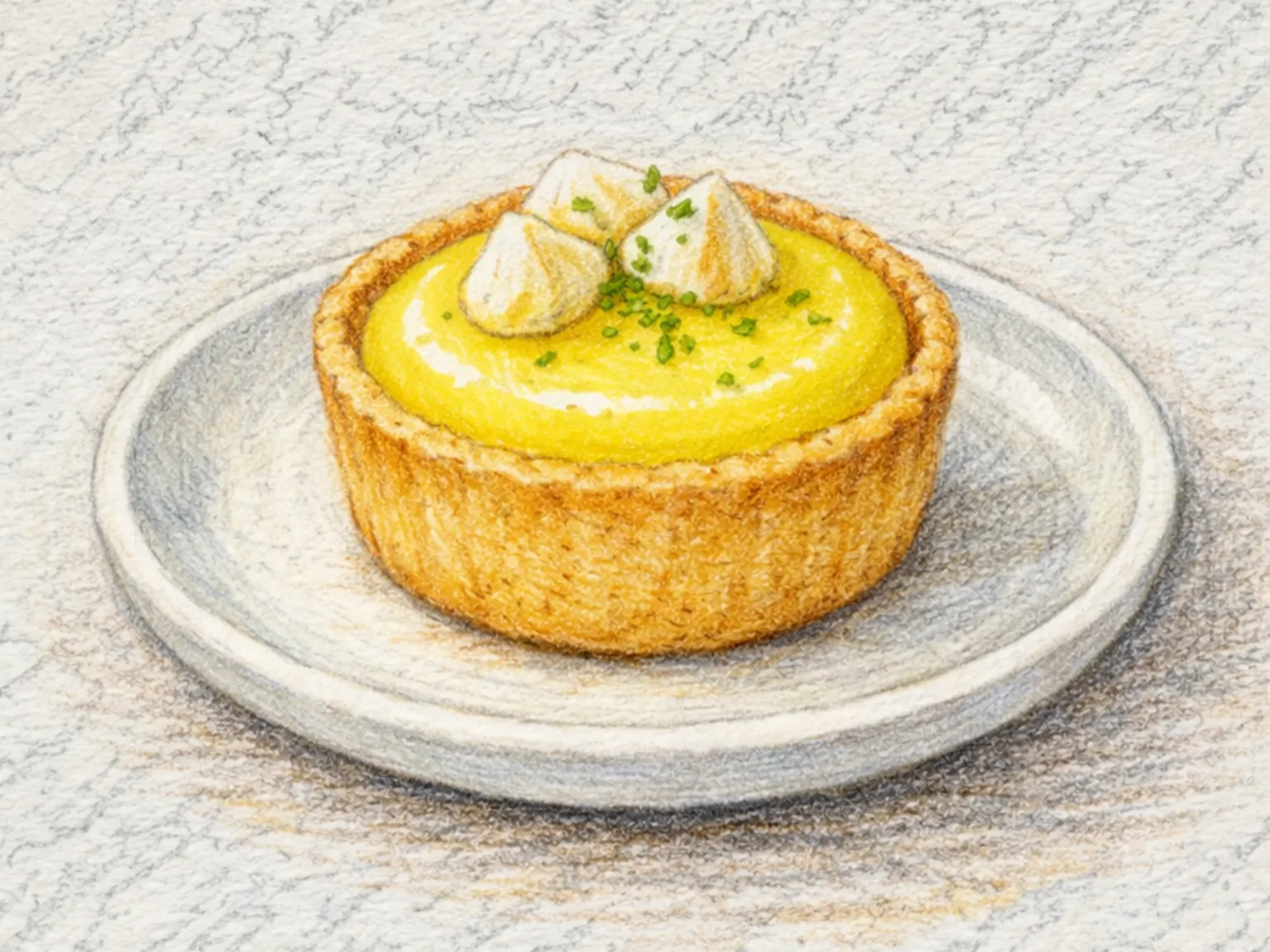
Lemon Curd Tart is a classic dessert composed of a crumbly shortcrust pastry shell filled with a smooth, tangy lemon curd.
What makes this special
- Egg yolks and lemon juice stirred into curd fill the shortcrust shell of Lemon Curd Tart with bright acidity.
- Slow-stirred lemon curd coats the palate with its butter-smooth texture
- Shortcrust shell's crumbly snap contrasts sharply with the silky curd
Key ingredients
Core cooking flow
- 1 Combine 180 g all-purpose flour and 40 g powdered sugar, then cut in 100 g cold unsalted butter.
- 2 Add 1 egg yolk and press the crumbs together just until a dough forms.
- 3 Press the chilled dough evenly into the tart pan and prick the base closely with a fork.
Lemon Curd Tart is a classic dessert composed of a crumbly shortcrust pastry shell filled with a smooth, tangy lemon curd. The shell is prepared by rubbing cold unsalted butter into flour and powdered sugar, binding it with egg yolk, and baking it until lightly golden. The filling is made by whisking fresh lemon juice, grated lemon zest, sugar, and egg yolks over low heat. The mixture is cooked slowly to thicken without boiling, then combined with heavy cream and strained to achieve a silky consistency. The lemon zest oils provide a lasting citrus aroma, while the butter offers a rich mouthfeel that balances the sharp acidity. Once filled, the tart is chilled for an hour to set, allowing it to be sliced cleanly. It can be served plain or decorated with whipped cream or torched meringue.
Instructions
Read the steps as a cooking flow: prep, heat, seasoning, doneness control, and finish.
- 1Season
Combine 180 g all-purpose flour and 40 g powdered sugar, then cut in 100 g cold unsalted butter.
Rub with fingertips until the mixture looks like small pea-sized crumbs, keeping the butter from melting.
- 2Step
Add 1 egg yolk and press the crumbs together just until a dough forms.
Do not knead for long, or the shell can turn tough. Flatten, wrap, and chill for 20 minutes.
- 3Heat
Press the chilled dough evenly into the tart pan and prick the base closely with a fork.
Bake at 180C for about 15 minutes, until the edges turn pale golden and the base looks dry.
- 4Season
Put 90 ml lemon juice, 1 tablespoon yellow lemon zest, 110 g sugar, and the remaining 2 yolks in a saucepan.
Whisk well before heating so the sugar disperses and yolk lumps are less likely to form.
- 5Control
Cook the curd over low heat, stirring constantly, and let it thicken gradually.
If it begins to bubble, lower the heat immediately. Turn off the heat when it coats the spatula and a drawn line stays visible.
- 6Heat
Off the heat, stir in 80 ml heavy cream, then strain the curd for a smooth texture.
Fill the baked shell, level the surface, and chill for 1 hour before slicing cleanly and serving cold.
After the steps
Pick a recipe that fits this dish.
Continue with shared ingredients, meal pairings, or a similar method.
Recipes That Go Well With This
More Baking →Based on shared ingredients and meal pairing
Yuja Cream Cheese Tart (Korean Citron Cream Cheese No-Bake Tart)
Yuja Cream Cheese Tart features a crunchy biscuit crust filled with a smooth, oven-baked cream cheese filling sweetened with yuja marmalade. The crust is made from crushed digestive biscuits and melted butter, pressed into a pan and baked until fragrant. For the filling, softened cream cheese is whipped with sugar, eggs, heavy cream, and Korean citron marmalade. A splash of lemon juice is added to elevate the acidity and brighten the citrus notes. This filling is poured over the pre-baked base and baked until the edges set while the center remains slightly soft. After cooling, the tart is chilled in the refrigerator for at least two hours to achieve a dense, mousse-like consistency. Resting the tart overnight allows the citrus peel to infuse the creamy filling, creating a balance of sweet and tangy flavors.
Paris-Brest (Ring-Shaped Choux with Praline Cream)
A ring of choux pastry is baked until deeply golden and hollow, then split and generously filled with praline mousseline cream made from roasted hazelnut paste. The shell shatters on first bite, giving way to a smooth, nutty cream that carries an intense toasted aroma. Sliced almonds pressed onto the raw dough before baking add a secondary layer of crunch and visual texture. The choux must cool completely before filling to prevent the cream from melting and the shell from going soft. Eggs are added to the hot dough gradually, checking the consistency after each addition, because the exact amount needed varies with flour absorption and egg size. Once assembled, a brief chill in the refrigerator sets the cream without softening the pastry.
Chocolate Lava Cake
Chocolate lava cake bakes a batter of melted dark chocolate, butter, whole eggs, egg yolks, sugar, and a small measure of flour in buttered ramekins at 220 degrees Celsius for ten to twelve minutes, producing a set crust and molten center from a single brief baking window. The high oven temperature firms the outside and top of the batter into cake while the core stays liquid, so breaking the surface with a spoon releases a slow pour of concentrated warm chocolate. High-cacao dark chocolate provides a complex, bittersweet depth that pairs with the richness of butter fat, and vanilla extract softens and rounds the overall aroma. Timing controls everything in this recipe: overbaking by even two minutes sets the center solid and destroys the signature flow. The edges of each ramekin should feel just firm when pressed lightly through a towel at the ten-minute mark. Ramekins can be filled ahead and refrigerated, but the baking time then needs an extra one to two minutes to account for the colder starting temperature. Serving with a scoop of vanilla ice cream or a spoonful of cold heavy cream creates a striking contrast between the hot, dense chocolate interior and the chilled, lighter dairy.
Hallabong Marmalade Madeleines
Hallabong marmalade madeleines are shell-shaped baked treats that combine melted butter with sweet citrus marmalade. The batter is prepared by whisking eggs and sugar, folding in sifted cake flour and baking powder, and incorporating milk, honey, and hallabong marmalade. Melted unsalted butter is added in portions until the batter is glossy. Resting the batter in the refrigerator for thirty minutes before baking is essential, as the cold batter helps form the characteristic hump on top. The cakes are baked at 200°C for four minutes, then at 180°C for eight minutes. This temperature shift ensures a proper rise. The finished madeleines feature a soft texture with chewiness from the bits of candied citrus rind. The contrast between the bitter rind and sweet pulp complements the rich butter aroma. These pastries pair well with black tea or Earl Grey.
Serve with this
Beet and Goat Cheese Salad
Beet and goat cheese salad begins with whole beets wrapped in foil and roasted at 200°C for forty-five to sixty minutes, long enough for their raw, earthy undertone to convert almost entirely into a concentrated, caramel-adjacent sweetness. Peeling the skins while the beets are still warm requires only the pressure of a paper towel - they slip off cleanly - and slicing them before they cool preserves the vivid crimson-purple cross-section that makes the dish visually striking. Crumbled goat cheese placed on the warm slices softens slightly, and its tangy acidity cuts through the dense sweetness of the roasted root rather than competing with it. Walnuts toasted briefly in a dry pan lose much of their raw bitterness, developing a nuttiness that bridges the mineral quality of the beet and the dairy sharpness of the cheese. Balsamic reduction does more than dress the plate: its concentrated sweet-tart intensity ties the separate components into a coherent whole. Arugula underneath the beet slices provides a peppery bitterness that sharpens the contrast against the sweetness, giving the salad a complexity well beyond what its short ingredient list suggests. A simple dressing of extra-virgin olive oil and lemon juice over the greens keeps the balance light and clear.
Flower Rice Pancakes (Glutinous Rice Cakes with Edible Flowers)
Hwajeon is a traditional Korean rice pancake made by kneading glutinous rice flour with salt and warm water, portioning the dough into 30-gram rounds, and pan-frying on low heat with edible flower petals pressed onto the surface. Low heat is not optional: high heat chars the outside while leaving the center gummy, whereas patient cooking at a gentle temperature produces a uniform chew all the way through. The petals must be dried completely before use to avoid oil splatter, and they are pressed in while the top of the pancake is still slightly underdone so they bond firmly rather than sitting loose on the surface. Different flowers shift the character of each batch: azalea delivers a faintly floral note, chrysanthemum a subtler, more herbal impression, and rose a soft sweetness. Served alongside honey and pine nuts, the honey draws out the mild sweetness of the rice dough, and the pine nuts add a resinous, oily richness that rounds out the last bite.
Korean Dalgona Milk (Caramel Puffed Sugar Candy Milk)
Dalgona milk starts with melting sugar in a small pan over low heat until it reaches a deep amber color, then adding baking soda, which causes the hot caramel to foam and aerate instantly into a honeycomb-like structure. Once cooled, the puffed candy is crushed and dissolved into cold milk. The baking soda reaction is what gives dalgona its distinctive lightness: instead of a dense, hard caramel, the aerated structure makes it brittle and easy to break while also helping it dissolve quickly in the milk. The caramelized sugar delivers a deep, toasty sweetness with a slight bitterness at the edges, similar to butterscotch, that spreads through the milk as the pieces melt. A small amount of vanilla extract sharpens the flavor and a pinch of salt rounds it out. Keeping some crushed dalgona pieces separate and dropping them on top of the finished drink as a garnish adds a crunchy contrast to the creamy liquid beneath.
Similar recipes
Vanilla Honey Madeleines (French Shell Cakes with Honey)
Eggs, sugar, and honey are whisked together, then combined with melted butter, cake flour, and vanilla to form a batter that bakes into small, shell-shaped French cakes with a characteristic bump on the back. The honey works alongside sugar to sweeten the madeleine while contributing a floral undertone that plain sugar cannot provide. Melted butter saturates the batter with richness, and vanilla bridges the honey and butter flavors into a cohesive aroma. Chilling the batter for at least thirty minutes is the key to the signature hump - the cold batter hitting the hot oven creates a rapid rise in the center while the edges have already begun to set. Each mold cavity should be well-buttered and filled to eighty percent to ensure clean edges and consistent shape. Baking time is brief, ten to twelve minutes, and the madeleines must be removed as soon as the rims turn golden to preserve the moist, spongy interior. They are best eaten within hours of baking, when the crust is still faintly crisp and the center yields softly.
Clafoutis (French Baked Cherry Custard Dessert)
Clafoutis is a traditional French dessert from the Limousin region made by arranging fresh cherries in a buttered baking dish, then pouring over a thin batter of eggs, sugar, milk, and flour and baking at 180 degrees Celsius for thirty to thirty-five minutes. The batter is considerably thinner than pancake batter, and the result when baked is a texture that sits between a creamy custard and a light sponge -- the edges puff and turn golden while the center around the cherries stays moist and yielding. Using unpitted cherries is the traditional method: the pits release a faint almond scent during baking that perfumes the surrounding batter in a way that pitted fruit cannot replicate. The cherries also hold their shape better with the pits in. Vanilla extract deepens the egg-and-milk base, and the cherries' own tart juice seeps into the batter during baking, creating concentrated pockets of fruit flavor that balance the overall sweetness. Clafoutis is served directly from the baking dish, typically dusted with powdered sugar and brought to the table while still warm, because the custard texture softens and loosens slightly as it cools, making the warm version noticeably more appealing. Made with blueberries, plums, or apricots instead of cherries, the dessert takes a different name -- flaugnarde -- though the technique remains identical.