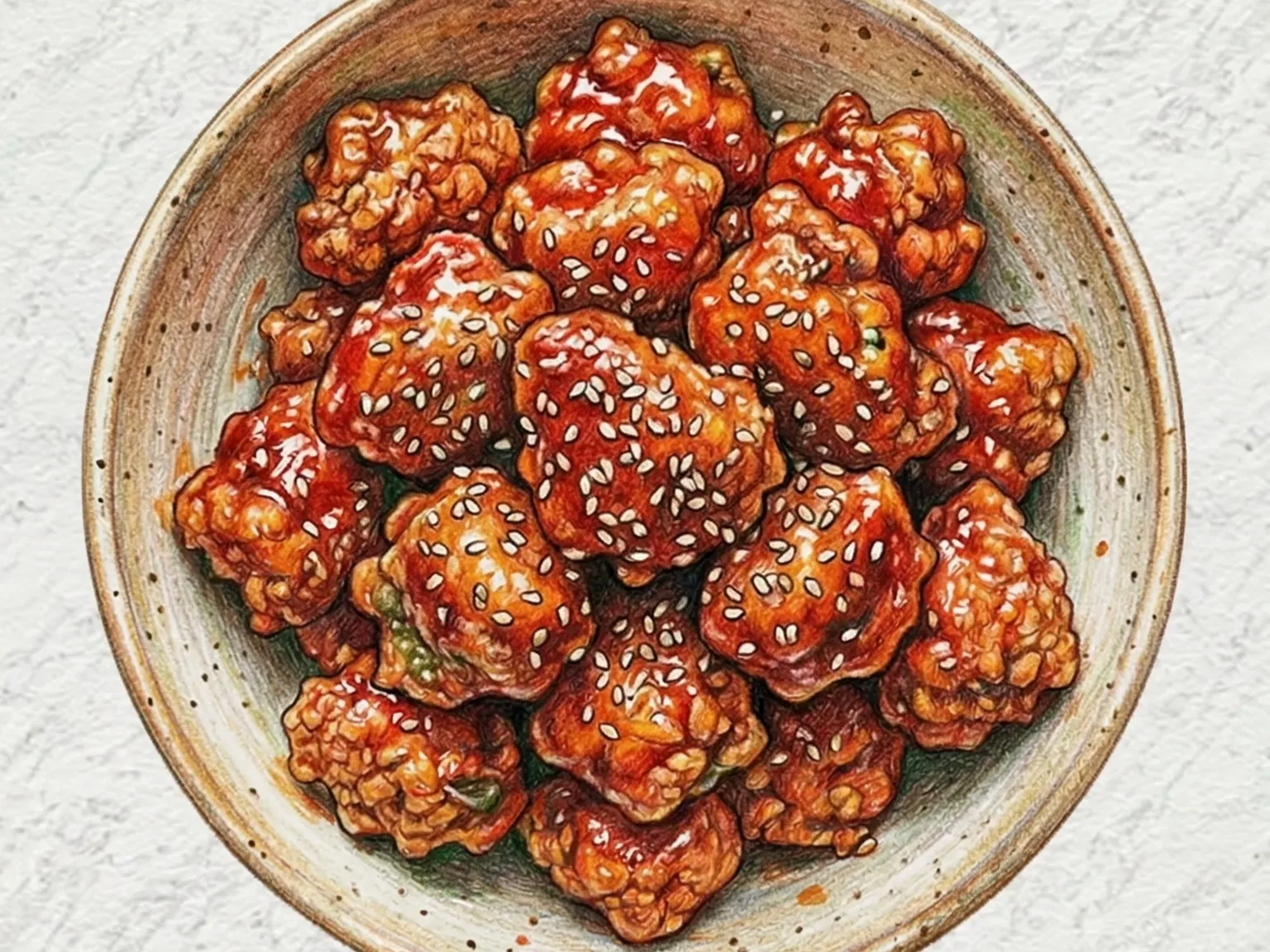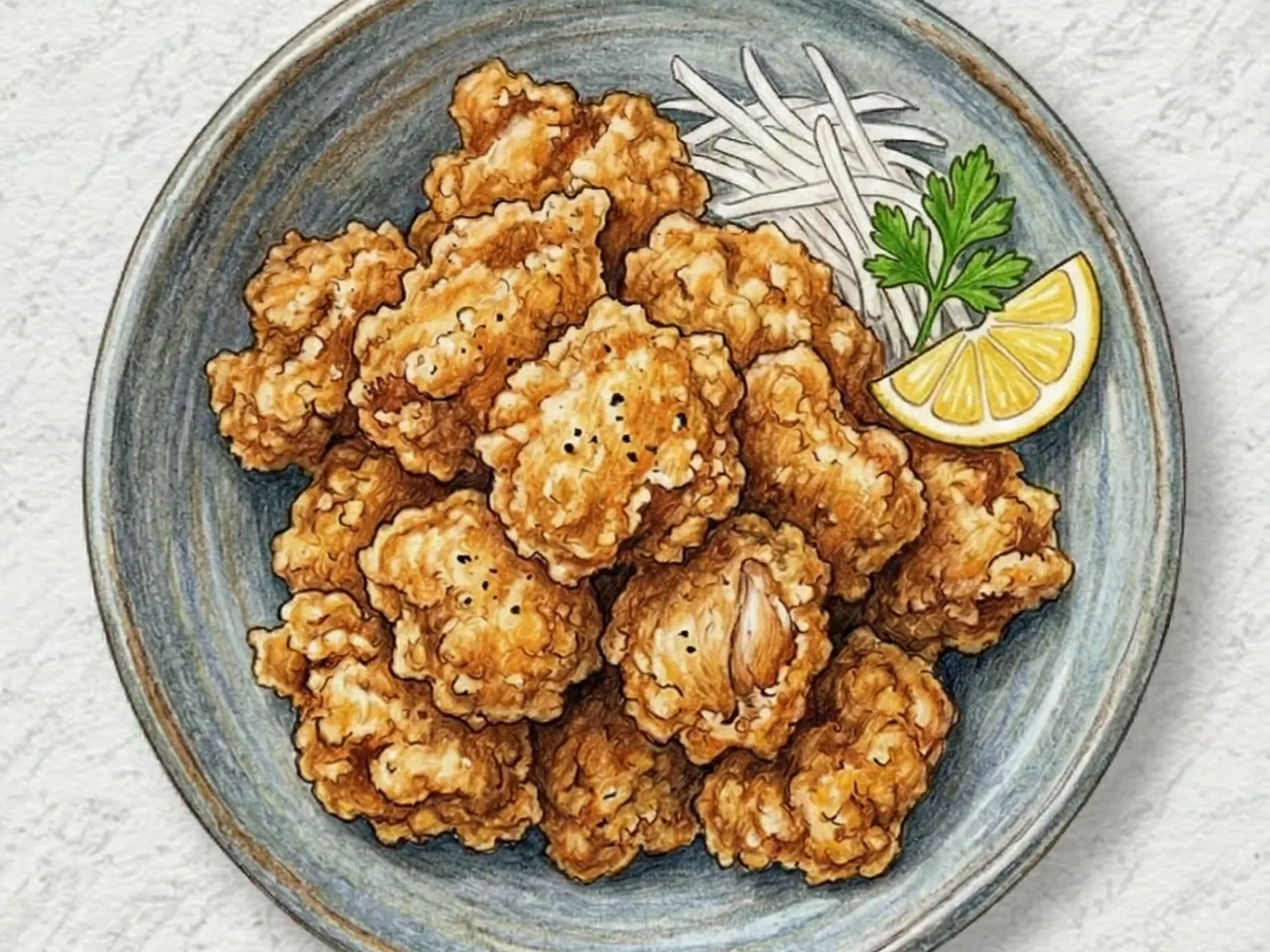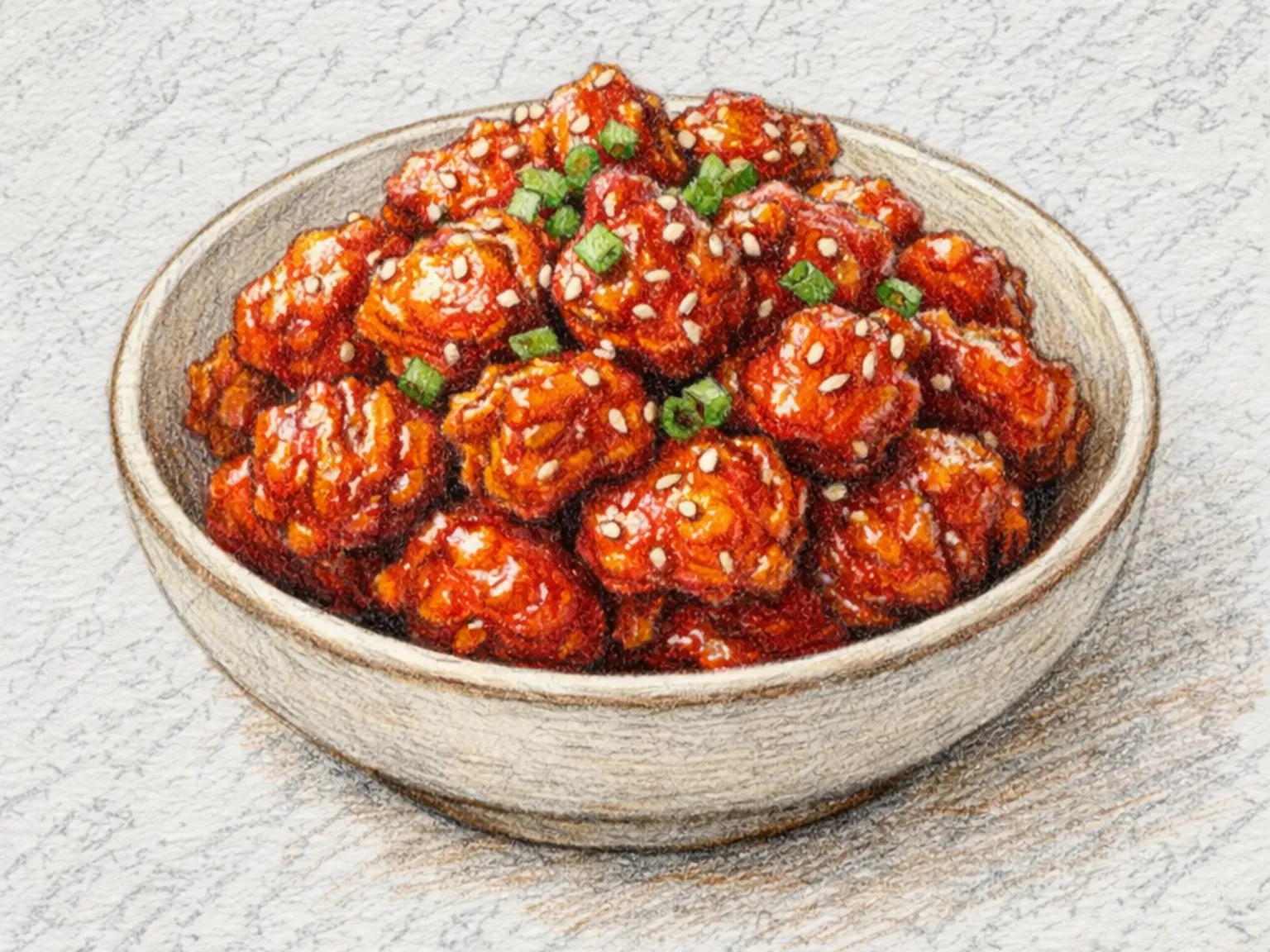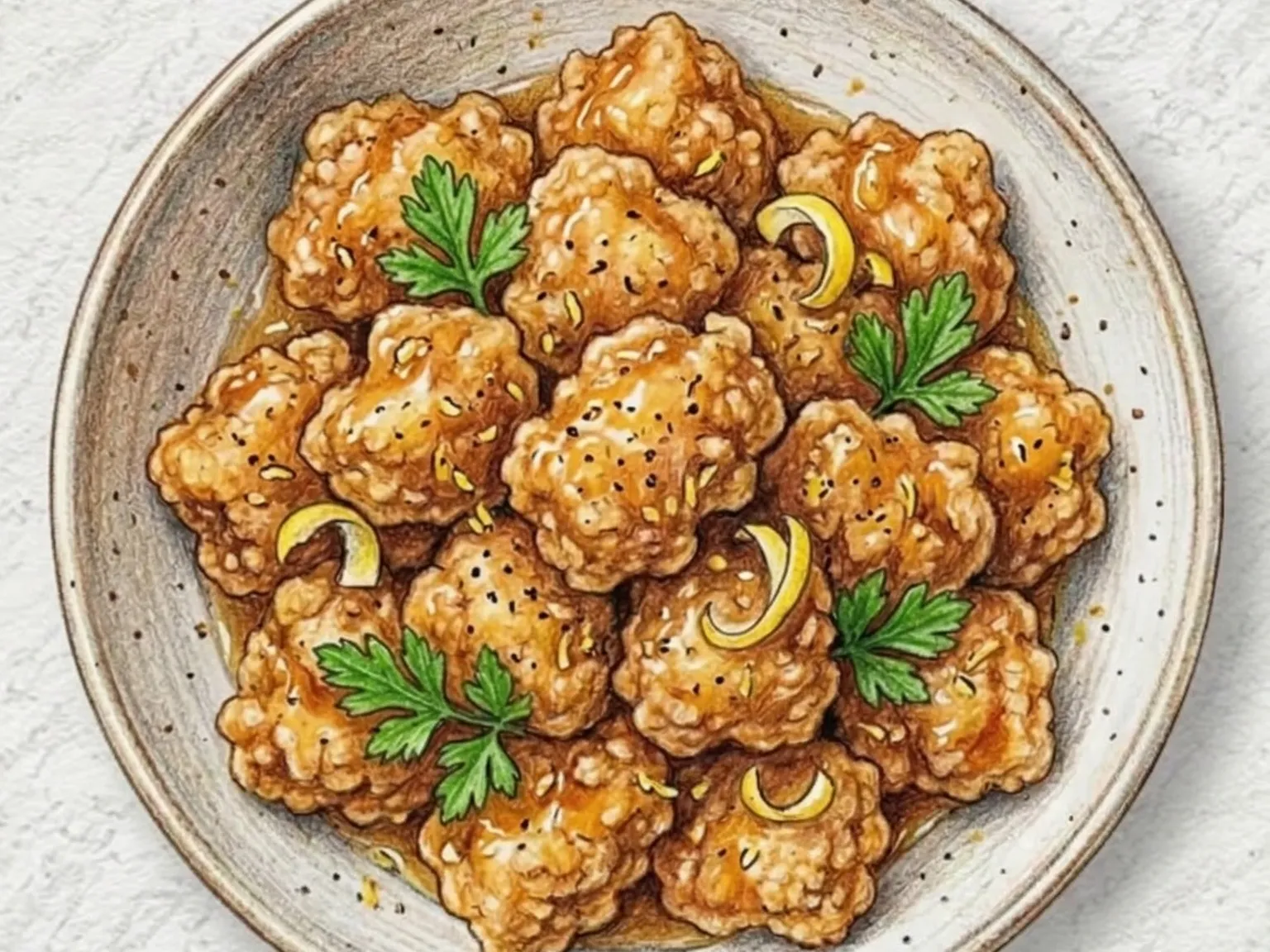
Korean Lemon Pepper Dakgangjeong

Korean Lemon Pepper Dakgangjeong

Quick answer

Boneless chicken thigh pieces are cut bite-size, coated thoroughly in potato starch, and double-fried at 170 then 180 degrees Celsius to build a shell that stays crunchy...

What makes this special

  • Lemon pepper dakgangjeong applies a citrus-glaze to chicken fried twice for lasting crunch.
  • 170°C then 180°C double fry keeps crunch even as it cools
  • Lemon acidity cuts oil; black pepper lingers long on the finish
Total time
38 min
Level
Medium
Servings
4 servings
Ingredients
8
Calories
520 kcal
Protein
29 g

Key ingredients

Boneless chicken thighPotato starchSaltBlack pepperLemon juice

Core cooking flow

  1. 1 Pat 600 g boneless chicken thigh dry, then cut it into bite-size pieces.
  2. 2 If the chicken surface is wet, the starch will clump.
  3. 3 Heat 900 ml cooking oil to 170C and add the chicken without crowding.

Boneless chicken thigh pieces are cut bite-size, coated thoroughly in potato starch, and double-fried at 170 then 180 degrees Celsius to build a shell that stays crunchy through the glazing step. The fried chicken goes straight into a reduction of lemon juice, honey, soy sauce, and butter, where the bright citrus acidity cuts cleanly through the rendered fat and cracked black pepper settles in as a slow, lingering finish. The entire tossing step must be completed in under twenty seconds before the steam softens the crust. Adding lemon zest directly into the glaze intensifies the citrus note considerably, and finished slices of lemon on the side make for a clean, vivid presentation.

Prep 20min Cook 18min 4 servings

Instructions

Read the steps as a cooking flow: prep, heat, seasoning, doneness control, and finish.

6 steps
  1. 1
    Season

    Pat 600 g boneless chicken thigh dry, then cut it into bite-size pieces.

    Season with 0.8 teaspoon salt and 1 teaspoon black pepper, and let it stand for 10 minutes so the surface is evenly seasoned.

  2. 2
    Step

    If the chicken surface is wet, the starch will clump.

    Add the 6 tablespoons potato starch in portions, toss well, and leave a thin dry white coating with no thick pockets.

  3. 3
    Heat

    Heat 900 ml cooking oil to 170C and add the chicken without crowding.

    Fry for about 4 minutes until lightly golden, then lift it out and rest for 2 minutes to let steam escape.

  4. 4
    Heat

    Raise the oil to 180C and return the chicken to the oil.

    Fry for 2 more minutes until the color deepens and the crust feels firm and scratchy when touched with chopsticks.

  5. 5
    Control

    In a pan, simmer 2 tablespoons lemon juice, 1.5 tablespoons honey, and 1 tablespoon soy sauce over medium heat.

    Cook until large bubbles become smaller and the glaze looks shiny.

  6. 6
    Finish

    Add the fried chicken to the glaze and lower the heat.

    Turn quickly to coat each piece thinly, finish within 20 seconds, and plate immediately so the crust stays crisp.

After the steps

Pick a recipe that fits this dish.

Continue with shared ingredients, meal pairings, or a similar method.

Recipes That Go Well With This

More Street food →

Based on shared ingredients and meal pairing

Korean Gochujang Honey Dakgangjeong
Shared ingredient: boneless chicken thigh Street food

Korean Gochujang Honey Dakgangjeong

Gochujang honey dakgangjeong starts with bite-sized boneless chicken thigh pieces coated in potato starch and double-fried, first at 170 degrees Celsius and then at 180 degrees, before being tossed in a glaze of gochujang, honey, soy sauce, and garlic. The two-stage frying builds a rigid starch shell that stays crunchy even after the sauce is applied, while the natural fat in thigh meat keeps the interior juicy throughout the process. Gochujang's fermented heat contrasts directly with honey's thick sweetness, and soy sauce anchors the salt level so neither sweetness nor spice dominates. Garlic sharpens the aroma of the sauce, and sesame seeds scattered at the end add a finishing layer of nuttiness. The sauce must be reduced quickly on high heat, under one minute, to achieve a glossy coat without burning. The chicken should be sauced and eaten immediately after frying for the maximum contrast between the crackling crust and the tender, glazed interior.

Korean Soy Garlic Dakgangjeong
Shared ingredient: boneless chicken thigh Street food

Korean Soy Garlic Dakgangjeong

Soy-garlic dakgangjeong is Korean fried chicken made from boneless thigh pieces coated in potato starch and fried twice before being tossed in a soy-garlic glaze. The first fry runs at 170 degrees Celsius for five minutes to cook the meat through to the center. The second fry raises the temperature to 190 degrees and runs for two minutes to push residual moisture out of the crust and harden the surface. Both fries are necessary to achieve a crust firm enough to stay crisp under the wet glaze. Using only potato starch rather than a wheat-starch blend produces a thinner, more transparent coating that crisps harder and absorbs less oil. The sauce is reduced for no more than thirty seconds to one minute so the saltiness does not concentrate excessively. Vinegar is a key component: it cuts through the grease and leaves the palate clean after each bite. The fried chicken must go into the sauce while it is still loose, then be tossed over high heat quickly so the coating never has time to steam and soften. Sesame seeds scattered on top add a nutty fragrance and a textural contrast against the lacquered surface.

Korean Sweet Corn Latte (Butter Sauteed Corn Milk Drink)
Serve together Drinks

Korean Sweet Corn Latte (Butter Sauteed Corn Milk Drink)

Sweet corn latte begins by sauteing cooked corn kernels in butter until fragrant, then simmering them in milk to draw out the corn's natural sugars before blending everything smooth. The butter amplifies the starchy, roasted aroma during the initial saute, coating each kernel so that the fat-soluble flavor compounds dissolve fully into the milk during the five-minute simmer. Blending the mixture until completely smooth and then straining it through a fine sieve removes any remaining hull pieces, producing a texture as silky as a custard sauce. This straining step makes a noticeable difference in the final quality. Condensed milk adds a rounded sweetness, and a small amount of white pepper introduces a faint spiced warmth that gives the drink depth beneath the sweetness. It works equally well served hot in a ceramic mug or chilled and poured over ice; the corn aroma remains vivid in both versions.

Korean Sweet Spicy Dakgangjeong
Similar recipe Street food

Korean Sweet Spicy Dakgangjeong

Yangnyeom dakgangjeong is Korean sweet-spicy fried chicken made by cutting boneless thigh meat into bite-size pieces, dredging them in potato starch, and running them through a two-stage fry. The first fry at 170 degrees Celsius cooks the meat through; the second fry at 185 degrees drives off the residual moisture the crust absorbed during the first pass, hardening the exterior into a shell that can withstand sauce tossing without collapsing. The glaze is a reduction of gochujang, gochugaru, corn syrup, and soy sauce, simmered down until the mixture is thick enough to coat a spoon without dripping off. Tossing the finished chicken in the hot glaze must happen off the heat and within twenty seconds, because the steam trapped between sauce and crust will turn the coating soggy if the process drags on. When done correctly, the result is a glossy, sticky exterior that crackles audibly at first bite even after the dish has cooled to room temperature, surrounding thigh meat that stays juicy inside.

Serve with this

Gotgam Cream Cheese Roll (Dried Persimmon Rolls)
Desserts Easy

Gotgam Cream Cheese Roll (Dried Persimmon Rolls)

Gotgam cream cheese roll is a no-cook Korean dessert that requires nothing more than a knife, a bowl, and a refrigerator. Dried persimmons are slit open and flattened into thin sheets, each one acting as the outer wrapper. The filling is cream cheese mixed with honey and fresh lemon juice to balance its natural richness with acidity, and finely chopped walnuts are folded in throughout to add a crunchy, nutty element to every bite. The filling is spread across the opened persimmon, which is then rolled tightly and wrapped in plastic wrap. Twenty minutes in the refrigerator firms the roll enough to slice cleanly. Dipping the knife in warm water and wiping it dry before each cut produces the smoothest cross-sections. The finished slices reveal clearly defined layers: the chewy, caramel-sweet dried persimmon on the outside, the tangy cream cheese in the middle, and flecks of walnut distributed throughout. The combination makes it a natural pairing with wine or a polished addition to a traditional holiday table.

🍺 Bar Snacks 🎉 Special Occasion
Prep 20min 2 servings
Korean Crispy Glazed Tofu Bites
Side dishes Medium

Korean Crispy Glazed Tofu Bites

Dubu gangjeong applies the double-coating logic of Korean fried chicken to tofu, pressing each cube dry before dredging in potato starch, frying until the shell turns shattering crisp, then tossing in a concentrated sticky glaze. The dish originated in temple cuisine as a meatless adaptation of gangjeong and has since become a staple anju in Korean bars. Pressing the tofu is non-negotiable: at least twenty minutes under a heavy weight wrapped in paper towels removes enough moisture to prevent oil from splattering and allows the starch coating to adhere evenly. Potato starch produces a noticeably thinner and more translucent crust than wheat flour, which cracks cleanly rather than bending when bitten. The glaze is made by boiling gochujang, soy sauce, sugar, and rice syrup together until large bubbles break on the surface, signaling that the mixture has concentrated and will cling rather than pool. Pouring the hot glaze over the fried tofu and tossing quickly coats every surface in an even, lacquer-like finish. The defining quality of a well-made dubu gangjeong is the contrast between the caramelized shell with its slight chew and the soft, almost custard-like interior. Once made, it must be eaten within ten minutes before the coating absorbs moisture and goes soft.

🏠 Everyday 🧒 Kid-Friendly
Prep 18min Cook 15min 2 servings
Korean Mussel Soup Noodles
Noodles Easy

Korean Mussel Soup Noodles

Honghap tangmyeon is a mussel noodle soup where a generous quantity of mussels is simmered to produce a deeply briny, clear broth that serves as the foundation of the entire dish without the use of prepared stock. The mussels release their concentrated sea flavor directly into the pot, and this self-made broth is what distinguishes the dish from simpler seafood noodle soups. Korean radish is cooked alongside from the start, lending a natural sweetness and a refreshing clarity to the liquid as it breaks down gently. Soup soy sauce and cooking wine adjust the seasoning and temper the salt that the mussels contribute, pulling the flavor into balance. Minced garlic and green onion build an aromatic layer that keeps any fishiness in check, leaving only a clean, deep savoriness in its place. A generous crack of black pepper over the steaming bowl sharpens the marine character of the broth and warms the palate. The noodles should not be overcooked; they need enough bite to hold up against the rich, hot liquid. A few slices of cheongyang chili on top add a brisk heat that makes the broth feel simultaneously cool and fiery, the defining sensation of good Korean seafood soup.

🍺 Bar Snacks 🌙 Late Night
Prep 18min Cook 20min 2 servings

Similar recipes

Korean Popcorn Chicken
Street food Easy

Korean Popcorn Chicken

Popcorn chicken is a Korean fried snack made by cutting chicken breast into 2cm cubes, coating them in egg wash and cornstarch, then double-frying at 170 degrees Celsius. The first fry sets the crust; the second fry drives out residual moisture, producing an exceptionally crunchy shell. Because the pieces are small, the crust-to-meat ratio is high, so every bite delivers maximum crunch. A glaze reduced from soy sauce, sugar, and oligosaccharide syrup coats each piece in a sweet-salty finish. Garlic powder mixed into the initial seasoning carries a mild garlic note through the oil.

🧒 Kid-Friendly ⚡ Quick
Prep 15min Cook 15min 2 servings
Korean Curry Fried Rice (Golden Spiced Chicken Fried Rice)
Rice Easy

Korean Curry Fried Rice (Golden Spiced Chicken Fried Rice)

Curry bokkeumbap is a Korean fried rice where curry powder coats each grain with warm spice and gives the rice a vivid golden color. Chicken breast, onion, carrot, and bell pepper are stir-fried together before the rice goes in, distributing protein and vegetables evenly through every serving. The curry fragrance develops gradually with each bite - more present than plain fried rice but lighter than a curry sauce, landing at a satisfying middle point between the two. Bell pepper adds sweetness and a visual contrast of color against the golden rice. Topping with a fried egg raises the dish further: when the yolk breaks and mixes into the rice, a layer of creaminess runs through each bite. The recipe works well with day-old rice and requires few ingredients, making it a practical weeknight meal.

🏠 Everyday 🍱 Lunchbox
Prep 10min Cook 10min 2 servings
Korean Stir-Fried Chicken
Stir-fry Easy

Korean Stir-Fried Chicken

Dak-bokkeum is a Korean stir-fried chicken dish seasoned with a soy sauce-based marinade. Soy sauce, sugar, and minced garlic coat the chicken evenly before it hits the pan, producing a salty, umami-forward crust as it sears. Onion and carrot are added partway through, and the moisture they release as they soften blends into the seasoning to form a natural pan sauce without any added liquid. Sesame oil goes in at the end, its nutty aroma lifting through the dish as it finishes. Breast meat produces a leaner, cleaner-tasting result, while thigh meat stays more moist and springy throughout cooking. The dish pairs well with steamed rice and comes together quickly enough for weeknight cooking.

🏠 Everyday 🌙 Late Night
Prep 15min Cook 15min 2 servings

Tips

Double-frying keeps it crisp even after cooling.
Toss in glaze for under 20 seconds to avoid sogginess.

Nutrition (per serving)

Calories
520
kcal
Protein
29
g
Carbs
21
g
Fat
34
g