Linzer Torte (Almond Lattice Tart with Raspberry Jam)
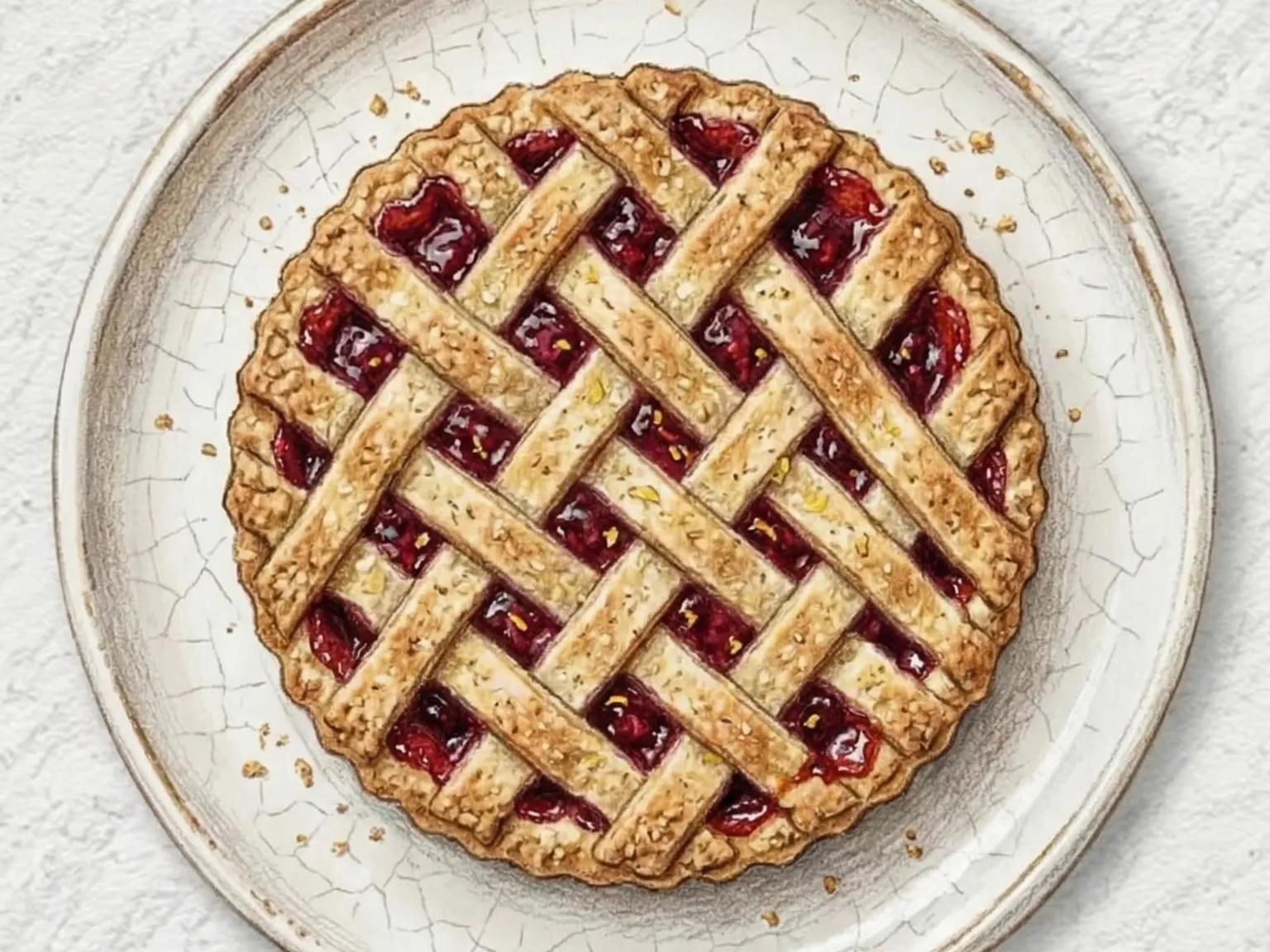
An Austrian tart made with a nut-enriched dough, a generous layer of raspberry jam, and a lattice top that reveals the jewel-red filling beneath. Combining almond flour with wheat flour gives the pastry a short, sandy texture that crumbles gently and melts into the smooth jam on the palate. The butter-heavy dough must be thoroughly chilled before being rolled and cut into strips; warm dough tears and loses definition. Raspberry jam provides a sharp, fruity acidity that stands out against the mellow, nutty backdrop of the crust, while a touch of lemon zest lifts the overall aroma with a bright finish. Baking at 180 degrees Celsius for 30 to 35 minutes brings the jam to a gentle boil, intensifying its color and flavor, while the lattice strips turn golden and slightly crisped at the edges. Resting the tart overnight allows the jam's moisture to soften the boundary between filling and crust, creating a more cohesive slice where pastry and fruit feel unified rather than separate.
Adjust Servings
Instructions
- 1
Cream butter and sugar, then beat in the egg.
- 2
Add flour, almond flour, and lemon zest; mix into dough and chill.
- 3
Press two-thirds of the dough into a tart pan and dock the base.
- 4
Spread jam evenly and place remaining dough strips in a lattice pattern.
- 5
Bake at 180C for 30-35 minutes and cool completely before slicing.
As an Amazon Associate, we may earn from qualifying purchases.
Tips
Nutrition (per serving)
More Recipes

Sacher Torte (Viennese Dark Chocolate Apricot Cake)
Sacher torte is Vienna's most celebrated cake - a dense, intensely chocolatey sponge split horizontally and filled with a thin layer of apricot jam, then enrobed in a glossy dark chocolate glaze. The batter contains a higher ratio of melted chocolate and butter than a typical chocolate cake, which makes the crumb rich and moist rather than light and airy. Whipped egg whites folded into the chocolate base introduce just enough lift to keep the texture from becoming leaden, while the apricot jam provides a tart, fruity counterpoint that prevents the chocolate from overwhelming the palate. The glaze is made by heating heavy cream and pouring it over chopped dark chocolate, stirring until smooth, then pouring it over the cake in a single motion for a mirror-like finish. Warming the jam slightly before spreading ensures an even, thin coat that does not tear the delicate sponge. Once the glaze has set completely, slicing with a knife dipped in hot water produces the cleanest cross-section, revealing the dark cake, the amber jam line, and the shiny chocolate shell.

Galette des Rois (Puff Pastry Almond Frangipane Pie)
Galette des rois is the traditional French pie eaten during Epiphany in January, made from two rounds of puff pastry enclosing almond frangipane cream. The puff pastry contains hundreds of alternating layers of dough and butter that expand dramatically in the oven, shattering into golden fragments when cut. The frangipane bakes into a moist, dense cream with concentrated almond richness. A small porcelain figurine called a feve is hidden inside before baking - whoever finds it wears a paper crown and is declared the day's king or queen. The top layer is scored with decorative leaf or spiral patterns and given an egg wash for a lacquered shine.

Wiener Schnitzel
Classic Viennese dish of veal cutlet pounded thin, breaded in flour, egg, and breadcrumbs, pan-fried golden in butter.

Semla (Swedish Cardamom Bun with Almond Cream)
Semla is a Swedish cardamom-scented bun that is baked, cooled, and then hollowed out to make room for a filling of almond paste mixed with the scooped crumb, topped with a generous mound of whipped cream. The bun itself is soft and fragrant, with cardamom lending an exotic warmth that distinguishes it from ordinary sweet rolls. The almond filling is dense and intensely nutty, providing a rich base layer that the light, billowy cream offsets with its cool freshness. The removed cap of the bun is placed back on top like a lid, and a final dusting of powdered sugar completes the presentation. Timing is important: the bun must cool completely before any cream goes in, or the heat will melt it into a flat puddle. If the cardamom flavor feels too subtle after baking, increasing the spice by half a teaspoon in the dough brings it to the forefront. In Sweden, semla appears in bakeries from January through Easter, and the best versions balance the three components - bread, nut paste, and cream - so that no single element dominates.

Portuguese Egg Tart (Flaky Pastry with Caramelized Custard)
Flaky puff pastry shells are pressed into muffin tins and filled with a rich egg yolk custard, then baked at very high heat until the tops blister with dark caramelized spots. Those charred patches are not a mistake but the defining feature of the tart, contributing a bittersweet complexity that balances the sweet, creamy filling below. The custard sets to a trembling consistency that is firm enough to hold when the tart is lifted but soft enough to melt on the tongue. Vanilla extract added to the custard rounds out the egg richness with a floral note. Straining the custard through a fine sieve before filling ensures a perfectly smooth texture. The extreme oven temperature is what separates these from ordinary custard tarts, as it caramelizes the surface in minutes while keeping the interior silky.

Einspanner (Espresso with Vanilla Whipped Cream)
Einspanner is an Austrian-style coffee that layers espresso beneath lightly sweetened whipped cream flavored with sugar and vanilla. The cream is whipped to about seventy percent, keeping it fluid enough to float and spread over the coffee; over-whipping causes it to clump and sink. Espresso is cooled slightly, poured over ice, then the cream is spooned on gently using the back of a spoon to create two distinct visual layers. A light dusting of cocoa powder bridges the bitter espresso and sweet cream with a hint of chocolate.