Lion's Head Meatballs (Chinese Braised Large Pork Meatballs with Cabbage)
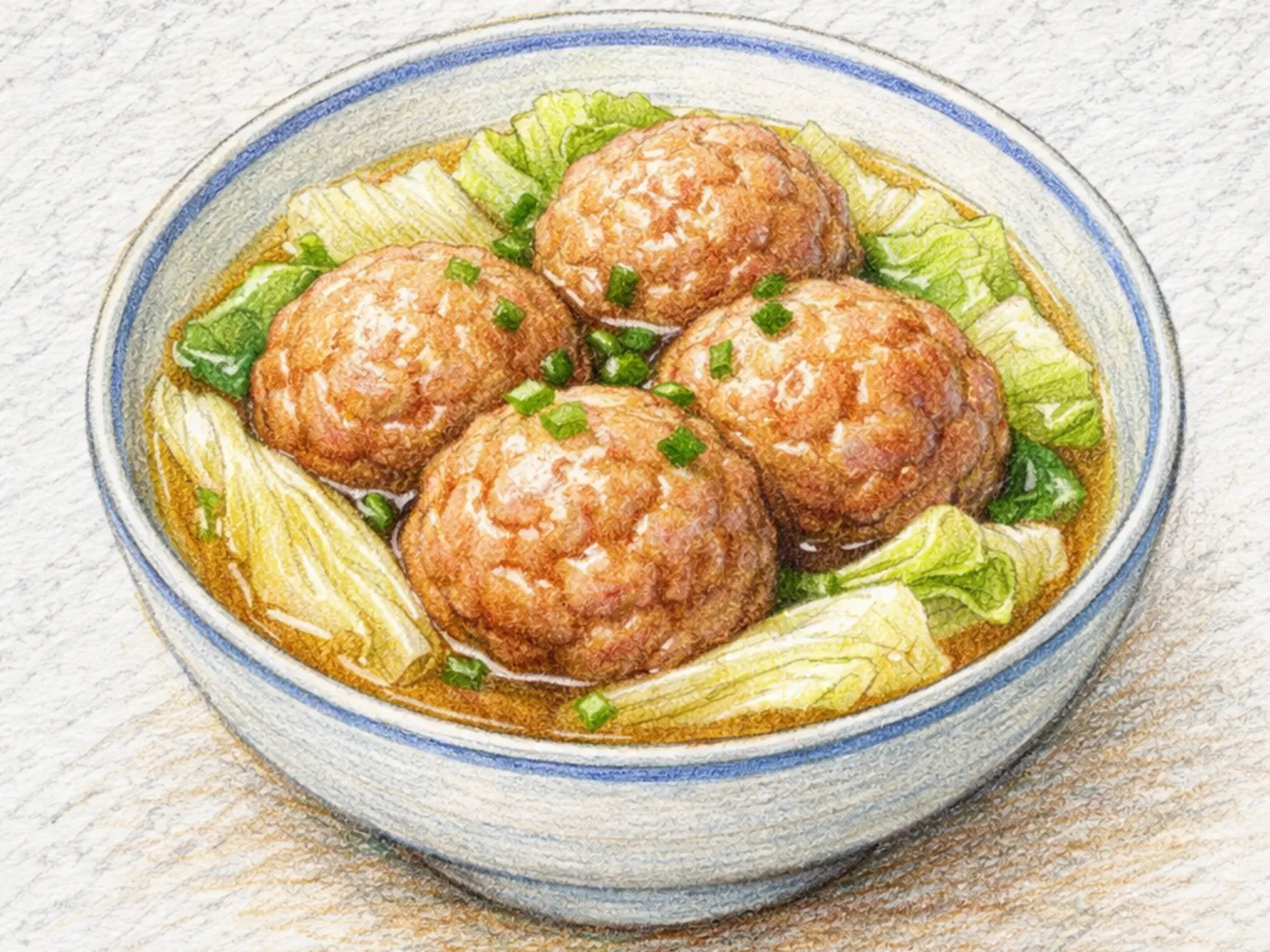
Lion's head meatballs are a hallmark of Huaiyang cuisine from eastern China. Each meatball is shaped to the size of a fist from a loose mixture of ground pork, minced water chestnuts, and aromatics - the water chestnuts keeping the interior moist and giving it a subtle crunch even after long braising. The meatballs nestle into napa cabbage leaves in a clay pot, then simmer gently in a light soy and ginger broth until the cabbage wilts into silky ribbons and the pork turns spoon-tender. The name comes from how the cabbage wraps around each ball like a lion's mane. Served with steamed rice, the mild broth doubles as a soup course.
Adjust Servings
Instructions
- 1
Mix ground pork with egg, starch, minced scallion and ginger, 1 tbsp soy sauce, and cooking wine until sticky.
- 2
Divide into 4 portions and shape into large meatballs.
- 3
Layer napa cabbage in a pot and place meatballs on top.
- 4
Add water and remaining soy sauce, bring to a boil, then braise on low for 25 minutes.
- 5
When meatballs are fully cooked and broth is flavorful, serve with the braised cabbage.
As an Amazon Associate, we may earn from qualifying purchases.
Tips
Nutrition (per serving)
More Recipes

Guo Bao Rou (Sweet and Sour Crispy Pork)
Guo bao rou - literally 'pot-wrapped meat' - is the signature dish of Northeastern Chinese cuisine, created in late Qing Dynasty Harbin to entertain Russian diplomats who found traditional Chinese flavors too unfamiliar. Pork tenderloin or loin is sliced thin and coated heavily in potato starch, fried once to set the crust, then fried a second time at higher temperature to puff the starch into a shatteringly crisp shell - this double-frying technique is non-negotiable. A sauce of vinegar, sugar, and soy sauce is reduced rapidly in a hot wok until it caramelizes, then the crispy pork is tossed through in a motion that must take no more than thirty seconds - any longer and the starch absorbs the liquid, destroying the crunch. The original Harbin version leans heavily on vinegar's sharp tang with a pale color, while versions that migrated south or into Korean-Chinese kitchens often substitute ketchup for a sweeter, redder result. Each piece delivers a triple texture: a glassy sauce coating on the outside, a shattering starch layer beneath, and soft, yielding pork at the center.

Kung Pao Chicken
Kung pao chicken is a landmark dish of Sichuan cuisine, combining diced chicken, roasted peanuts, and dried chilies in a sauce that is simultaneously spicy, sweet, sour, and numbing. The chicken is cut into small cubes and marinated briefly in soy sauce and cornstarch, which creates a thin coating that seals in moisture when the meat hits the searing-hot wok. Dried red chilies and Sichuan peppercorns are fried in oil first, infusing it with their heat and the distinctive tingling sensation known as mala. The sauce - a balanced mixture of soy sauce, black vinegar, and sugar - is added at the end and reduced quickly into a glossy glaze that clings to every piece. Roasted peanuts are tossed in just before serving to preserve their crunch, and chopped scallion adds a final layer of freshness. The interplay of spice, tang, and nuttiness in each bite explains why this dish has traveled far beyond Sichuan to become one of the most recognized Chinese dishes worldwide.

Braised Pork Belly with Preserved Mustard Greens
Meicai kourou is a Hakka Chinese dish of parboiled pork belly that is seared with soy sauce for color, then layered with preserved mustard greens and steamed for over an hour. The prolonged steaming renders the fat translucent and meltingly soft, while the fermented, salty greens infuse the meat with their concentrated flavor. When inverted onto a plate, the neatly stacked slices glisten under the braising sauce. It is a centerpiece dish meant for sharing, with the sauce spooned over steamed rice to capture every layer of richness.

Century Egg and Pork Congee
Century egg and pork congee - pi dan shou rou zhou - is the quintessential Cantonese breakfast, served from dawn at congee shops across Hong Kong, Guangzhou, and the broader Pearl River Delta. The congee base requires a full hour of slow simmering, during which rice grains disintegrate entirely into a silky, porridge-like suspension - the Cantonese call this texture 'sang shui,' meaning the rice and water have become indistinguishable. Lean pork is sliced thin and dropped into the pot during the final minutes, cooking instantly in the hot porridge. Century egg - duck egg preserved in clay, ash, and salt for weeks until the white turns translucent amber and the yolk becomes a creamy dark-green gel - is cubed and stirred through. The egg's alkaline, sulfurous depth meets the clean blandness of the rice porridge, while the pork provides a savory anchor. White pepper, sesame oil, and sliced scallion finish the bowl. The congee must be eaten immediately - it thickens rapidly as it cools, and the textural window between perfectly flowing and pasty is narrow.

Sesame Spicy Tantanmen (Chinese Creamy Sesame Chili Oil Noodle Soup)
Tantanmen is a Chinese-origin noodle soup that combines a creamy sesame-based broth with the heat of chili oil to produce a bowl that is simultaneously nutty, spicy, and deeply savory. The broth begins with chicken stock into which sesame paste is whisked until fully dissolved, creating a thick, tan-colored liquid with a pronounced roasted-nut fragrance. Ground pork is fried separately with garlic, ginger, and doubanjiang-a fermented chili bean paste-until the meat is browned and crumbly, then spooned over the noodles as a rich, salty topping. Blanched bok choy adds a crisp, vegetal note that breaks up the heaviness of the broth, and a final drizzle of chili oil pools on the surface, releasing its fragrance with every sip. The noodles should be cooked just short of fully done so they maintain their chew in the hot liquid. Each component-sesame, chili, fermented bean, and pork-contributes a distinct layer of flavor, and the bowl rewards slow eating as they gradually merge.

Chinese Red-Braised Fish (Hong Shao Yu)
Golden pan-seared white fish glazed in a glossy, caramelized soy-sugar sauce with ginger and green onion -- a Chinese home-cooking classic ready in under 30 minutes. Searing creates a firm exterior that holds the fish together throughout braising, while ginger and green onion infuse the sauce with fragrance and neutralize any fishiness. The sauce reduces into a glossy, dark glaze that coats each piece of fish. With a cooking time under 30 minutes, this is a practical weeknight dish that delivers the deep, caramelized soy flavors of long-braised Chinese cooking in a fraction of the time.