Lobster Bisque
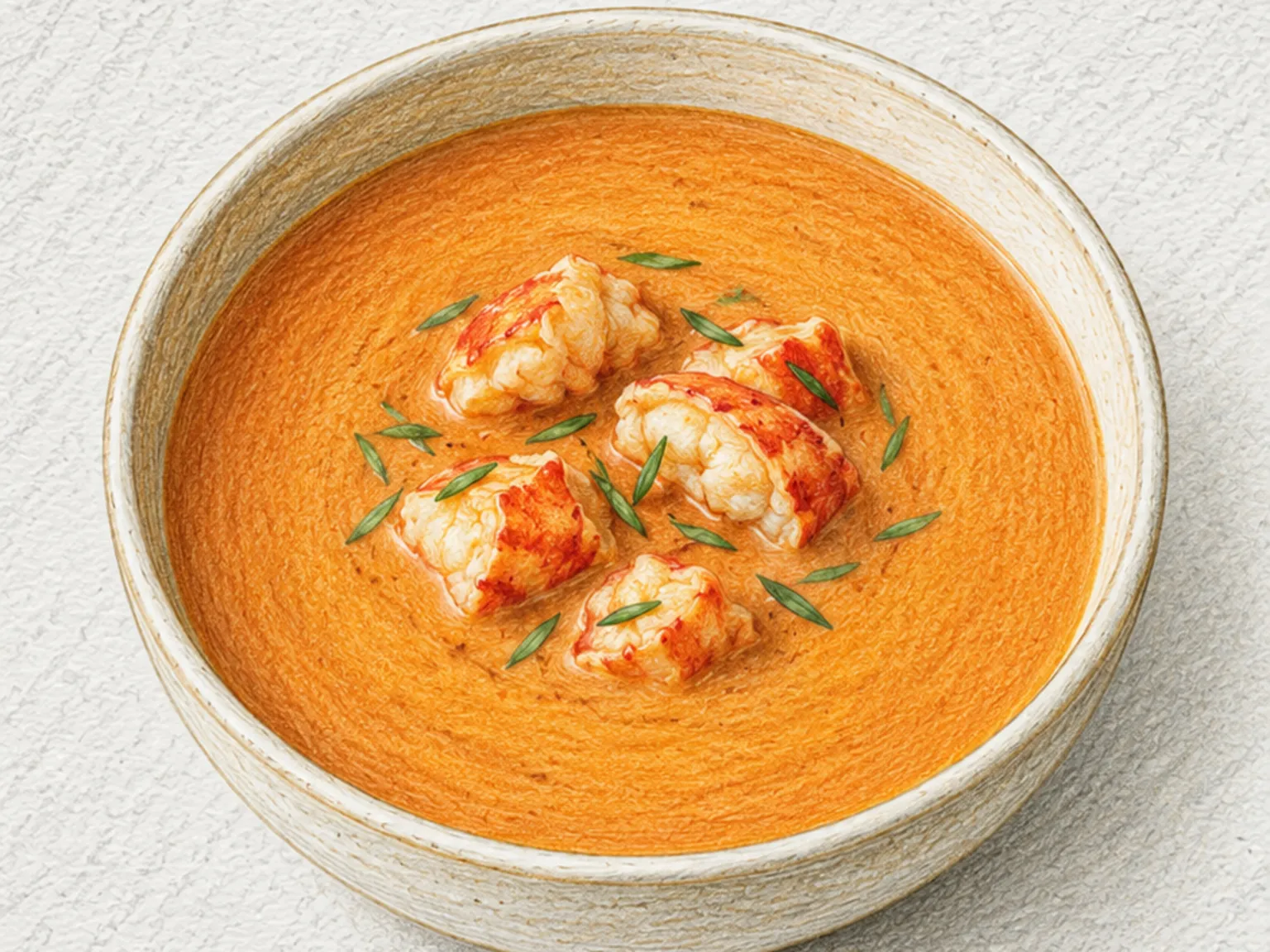
Lobster bisque is a classic French cream soup built by roasting lobster shells in butter until deeply colored, then flambeing with cognac to burn off bitterness and layer in smoky complexity. The shells simmer with fish stock, whole tomatoes, and aromatic vegetables for at least thirty minutes, extracting every bit of crustacean flavor before the broth is strained through a fine sieve. Heavy cream transforms the strained liquid into a velvety, smooth-textured soup, and fresh tarragon adds an herbal note that lifts the richness. The reserved lobster meat goes in at the very end to keep its tender bite intact. Each spoonful delivers a concentrated depth of ocean flavor that defines one of French cuisine's most refined soups.
Adjust Servings
Instructions
- 1
Cook lobster; remove meat and reserve the shells.
- 2
Sauté vegetables in butter; add shells and cook until deeply colored.
- 3
Add cognac and flambé; add tomatoes and fish stock; simmer 30 minutes.
- 4
Remove shells, strain broth, add cream, and simmer.
- 5
Add lobster meat and garnish with tarragon.
As an Amazon Associate, we may earn from qualifying purchases.
Tips
Nutrition (per serving)
More Recipes

Potato Leek Soup
Potato leek soup is a French home-style cream soup made by sweating leeks and onion in butter over low heat, simmering with diced potatoes in chicken stock, and blending until velvety smooth. Cooking the leeks slowly is essential - it dissolves their raw sharpness into a sweet, mellow base that carries the entire soup. The potato starch provides natural body without any added thickener, and an immersion blender produces a seamless, silky texture. Heavy cream stirred in at the end adds a layer of richness and rounds out the flavor. The soup can be served hot for a comforting meal or chilled as vichyssoise for a refined summer starter.

Lobster Thermidor
Lobster thermidor is a French dish in which boiled lobster meat is cut into bite-size pieces, folded into a cream sauce made from shallots sauteed in butter, white wine reduced by half, Dijon mustard, and heavy cream, then packed back into the cleaned shell and topped with grated Parmesan for a brief gratin under high heat. Reducing the wine concentrates its acidity, and the mustard adds a sharp undercurrent that prevents the cream sauce from tasting flat. Baking at 220 degrees Celsius for only six to eight minutes gives the cheese a golden crust while keeping the lobster meat tender. Lemon juice stirred into the filling at the last moment lifts the richness. The dramatic presentation in the shell makes it a natural choice for entertaining.

Cream of Mushroom Soup
Cream of mushroom soup sautees sliced button mushrooms in butter and olive oil for eight to ten minutes until the moisture evaporates and the mushrooms develop a deep brown color, then builds the soup with a flour roux, chicken stock, and heavy cream. Onion and garlic sauteed beforehand establish an aromatic foundation, and dried thyme adds an earthy herb note that complements the mushrooms. Cooking the flour for one minute before gradually whisking in stock prevents lumps and creates a smooth base. Adding cream at the end and simmering briefly rounds out the flavor with richness. Blending only half the soup produces a texture that is both velvety and chunky.

Blanquette de Veau (French Veal Stew in Creamy Egg-Lemon Sauce)
Blanquette de veau is a classic French white stew where veal shoulder is first blanched in cold water to remove impurities, then gently simmered with carrot and onion in fresh water for over an hour until the meat yields easily to a fork. The cooking broth is transformed into a sauce by building a butter-flour roux and whisking in the liquid, then finishing with tempered heavy cream and egg yolks to create a velvety coating that clings to every piece of meat. The sauce must never boil after the yolks go in - even brief overheating will cause it to break. A squeeze of lemon at the end lifts the cream's richness, and button mushrooms sauteed separately in butter add an earthy counterpoint when folded back in.

French Celeriac Remoulade
Celeriac remoulade shreds thickly peeled celeriac into fine matchsticks and dresses them in a mixture of Dijon mustard, mayonnaise, lemon juice, and white wine vinegar. Tossing the shreds with half the lemon juice immediately after cutting prevents enzymatic browning, while the remaining juice goes into the dressing for acidity. The Dijon's sharp heat balances the mayonnaise's richness, and a short 15-minute chill in the refrigerator lets the flavors meld evenly into the celeriac. Cutting the matchsticks as thin as possible increases surface area for faster dressing absorption, and overnight refrigeration deepens the flavor further.

Classic Croissant
A classic croissant is built through lamination - a process of folding cold butter into yeast-leavened dough in successive turns to create dozens of alternating layers. Three sets of folds produce a structure so layered that when baked, the butter melts and releases steam, forcing each layer apart from within. The exterior caramelizes into a shell so thin and crisp it shatters at the slightest pressure, scattering golden flakes. The interior, by contrast, is a honeycomb of soft, airy strands held together by the ghost of dissolved butter. Tearing a warm croissant apart releases a rush of butter fragrance that fills the room. The dough itself carries a faint sweetness from sugar and milk, but the dominant flavor is pure butter, amplified and transformed by heat.