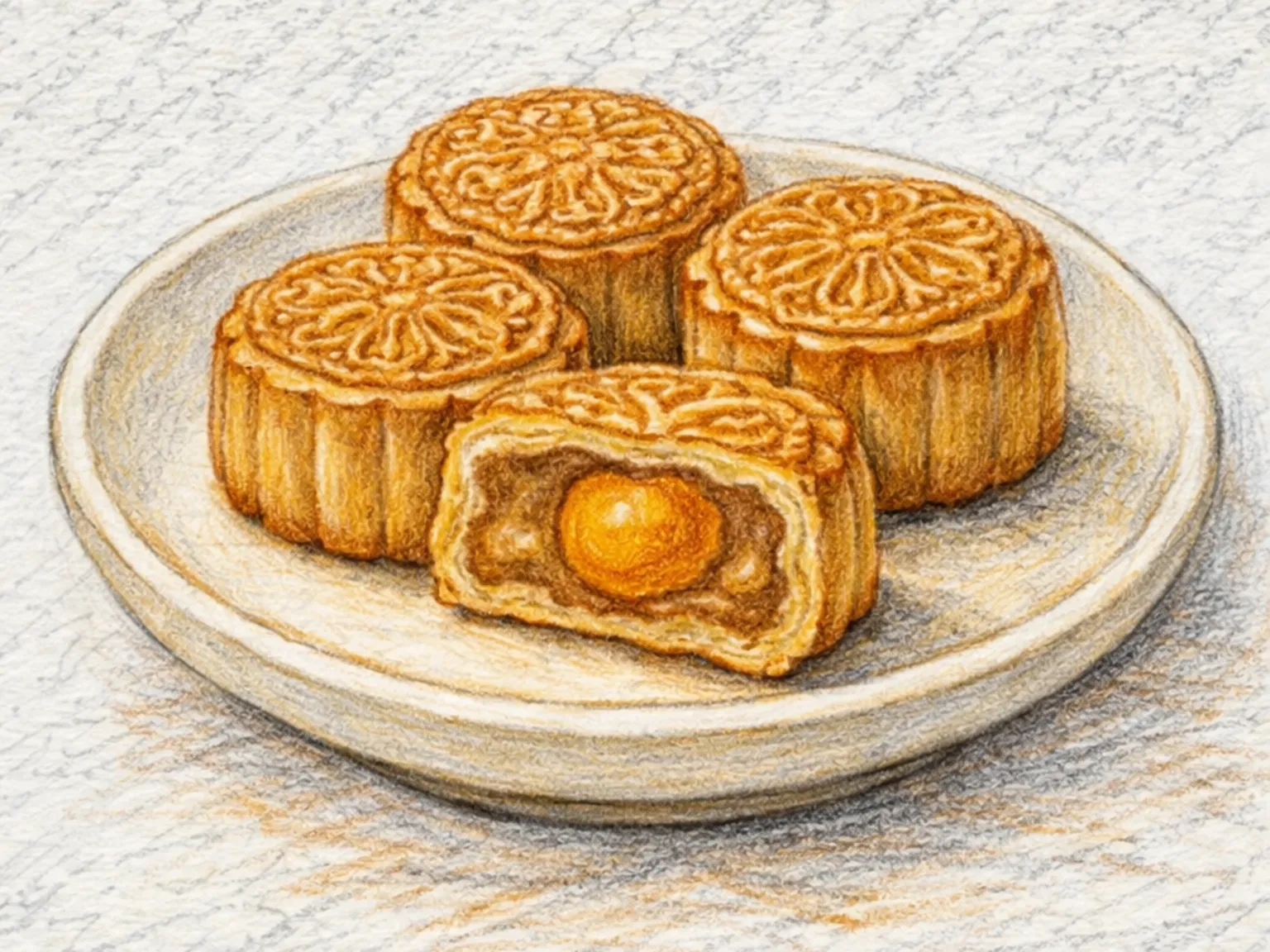
Lotus Seed Mooncake (Sweet Lotus Paste in Golden Syrup Crust)
Lotus seed paste is wrapped in a thin dough of golden syrup, neutral oil, alkaline water, and flour, then pressed into decorative molds and baked to produce this iconic Chinese Mid-Autumn Festival pastry. The syrup-based dough remains pliable and moist even after baking, unlike a standard pie crust, creating a skin that yields softly under the teeth before giving way to the dense, sweet filling. The ratio of filling to dough is intentionally high, so each bite delivers concentrated lotus seed flavor. Mooncake molds stamp intricate patterns onto the surface, but a heavy-handed egg wash blurs those details; a single thin coat preserves the design while adding a glossy, amber sheen. Baking in two stages at 190 degrees Celsius, with the egg wash applied between them, ensures even coloring without over-browning. The crucial final step is resting: sealed in an airtight container for at least one day, the dough absorbs oil from the filling in a process called hui-you, softening its texture and harmonizing the flavors into a cohesive whole.
Adjust Servings
Instructions
- 1
Mix syrup, oil, and alkaline water, then add flour to form dough.
- 2
Rest dough for 30 minutes and divide lotus paste into 8 balls.
- 3
Wrap filling with dough and press in mooncake molds.
- 4
Bake at 190C for 8 minutes, then brush lightly with egg wash.
- 5
Bake 12-15 more minutes, cool, and rest airtight for 1 day.
As an Amazon Associate, we may earn from qualifying purchases.
Tips
Nutrition (per serving)
More Recipes

Black Sesame Tangyuan (Glutinous Rice Balls with Sesame Paste Filling)
Black sesame tangyuan are Chinese glutinous rice dumplings filled with a sweet, roasted sesame paste. The filling is made by combining ground black sesame with sugar and butter until it forms a dense, jet-black paste, which is then wrapped in a smooth ball of glutinous rice flour dough. When dropped into boiling water, the dumplings float to the surface as they cook through. Biting into one releases the molten sesame filling, which flows out from within the chewy, elastic skin in a rich, nutty stream. They are traditionally served in a light ginger syrup, where the warm spiciness of the ginger plays against the deep sesame richness. The textural contrast between the springy outer shell and the flowing interior makes each piece both satisfying and indulgent.

Zongzi (Chinese Bamboo-Wrapped Sticky Rice Dumplings)
Zongzi are traditional Chinese sticky rice dumplings wrapped in bamboo leaves and simmered for hours. Glutinous rice is soaked overnight, then bundled around a filling of soy-braised pork belly and rehydrated shiitake mushrooms seasoned with oyster sauce. The bamboo leaves are folded into a tight shape and secured with kitchen twine before being submerged in boiling water for two hours or more. During this cooking, the rice absorbs the rendered fat and seasoning from the pork, becoming dense, sticky, and deeply flavored. The bamboo leaves impart a subtle grassy fragrance that permeates every grain. While traditionally eaten during the Dragon Boat Festival, zongzi are available year-round across southern China.

Douhua (Silky Tofu Pudding Dessert)
Douhua - tofu pudding - has been a beloved street dessert across China, Taiwan, and Southeast Asian Chinese communities for centuries, occupying the same foundational role in Asian sweets that custard holds in European traditions. Freshly pressed soy milk is set with a coagulant such as gypsum or glucono delta-lactone, then left undisturbed until it solidifies into a texture softer than pudding yet more substantial than liquid - a trembling, barely-set curd that quivers on the spoon. In Taiwan, it is served cold with brown sugar syrup, tapioca pearls, red beans, or peanuts; in Hong Kong, a hot ginger sugar syrup is ladled over the warm curd. The tofu itself carries only the faintest nuttiness of soybean, letting the toppings define each bowl's character. Sold at Taiwanese night markets for pocket change, douhua appears simple but demands precise temperature control during coagulation - too fast and the curd turns grainy, too slow and it never sets.

Beijing Zhajiangmian (Northern Chinese Fermented Bean Paste Noodles)
Beijing zhajiangmian is the northern Chinese ancestor of Korean jajangmyeon, though the two have diverged significantly in flavor and presentation. The sauce is built from ground pork stir-fried with huangjiang, a fermented soybean paste darker and saltier than miso, until the fat separates and the paste turns glossy. Thick hand-pulled or machine-cut wheat noodles form the base, and an array of raw garnishes - julienned cucumber, radish sprouts, bean sprouts, and shredded scallion - are arranged neatly on top. The dish is meant to be tossed vigorously at the table so the sauce coats every strand. The contrast between the warm, intensely savory paste and the cool, crisp vegetables defines the eating experience. In summer, the noodles are often rinsed in cold water before serving.

Spicy Fried Chicken Stir-fry
Rajogi is a Korean-Chinese dish of chicken thigh pieces coated in potato starch and deep-fried at 170 degrees Celsius until golden, then tossed in a sauce built from gochujang, ketchup, and vinegar. Onion and bell pepper are stir-fried separately to form the sauce base before the crispy chicken is folded in. The coating absorbs just enough glaze to deliver sweetness, tanginess, and chili heat simultaneously while retaining crunch underneath. Timing is critical -- the chicken must be tossed in sauce moments before serving to preserve its texture.

Zhajiangmian (Chinese Black Bean Paste Noodles with Ground Pork)
Zhajiangmian is a Chinese noodle dish built on a thick sauce of ground pork and onion stir-fried with chunjang, a fermented black bean paste. The paste must be fried thoroughly in oil to draw out its roasted, savory character and eliminate the raw bitterness it carries before cooking. Adding soy sauce and sugar, then simmering on low heat for five minutes, concentrates the sauce into a glossy, dark coating. Fresh wheat noodles are boiled, briefly rinsed, and drained so the sauce clings without being diluted. Julienned cucumber served on top provides a crisp, cool contrast that balances the dense, salty depth of the bean paste.