Lu Rou Fan (Taiwanese Braised Pork Belly Rice Bowl)
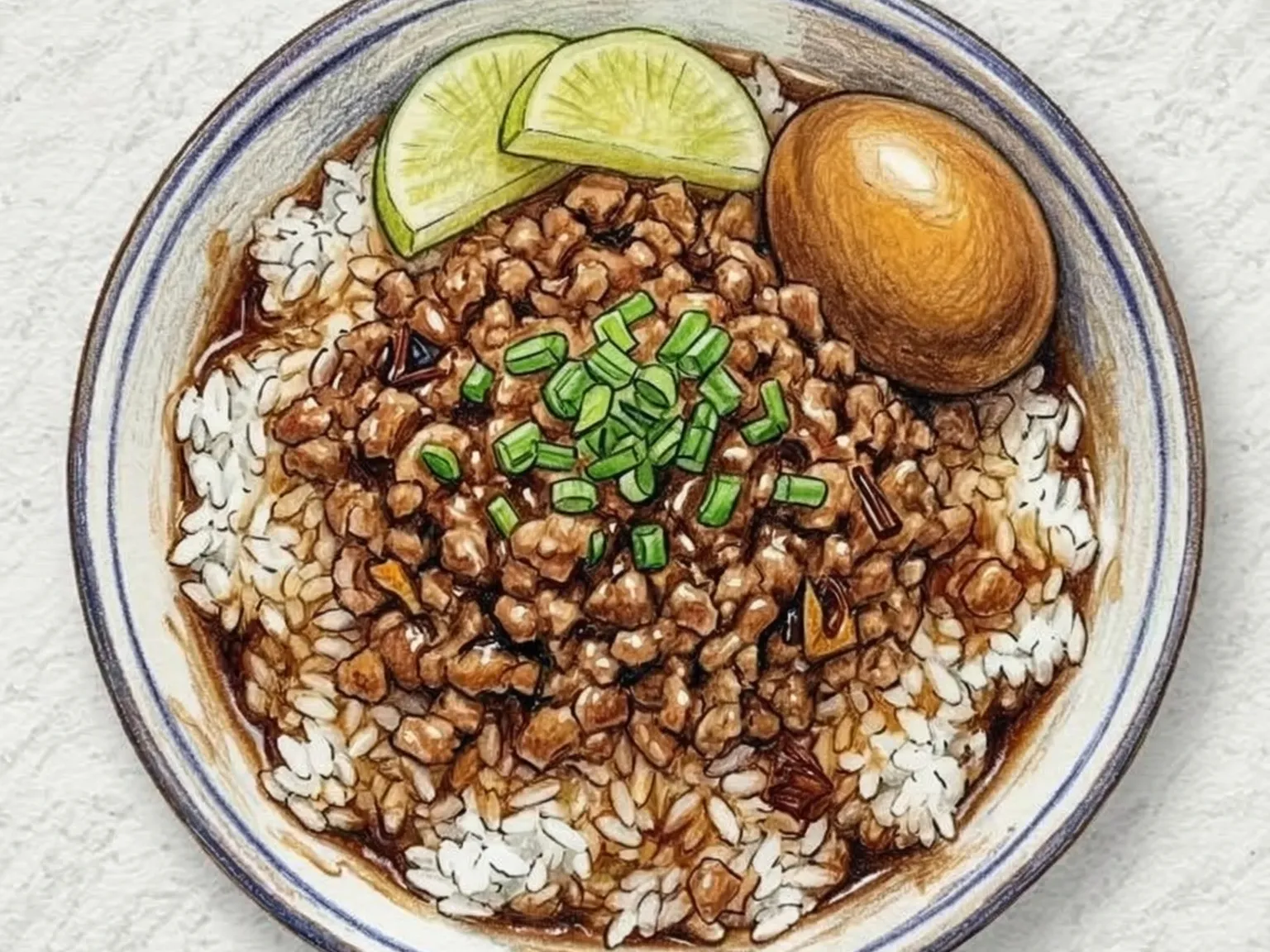
Lu rou fan is Taiwan's most iconic comfort food - a bowl of steamed white rice crowned with braised minced pork that has been simmered low and slow in soy sauce, rice wine, and five-spice powder until the fat renders into a glossy, fragrant sauce. Star anise and cinnamon linger in the background without overpowering the pork. Sold everywhere from night market stalls to breakfast shops for a few coins, it manages to feel both humble and deeply satisfying. The standard accompaniments - pickled daikon, a soy-braised egg, and blanched greens - are simple but essential, cutting through the richness and rounding out the bowl.
Adjust Servings
Instructions
- 1
Finely chop onion and saute until golden.
- 2
Add ground pork and cook until no longer pink.
- 3
Add soy sauce, sugar, and five-spice to coat the meat.
- 4
Pour in water and simmer on low heat for 30 minutes.
- 5
Add boiled eggs and simmer 10 more minutes.
- 6
Serve generously over hot rice.
As an Amazon Associate, we may earn from qualifying purchases.
Tips
Nutrition (per serving)
More Recipes

Taiwanese Braised Pork (Five-Spice Belly Rice Bowl)
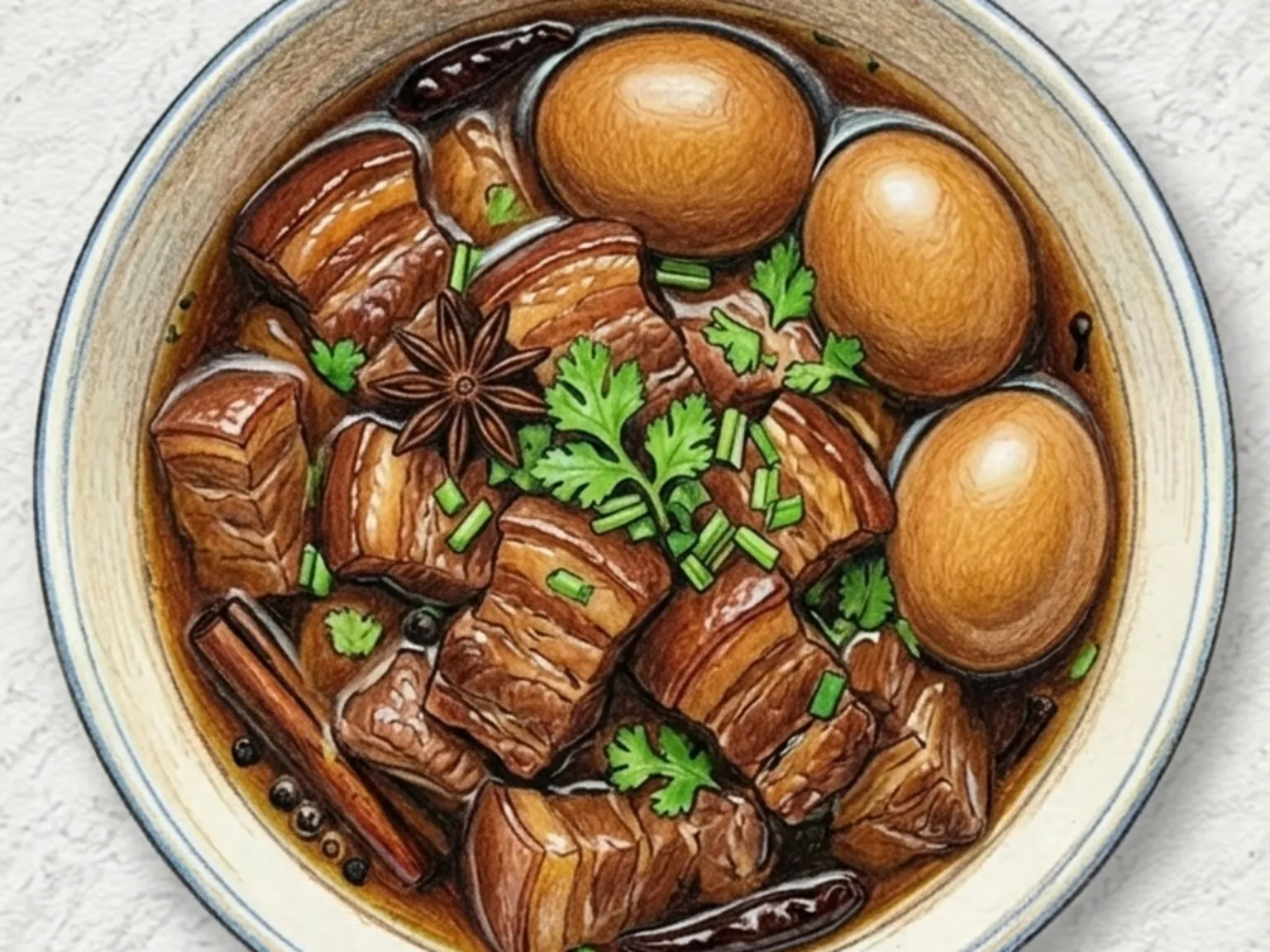
Lu rou fan is a Taiwanese braised pork dish where minced or diced pork belly is simmered in soy sauce with five-spice powder and rock sugar until the fat melts into a thick, glossy sauce. The five-spice blend - star anise, cinnamon, clove, Sichuan pepper, and fennel - gives the braise its signature aromatic complexity. Traditionally, hard-boiled eggs are added to the pot and braised alongside the pork until their whites absorb the dark sauce. Ladled generously over steaming rice so the sauce seeps between every grain, this is one of Taiwan's most iconic night market comfort foods.

Gua Bao (Steamed Bun with Braised Pork)
Gua bao - sometimes called the Taiwanese hamburger - is a traditional snack that began as a ceremonial food eaten during Lunar New Year pig slaughter but has evolved into one of Taiwan's most iconic street foods, found at night markets across the island. The steamed bun (he ye bao) is made from a fermented wheat dough that must be pillowy-soft, smooth-surfaced, and elastic enough to fold in half without tearing. The filling is pork belly braised for over an hour in soy sauce, five-spice powder, and rock sugar until the meat collapses at the touch of chopsticks. Pickled mustard greens (suan cai) contribute a sharp acidity, crushed peanut powder adds a sandy sweetness, and fresh cilantro brings an herbal brightness - each element cutting through the braised pork's richness from a different angle. The bun is small enough to eat in one hand, yet the flavor complexity packed inside rivals a full plated dish - this compression of depth into a single handheld bite is what Taiwan's night market culture does best.

Three Cup Chicken (Taiwanese Soy Sesame Oil Rice Wine Braised Chicken)
San bei ji, or Three Cup Chicken, is a Taiwanese braise named for the equal measures of soy sauce, sesame oil, and rice wine that form its sauce. The cooking begins with toasted sesame oil in a clay pot, followed by thin slices of garlic and ginger fried until golden. Bone-in chicken pieces, seared to a light crust, join the pot along with the soy sauce and rice wine. As the liquid reduces over moderate heat, it thickens into a dark, glossy glaze that coats every piece of chicken. The final and defining step is a generous handful of Thai basil leaves stirred in just before serving - the residual heat wilts the leaves and releases a sharp, peppery aroma that lifts the rich sauce. The dish is served directly in the clay pot, still bubbling, and paired with plain steamed rice to soak up the concentrated sauce.

Classic Katsudon (Pork Cutlet Egg Rice Bowl)
Classic katsudon is a Japanese rice bowl that transforms a crispy pork cutlet into something altogether different by simmering it briefly with onion, egg, and seasoned dashi broth. Thinly sliced onion cooks first in a shallow pan of tsuyu - a blend of soy sauce, mirin, and dashi - until soft and sweet. The fried cutlet, sliced into strips, is nestled into the onion broth, then lightly beaten egg is poured over the top and cooked just until it sets into a custard-like layer. This half-set egg clings to the panko crust, creating a contrast between the still-crunchy edges and the silky coating. The entire mixture is slid onto a bowl of steaming rice, where the savory broth soaks into the grains. In Japan, katsudon is traditionally eaten before exams or competitions as a good-luck ritual.

Khao Kha Moo (Thai Braised Pork Leg Rice Bowl)
Khao kha moo is a Thai braised pork leg rice bowl that rewards patience with deeply satisfying flavor. A whole pork leg is simmered for upward of two hours in a dark soy and palm sugar broth perfumed with star anise, cinnamon, and whole garlic cloves. The prolonged cooking breaks down connective tissue until the meat yields to the lightest pull. The braising liquid reduces into a glossy, mahogany-colored sauce that is both salty and gently sweet. Thick slices of the pork are arranged over steamed jasmine rice, and the sauce is spooned over until the grains glisten. Traditional garnishes include a halved hard-boiled egg stained brown from the braising liquid, pickled mustard greens that cut through the richness, and a fiery chili-vinegar dipping sauce. It is one of the most beloved night-market dishes in Thailand.

Korean Braised Pork Ribs
Dwaeji galbi-jjim is a Korean braised pork rib dish simmered in a soy sauce base with Korean radish, carrots, and onion. The ribs cook low and slow until the meat practically falls off the bone, absorbing the ginger- and garlic-infused braising liquid along the way. The radish chunks turn translucent and soak up the seasoning, becoming as flavorful as the meat itself. Served with steamed rice, this dish is a hearty main course suited to cooler weather.