Charim

2686 Korean & World Recipes

2686+ Korean recipes, clean and organized. Ingredients to instructions, all at a glance.

Lumpiang Shanghai (Filipino Deep-Fried Pork Spring Rolls)
AsianMedium

Lumpiang Shanghai (Filipino Deep-Fried Pork Spring Rolls)

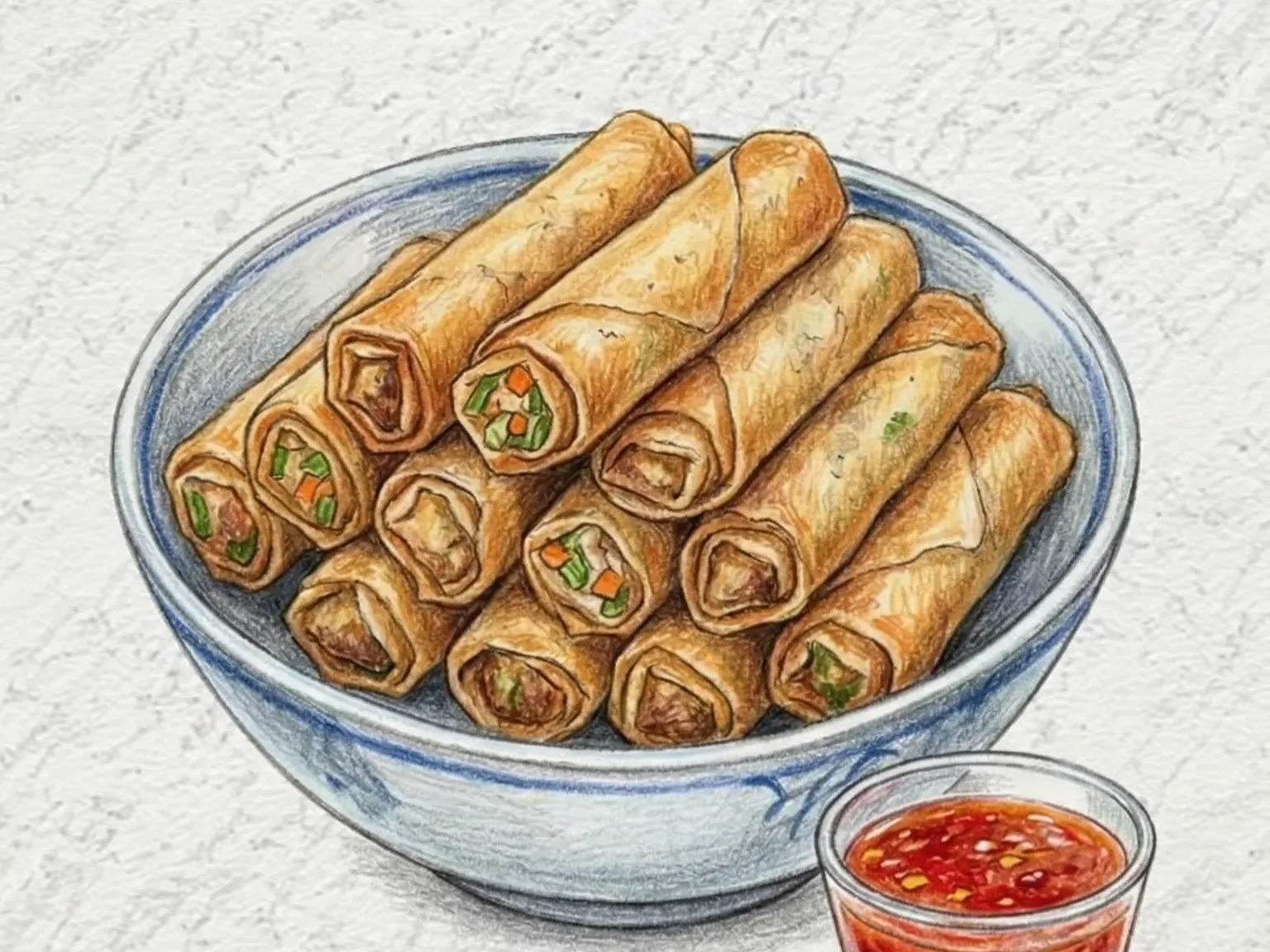
Lumpiang Shanghai is the spring roll that shows up at every Filipino celebration - birthdays, fiestas, and holiday gatherings alike. Ground pork is mixed with finely diced carrots, onions, and scallions, seasoned with soy sauce and black pepper, then rolled tightly in thin wrappers and fried until the exterior turns golden and audibly crisp. The rolls are cut into finger-length pieces and served with a sweet chili or vinegar dipping sauce. What makes them addictive is the contrast between the shattering shell and the well-seasoned meat inside, which stays juicy even as the outside crisps. They hold up remarkably well at room temperature, which is why trays of them disappear within minutes at any gathering.

Prep 30minCook 15min4 servings

Adjust Servings

2servings
servings

Instructions

  1. 1

    Finely mince carrot, onion, and scallion.

  2. 2

    Mix ground pork with vegetables, soy sauce, and pepper for filling.

  3. 3

    Place filling on wrapper, roll tightly, and seal edge with water.

  4. 4

    Fry first at 160°C to cook through, then briefly at 180°C for crispness.

  5. 5

    Drain and cut each roll in half before serving.

🛒Shop Ingredients on Amazon

As an Amazon Associate, we may earn from qualifying purchases.

Tips

Overfilling can cause rolls to burst during frying.
Double-frying keeps them crispy longer.

Nutrition (per serving)

Calories
450
kcal
Protein
19
g
Carbs
24
g
Fat
30
g

More Recipes

Sisig (Filipino Crispy Chopped Pork with Chili and Calamansi)
AsianMedium

Sisig (Filipino Crispy Chopped Pork with Chili and Calamansi)

Sisig is a quintessential Filipino bar food built around chopped pork that is boiled first for tenderness, then pan-fried in butter until the edges turn deeply crisp. Diced onion and fresh chilies are tossed in briefly, adding crunch and a sharp bite that cuts through the richness. Calamansi juice-a small citrus native to the Philippines-brings a tart brightness that lifts the entire dish, while a finishing fold of mayonnaise binds everything together in a creamy coating without dulling the flavor. The mixture is traditionally served on a sizzling cast-iron plate so it arrives at the table still popping and hissing. Each forkful delivers a layered experience: the crunch of the fried pork, the cool tang of citrus, and the lingering heat of the chili. Sisig is inseparable from Filipino drinking culture and remains one of the country's most iconic street-to-table dishes.

🍺 Bar Snacks
Prep 20minCook 25min2 servings
Pandesal Milk Rolls (Soft Filipino Bread with Crumb Coating)
BakingMedium

Pandesal Milk Rolls (Soft Filipino Bread with Crumb Coating)

These small Filipino bread rolls are leavened with yeast and enriched with milk, producing an interior so soft it tears apart in cotton-like wisps. A coating of fine breadcrumbs on the outside adds a faintly sandy texture and a pale, matte appearance that distinguishes pandesal from other dinner rolls. The sweetness is deliberately understated, making the rolls versatile enough for jam at breakfast or sliced meat at lunch. Butter kneaded into the dough contributes richness without heaviness, and the crumb stays moist through the next day when stored in a sealed bag. Covering the rolls with a clean towel five minutes after baking traps steam and keeps them especially tender.

🧒 Kid-Friendly
Prep 35minCook 18min4 servings
Bicol Express (Filipino Pork Belly in Spicy Coconut Cream Stew)
AsianMedium

Bicol Express (Filipino Pork Belly in Spicy Coconut Cream Stew)

Bicol Express is named after the railway line that once connected Manila to the Bicol region in southeastern Luzon - an area famous for its love of coconut and chili peppers. Thinly sliced pork belly simmers in a mixture of coconut milk and coconut cream with shrimp paste (bagoong), garlic, onion, and a generous amount of finger-length chilies and bird's eye chilies. The coconut milk reduces slowly over medium heat, splitting into oil as the liquid evaporates, at which point the pork begins to fry in the rendered coconut fat. The finished dish is nearly dry - the sauce has thickened into a creamy, oily coating that clings to the pork and chilies. The shrimp paste adds a deep, funky salinity beneath the coconut sweetness, and the chili heat builds over successive spoonfuls rather than hitting immediately. Despite its name suggesting a modern invention, the combination of coconut, chili, and fermented shrimp is an ancient Bicolano flavor profile. It pairs inseparably with steamed white rice, which absorbs the rich, spicy sauce.

🎉 Special Occasion
Prep 15minCook 35min4 servings
Cha Gio (Southern Vietnamese Crispy Rice Paper Spring Rolls)
AsianMedium

Cha Gio (Southern Vietnamese Crispy Rice Paper Spring Rolls)

Cha gio - Vietnamese fried spring rolls - are a southern Vietnamese specialty that differs from the north's nem ran in both wrapper and filling. Southern cooks use rice paper rather than wheat-based wrappers, which fries into an exceptionally thin, blistered shell with a shatteringly crisp texture that crackles louder than any Chinese egg roll. The filling combines ground pork, shrimp, glass noodle threads, wood ear mushroom, and grated carrot, seasoned with fish sauce and black pepper. The rolling technique matters - too loose and the roll bursts during frying; too tight and the filling compresses into a dense puck. Fried at 160°C and then raised to 180°C for a final crisping, the ideal cha gio has a shell so thin it is nearly translucent, revealing the filling underneath. The traditional way to eat it is wrapped in a mustard green leaf or lettuce with fresh herbs - mint, basil, perilla - and dipped in nuoc cham. Cha gio is a fixture of Vietnamese Tet (Lunar New Year) celebrations, where families prepare hundreds in a single session.

🍺 Bar Snacks🎉 Special Occasion
Prep 30minCook 20min4 servings
Sinigang na Baboy (Filipino Tamarind Sour Pork Rib Soup)
AsianMedium

Sinigang na Baboy (Filipino Tamarind Sour Pork Rib Soup)

Sinigang na baboy is the quintessential Filipino sour soup, a dish that appears on family tables across the Philippines with the comforting regularity of a weekly ritual. Pork ribs are simmered until the meat loosens from the bone, then the broth is sharpened with tamarind - either fresh pods pounded and strained, or a spoonful of tamarind paste for convenience. Tomatoes, onions, and daikon radish go in early and soften into the broth, while eggplant, long green beans, finger chilies, and leafy greens like water spinach are added toward the end so they keep their color and bite. The resulting broth is clear, tart, and savory all at once, with the pork fat adding a subtle richness beneath the acidity. Filipinos ladle the soup generously over steamed rice, and the sourness is said to sharpen the appetite rather than satisfy it, which explains why second helpings are almost mandatory.

🎉 Special Occasion
Prep 20minCook 50min4 servings
Pancit Canton (Filipino Stir-Fried Egg Noodles with Chicken and Vegetables)
NoodlesEasy

Pancit Canton (Filipino Stir-Fried Egg Noodles with Chicken and Vegetables)

Pancit canton is a Filipino stir-fried egg noodle dish cooked with chicken, carrot, and cabbage in a soy sauce and oyster sauce seasoning. The noodles are parboiled to about seventy percent doneness so they finish cooking in the wok while absorbing the sauce, staying springy rather than soft. Chicken thigh is stir-fried first to render its fat and juices, then carrot and cabbage go in over high heat to keep their crunch. Soy sauce and oyster sauce combine into a salty, umami-rich glaze that coats the noodles evenly. A squeeze of fresh lemon after the heat is turned off lifts the dish with citrus brightness, cutting through the oily richness. The lemon must be added at the very end to preserve its volatile aroma.

🎉 Special Occasion🌙 Late Night
Prep 15minCook 15min2 servings
More Asian