Korean Plum Blossom Tea (Floral Jujube Honey Brew)
Quick answer
Maehwa-cha is a Korean floral tea brewed by gently steeping dried plum blossoms in water first simmered with pitted jujubes.
What makes this special
- A short two-minute steep preserves the delicate floral fragrance of Maehwa-cha blossoms.
- Steeping under two minutes after removing heat keeps floral notes without bitterness
- Honey dissolved below 80°C into jujube broth preserves its floral fragrance
Key ingredients
Core cooking flow
- 1 Place 4g of dried plum blossoms in a fine mesh sieve and rinse them briefly...
- 2 Combine 500ml of water and two pitted, sliced jujubes in a pot over medium h...
- 3 Turn off the heat once the water reaches approximately 90C, then add the rin...
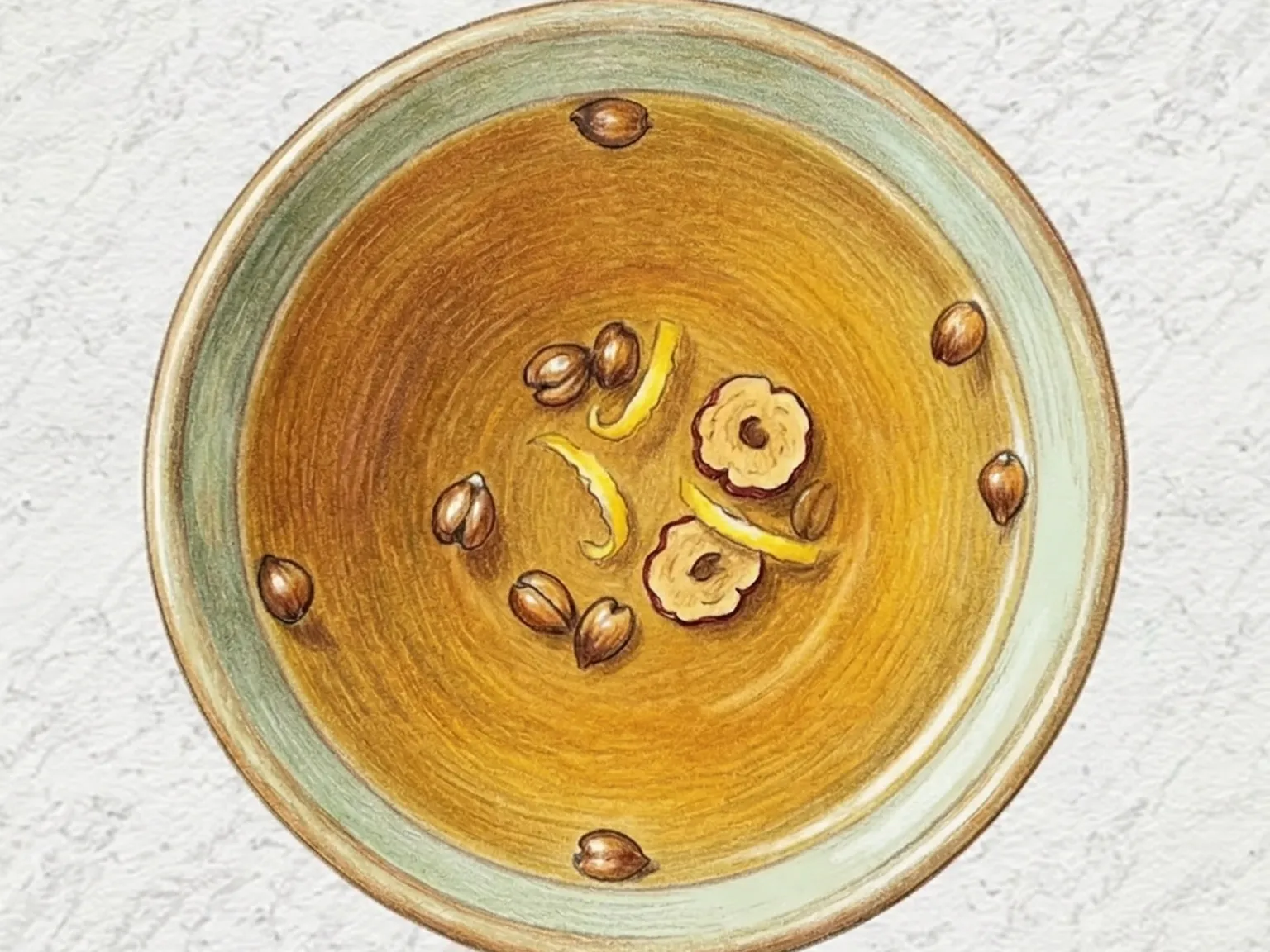
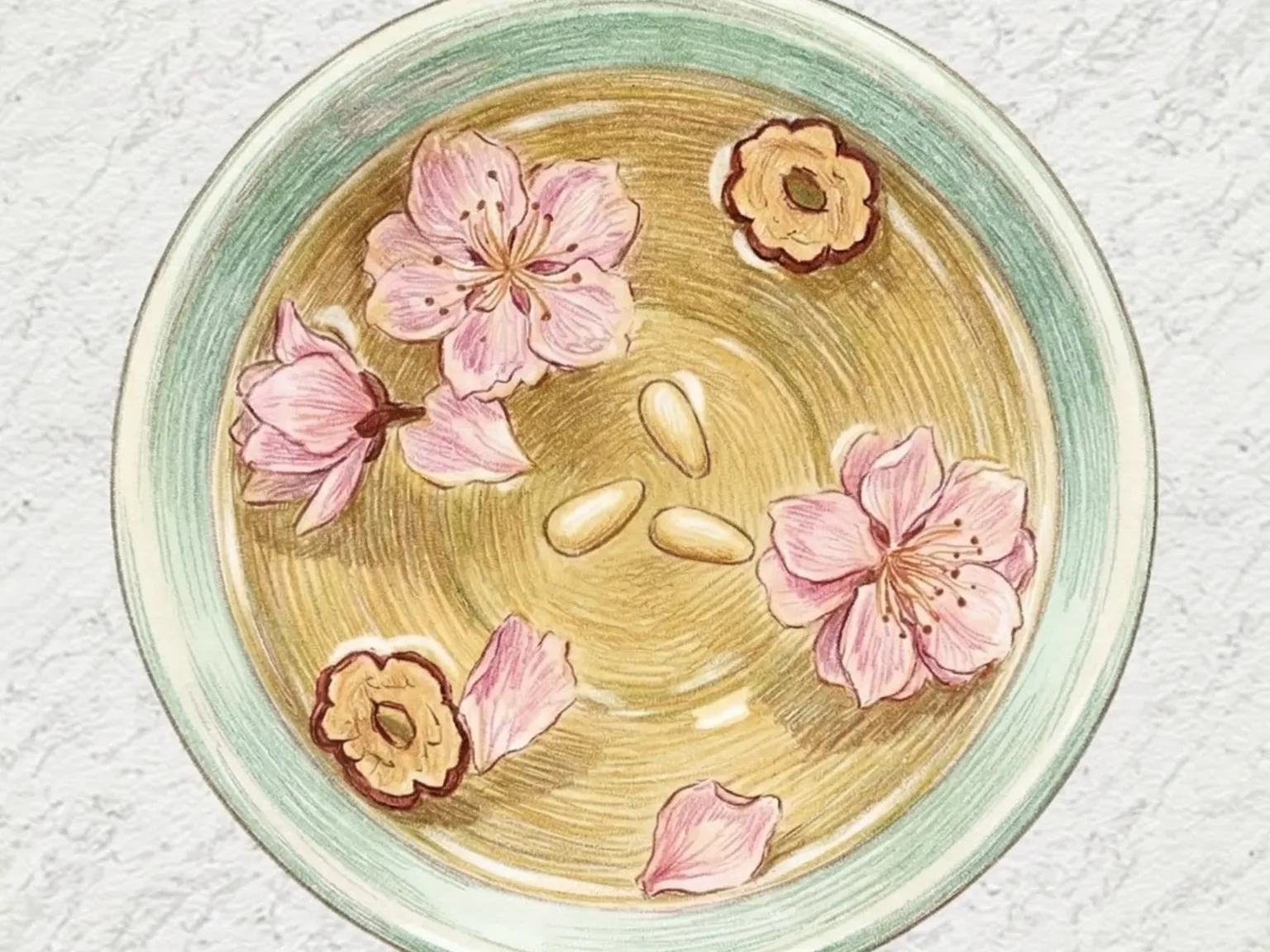
Maehwa-cha is a Korean floral tea brewed by gently steeping dried plum blossoms in water first simmered with pitted jujubes. The jujubes lay down a soft, rounded sweetness in the base liquid, and honey stirred in below 80 degrees Celsius blends into the broth without dulling the flower's fragrance. The resulting tea is transparent, almost colorless, carrying a scent that is airy and faintly sweet rather than heavy or perfumed. A few pine nuts floated on the surface add a faint nutty warmth with each sip, giving the cup a more layered finish. Because plum blossoms turn bitter and astringent when boiled too long, the dried flowers are added only after the heat is off, steeped for no more than two minutes before the petals are lifted out. The resulting cup captures the fleeting quality of early spring in its aroma.
Instructions
Read the steps as a cooking flow: prep, heat, seasoning, doneness control, and finish.
- 1Step
Place 4g of dried plum blossoms in a fine mesh sieve and rinse them briefly under cold running water for ten seconds to remove any surface dust before shaking off the excess.
- 2Control
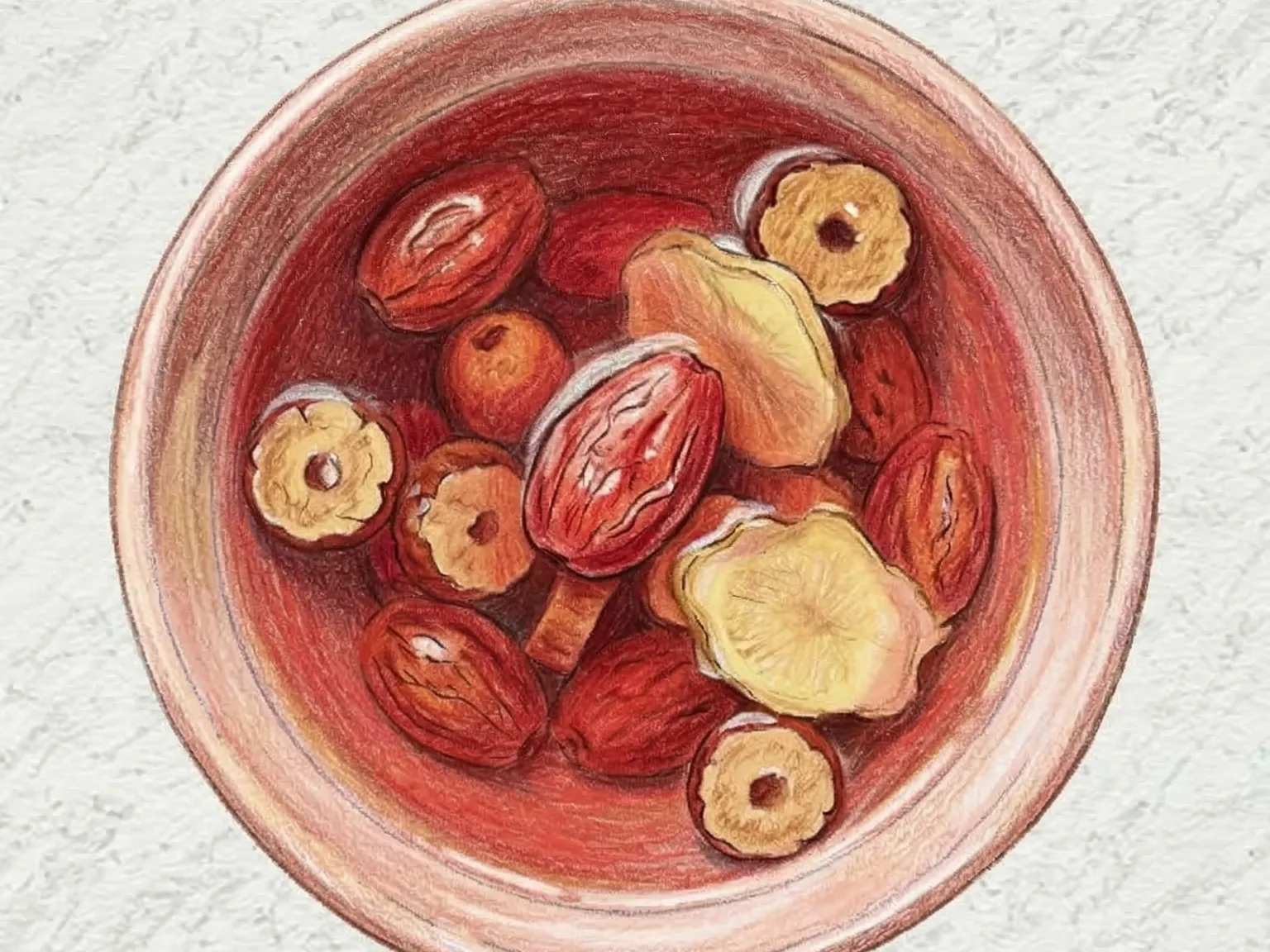
Combine 500ml of water and two pitted, sliced jujubes in a pot over medium heat, then reduce to a simmer once boiling and continue cooking for five minutes to extract the flavor.
- 3Control
Turn off the heat once the water reaches approximately 90C, then add the rinsed plum blossoms and cover the pot tightly with a lid to steep for exactly two minutes for aroma.
- 4Prep
Strain the tea to remove the blossoms and jujube pieces, then stir in 1.5 tablespoons of honey into the warm amber liquid until it is completely dissolved and the mixture is smooth.
- 5Finish
Divide the finished tea into individual serving cups and sprinkle a tiny pinch of 0.25 teaspoons of lemon zest over the surface to brighten the floral notes with a fresh citrus aroma.
- 6Finish
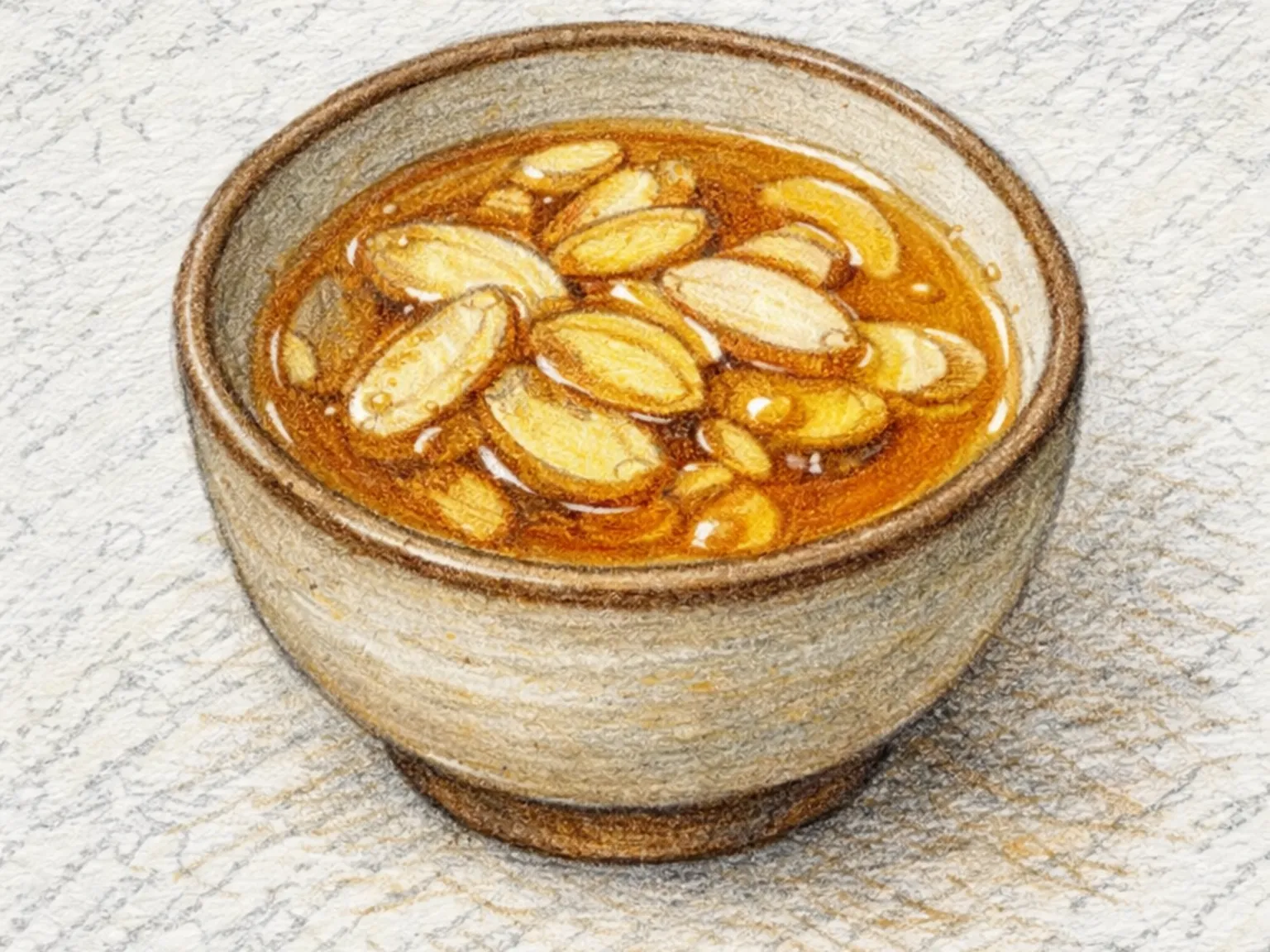
Float one tablespoon of pine nuts on top of each cup and serve the plum blossom tea while warm, allowing the subtle floral flavors to develop as the beverage cools slightly.
After the steps
Pick a recipe that fits this dish.
Continue with shared ingredients, meal pairings, or a similar method.
Recipes That Go Well With This
More Drinks →Based on shared ingredients and meal pairing
Korean Ginseng Tea (Fresh Ginseng Jujube Herbal Brew)
Insam-cha is a traditional Korean ginseng tea made by thinly slicing fresh ginseng root and simmering it with dried jujubes and ginger over low heat for twenty minutes. Fresh ginseng is milder and less bitter than dried root, but slicing it thin is essential for the active compounds to infuse efficiently, releasing the root's characteristic earthy, herbal aroma as it cooks. Jujubes naturally soften the ginseng's bitterness, and ginger introduces a sharp warmth that gives the tea its backbone and prevents it from tasting flat. Honey is added to balance the flavor, and a few pine nuts floated on the surface at serving add an oily richness that complements the herbal notes without cooking away. Adding pine nuts at the end rather than simmering them preserves their fragrance in the finished cup. The amount of ginger can be adjusted to control the intensity of the heat, and the ratio of jujubes to ginger shifts the tea toward sweeter or more pungent depending on preference.
Korean Ssanghwa Herbal Tea
Ssanghwa-cha is a traditional Korean tonic tea made by slow-simmering astragalus root, angelica root, cinnamon bark, licorice, and jujube in approximately 1800 ml of water over low heat for more than fifty minutes. The prolonged extraction coaxes layered complexity from each herb, producing a brew that is simultaneously bitter, sweet, and warmly aromatic with cinnamon woven through every sip. Jujubes added during the simmer soften the sharpest herbal edges while contributing a mild natural sweetness that rounds the overall profile. Honey is stirred in after straining to let each person adjust the sweetness to taste. The tea is poured hot into a ceramic cup and finished with a small cluster of pine nuts whose oil blooms on contact with the steaming surface, releasing a gentle, nutty fragrance. The deep medicinal warmth lingers in the throat long after each sip, making the drink a reliable remedy for fatigue and cold weather.
Gotgam Cream Cheese Roll (Dried Persimmon Rolls)
Gotgam cream cheese roll is a no-cook Korean dessert that requires nothing more than a knife, a bowl, and a refrigerator. Dried persimmons are slit open and flattened into thin sheets, each one acting as the outer wrapper. The filling is cream cheese mixed with honey and fresh lemon juice to balance its natural richness with acidity, and finely chopped walnuts are folded in throughout to add a crunchy, nutty element to every bite. The filling is spread across the opened persimmon, which is then rolled tightly and wrapped in plastic wrap. Twenty minutes in the refrigerator firms the roll enough to slice cleanly. Dipping the knife in warm water and wiping it dry before each cut produces the smoothest cross-sections. The finished slices reveal clearly defined layers: the chewy, caramel-sweet dried persimmon on the outside, the tangy cream cheese in the middle, and flecks of walnut distributed throughout. The combination makes it a natural pairing with wine or a polished addition to a traditional holiday table.
Korean Heotgae Tea (Oriental Raisin Tree Hangover Herbal Brew)
Heotgae-cha is a traditional Korean herbal tea made by simmering dried oriental raisin tree fruit with jujubes, ginger, and cinnamon over low heat for thirty-five minutes. The dried heotgae fruit, small and knobby in appearance, is astringent and muted in raw form, but prolonged simmering draws out a deep, earthy sweetness that gradually fills the water. Jujubes add natural sweetness and a faint fruity note, ginger contributes a sharp warmth that lingers at the tip of the tongue, and cinnamon layers in a gentle, aromatic sweetness, building a multi-layered flavor that develops slowly over the long cooking time. Honey is stirred in at the end to adjust sweetness to taste. In Korean traditional medicine, the oriental raisin tree has long been associated with supporting liver function and alleviating hangover symptoms, which is why the tea has been consumed as a morning-after drink for generations. Among Korean office workers accustomed to frequent after-work drinking gatherings, heotgae-cha remains one of the most commonly reached-for hangover remedies.
Serve with this
Korean Avocado Gimbap (Creamy Avocado Crab Seaweed Rice Roll)
Avocado gimbap is a contemporary Korean roll that emerged in the 2010s as avocado shifted from a specialty import to a common supermarket staple in Korea. The timing of Korean avocado adoption is traceable: consumption roughly doubled between 2014 and 2018, driven by cafe culture and wellness trends, and this gimbap variant followed directly from that availability. Where traditional gimbap - danmuji, ham, spinach, carrot, egg - delivers discrete, clearly differentiated flavors in each bite, avocado gimbap works differently. The avocado at the center is buttery and neutral, its creaminess binding the other ingredients rather than competing with them. Selecting the right avocado matters considerably: the fruit must be ripe enough to yield when bitten without resistance, but firm enough to hold a clean slice. Underripe avocado is hard and flavorless; overripe avocado collapses when cut and turns the cross-section muddy. The rice is seasoned simply with sesame oil and salt, and the sheet of dried laver wrapping everything contributes a roasted, oceanic note. Crab stick placed lengthwise in the center, alongside julienned cucumber and a strip of egg jidan, creates the characteristic cross-section: concentric rings of green, white, and yellow that have made this version one of the most photographed gimbap in Korean food media. The avocado begins oxidizing and browning within an hour of cutting, so the roll is best eaten soon after assembly. It has become one of the highest-selling items in Korean convenience store gimbap sections, and a standard offering at gimbap specialty restaurants.
Crispy Seaweed Chips
Basak gim-bugak is a traditional Korean snack made of seaweed sheets coated with glutinous rice paste and fried until crispy. The process begins by cooking a thick mixture of water, glutinous rice flour, and salt. After cooling the paste, it is spread thinly onto half of a seaweed sheet. The sheet is folded in half and coated with another thin layer of paste to build a double-layer structure. Sesame seeds are scattered on top before drying. The sheets are dried in a dehydrator or an air fryer at 80 degrees Celsius until stiff and hard. Ensuring the seaweed is completely dry, especially at the edges, is crucial for a crisp outcome. The dried pieces are flash-fried in hot oil at 180 degrees Celsius for just two to three seconds. They puff up instantly and must be removed quickly to prevent burning.
Dasik (Korean Honey-Pressed Roasted Grain Confection)
Dasik is a traditional Korean pressed confection made by kneading roasted grain or nut powders with honey and pressing the mixture into carved wooden molds. Unlike baked goods, dasik holds its shape entirely through the binding power of honey, with no heat applied during preparation. This technique produces a texture that is slightly resistant at first contact, then dissolves gently at body temperature in a way that releases the full aroma of the main ingredient. Roasted soybean powder yields a nutty version, black sesame produces a deeply aromatic one, and additions of pine nut powder or cinnamon develop the flavor in different directions. The wooden molds carve decorative patterns into the surface of each piece, giving dasik a visual refinement that matches its restrained sweetness. For centuries, dasik has been a standard offering at Korean tea gatherings, and its subtle flavor remains a natural match for the gentle bitterness of green tea.
Similar recipes
Korean Kudzu Root Tea (Earthy Herbal Root Brew)
Chik-cha is a traditional Korean tea made by soaking dried kudzu root in cold water to remove dust, then slowly simmering it with sliced ginger, scored jujubes, and a cinnamon stick for at least twenty-five minutes on low heat. The kudzu root releases an earthy, starchy depth that forms the tea's backbone, while ginger adds warm pungency and cinnamon contributes a sweet, woody spice layer. Honey is stirred in only after the heat is turned off to preserve its floral aroma, and longer simmering intensifies the kudzu's flavor. In traditional Korean medicine, kudzu root has long been used to address fever and thirst, and the tea was commonly brewed at the first sign of a cold. Straining out the solids and storing the tea in a thermos keeps it warm and drinkable throughout the day.
Baesuk (Korean Poached Pear Punch)
Baesuk is a traditional Korean punch made by slowly simmering whole or large-cut Korean pear with ginger, whole black peppercorns, and dried jujubes. As the pear cooks over low heat, its juice gradually dissolves into the liquid, building a natural sweetness that forms the drink's backbone. Ginger contributes a warm, peppery sharpness that interlocks with the pear's sweetness, producing a flavor that is comforting yet clean. Whole peppercorns are added sparingly and function as an aromatic element rather than a source of actual heat. Jujubes add a faint reddish tint and a mild fruity undertone to the liquid. Honey is stirred in after the heat is turned off and the temperature has dropped slightly to preserve its fragrance; because the pear already provides significant sweetness, the honey amount should start small and be adjusted by taste. Overnight refrigeration allows the ginger and pear flavors to penetrate more fully, rounding out the drink. Pine nuts floated on the surface before serving add a subtle oily richness to the finish of each sip. Historical records indicate that baesuk appeared on royal banquet tables during the Joseon dynasty and at aristocratic tea spreads, and Korean traditional medicine has long recommended it as a remedy for cold prevention and digestive support. Even today it remains a seasonal drink associated with holidays and ancestral rite preparations.
Green Tea Dasik Cookies (No-Bake Korean Matcha Pressed Cookies)
Nokcha dasik are Korean pressed tea cookies formed by binding roasted soybean powder and matcha with honey, rice syrup, and a touch of sesame oil, then stamping the mixture in a traditional wooden mold. No oven or heat is needed; the key is achieving a moisture ratio that lets the dough hold together under pressure without cracking. If the dough is too dry, the surface splits when unmolded; too wet, and the stamped pattern loses definition. Rice syrup quantity is the primary lever for adjusting consistency. On the tongue, the cookie dissolves gently, releasing the toasty depth of roasted soybean first, followed by the grassy bitterness of green tea that cleans the palate. The embossed pattern from the mold gives each piece a refined, ornamental appearance, and a brief air-dry at room temperature firms the surface enough for neat storage. Arranged two or three to a small plate beside a cup of tea, they make a composed and properly presented traditional tea-table spread.