Korean Seaweed Winter Soup
Soups Easy

Korean Seaweed Winter Soup

Quick answer

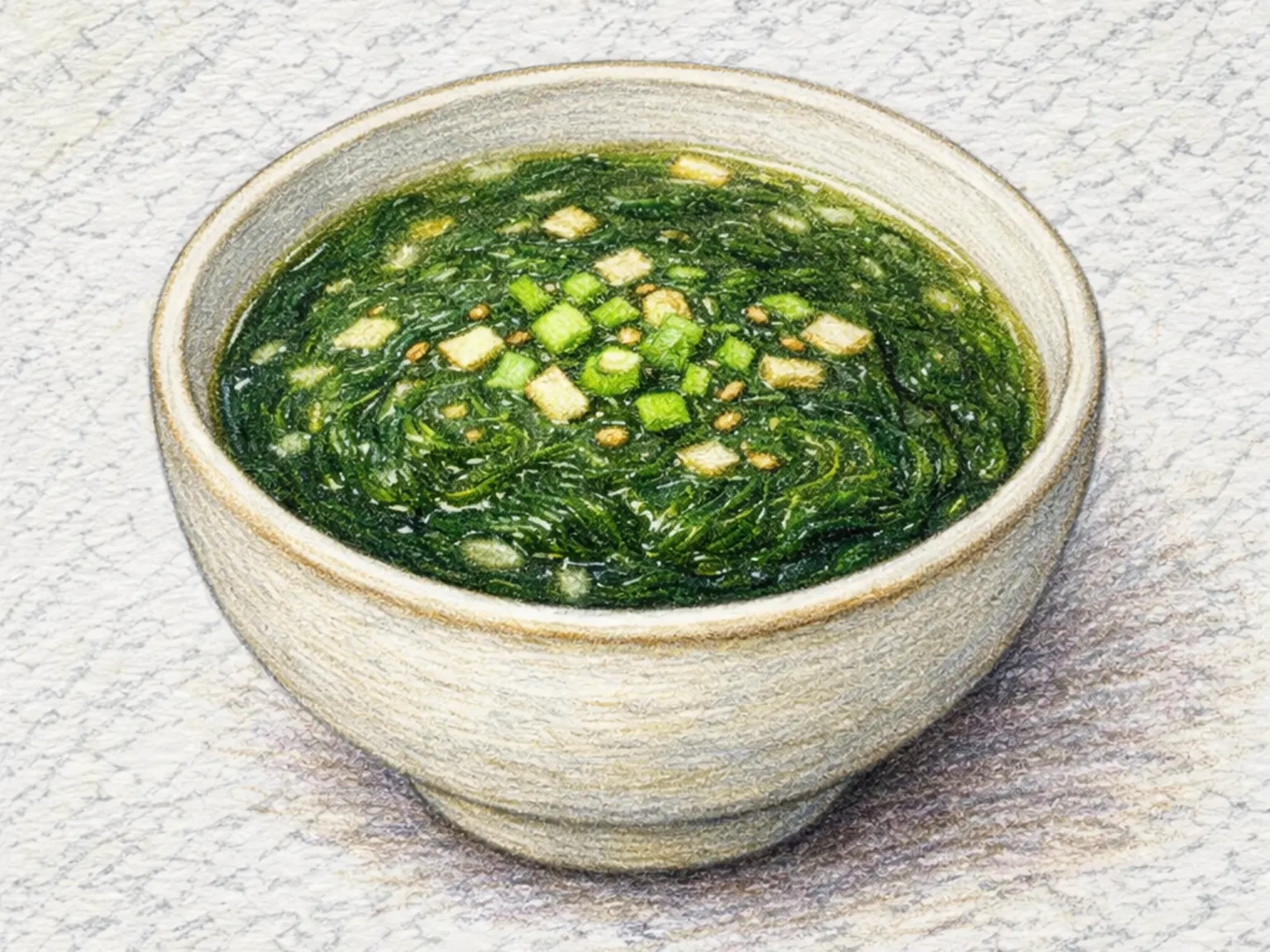
Maesaengi-guk is a winter soup featuring thread-like green seaweed cooked in a savory anchovy stock.

What makes this special

  • Maesaengi-guk utilizes fine, thread-like green seaweed harvested in winter for a pure marine scent.
  • Winter-harvested seaweed cooked only 3 to 4 minutes to retain sea aroma
  • 2-minute rest off heat lets seasoning distribute evenly through the soup
Total time
27 min
Level
Easy
Servings
4 servings
Ingredients
8
Calories
78 kcal
Protein
5 g

Key ingredients

maesaengi seaweedanchovy stockminced garlicsoup soy saucesesame oil

Core cooking flow

  1. 1 Place 200 g maesaengi in cold water and swish it gently without rubbing hard...
  2. 2 Add 1 teaspoon sesame oil to a pot and warm it over low heat.
  3. 3 Pour in 1200 ml anchovy stock and raise the heat to medium until bubbles begin around the edge.

Maesaengi-guk is a winter soup featuring thread-like green seaweed cooked in a savory anchovy stock. The process starts by warming sesame oil over low heat and sautéing minced garlic briefly to release its aroma without browning it. Anchovy stock is then added to create a clean broth. The delicate seaweed is added when the stock simmers, and it is immediately loosened with chopsticks. Simmering the seaweed for only three to four minutes keeps its deep green color and sea scent intact, as overcooking will destroy its delicate structure. The soup is seasoned with soup soy sauce, salt, and black pepper. After adding green onions and cooking for another minute, the pot is covered and rested off the heat for two minutes to allow the flavors to distribute evenly throughout the silky soup.

Prep 12min Cook 15min 4 servings

Instructions

Read the steps as a cooking flow: prep, heat, seasoning, doneness control, and finish.

6 steps
  1. 1
    Heat

    Place 200 g maesaengi in cold water and swish it gently without rubbing hard, so the fine strands do not break.

    Drain it in a sieve, then lightly loosen any clumps with chopsticks before cooking.

  2. 2
    Control

    Add 1 teaspoon sesame oil to a pot and warm it over low heat.

    Stir in 1 tablespoon minced garlic for about 20 seconds, stopping before it browns so the soup stays clean-tasting.

  3. 3
    Season

    Pour in 1200 ml anchovy stock and raise the heat to medium until bubbles begin around the edge.

    Add 1 tablespoon soup soy sauce first, saving the remaining seasoning adjustment for the end.

  4. 4
    Control

    When the stock is gently simmering, add the maesaengi and immediately loosen it with chopsticks.

    Do not leave clumps sitting in the pot; simmer only 3-4 minutes so the sea aroma stays fresh.

  5. 5
    Season

    Once the broth turns evenly deep green, add the remaining 0.5 tablespoon soup soy sauce little by little.

    Season only as needed with 0.5 teaspoon salt and 0.2 teaspoon black pepper to avoid oversalting.

  6. 6
    Finish

    Add 30 g sliced green onion and cook for 1 more minute, then turn off the heat.

    Cover and rest the soup for 2 minutes so the seasoning settles, then serve warm while the maesaengi is silky.

After the steps

Pick a recipe that fits this dish.

Continue with shared ingredients, meal pairings, or a similar method.

Recipes That Go Well With This

More Soups →

Based on shared ingredients and meal pairing

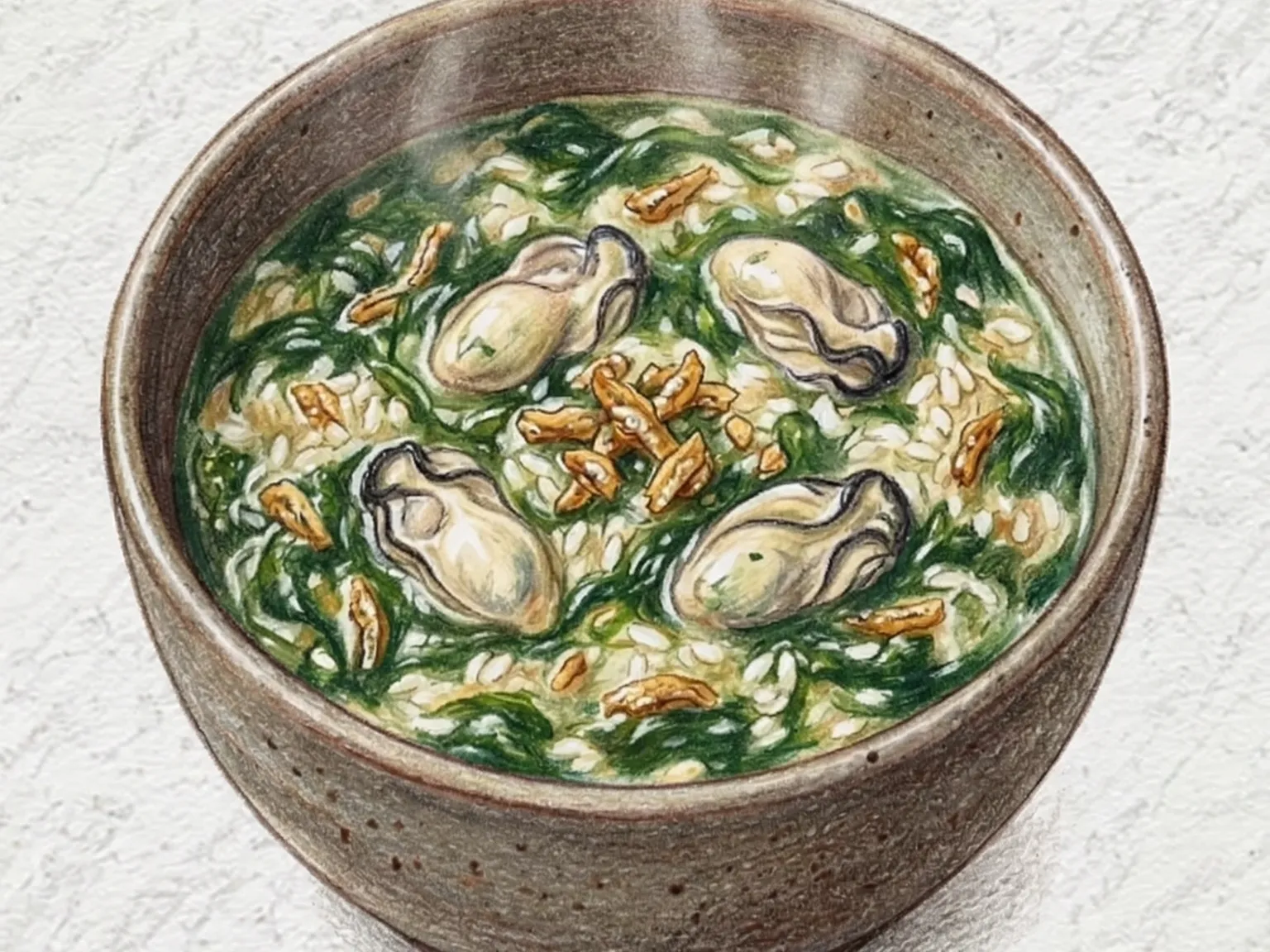
Korean Maesaengi Oyster Porridge
Shared ingredient: maesaengi seaweed Rice

Korean Maesaengi Oyster Porridge

Maesaengi gul juk is a Korean winter restorative porridge made by simmering sesame-oil-toasted rice in anchovy-kelp stock, then finishing it with maesaengi seaweed and fresh oysters. The delicate, threadlike strands of maesaengi lend a mild oceanic fragrance that spreads gently through each spoonful of the porridge. Oysters release briny, mineral-rich juices as they cook, deepening the broth in a way that plain water or a neutral stock cannot replicate. Toasting the raw rice grains in sesame oil before adding any liquid coats each grain with nutty fat, giving the finished porridge a warm, fragrant backbone that ties the seaweed and shellfish together. The anchovy-kelp stock adds its own clean, savory depth that complements both seafood components without overpowering either. Maesaengi must go in at the very last moment before the heat is turned off, because extended cooking destroys its vivid green color and chases away its fresh sea aroma. Oysters should also be added near the end to prevent them from shrinking and toughening. The porridge delivers carbohydrate, protein, and minerals in a single bowl, making it a classic choice for cold mornings or when the body needs gentle nourishment.

Korean Mussel Seaweed Soup
Shared ingredient: maesaengi seaweed Soups

Korean Mussel Seaweed Soup

Honghap-maesaengi-guk is a winter specialty from Korea's southern coast that pairs fresh mussels with maesaengi, a hair-thin green seaweed harvested in cold water. The seaweed is briefly sautéed in sesame oil before water and mussels are added, and as the pot simmers, the broth turns a deep green with a mineral-rich ocean fragrance. Soup soy sauce and garlic provide just enough seasoning to frame the natural salinity without masking it. The textural contrast is central to the experience: maesaengi slides across the palate in silky strands while the mussels offer a firm, meaty chew. Each spoonful delivers both the vegetal depth of seaweed and the concentrated brininess of shellfish, making it a dish greater than the sum of its two main ingredients.

Korean Soft Tofu Stew Rice Bowl
Serve together Rice

Korean Soft Tofu Stew Rice Bowl

Fiery soft-tofu stew is cooked until bubbling and poured directly over a bowl of rice so the spicy broth seeps into every grain. The silky tofu breaks apart gently, creating pockets of creamy texture within the chili-laced soup. Cracking a raw egg into the simmering pot softens the heat and adds body to the broth. Variations with shrimp, clams, or pork each shift the base flavor in a different direction, making this a versatile single-bowl meal. Serving it soon after cooking keeps the intended texture clearer, while brief resting lets the sauce or broth settle into the dish.

Korean Seaweed and Oyster Soup
Similar recipe Soups

Korean Seaweed and Oyster Soup

Maesaengi-gul-guk is a light winter soup pairing two peak-season ingredients, capsosiphon seaweed and fresh oysters, that together produce a broth with an intense marine character neither delivers alone. Julienned radish and garlic are sauteed in sesame oil first to coax out sweetness, then water is added and brought to a boil before the oysters go in for three minutes. The oysters release their brininess into the stock, building the flavor base without any additional seasoning beyond soup soy sauce and a pinch of salt. The seaweed is added last and simmered for only two minutes, just long enough for it to soften while retaining its silky texture and faint oceanic scent. Both ingredients are best from November through February, so the soup is at its peak during those winter months. Because the oysters contribute significant salt on their own, seasoning should be done gradually at the end to avoid oversalting. The soup is warming and easy to digest, making it a natural fit for recovery meals and winter breakfasts.

Serve with this

Korean Crisp Chili Pepper Salad
Side dishes Easy

Korean Crisp Chili Pepper Salad

Asakigochu is a specific variety of Korean pepper characterized by its thick walls and a distinct snap when bitten. This pepper was developed to prioritize texture over spiciness, resulting in a vegetable that offers a significant crunch without the heat of other varieties. The preparation of this dish involves a brief blanching process where the peppers are submerged in boiling water for a duration of exactly twenty seconds. This short exposure to heat is sufficient to eliminate the raw, grassy aroma often found in uncooked peppers, yet it is not long enough to soften the cellular structure. Consequently, the characteristic crispness remains unchanged. The seasoning sauce is a mixture of two traditional fermented pastes. Doenjang provides a salty and fermented depth, while gochujang adds complexity. To balance these heavy flavors, vinegar is added for sharpness and oligosaccharide syrup is used to adjust the consistency and add a subtle sweetness. This combination creates a contrast between the deep, funky notes of the fermented beans and a bright acidity that highlights the clean taste of the pepper. Timing is important for the final result. It is best to allow the seasoned peppers to rest for five minutes before serving. This pause allows the flavors from the thick sauce to soak into the pepper walls instead of simply sitting on the exterior. This side dish functions well as a standard accompaniment to a bowl of rice or as a more fullly flavored snack to be consumed while drinking soju.

🥗 Light & Healthy 🏠 Everyday
Prep 10min Cook 2min 2 servings
Korean Soy Pickled Beet (Vinegar Soy Brine Jangajji)
Kimchi Easy

Korean Soy Pickled Beet (Vinegar Soy Brine Jangajji)

Beet jangajji is a Korean soy-pickled beet prepared by slicing beets thin and submerging them in a cooled brine of soy sauce, vinegar, and sugar. The vinegar cuts through the beet's earthy undertone, leaving a clean sweetness sharpened by acidity, and onion adds a mellow depth to the pickling liquid. As the brine cools, the beet's vivid red pigment bleeds into the liquid, creating a visually striking jar that stands out on the table. After at least a day of pickling, the flavor penetrates fully, producing a crisp, refreshing side dish suited to rice or grilled meats. Julienned beets pickle faster and are ready within a day, while thicker slices need two days or more for the brine to reach the center. Stored in the refrigerator, the pickles keep well for over two weeks, making a large batch practical.

🍱 Lunchbox 🏠 Everyday
Prep 20min Cook 10min 2 servings
Korean Stuffed Perilla Leaf Pancakes
Pancakes Medium

Korean Stuffed Perilla Leaf Pancakes

Kkae-ip-jeon are pan-fried perilla leaf parcels stuffed with a filling of ground pork and firm tofu, coated in flour and egg. The tofu must be squeezed dry in a cloth before mixing; excess moisture causes the filling to spread and stick to the pan. Garlic chives and onion add crunch and fragrance to the mix, and the filling seasoned with soy sauce and black pepper pairs cleanly with the perilla's strong herbal character. Dusting with flour first, then dipping in egg, produces an even coating, and frying covered over medium-low heat for two minutes per side ensures the filling is cooked through to the center. The bite-sized pieces work well as a packed lunch side or as bar food.

🍺 Bar Snacks 🎉 Special Occasion
Prep 22min Cook 12min 2 servings

Similar recipes

Korean Shrimp Seaweed Soup
Soups Easy

Korean Shrimp Seaweed Soup

Saeu-miyeok-guk is a Korean seaweed soup made with shrimp rather than the more common beef, producing a lighter, ocean-forward bowl that carries a distinct marine clarity. The preparation begins by sauteing rehydrated seaweed and minced garlic together in sesame oil, a step that reduces any raw seaweed smell and builds a warm, nutty base before liquid is added. Shrimp are added to the pan and cooked just until they begin to turn pink, at which point their natural sweetness transfers into the seasoned oil. Water is poured in and the soup simmers on medium-low heat for twelve minutes, long enough for the mineral richness of the seaweed and the delicate shellfish umami to merge into a unified, clean-tasting broth. Soup soy sauce and salt provide the final seasoning without muddying the clarity of the stock. The textural interplay between the slippery, tender seaweed and the firm, bouncy shrimp makes each spoonful more satisfying than either ingredient would be on its own, and the overall lightness of the broth makes it a natural choice as a restorative meal or a birthday soup when a beef-heavy version feels too rich.

🏠 Everyday 🥗 Light & Healthy
Prep 15min Cook 20min 2 servings
Korean Spinach Tofu Soup
Soups Easy

Korean Spinach Tofu Soup

Sigeumchi-dubu-guk is a clear, mild Korean soup in which spinach and tofu float in an anchovy-kelp broth seasoned only with soup soy sauce - no fermented paste, no chili. The result is a bowl of quiet transparency where each ingredient's natural flavor is audible: the green, slightly mineral taste of spinach, the neutral creaminess of tofu, and the clean savor of the stock. A small amount of minced garlic builds umami in the background, and a single drop of sesame oil on the surface adds a whisper of richness. This soup is intentionally gentle, which is exactly why Korean families rely on it so heavily - it suits every palate and every age group, from toddlers to grandparents. Cooks often serve it alongside bold, spicy dishes because the clear broth acts as a reset between intense bites. The technique is straightforward but timing matters: tofu should be cut into generous cubes so it holds its shape during simmering, and spinach should enter the pot only at the very end to preserve its color and a touch of texture. The entire preparation takes under fifteen minutes and requires only four or five ingredients, making it one of the most practical everyday soups in Korean cooking.

🏠 Everyday 🥗 Light & Healthy
Prep 10min Cook 16min 4 servings
Korean Dried Pollock Napa Stew
Stews Easy

Korean Dried Pollock Napa Stew

This stew pairs dried pollock strips with napa cabbage for a mild, comforting bowl built on clean, unhurried flavors. The pollock releases a savory, slightly sweet depth into the broth as it rehydrates during cooking. Soaking the pollock briefly in water before adding it loosens the stiff fibers and helps the broth extract faster. The cabbage softens slowly and adds its own natural sweetness, while firm tofu and zucchini round out the ingredients with body and texture. A touch of perilla oil lends a nutty fragrance to the finished bowl. Seasoned simply with soup soy sauce, it works well as a hangover remedy or a light weekday meal that settles the stomach.

🏠 Everyday 🥗 Light & Healthy
Prep 10min Cook 25min 4 servings

Tips

Do not overcook maesaengi; short cooking keeps its aroma.
Add soup soy sauce gradually for better salt control.

Nutrition (per serving)

Calories
78
kcal
Protein
5
g
Carbs
6
g
Fat
4
g