Korean Maesaengi Oyster Kalguksu
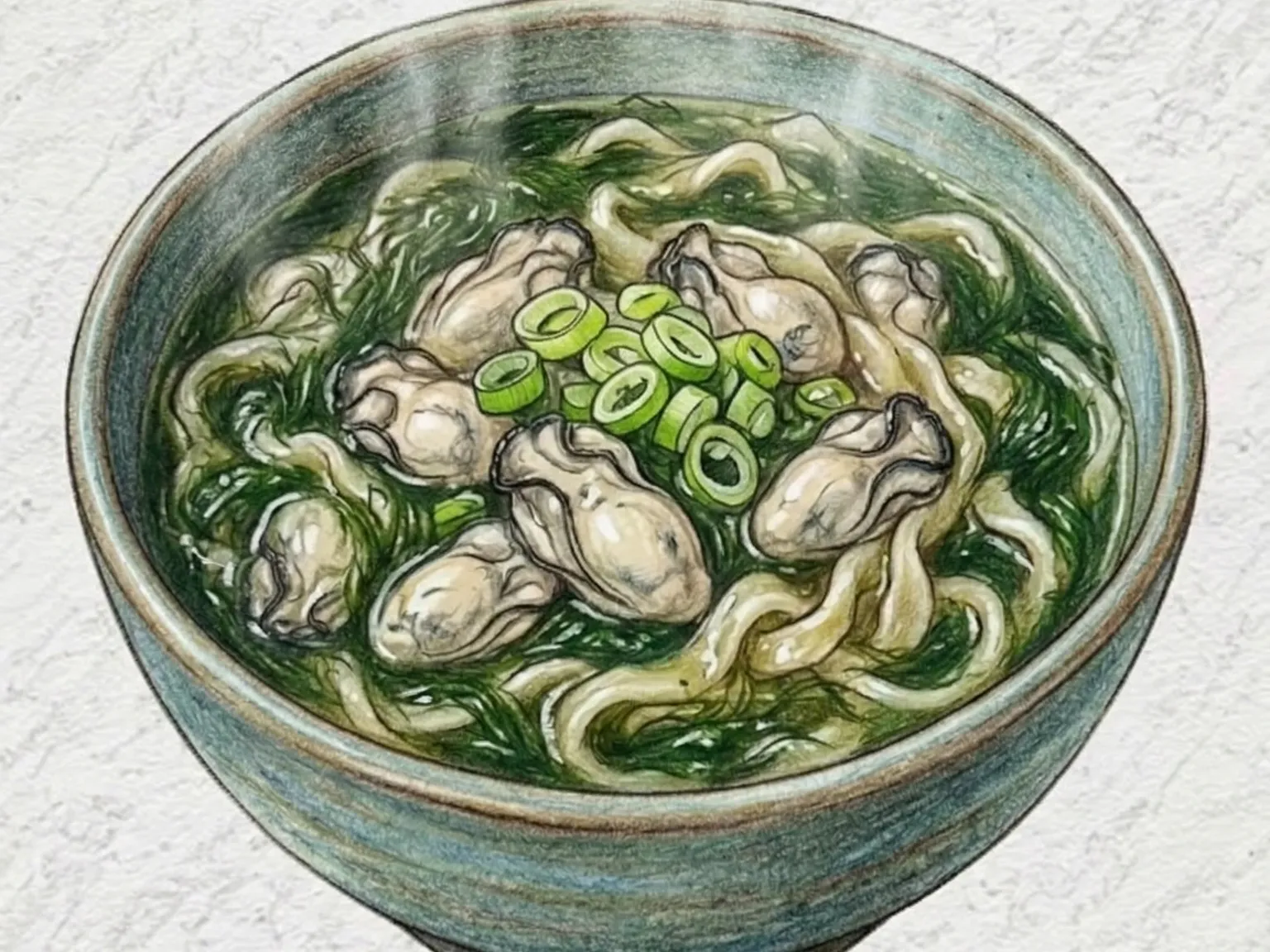
Maesaengi oyster kalguksu is a Korean seasonal noodle soup featuring maesaengi - a hair-thin, dark green seaweed harvested along Korea's southern coast in winter - and fresh shucked oysters. The broth starts with anchovy-kelp stock, seasoned simply with soup soy sauce, minced garlic, and salt. Knife-cut noodles go in first and cook for four to five minutes. Oysters are added next and simmered for only two minutes to keep them plump; overcooking turns them rubbery. Maesaengi goes in last, needing just one minute of heat to bloom its vivid green color and release its briny ocean aroma. The timing is critical: each ingredient enters the pot at a different stage to preserve its texture. Sliced scallion finishes the bowl, and the dish is best made between December and February when both maesaengi and oysters are at peak freshness.
Adjust Servings
Instructions
- 1
Rinse maesaengi gently in cold water and drain well in a sieve.
- 2
Rinse oysters briefly in salted water, then drain.
- 3
Bring the stock to a boil, then season with garlic and soup soy sauce.
- 4
Add noodles and cook 4-5 minutes, then add oysters and cook 2 more minutes.
- 5
Add maesaengi and simmer 1 minute until bright green, then turn off heat.
- 6
Adjust with salt, top with sliced scallion, and serve immediately.
As an Amazon Associate, we may earn from qualifying purchases.
Tips
Nutrition (per serving)
More Recipes

Korean Seafood Knife-Cut Noodle Soup
Haemul kalguksu simmers knife-cut wheat noodles in a broth built from clams, shrimp, and squid. Dried kelp forms the stock's foundation, and as Manila clams open they release a briny liquor that deepens the base considerably. Zucchini adds mild sweetness, green onion brings fragrance, and soup soy sauce with minced garlic rounds out the seasoning into a clean yet umami-rich broth. The wide, flat kalguksu noodles have a distinctive chewy bite and absorb the seafood broth with each slurp.

Korean Knife-cut Noodle Soup
Kalguksu is a Korean noodle soup made with hand-cut wheat noodles simmered in anchovy-kelp broth. The noodles are rolled flat and sliced with a knife, giving them a rough surface that absorbs broth and a satisfying chew distinct from machine-made pasta. Sliced potato, half-moon zucchini, and onion go into the pot, with the potato releasing starch that naturally thickens the broth as it cooks. Seasoning stays minimal - soup soy sauce, salt, minced garlic, and green onion added at the end - so the clean, savory depth of the stock comes through clearly. The dish is traditionally associated with rainy days in Korea, and adding clams turns it into a popular seafood variation.

Korean Fermented Soybean Paste Noodle Soup
Doenjang kalguksu is a Korean noodle soup of knife-cut wheat noodles in an anchovy broth flavored with fermented soybean paste. Straining the doenjang through a sieve as it dissolves prevents lumps and yields a smooth, deeply savory liquid where fermented depth - not raw salt - leads the taste. Zucchini half-moons and sliced shiitake mushrooms add sweetness and aroma to the broth, and cubed tofu brings a soft textural contrast. Timing is important: the final seasoning goes in just before the noodles, because extended boiling can push doenjang toward bitterness.

Korean Red Bean Noodle Soup
Pat kalguksu is a traditional Korean noodle dish served in a thick, pureed red bean broth. The beans are boiled twice - the first water is discarded to remove bitterness - then blended smooth and strained to create a velvety base. Glutinous rice flour thickens the broth further, while salt and sugar balance its nutty, mildly sweet profile. Cooked chestnuts and pine nuts are placed on top as garnish, adding crunch and reinforcing the dish's earthy character.

Korean Seaweed and Oyster Soup
Maesaengi-gul-guk combines two peak-winter ingredients, capsosiphon seaweed and fresh oysters, in a single light broth. Julienned radish and garlic are sauteed in sesame oil to establish sweetness, then water is added and brought to a boil before the oysters go in for three minutes. The seaweed is added last and simmered for only two minutes to preserve its silky texture and subtle marine scent. Soup soy sauce and a pinch of salt are the only seasonings needed, since the oysters release enough brininess to flavor the broth on their own.

Gul-guk (Clear Oyster Radish Soup)
Gul-guk is a clear Korean oyster soup built on the simplest possible foundation: water, radish, and fresh oysters. The radish simmers first, lending a cool sweetness to the broth before the oysters are slid in near the end to preserve their plump, springy texture. Seasoning is deliberately restrained-soup soy sauce and minced garlic are enough-because the oysters themselves provide an intense, briny depth that needs no amplification. The resulting bowl is translucent and clean-tasting, with a lingering marine finish. Along Korea's south coast, where winter oyster harvests are abundant, this soup often appears on breakfast tables or as a gentle remedy after a long night.