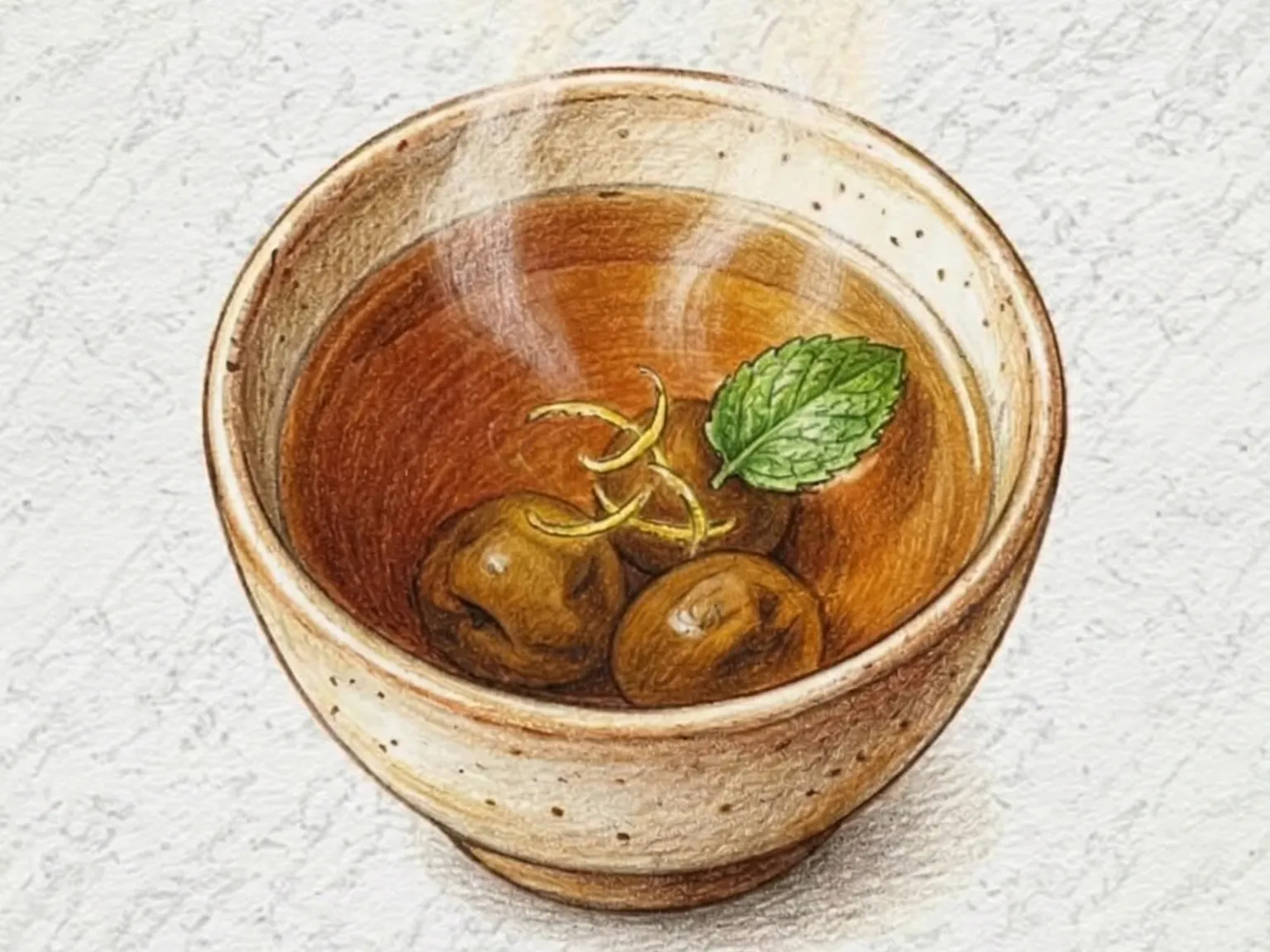
Korean Green Plum Tea (Sweet-Tart Plum Honey Drink)
Maesilcha is a Korean plum tea made by dissolving green plum syrup in lukewarm water and rounding it with honey and a squeeze of lemon juice. The plum syrup carries a vivid tartness that honey softens into a balanced sweet-sour profile. A small amount of lemon juice defines the edges of the flavor, keeping each sip clean and distinct. Served over ice with mint leaves it becomes a refreshing cold tea, or with reduced water and no ice it works as a concentrated warm drink.
Adjust Servings
Instructions
- 1
Boil water, then let it cool slightly to lukewarm.
- 2
Add plum syrup and honey to each glass first.
- 3
Pour in water and stir until fully combined.
- 4
Add lemon juice for brightness and adjust to taste.
- 5
Finish with ice and mint leaves for a chilled drink.
As an Amazon Associate, we may earn from qualifying purchases.
Tips
Nutrition (per serving)
More Recipes

Korean Sparkling Green Plum Ade
Maesil sparkling ade is a Korean effervescent drink that pairs green plum syrup with lemon juice and sparkling water poured slowly over ice. The plum syrup delivers a tangy-sweet depth that carbonation lifts and brightens with every bubble. Lemon slices and fresh mint leaves layered in the glass add citrus fragrance and visual freshness. Adjusting the ratio of syrup to sparkling water lets you dial the sweetness up or down to match the meal.

Korean Traditional Spiced Honey Drink
Jehotang is a royal Korean summer drink that layers warm spice over sweet-tart fruit syrup. Cinnamon sticks, fresh ginger, and licorice root are simmered together, then strained and blended with plum syrup and honey once the liquid cools. The result is a chilled, aromatic beverage with lingering warmth from the spices and bright acidity from the plum. Floating pine nuts on top add a subtle richness that rounds out every sip.

Korean Schisandra Berry Tea
Omijacha is a traditional Korean cold-steeped tea made by soaking dried schisandra berries in cold water for at least eight hours to draw out their vivid crimson color and layered flavor. Hot water would amplify the astringent notes, so cold steeping in the refrigerator overnight is essential, yielding a tea where tartness, sweetness, and subtle bitterness interplay in the way that gives schisandra its name meaning five flavors. Once strained, honey and sugar are dissolved into the clear tea to cushion the acidity, and thin pear slices and pine nuts are floated in each cup to add crisp fruit aroma and a nutty counterpoint. The tea is at its best on the day it finishes steeping, when both color and fragrance are at peak intensity.

Korean Watermelon Mint Juice
Watermelon mint juice blends seedless watermelon flesh with honey and lime juice, then pulses in mint leaves for just five seconds to capture their fragrance without extracting bitterness. Straining the blend removes excess pulp, producing a light, clear-textured drink. The juice is poured over a full glass of ice and finished with sparkling water, whose bubbles amplify both the watermelon's sweetness and the mint's cooling sensation. Lime juice cuts through the melon's one-note sweetness with a bright acidity, and a sprig of fresh mint on top releases aroma with each sip.

Green Tea Dasik Cookies (No-Bake Korean Matcha Pressed Cookies)
Nokcha dasik are Korean pressed tea cookies formed by binding roasted soybean powder and matcha with honey, rice syrup, and a touch of sesame oil, then stamping the mixture in a traditional wooden mold. No oven or heat is needed; the key is achieving a moisture ratio that lets the dough hold together under pressure without cracking. On the tongue, the cookie dissolves gently, releasing the toasty depth of roasted soybean first, followed by the grassy bitterness of green tea that cleans the palate. The embossed pattern from the mold gives each piece a refined, ornamental appearance, and a brief air-dry at room temperature firms the surface enough for neat storage.

Sweet Rice Punch (Traditional Korean Malted Barley Grain Drink)
Sikhye is a traditional Korean sweet rice punch made by steeping malted barley powder in lukewarm water, straining the milky liquid, adding cooked rice, and holding the mixture at around 60 degrees Celsius for one hour until the rice grains float. The amylase enzymes in the malt break down the rice starch, producing a distinctly malty, clear sweetness with grain depth. Only the clear top liquid is used after settling to keep the punch from turning cloudy, and simmering it with sugar and sliced ginger for 20 minutes rounds the sweetness while adding a gentle spiced warmth to the finish. Served well chilled with the reserved floating rice grains and pine nuts on top, the cold temperature sharpens the malty aroma and makes each sip crisp and refreshing.