Korean Spicy Blue Crab Hot Pot
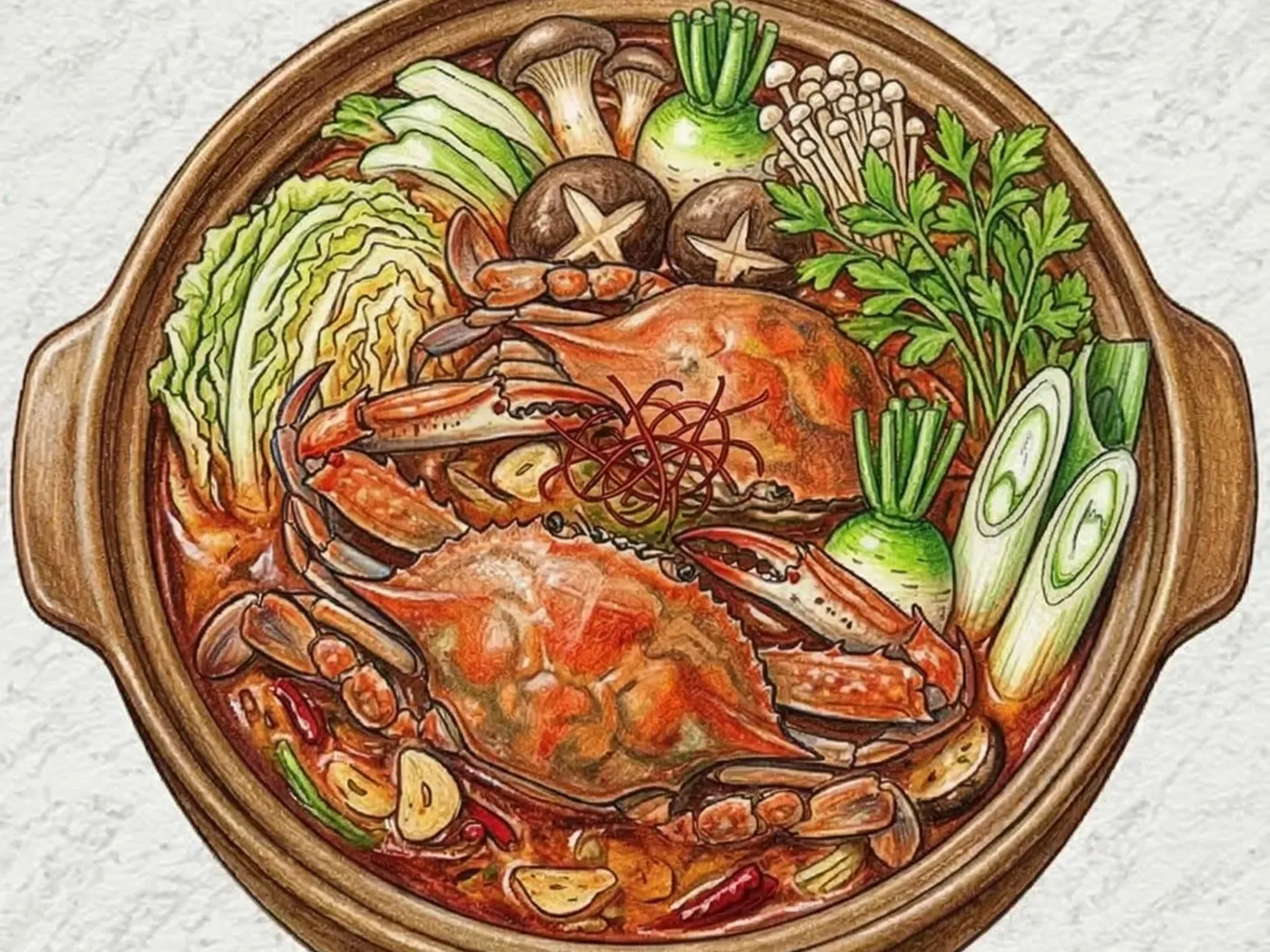
Maeun kkotge jeongol is a spicy crab hot pot featuring two whole blue crabs in a gochujang and gochugaru-laced broth. The crab shells infuse the soup with a concentrated shellfish essence that combines with the fermented chili paste for a bold, layered heat. Daikon radish and tofu cubes simmer in the fiery liquid, soaking up flavor throughout. Served tableside in a wide pot with green onion stalks laid across the top, it is a communal dish designed to be enjoyed as it bubbles away.
Adjust Servings
Instructions
- 1
Clean crabs, halve, and set the shells aside.
- 2
Bring water to a boil; season with gochujang, chili flakes, soy sauce, and garlic.
- 3
Add daikon and crab shells first to develop the broth.
- 4
Add crab bodies and tofu, simmer until cooked through.
- 5
Garnish with green onion and serve.
As an Amazon Associate, we may earn from qualifying purchases.
Tips
Nutrition (per serving)
More Recipes

Korean Doenjang Kkotge Tang
Kkotge tang doenjang simmers a full 800g of blue crab in a doenjang-forward broth, yielding a stew where fermented soybean paste and crab essence are the dominant flavors. Radish, zucchini, and onion cook down in the crab-enriched liquid, adding sweetness and body. Unlike the more common spicy crab stews, this version leads with doenjang's earthy depth, backed by a moderate heat from gochugaru and Cheongyang chili. The result is a rich, umami-heavy soup best enjoyed with rice to soak up every drop.

Korean Octopus Hot Pot (Spicy Gochujang Broth with Herbs)
Nakji jeongol is a spicy Korean hot pot starring small octopus simmered with napa cabbage, water parsley, and onion in an anchovy stock laced with gochujang and gochugaru. The octopus should be cooked briefly to keep its signature springy, chewy texture. The broth develops a layered heat from both the chili paste and flakes, while water parsley cuts through the spice with its fresh, herbal bite.

Korean Spicy Beef Tripe Hot Pot
This fiery hot pot simmers beef tripe in a beef bone stock seasoned with Korean chili flakes and gochujang. The tripe offers its signature chewy, springy texture that stands up well to the bold spice. Cabbage and oyster mushrooms soften in the broth, adding balance, while perilla leaves bring an herbal fragrance. A generous amount of green onion keeps the broth refreshing despite its heat. The beef bone stock base gives the entire dish a full-bodied richness.

Korean Spring Blue Crab Stew
Kkotgetang is a classic Korean spicy crab stew made with 600g of whole blue crab simmered until the shells release their full flavor into the broth. Gochugaru and a touch of doenjang season the liquid with heat and fermented depth, while radish and zucchini turn sweet as they absorb the crab-infused stock. Two Cheongyang chilies push the spice level higher, and green onion adds a fresh finish. Picking the crab meat from the shell while sipping the hot, briny broth is half the enjoyment.

Korean Blue Crab Soy Stir-Fry
Kkotge ganjang bokkeum is a Korean blue crab stir-fry where halved crabs are lightly dusted with flour, pan-seared until the shells turn red, then braised briefly under a lid in a sauce of soy sauce, sugar, garlic, ginger, and gochugaru. The flour coating seals in moisture and helps the sweet-salty sauce cling to the shell surface, leaving a sticky glaze meant to be eaten with your hands. Ginger neutralizes any fishiness, while scallion and sesame oil contribute the final aromatic layer. Using live crabs and cooking them immediately ensures the meat stays firm and sweet.

Korean Spicy Blue Crab Soup
Ggotge-tang is a spicy Korean crab soup built around whole blue crabs that infuse the broth with an intense, briny seafood essence. The shells crack open during simmering and release a concentrated marine flavor that forms the foundation of the entire pot. Doenjang dissolved into the broth adds fermented depth, while gochugaru brings a persistent warmth that builds gradually with each spoonful. Radish chunks sweeten the liquid and balance the heat, and zucchini and green onion fill the bowl with color and texture. The real treat comes at the end of the meal, when leftover rice is spooned into the crab's top shell and mixed with the residual roe and juices - a practice that Korean diners consider the best part. Blue crab season peaks in spring and autumn, and this soup is the most popular way to celebrate the catch when the crabs are plump and full of meat.