Dry Mala Stir-fry (Sichuan Numbing Spice Dry Wok)
Quick answer
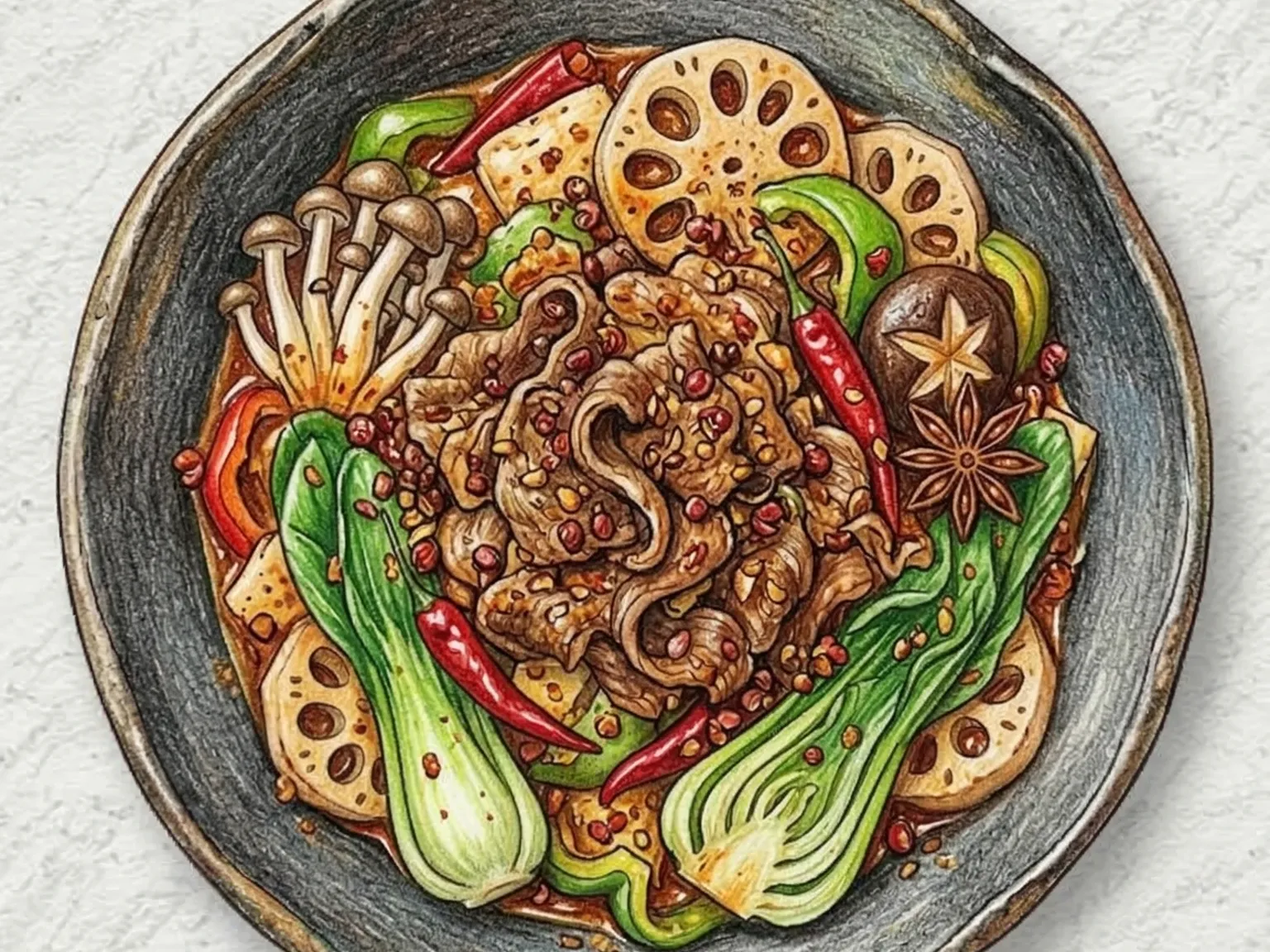
Mala xiangguo is a dry Sichuan stir-fry where beef slices, bok choy, shiitake mushrooms, and lotus root are coated in mala sauce and tossed over high heat without any broth.
What makes this special
- Mala xiangguo tosses beef and vegetables in a dry wok with numbing peppercorns and sharp chili heat.
- Sichuan peppercorn numbness and chili heat hit simultaneously on the tongue
- Dry wok with no liquid concentrates the sauce coating on each ingredient
Key ingredients
Core cooking flow
- 1 Pat 180 g beef slices very dry with paper towels, then slice the lotus root and shiitake thinly.
- 2 Place 1.5 tablespoons cooking oil and 1 tablespoon minced garlic in a wide pan over medium heat.
- 3 Spread the beef in a single layer and raise the heat to high.
Mala xiangguo is a dry Sichuan stir-fry where beef slices, bok choy, shiitake mushrooms, and lotus root are coated in mala sauce and tossed over high heat without any broth. The Sichuan peppercorn's numbing tingle and the chili's sharp burn hit simultaneously, and the absence of liquid concentrates the seasoning directly onto each ingredient's surface. Lotus root adds crunch, shiitake contributes chewiness, and bok choy provides a soft counterpoint - the textural variety within a single plate is part of the appeal. Overcrowding the pan releases moisture and dilutes the sauce, so controlled portions are essential.
Instructions
Read the steps as a cooking flow: prep, heat, seasoning, doneness control, and finish.
- 1Heat
Pat 180 g beef slices very dry with paper towels, then slice the lotus root and shiitake thinly.
Separate the bok choy stems from the leaves and shake off excess water so the stir-fry does not turn watery.
- 2Control
Place 1.5 tablespoons cooking oil and 1 tablespoon minced garlic in a wide pan over medium heat.
Stir for about 30 seconds, just until the garlic edges turn lightly golden, then move on before it burns.
- 3Heat
Spread the beef in a single layer and raise the heat to high.
Stir-fry for about 1 minute, only until the outside turns brown, then push it to the side so it does not overcook while the vegetables start.
- 4Step
Add 120 g lotus root and 100 g shiitake first, keeping the heat high.
Toss for about 2 minutes, until the lotus root looks slightly translucent and the shiitake feels chewy, letting visible moisture evaporate.
- 5Heat
Add the bok choy stems first, then add the leaves after about 30 seconds.
If the pan looks crowded, cook in batches, because trapped steam will water down the mala coating.
- 6Finish
Add the 2 tablespoons mala sauce in portions rather than all at once, tossing until it clings to the surface of each ingredient.
Turn off the heat when the pan looks glossy and dry, then finish with 1 teaspoon sesame seeds.
After the steps
Pick a recipe that fits this dish.
Continue with shared ingredients, meal pairings, or a similar method.
Recipes That Go Well With This
More Stir-fry →Based on shared ingredients and meal pairing
Tomato Egg Rice Bowl (Stir-fried Tomatoes with Soft Scrambled Eggs)
Ripe tomatoes are cut into wedges and stir-fried over high heat until they release their juices and form a natural, tangy sauce. Beaten eggs are poured in and gently folded so they stay soft and barely set, mingling with the tomato pulp. A small amount of sugar and soy sauce brings the sweet-tart balance into focus. Spooned over hot rice, the sauce soaks into the grains and the whole bowl comes together in under ten minutes, drawing on the simplicity of Chinese home cooking. It can be served as a one-bowl meal, with simple accompaniments chosen to match the sauce, broth, or topping.
Manduguk (Korean Dumpling Clear Broth Soup)
Manduguk is a Korean dumpling soup in which hand-folded dumplings stuffed with ground pork, tofu, scallion, and garlic are dropped into a clear, simmering broth, typically anchovy-kelp stock or beef broth, and cooked until they float. As the dumplings cook, their thin wheat-flour wrappers release a subtle starch that gives the broth a barely perceptible body, while the filling leaks savory juices that enrich the liquid gradually. A thin drizzle of beaten egg stirred in near the finish creates silken wisps on the surface of the broth and gives the bowl a more finished appearance. Shredded egg strips and crumbled dried seaweed scattered on top add a pleasant contrast in color and a faint oceanic note to the flavor. Many Korean households serve manduguk on Lunar New Year as an alternative to tteokguk, and some combine the two by adding sliced rice cakes alongside the dumplings. Dumplings can be made in large batches and frozen raw, which means this soup can be pulled together quickly on weeknights without sacrificing any of the flavor that comes from homemade filling. A small dish of soy-vinegar dipping sauce served alongside lets each person adjust the seasoning at the table, and the light acidity of the sauce cuts through the mild broth in a way that makes the contrast between the two worth trying.
Korean Mushroom Dumpling Hot Pot
Mandu jeongol is a generous hot pot of twelve large dumplings simmered with napa cabbage, shiitake mushrooms, oyster mushrooms, and bok choy in anchovy-kelp stock. The two varieties of mushroom add layers of umami to the clear broth, while the cabbage and bok choy soften and release their natural sweetness as they cook. The dumplings cook directly in the simmering stock, their wrappers gradually turning chewy as the filling flavors seep into the surrounding liquid. Soup soy sauce and garlic provide a clean, understated seasoning that keeps the broth from overshadowing any single ingredient. The right moment to eat is when the vegetables have wilted and the dumplings float to the surface, signaling they are cooked through. The absence of any spice or strong seasoning makes this one of the more universally approachable hot pots, suited for all ages. Leftover broth absorbs cooked rice or soaked glass noodles easily, turning what remains into a satisfying finish to the meal.
Yu Xiang Eggplant (Sichuan Spicy Garlic Pork Eggplant)
Yu Xiang Qiezi is a Sichuan-style eggplant stir-fry with ground pork, doubanjiang, black vinegar, and sugar. The eggplant is pre-fried to firm it up so it holds its shape in the sauce, while the pork and doubanjiang create a spicy, aromatic oil base. Soy sauce, vinegar, and sugar layer sweet and sour notes over the heat, producing the characteristic Yu Xiang flavor profile. Garlic and ginger add fragrance, and the eggplant absorbs the sauce deeply so every bite releases a concentrated burst of seasoning.
Similar recipes
Crispy Chili Garlic Chicken
Kkanpunggi is a Korean-Chinese chicken dish where bone-in or boneless thigh pieces are coated in potato starch and deep-fried until the crust is completely shatter-crisp, then tossed quickly over high heat in a sauce built from garlic, dried red chilies, soy sauce, rice vinegar, and sugar. The sauce must go on while the chicken is still hot from the fryer: the heat helps the thin glaze bond to the surface without softening the coating, while allowing the seasoning to penetrate just enough. Leaving the chicken in the sauce any longer causes the starch shell to absorb moisture and go limp, which destroys the entire point of the dish. The balance of salty, sour, and sweet in the sauce coats each piece evenly, and the assertive garlic aroma combined with the slow heat of dried chilies forms the flavor signature that makes kkanpunggi instantly recognizable. Additional sliced fresh chilies, green or red, can be added at the end to control heat intensity to personal preference. Crisping the skin side of the thigh thoroughly during frying deepens both the textural contrast and the roasted savory aroma. This is one of the most popular anju dishes in Korea, routinely paired with beer or soju, and it must be eaten immediately while the crunch is intact.
Spicy Fried Chicken Stir-fry
Rajogi is a Korean-Chinese dish of chicken thigh pieces coated in potato starch and deep-fried at 170 degrees Celsius until golden, then tossed in a sauce built from gochujang, ketchup, and vinegar. Onion and bell pepper are stir-fried separately to form the sauce base before the crispy chicken is folded in. The coating absorbs just enough glaze to deliver sweetness, tanginess, and chili heat simultaneously while retaining crunch underneath. Timing is critical -- the chicken must be tossed in sauce moments before serving to preserve its texture.
Pepper and Pork Stir-fry (Chinese-Style Julienned Bell Pepper and Pork)
Gochu-japchae is a Korean-Chinese stir-fry of julienned bell peppers and pork loin cooked fast over high heat in a combined soy and oyster sauce base. The pork is pre-marinated with soy sauce and cornstarch before cooking: the starch coats each strip and holds in moisture, so the meat stays tender through the high-heat cooking rather than drying out. Soy sauce and oyster sauce together give the dish a clean, savory base where saltiness and umami are balanced without either dominating. Bell peppers are kept in the pan for only a short time, just enough to soften slightly while retaining their crunch and bright color. The high heat of the wok or pan is what sears the surface of the ingredients and creates the light, smoky char that distinguishes this kind of stir-fry from gentler cooking methods. Served over rice it works as a straightforward weeknight meal, or rolled into steamed flower buns or tortillas it becomes a more casual, hand-held meal. The whole dish comes together in under thirty minutes, making it one of the more practical examples of Korean-Chinese home cooking.
Hui Guo Rou (Twice-Cooked Pork)
Hui guo rou, literally 'twice-cooked pork,' stands as one of the defining dishes of Sichuan cuisine. Pork belly is first simmered whole until cooked through, then cooled completely and sliced thin before returning to a screaming-hot wok. The initial boiling renders excess fat and firms the meat, making clean, uniform slices possible. Back in the wok, those slices fry until their edges curl and crisp while the fat layers turn chewy rather than soft. Doubanjiang, the fermented chili bean paste that forms the backbone of Sichuan cooking, goes in along with fermented black beans, and together they build the dish's signature salty-spicy character. A splash of soy sauce and a pinch of sugar round out the depth. Diagonally sliced leek and green bell pepper are added only in the final one to two minutes over maximum heat, keeping their snap and fresh color against the richly seasoned pork. Because doubanjiang's saltiness varies significantly by brand, the soy sauce amount should always be adjusted to taste after the paste is added. When the wok is hot enough to generate wok hei, all the elements fuse into a cohesive, smoky whole that captures the bold spirit of Sichuan cooking.
Ants Climbing a Tree (Sichuan Glass Noodles with Minced Pork)
Ants climbing a tree - mayi shang shu - is a Sichuan home dish named for the way tiny pieces of minced pork cling to slippery glass noodles, visually recalling ants on twigs. The key technique is to soak the noodles only until barely pliable, not fully softened, so they finish cooking in the pan while absorbing every drop of the braising liquid. Doubanjiang, Sichuan's fermented chili-bean paste, provides the spicy, funky backbone; soy sauce pulls the color into a deep amber. The pork must be minced as finely as possible so it adheres evenly along each strand rather than clumping. When the dish is done correctly, the pan is nearly dry, the noodles are deeply saturated in sauce, and the meat is distributed in dense, even flecks. It is the kind of dish made when the pantry has little more than staples, yet it delivers more flavor than its short ingredient list suggests.