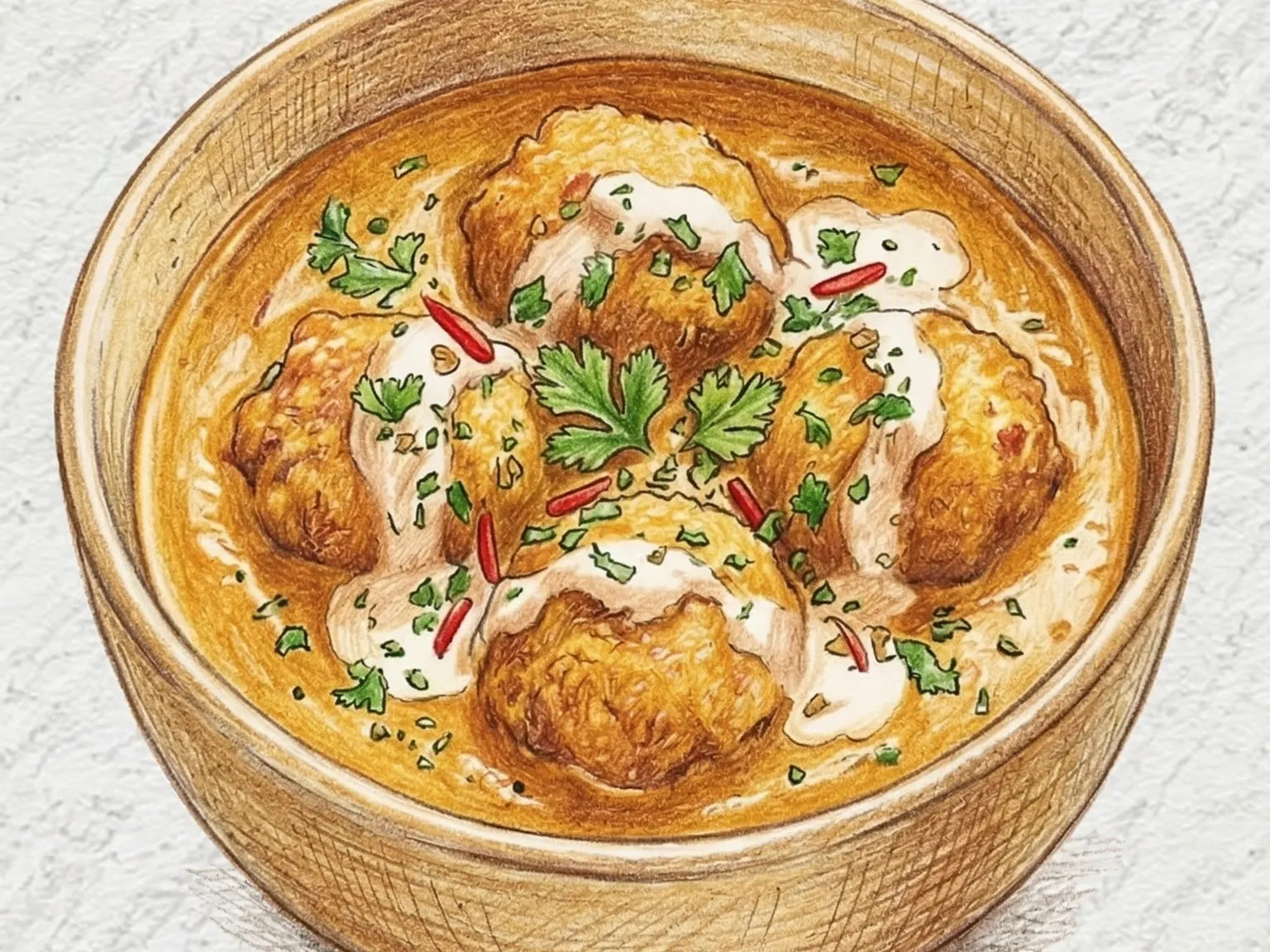
Malai Kofta (Indian Paneer Potato Dumplings in Creamy Tomato Sauce)
Malai kofta is a celebratory vegetarian dish from North India in which dumplings made from mashed potato and crumbled paneer are gently fried until golden, then served in a velvety tomato-cream gravy. The sauce gets its richness from a base of slow-cooked onions and tomatoes blended with cashew paste and finished with heavy cream, while garam masala and a touch of turmeric provide warmth without sharp heat. Each kofta is dense enough to hold its shape in the gravy yet soft enough to break apart with a spoon, releasing its mild cheese filling into the sauce. Paired with naan or basmati rice, it often appears at weddings and festival feasts as a showpiece main course.
Adjust Servings
Instructions
- 1
Mix boiled mashed potato, crumbled paneer, and cornstarch for kofta dough.
- 2
Shape into small balls and fry or pan-sear until golden.
- 3
Saute onion, garlic, and cashews, then blend smooth for sauce base.
- 4
Simmer the blended base with tomato puree and garam masala.
- 5
Finish with cream and add kofta just before serving.
As an Amazon Associate, we may earn from qualifying purchases.
Tips
Nutrition (per serving)
More Recipes

Palak Paneer (Indian Spinach Curry with Paneer Cheese)
Palak paneer is one of North India's most beloved vegetarian curries, pairing a vibrant spinach puree with cubes of mild, milky paneer cheese. Fresh spinach is blanched briefly and blended into a bright green sauce, combined with a base of sauteed onions, garlic, ginger, and tomatoes seasoned with garam masala. The paneer cubes are typically pan-seared first to form a light skin that holds their shape in the sauce while the interior stays soft and creamy. A swirl of heavy cream at the end rounds out the flavors, blending the earthy depth of spinach with warm spice and dairy richness.

Chicken Tikka Masala
Chicken tikka masala marinates chicken in yogurt, curry powder, garlic, and ginger, then grills or broils it before simmering in a sauce of tomato puree, garam masala, and heavy cream. The yogurt's lactic acid tenderizes the surface of the meat while carrying the spices deeper into the flesh. Sauteing onion in butter, then cooking tomato puree with garam masala for fifteen minutes rounds off the raw edges of the spices and builds the sauce's foundation. Heavy cream folded in at the end wraps the tomato acidity and spice heat in a smooth, rich body that balances the dish. Marinating overnight allows the spices to penetrate fully, producing noticeably more flavor than a short soak.

Baingan Bharta (Punjabi Flame-Roasted Smoky Eggplant Mash)
Baingan bharta traces its roots to Punjab, where eggplants are roasted directly over an open flame until the skin blackens and the flesh collapses into a smoky pulp. That charring is not a shortcut - it is the defining flavor of the dish, lending a campfire depth that no oven can replicate. The mashed pulp is then sauteed with onion, tomato, green chili, and ginger until the mixture thickens and the raw edges of the aromatics mellow out. The final texture is rough and chunky rather than smooth, with pockets of charred eggplant skin adding bitter contrast. It is traditionally scooped up with makki ki roti (cornmeal flatbread) during Punjab's winter months, though plain naan or rice work equally well.

Kadhi Pakora (Yogurt Curry with Fritters)
Kadhi pakora is a yogurt-based curry from North India, especially popular in Punjabi home cooking, where gram flour fritters are simmered in a tangy, spiced yogurt gravy. The pakoras are made by mixing a portion of gram flour with sliced onion, salt, and water into a thick batter, then deep-frying spoonfuls until golden. The remaining gram flour is whisked with yogurt, water, turmeric, and red chili powder to form the kadhi base, which must be stirred constantly in the early stages to prevent the yogurt from splitting. Cumin seeds are bloomed in oil to release their aroma before the kadhi mixture is poured in and simmered gently for twenty minutes, allowing the raw flour taste to cook out completely. Adding the fried pakoras near serving time preserves some of their texture, while longer simmering lets them absorb the gravy and turn soft throughout.

Butter Chicken
Butter chicken - murgh makhani - marinates chicken thighs in yogurt, garam masala, and cumin, grills or roasts them tandoori-style to build a smoky surface char, then simmers the pieces in a sauce of long-cooked tomato puree enriched with butter and heavy cream. The yogurt marinade tenderizes the meat by breaking down surface proteins, and the high-heat roasting adds a depth of flavor that plain poaching cannot achieve. The tomato base must cook down until its raw acidity mellows into a rounded sweetness before the dairy goes in. Butter and cream transform the spice blend's sharp edges into something velvety and rich, producing the mild, creamy character that sets this curry apart from hotter Indian preparations.

Chole Bhature (Chickpea Curry with Puffed Bread)
Chole bhature is the iconic breakfast and street-food combination of Punjab and Delhi - spiced chickpea curry paired with deep-fried puffed bread, drawing long morning queues at legendary shops across North India. Chole starts with dried chickpeas soaked overnight, pressure-cooked, then simmered with onion, tomato, amchur (dried mango powder), and anardana (pomegranate seed powder) until the gravy turns dark brown and each chickpea is coated in a thick, clinging sauce. Many families add a muslin pouch of whole spices - black cardamom, cinnamon, bay leaf - into the pot, infusing the curry without leaving stray spices in the final dish. Bhature is made from refined flour dough enriched with yogurt and semolina, rested until slightly fermented, then rolled and dropped into hot oil where it balloons dramatically into a puffy, golden pillow. Tearing off a piece of bhature and scooping up chole with raw onion and pickled chili delivers a burst of salty, sour, spicy, and fried-dough richness in one bite. The most celebrated chole bhature shops in Old Delhi have been using the same base gravy - never fully emptied, always replenished - for decades.