Korean Mushroom Dumpling Hot Pot
Stews Easy

Korean Mushroom Dumpling Hot Pot

Quick answer

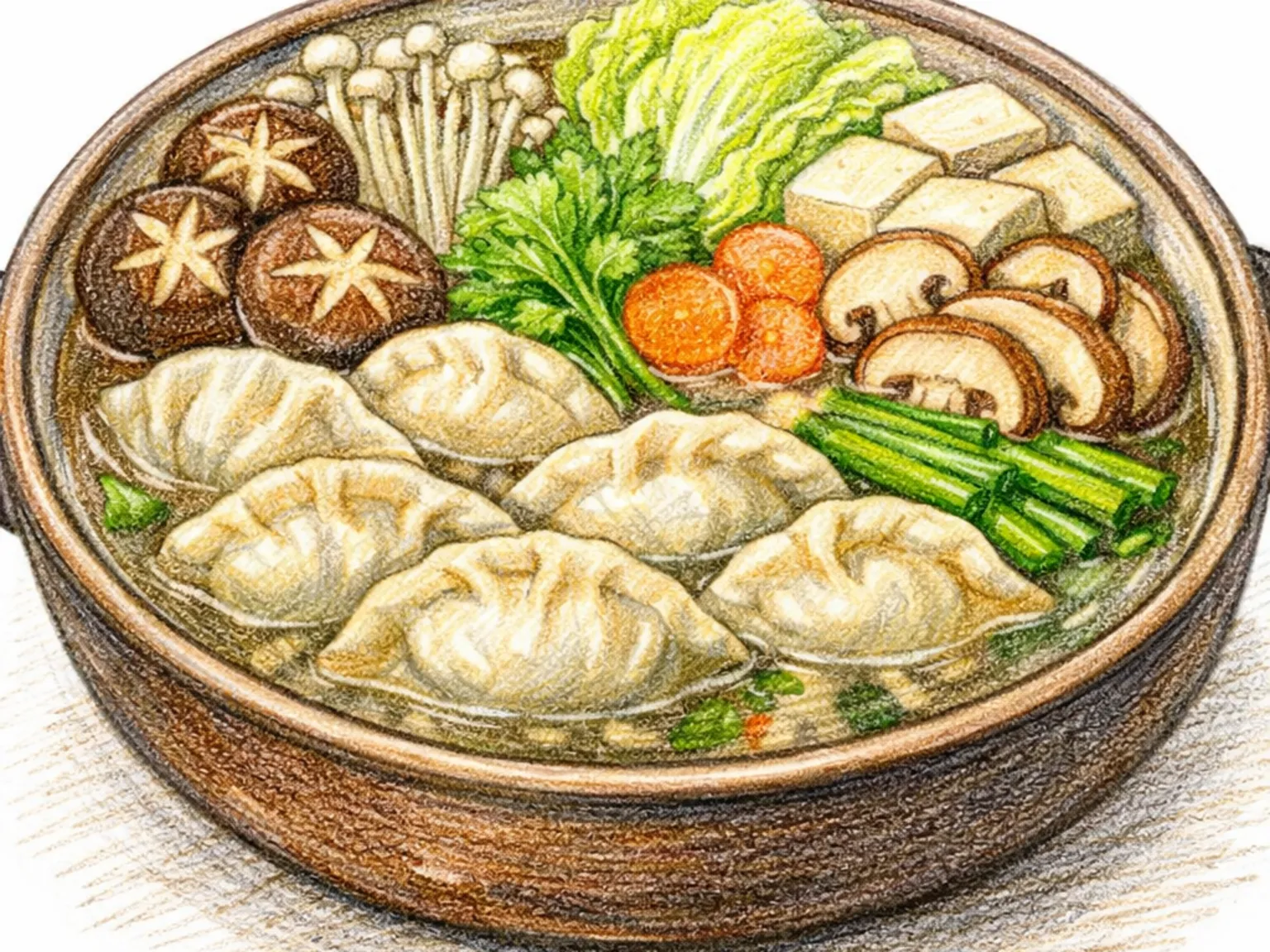
Mandu jeongol is a generous hot pot of twelve large dumplings simmered with napa cabbage, shiitake mushrooms, oyster mushrooms, and bok choy in anchovy-kelp stock.

What makes this special

  • Mandu jeongol merges the savory umami of shiitake and oyster mushrooms with large dumplings and sweet napa cabbage in a hearty anchovy-kelp stock.
  • Shiitake and oyster mushrooms double the umami in anchovy-kelp stock
  • Dumplings cook slowly in hot broth, swelling the skin to a chewy texture
Total time
35 min
Level
Easy
Servings
4 servings
Ingredients
9
Calories
470 kcal
Protein
19 g

Key ingredients

Large dumplingsNapa cabbageShiitake mushroomsOyster mushroomsBok choy

Core cooking flow

  1. 1 Cut 200 g napa cabbage into 5 cm pieces and slice 120 g shiitake mushrooms 0.5 cm thick.
  2. 2 Pour 1100 ml anchovy-kelp stock into a hot pot or wide pot, then add 1 table...
  3. 3 When the stock boils, add the napa cabbage, shiitake mushrooms, and oyster mushrooms first.

Mandu jeongol is a generous hot pot of twelve large dumplings simmered with napa cabbage, shiitake mushrooms, oyster mushrooms, and bok choy in anchovy-kelp stock. The two varieties of mushroom add layers of umami to the clear broth, while the cabbage and bok choy soften and release their natural sweetness as they cook. The dumplings cook directly in the simmering stock, their wrappers gradually turning chewy as the filling flavors seep into the surrounding liquid. Soup soy sauce and garlic provide a clean, understated seasoning that keeps the broth from overshadowing any single ingredient. The right moment to eat is when the vegetables have wilted and the dumplings float to the surface, signaling they are cooked through. The absence of any spice or strong seasoning makes this one of the more universally approachable hot pots, suited for all ages. Leftover broth absorbs cooked rice or soaked glass noodles easily, turning what remains into a satisfying finish to the meal.

Prep 15min Cook 20min 4 servings

Instructions

Read the steps as a cooking flow: prep, heat, seasoning, doneness control, and finish.

6 steps
  1. 1
    Prep

    Cut 200 g napa cabbage into 5 cm pieces and slice 120 g shiitake mushrooms 0.5 cm thick.

    Separate the oyster mushrooms into bite-size clusters, then cut the green onion diagonally into 1 cm pieces.

  2. 2
    Control

    Pour 1100 ml anchovy-kelp stock into a hot pot or wide pot, then add 1 tablespoon minced garlic and 1 tablespoon soup soy sauce.

    Heat over high heat until it boils, skimming light foam for a clearer broth.

  3. 3
    Control

    When the stock boils, add the napa cabbage, shiitake mushrooms, and oyster mushrooms first.

    Lower to medium heat and simmer about 5 minutes, until the cabbage turns slightly translucent and the mushroom aroma seasons the broth.

  4. 4
    Step

    Add the 12 large dumplings in a single layer so they do not press against each other.

    If they are frozen, add them straight from the freezer, because thawing makes the wrappers more likely to tear or turn mushy.

  5. 5
    Control

    Keep the pot at a steady medium simmer for 7 to 8 minutes.

    Do not stir the dumplings hard; spoon hot broth over them instead, until the wrappers look translucent and the dumplings float to the surface.

  6. 6
    Finish

    Add 150 g bok choy and the sliced green onion, then simmer 2 more minutes.

    Turn off the heat while the bok choy stems still have a light crunch, and adjust any missing seasoning with salt for a clearer finish.

After the steps

Pick a recipe that fits this dish.

Continue with shared ingredients, meal pairings, or a similar method.

Recipes That Go Well With This

More Stews →

Based on shared ingredients and meal pairing

Korean Perilla Mushroom Hot Pot
Shared ingredient: shiitake mushrooms Stews

Korean Perilla Mushroom Hot Pot

Korean perilla mushroom hot pot is a hearty vegetarian dish made with shiitake, oyster, and enoki mushrooms, tofu, and bok choy simmered in a light vegetable stock. The cooking process starts by boiling the vegetable stock seasoned with soup soy sauce and minced garlic. Shiitake and oyster mushrooms are added first to build a deep umami base. Tofu, enoki mushrooms, and bok choy are then arranged on top and simmered until the vegetables are tender. To finish, ground perilla seed powder is gently stirred into the broth at the very end, which prevents the soup from becoming gritty while releasing a rich, nutty aroma and creating a naturally thick texture. This hot pot delivers a satisfying combination of earthy mushrooms, soft tofu, and crisp bok choy, offering a comforting meatless meal.

Korean Kimchi Beef Dumpling Hot Pot
Shared ingredient: napa cabbage Stews

Korean Kimchi Beef Dumpling Hot Pot

Kimchi-beef mandu jeongol is a generous Korean hot pot that combines frozen dumplings, thinly sliced beef, and aged kimchi in anchovy stock seasoned with gochujang and soup soy sauce. As the pot bubbles, the meat filling inside each dumpling leaches its savory fat into the broth while the kimchi's fermented sourness and heat layer in on top, building a soup that grows more complex the longer it simmers. Napa cabbage leaves, enoki mushrooms, and firm tofu add contrasting textures to each spoonful. Blanching the beef briefly before adding it to the pot prevents the broth from clouding, and the tofu goes in last to keep it intact. The older and more pungent the kimchi, the deeper and more rounded the soup becomes, which is why well-fermented kimchi is worth seeking out for this dish specifically. A drop of perilla oil stirred in just before serving adds a nutty finish that ties the layers together. Eaten communally from the stove, with rice stirred in at the end to absorb the remaining broth, this pot feeds a table with minimal effort.

Korean Pine Nut Porridge (Creamy Nutty Nourishing Rice Porridge)
Serve together Rice

Korean Pine Nut Porridge (Creamy Nutty Nourishing Rice Porridge)

Pine nuts are blended with water into a smooth milk, then stirred into soaked rice that has been sauteed in sesame oil to bring out its starch aroma. The pine nut milk is added after the rice has already simmered for ten minutes, because prolonged boiling diminishes the nuts' volatile fragrance. The finished porridge has a pale cream hue and leaves a lingering resinous pine-nut note on the palate. Thinly sliced jujube garnish adds a pop of red color and gentle natural sweetness that complements the nuttiness.

Korean Mushroom Bulgogi Jeongol
Similar recipe Stews

Korean Mushroom Bulgogi Jeongol

Soy sauce-marinated beef and a mix of shiitake and enoki mushrooms simmer together in a generous broth, with the beef's umami and the shiitake's deep, earthy scent building into the stock as the jeongol cooks. Sweet potato noodles absorb that concentrated broth, picking up its full flavor in every chewy strand. Onion's natural sweetness moderates the saltiness of the soy-based stock, and the garlic-infused liquid makes the dish work equally well as a rice accompaniment or a drinking table side. The jeongol is typically left on a portable burner at the table and eaten continuously as it cooks.

Serve with this

Korean Beef & Shiitake Japchae
Side dishes Medium

Korean Beef & Shiitake Japchae

Japchae originated as a Joseon royal court dish of stir-fried vegetables before sweet potato glass noodles were added to create the form recognized today. This version pairs glass noodles with soy-marinated beef and sliced shiitake mushrooms. Each component cooks separately: beef and mushrooms stir-fried with garlic, spinach blanched and squeezed dry, carrots and onions sauteed until just tender. A final toss with sesame oil brings everything together. The noodles should be translucent and springy, carrying a sweet-salty soy glaze into each forkful. A standard presence on every Korean holiday table at Chuseok, Seollal, and birthday celebrations alike.

🏠 Everyday 🎉 Special Occasion
Prep 20min Cook 18min 4 servings
Korean Flower Crab Pancake
Pancakes Hard

Korean Flower Crab Pancake

Fresh blue crab meat is picked clean, coated in a mixture of all-purpose flour and Korean pancake mix, dipped in beaten egg, and pan-fried until the surface turns golden. The crab's natural sweetness and mild brininess stay intact throughout the process, and minced ginger cuts through any residual fishiness without announcing itself in the finished jeon. Black pepper is added in small amounts - just enough to clean up the aftertaste without competing with the delicate crab. The egg coating holds moisture inside, keeping the meat tender while the outside crisps to a light, golden crust. A generous amount of crab filling in each piece is what makes the texture satisfying.

🍺 Bar Snacks 🎉 Special Occasion
Prep 18min Cook 12min 2 servings
Korean Celery Jangajji (Blanched Soy Lemon Pickle)
Kimchi Easy

Korean Celery Jangajji (Blanched Soy Lemon Pickle)

Celery jangajji is a Korean soy pickle made by briefly blanching celery stalks to tame their fibrous exterior, then submerging them in a boiled brine of soy sauce, vinegar, and sugar. Peeling away the tough outer strings and cutting into five-centimeter lengths before a thirty-second blanch removes the raw grassy edge while leaving the celery's distinctive cool, herbal scent intact. Lemon slices and whole garlic cloves added to the jar contribute a gentle citrus brightness and mild pungency that build quietly as the pickle rests. After two days in the refrigerator the brine penetrates evenly, producing a crisp, tangy side dish that pairs particularly well with grilled or braised pork. By the fourth or fifth day the flavors deepen further, and even those put off by raw celery's sharpness tend to find the pickled version approachable.

🍱 Lunchbox 🏠 Everyday
Prep 15min Cook 8min 4 servings

Similar recipes

Korean Fish Cake Hot Pot (Skewered Fish Cakes in Clear Broth)
Stews Easy

Korean Fish Cake Hot Pot (Skewered Fish Cakes in Clear Broth)

Eomuk jeongol is a Korean fish cake hot pot simmered in a clear broth built on dried kelp and anchovy stock. Large pieces of Korean radish cook alongside the fish cakes, releasing their natural sweetness into the liquid and keeping the broth light and refreshing as it reduces. Shiitake mushrooms add earthy umami depth, and using soup soy sauce alone for seasoning keeps the understated savory character of the fish cakes front and center. Cheongyang chili brings a sharp heat, and sliced green onion layers in a gentle sweetness as it softens in the bubbling pot. Fish cakes that spend more time in the broth turn silky and absorb the surrounding flavors, growing more flavorful with each passing minute. Using several shapes and thicknesses of fish cake side by side gives the pot different textures that makes eating it more interesting. The hot pot captures the warmth of street-stall eomuk-tang and brings it to the dinner table as a shared dish on cold days.

🏠 Everyday 🎉 Special Occasion
Prep 20min Cook 25min 4 servings
Korean Corn Cheese Pot Rice
Rice Easy

Korean Corn Cheese Pot Rice

Oksusu cheese sotbap is a Korean pot-cooked rice dish built on butter-sauteed onions and corn that infuse the grains with sweetness as the rice steams, then topped with mozzarella placed on after the heat is cut so it melts into long, stretchy strands rather than browning. Each spoonful delivers the pop of individual corn kernels alongside the soft, creamy pull of melted cheese, with butter coating every grain in a glossy richness. Replacing part of the cooking water with milk deepens the creamy texture and gives the finished rice a density and smoothness that plain water cannot achieve. With the lid closed for two to three minutes after the heat is off, the residual steam inside the pot is sufficient to melt the cheese completely without any additional heat. The combination of sweet corn, buttery rice, and stretchy mozzarella lands in a flavor register that needs no side dishes to feel complete, and it appeals across a wide age range without effort.

🧒 Kid-Friendly 🍱 Lunchbox
Prep 10min Cook 22min 2 servings
Korean Warm Noodles with Kimchi Dumplings
Noodles Easy

Korean Warm Noodles with Kimchi Dumplings

Kimchi mandu onmyeon is a Korean warm noodle dish that combines kimchi dumplings simmered in anchovy-kelp stock with thin wheat noodles served in the hot broth. The filling of kimchi and pork inside each dumpling gradually releases savory depth into the clean dashi as the dumplings cook, building a broth that feels substantive without requiring heavy seasoning. Soup soy sauce and minced garlic are the only seasoning additions, keeping the overall flavor clear and well-defined. Thin wheat noodles are boiled separately and rinsed under cold water before serving, which prevents the cooking starch from clouding the broth and keeps the noodles smooth and springy in texture rather than swollen and soft. Julienned zucchini added to the broth and a thin stream of beaten egg swirled in just before serving add color and textural variety to the finished bowl. Since the sodium content of kimchi dumplings varies considerably by brand, soup soy sauce should be added in small increments at the end rather than all at once. Overcooking the dumplings causes the wrapper to loosen and the broth to cloud, so once the dumplings float to the surface the noodles should go in and the dish brought together quickly. Gochugaru or sliced cheongyang chili transforms the bowl into a spicier version, and a drop of sesame oil stirred in just before eating rounds out the nuttiness of the broth. Equally suited as a late-night solo meal or a warming bowl on a cold day.

🏠 Everyday ⚡ Quick
Prep 10min Cook 18min 2 servings

Tips

Add frozen dumplings directly without thawing to prevent breaking.
Finish seasoning with salt instead of more soy sauce for a cleaner broth.

Nutrition (per serving)

Calories
470
kcal
Protein
19
g
Carbs
58
g
Fat
18
g

Variations

Minari Mushroom Dumpling Hot Pot

This dumpling hot pot gets a fresh herbal lift from minari. Mushroom umami and savory dumplings blend into a clean, soft finish.