Charim

2686 Korean & World Recipes

2686+ Korean recipes, clean and organized. Ingredients to instructions, all at a glance.

Korean Pickled Garlic (Soy-Vinegar Aged Whole Cloves)

Korean Pickled Garlic (Soy-Vinegar Aged Whole Cloves)

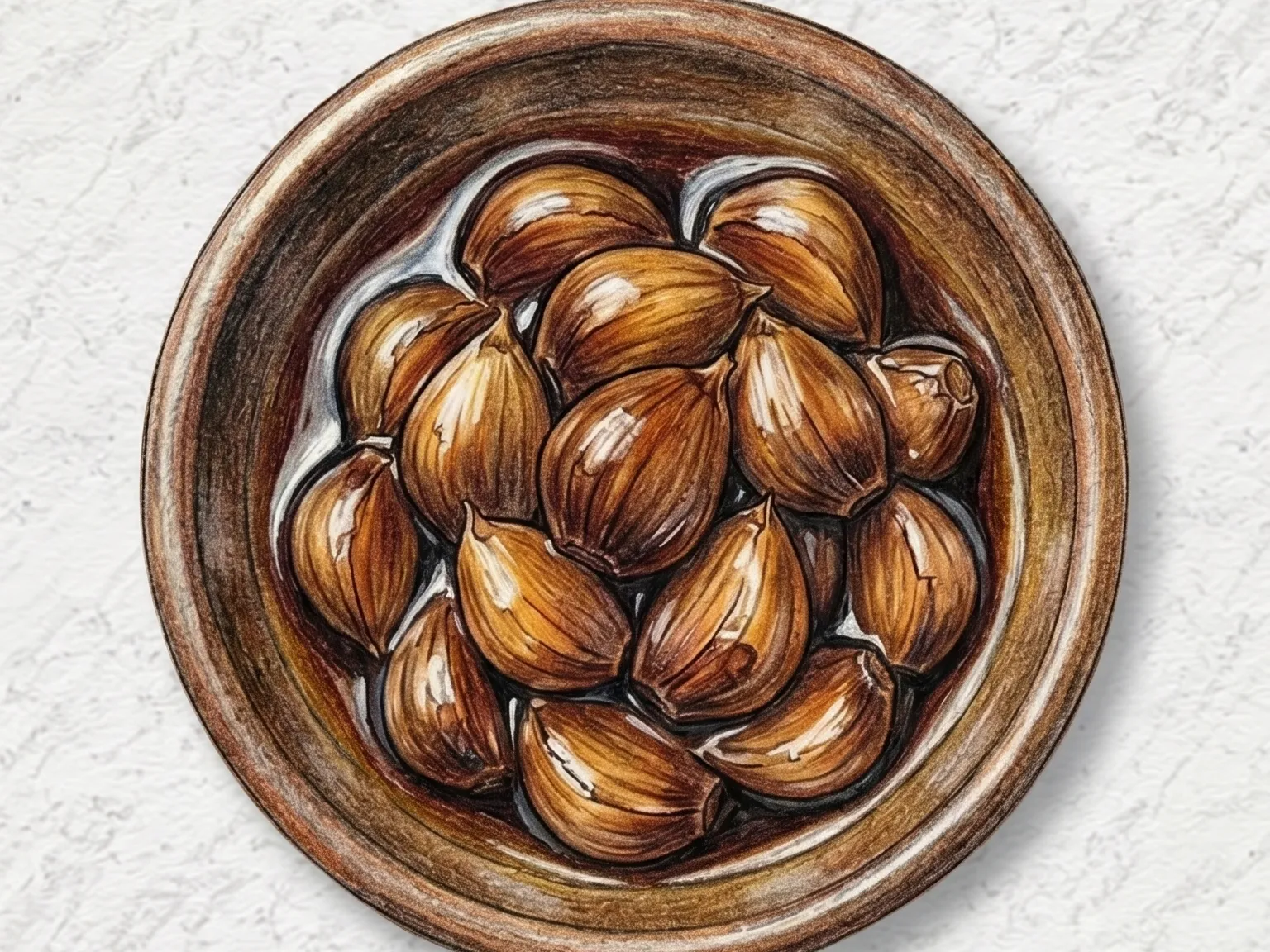
Maneul-jangajji is whole garlic cloves pickled in a soy-vinegar brine - a traditional Korean preserved banchan that occupies near-permanent space in the kimchi refrigerator alongside kimjang kimchi. The customary practice is to make it during the June fresh garlic harvest and eat it year-round. After three or more months in the brine, the raw garlic's sharp bite fades completely, leaving behind a jelly-firm, almost translucent clove with a salty-sweet flavor and no heat. The baseline ratio is two parts soy sauce to one part vinegar; increasing the vinegar skews the flavor too acidic for pairing with rice. The brine must be boiled and fully cooled before pouring, and repeating the process - draining, reboiling, cooling, and repouring every three days for three cycles - extends shelf life and deepens flavor. Transferring to refrigeration after three days at room temperature slows fermentation and maintains crunch. These pickled cloves are commonly eaten one at a time alongside grilled meat to cut through the fat.

Prep 20min Cook 10min 4 servings

Adjust Servings

2servings
servings

Instructions

  1. 1

    Peel the garlic and trim the root ends.

  2. 2

    Combine soy sauce, vinegar, sugar, and water in a pot; bring to a boil then cool.

  3. 3

    Pack the garlic into a sterilized jar and pour the cooled brine over.

  4. 4

    Seal and leave at room temperature for 3 days, then refrigerate.

🛒Shop Ingredients on Amazon

As an Amazon Associate, we may earn from qualifying purchases.

Tips

A 2:1 soy-to-vinegar ratio gives a well-balanced flavor.

Nutrition (per serving)

Calories
45
kcal
Protein
2
g
Carbs
9
g
Fat
0
g

More Recipes

Korean Pickled Green Peppers
Side dishesEasy

Korean Pickled Green Peppers

Gochu jangajji - soy-pickled green peppers - is a traditional Korean preservation technique dating to a time before refrigeration, when summer's abundant green peppers needed to last through leaner months. Each pepper is stemmed and pierced with a toothpick so the brine penetrates to the core. A boiling brine of soy sauce, vinegar, sugar, and water is poured directly over the peppers, partially cooking the exterior while the inside stays crisp. Repeating this step the next day - draining the brine, reboiling, and pouring again - strengthens the preservative effect and deepens the flavor, allowing the pickles to keep refrigerated for over a month. On rice, the salty-sour brine meets the pepper's lingering heat.

🏠 Everyday🍱 Lunchbox
Prep 15minCook 10min4 servings
Korean Pickled Garlic Scapes
Side dishesEasy

Korean Pickled Garlic Scapes

Maneuljjong-jangajji pickles garlic scapes in a boiled soy-vinegar-sugar brine, sharing the same preservation principle as garlic clove jangajji but using the stalks instead of the bulbs. The scapes are cut to 4 cm lengths, packed tightly in a jar, and doused with the brine while still hot - the heat partially cooks the outer surface, giving each piece a clean snap when bitten, unlike the cold-pour method used for whole garlic jangajji. Whole black peppercorns added to the jar release their spicy aroma into the liquid during aging, adding depth beyond the basic salt-acid profile. Though edible after one day, day three is the sweet spot where the seasoning has penetrated enough while the scapes still retain crunch. Reboiling and repouring the brine once extends the preservation window significantly. These pickled scapes serve as a sharp, vinegary counterpoint to rich meat dishes on the Korean table.

🏠 Everyday🍱 Lunchbox
Prep 15minCook 8min4 servings
Korean Chive Kimchi (Spicy Garlic Chive Quick Kimchi)
Side dishesEasy

Korean Chive Kimchi (Spicy Garlic Chive Quick Kimchi)

The fastest kimchi in the Korean repertoire - five ingredients, no salting, no fermentation. Garlic chives are cut to finger length and tossed with gochugaru, anchovy fish sauce, garlic, and sugar. The fish sauce supplies briny, fermented depth that normally develops over days of lacto-fermentation, compressing the flavor arc into an instant preparation. The chives' garlicky bite amplifies the red pepper heat. Popular in Gyeongsang-do, where chives grow abundantly in spring.

🏠 Everyday🍱 Lunchbox
Prep 15min4 servings
Korean Soy Pickled Cucumber
KimchiEasy

Korean Soy Pickled Cucumber

Oi jangajji is a Korean soy-pickled cucumber made by slicing cucumbers into one-centimeter rounds, lightly salting them, then packing them into a sterilized jar with garlic cloves and green chilies before pouring over a boiling brine of soy sauce, water, vinegar, and sugar. The hot liquid partially cooks the cucumber surface while the center stays crisp, and two days of cold fermentation lets the sweet-salty-sour brine soak through to the core. The green chilies leave a faint heat at the back of each bite, and whole garlic cloves release their aroma into the brine as they soften. Reboiling and re-pouring the brine once extends the pickle's crunch, making this a practical side dish that keeps well over a week in the refrigerator.

🏠 Everyday🍱 Lunchbox
Prep 20minCook 10min4 servings
Korean Restaurant-Style Kkakdugi
Side dishesMedium

Korean Restaurant-Style Kkakdugi

Sikdang-style kkakdugi is the cubed radish kimchi served free at virtually every Korean restaurant, standing alongside baechu-kimchi as a non-negotiable table banchan. Cutting the Korean radish into chunky 2 cm cubes ensures the interior stays crunchy even after salting and fermentation. Twenty minutes in coarse salt draws moisture, then the cubes are dressed with gochugaru, myeolchi-aekjeot (anchovy fish sauce), garlic, ginger, and sugar. The fish sauce provides the umami backbone that deepens during fermentation, while ginger suppresses off-flavors and sharpens the finish. One day at room temperature triggers lactic acid production - the signature tingle that signals active fermentation - followed by refrigeration where the flavor matures over two to three weeks. Winter radish carries more natural sugar, so the added sugar can be reduced; in summer, cutting the room-temperature rest to half a day prevents over-fermentation.

🏠 Everyday🍱 Lunchbox
Prep 25minCook 5min4 servings
Korean Pepper Leaf Soy Pickle
KimchiEasy

Korean Pepper Leaf Soy Pickle

Gochuip jangajji is a Korean soy pickle of pepper leaves, a summer byproduct of chili cultivation that is washed and submerged in a boiled brine of soy sauce, vinegar, and sugar. Unlike the chili fruit itself, pepper leaves carry almost no heat, offering instead a grassy, mildly bitter aroma that blends with the savory-sour brine. Garlic and cheongyang chili contribute a sharp fragrance to the pickling liquid, and the thin leaves absorb the seasoning fully within a single day. Laid over a spoonful of rice and eaten as a wrap, these pickled leaves double as both banchan and ssam in one bite.

🍱 Lunchbox
Prep 15minCook 12min4 servings
More Side dishes →