Korean Stir-Fried Garlic Scapes
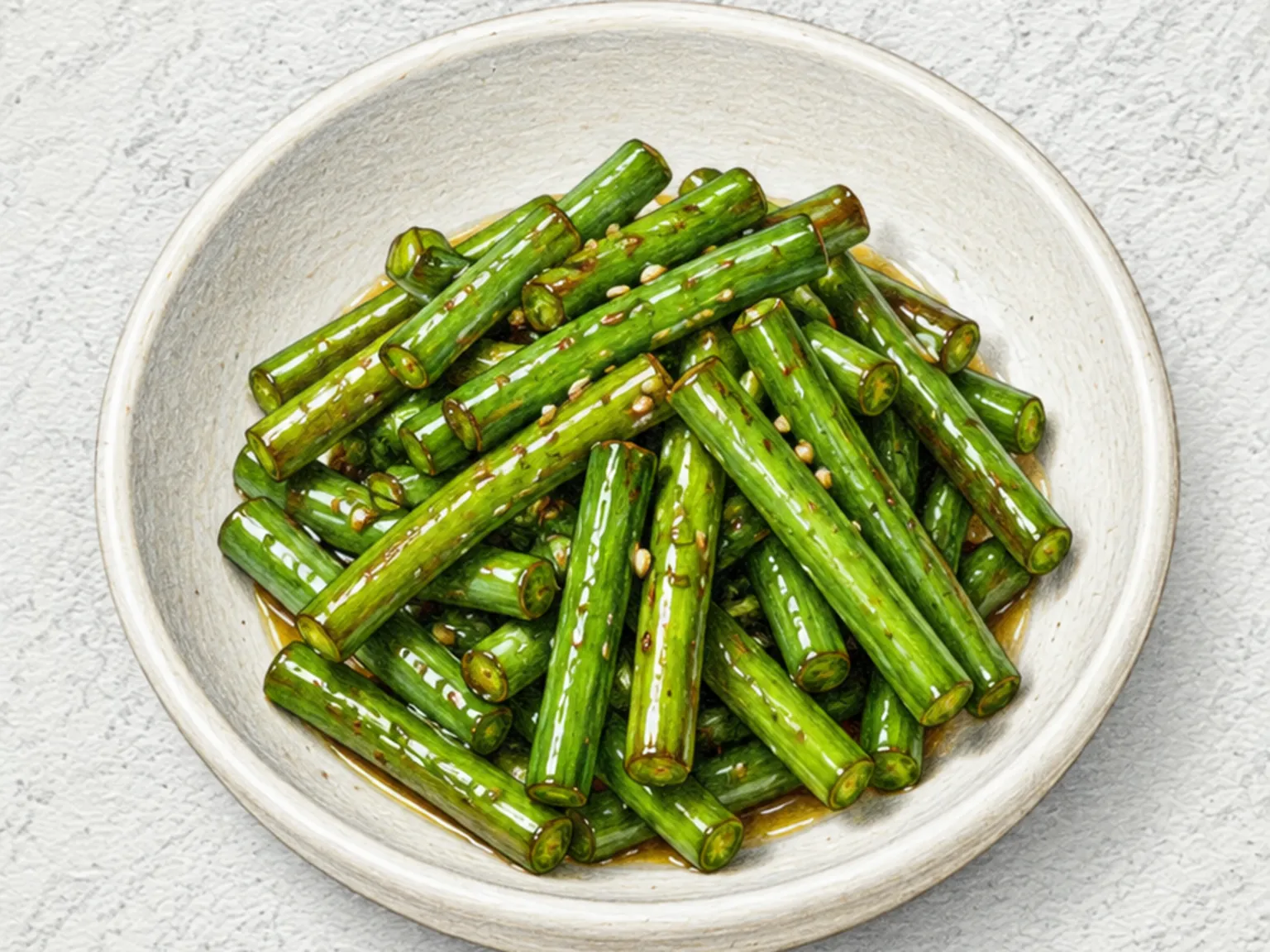
Maneuljjong-bokkeum is stir-fried garlic scapes - the curling flower stalks cut from garlic plants before they bloom - seasoned with soy sauce and oligosaccharide syrup. Garlic scapes carry the plant's growth energy in a concentrated, milder form: they deliver a gentle garlic fragrance without the sharp bite of the bulb. Cutting into 4 to 5 cm pieces and blanching for thirty seconds softens the outer fibrous skin while keeping the interior crisp. Skipping the blanch and going straight to the pan creates an uneven result - tough outside, undercooked inside. The syrup-and-soy combination builds a sweet-salty glaze on the scape surfaces, and sesame oil is added only after the heat is off to preserve its fragrance. This banchan keeps in the refrigerator for about five days, making it a reliable weekday side dish. Spring through early summer is peak garlic scape season.
Adjust Servings
Instructions
- 1
Cut garlic scapes into 4-5 cm pieces.
- 2
Blanch 30 seconds, cool, and drain.
- 3
Heat oil and lightly sauté garlic.
- 4
Add scapes, soy sauce, and syrup; stir-fry on high for 2-3 minutes.
- 5
Finish with sesame oil and sesame seeds.
As an Amazon Associate, we may earn from qualifying purchases.
Tips
Nutrition (per serving)
More Recipes

Korean Stir-Fried Bamboo Shoots
Juksun-bokkeum is a soy-seasoned stir-fry of bamboo shoots - a banchan closely tied to spring, when fresh juksun appears briefly in Korean markets from April through May, primarily from Damyang in Jeollanam-do. Fresh shoots must be boiled in rice-rinsing water for at least thirty minutes to neutralize their oxalic acid bitterness; canned shoots need a thorough rinse to remove the tinny taste. Julienned shoots are stir-fried with carrot and onion over high heat for a short burst - prolonged cooking draws out moisture and turns them rubbery. The seasoning is restrained: soy sauce, a pinch of sugar, garlic, and a finish of sesame oil, producing a subtly sweet, nutty dish. Bamboo shoots are rich in dietary fiber and low in calories, which gives this banchan high satiety per bite.

Korean Stir-Fried Kimchi (Caramelized Aged Kimchi Banchan)
Kimchi-bokkeum is the default way Korean households use up kimchi that has fermented past its fresh prime. Stir-frying tempers the sharp lactic acidity that over-ripe kimchi develops - the heat transforms the sourness into something mellower, sweeter, and more rounded. Onion goes in first and cooks until translucent, laying a sweet foundation before the kimchi and garlic join. Medium heat is essential: it drives off moisture gradually, yielding a thick, concentrated sauce rather than a watery stew. A small addition of gochugaru brightens the color, and a pinch of sugar balances the fermented tang. One tablespoon of kimchi brine amplifies the umami from the lactobacillus culture itself. The finished banchan is versatile enough to eat straight over rice, fold into fried rice, or pile on top of ramyeon.

Korean Garlic Scape Bacon Stir-fry
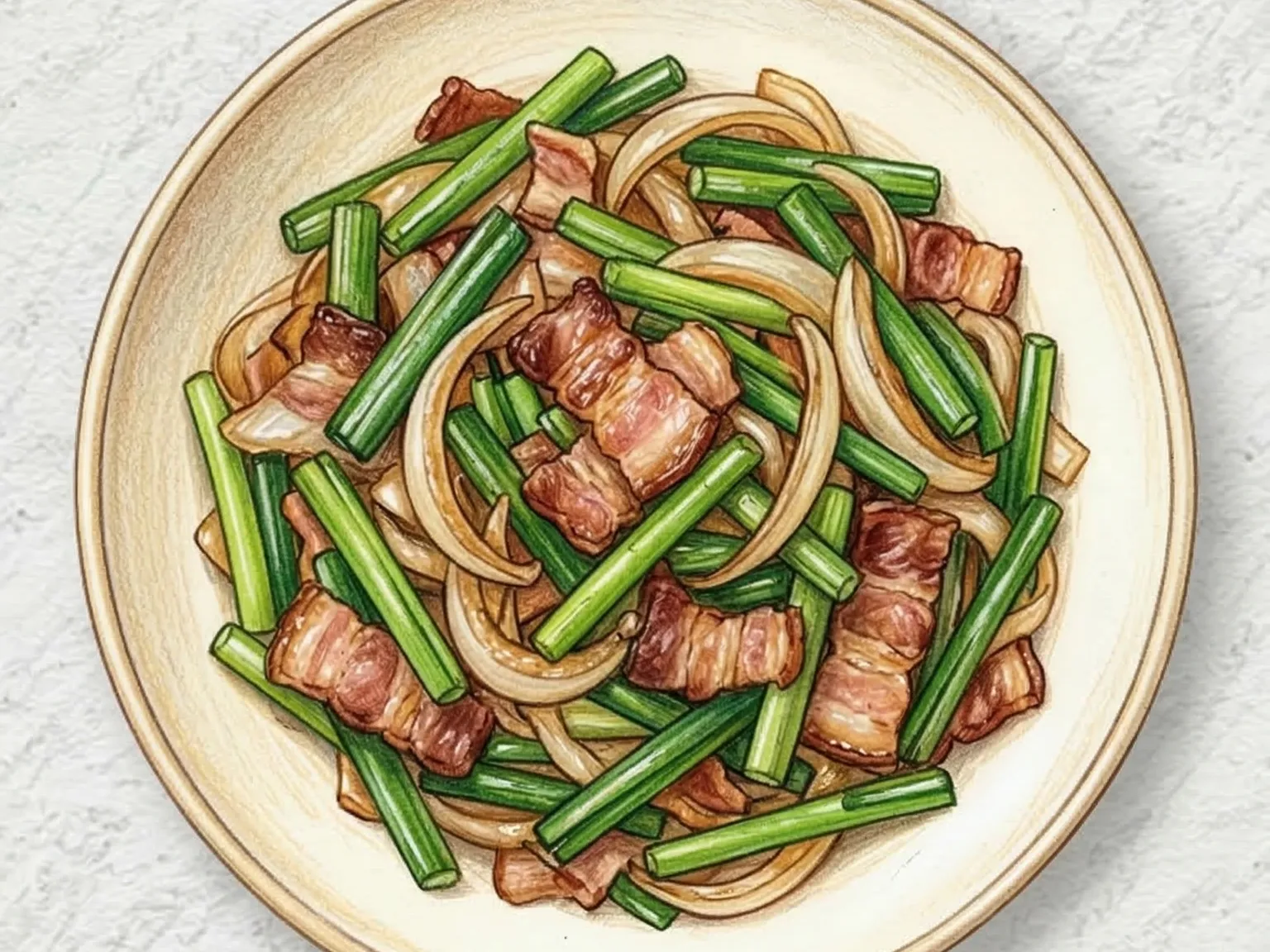
Maneuljjong bacon bokkeum is a side dish built on rendered bacon fat, in which garlic scapes and onion are stir-fried and finished with soy sauce and oligosaccharide syrup for a glossy coat. The bacon's smoky saltiness provides a deep flavor base that requires no additional complex seasoning, and the garlic scapes counter it with a sharp, crisp bite. The syrup creates a thin lacquer on the surface that balances the salt with gentle sweetness. Sesame seeds top the finished dish, and reducing the soy sauce compensates if the bacon runs particularly salty.

Korean Pickled Garlic Scapes
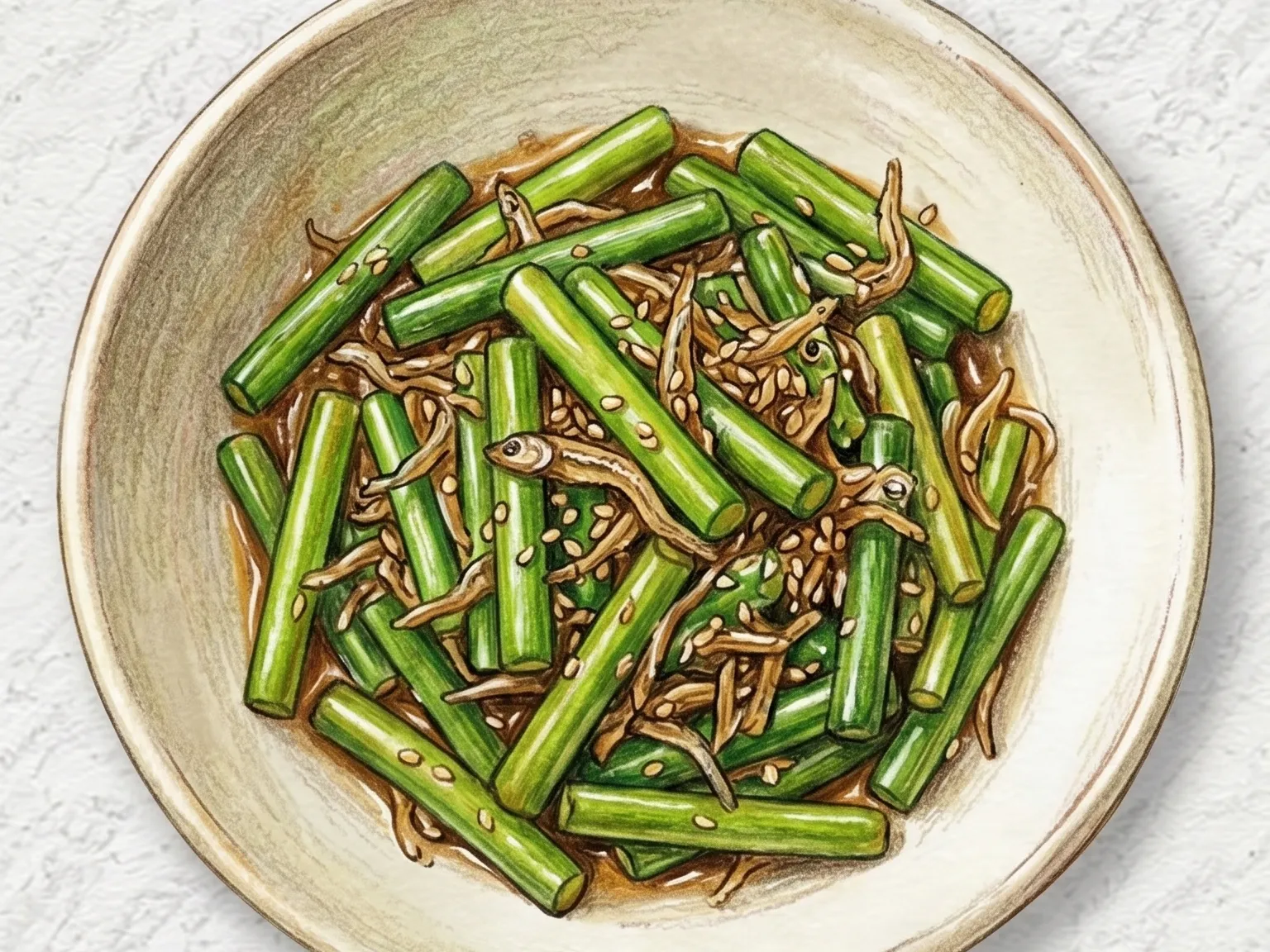
Maneuljjong-jangajji pickles garlic scapes in a boiled soy-vinegar-sugar brine, sharing the same preservation principle as garlic clove jangajji but using the stalks instead of the bulbs. The scapes are cut to 4 cm lengths, packed tightly in a jar, and doused with the brine while still hot - the heat partially cooks the outer surface, giving each piece a clean snap when bitten, unlike the cold-pour method used for whole garlic jangajji. Whole black peppercorns added to the jar release their spicy aroma into the liquid during aging, adding depth beyond the basic salt-acid profile. Though edible after one day, day three is the sweet spot where the seasoning has penetrated enough while the scapes still retain crunch. Reboiling and repouring the brine once extends the preservation window significantly. These pickled scapes serve as a sharp, vinegary counterpoint to rich meat dishes on the Korean table.

Korean Stir-fried Garlic Scapes
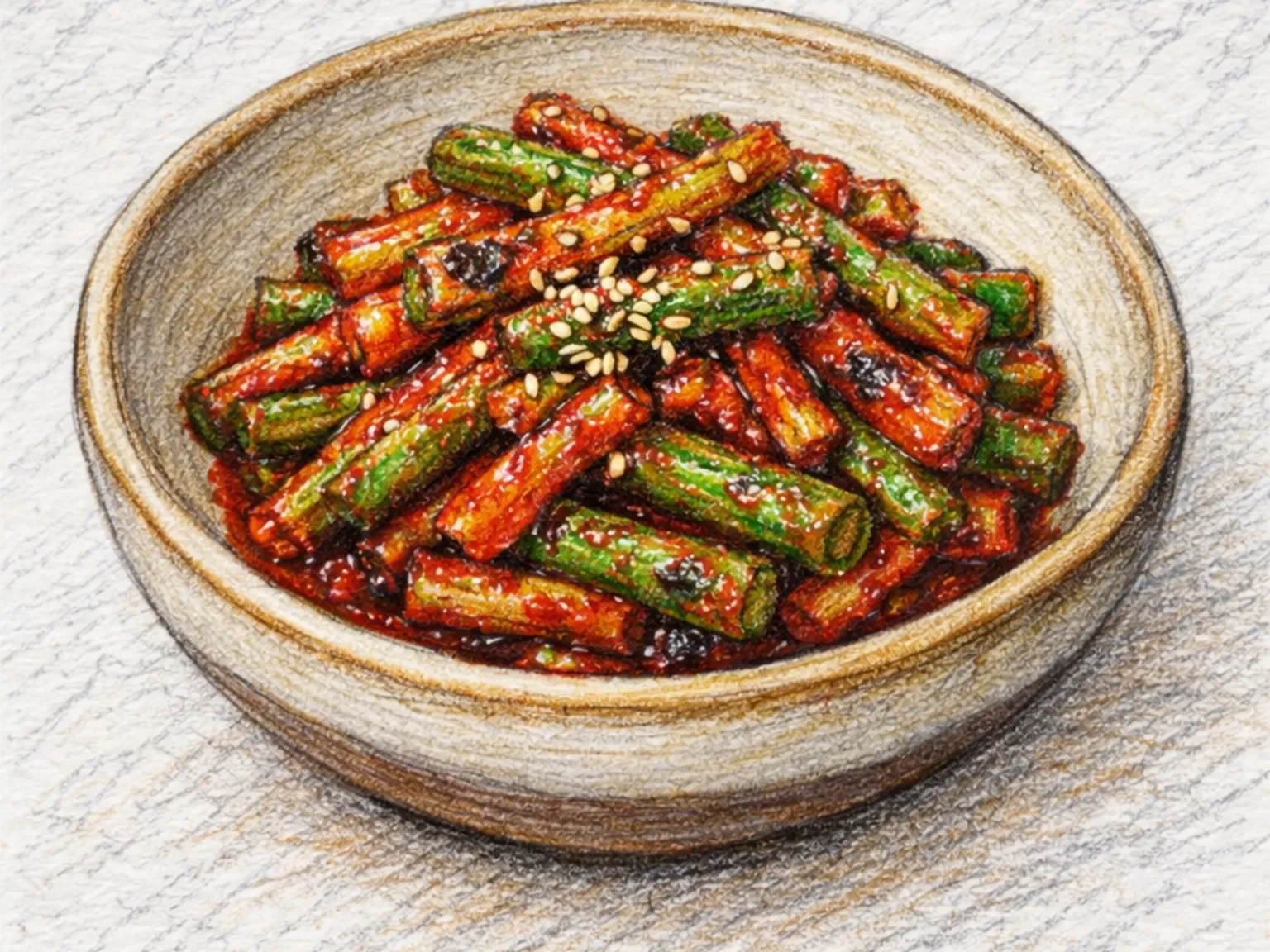
Maneul jong bokkeum is a Korean side dish of garlic scapes cut into 4 cm lengths and stir-fried with onion, then coated in a sauce of gochujang, soy sauce, and oligosaccharide syrup. The garlic scapes' sharp, pungent bite meets gochujang's spicy warmth and the syrup's glossy sweetness, producing a three-way balance of salty, sweet, and hot. Overcooking makes the scapes tough, so pulling them from the heat while they are still bright green is essential. Sesame seeds add a finishing nuttiness, and the dish keeps well refrigerated for several days of banchan rotation.

Korean Stir-Fried Eggplant Banchan
Gaji bokkeum transforms eggplant - a vegetable Koreans have cultivated since the Goryeo period - into a quick, oil-glazed banchan where the cooking speed matters as much as the seasoning. The eggplant is sliced into half-moons, and the pan must be scorching hot before the pieces enter; any hesitation and the eggplant will steam rather than sear, turning it into a soggy mass. High heat with minimal oil produces lightly charred edges while the interior turns silky and almost custardy. Soy sauce, garlic, and sesame oil go in during the final thirty seconds, sizzling against the hot surface and coating each piece in a thin, caramelized layer. The dish has a concentrated, clean umami taste without the heaviness of a braised preparation. Korean home cooks make this as a weeknight banchan precisely because it takes under ten minutes from cutting board to table.