Korean Garlic Scape Clam Stir-fry
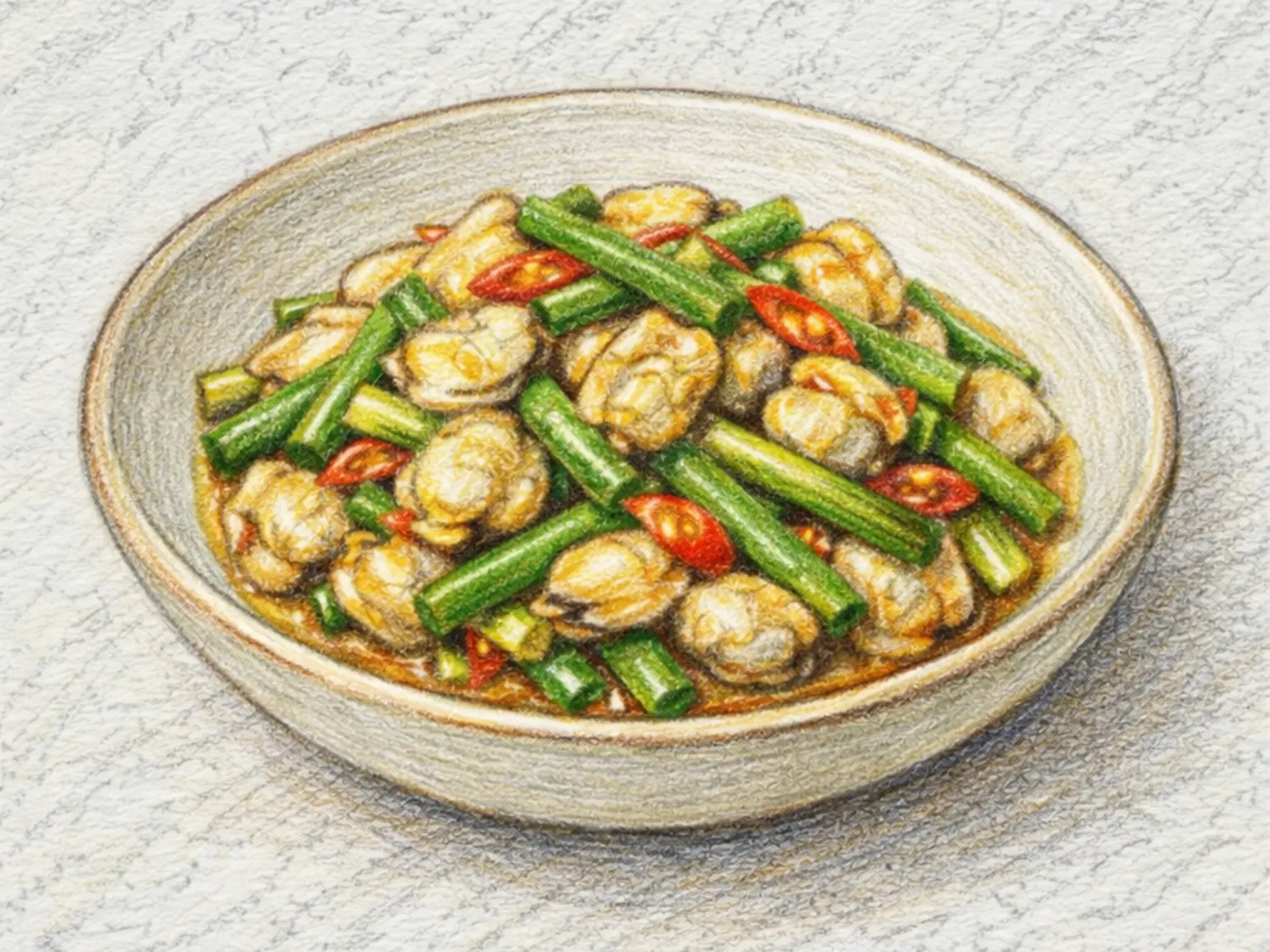
Maneuljjong-jogae-bokkeum is a Korean stir-fry of clam meat and garlic scapes tossed quickly over high heat with soy sauce, oyster sauce, and minced garlic. The clams contribute a briny, oceanic depth that pairs with the salty-sweet seasoning, while the garlic scapes - cut into 4 cm pieces and barely cooked - retain their firm, snappy bite. Diagonally sliced red chili adds a gentle warmth without overwhelming the seafood flavor. The dish cooks in under ten minutes, relying on speed and high heat to keep the clams soft and the scapes crunchy.
Adjust Servings
Instructions
- 1
Cut garlic scapes into 4 cm pieces and slice red chili diagonally.
- 2
Rinse clam meat quickly in salted water and drain well.
- 3
Heat oil and stir-fry minced garlic for 20 seconds.
- 4
Add garlic scapes and stir-fry 3 minutes over medium-high heat.
- 5
Add clam meat, soy sauce, and oyster sauce, then toss quickly for 2 minutes.
- 6
Add red chili and pepper, then stir-fry 30 seconds to finish.
As an Amazon Associate, we may earn from qualifying purchases.
Tips
Nutrition (per serving)
More Recipes

Korean Garlic Scape Bacon Stir-fry
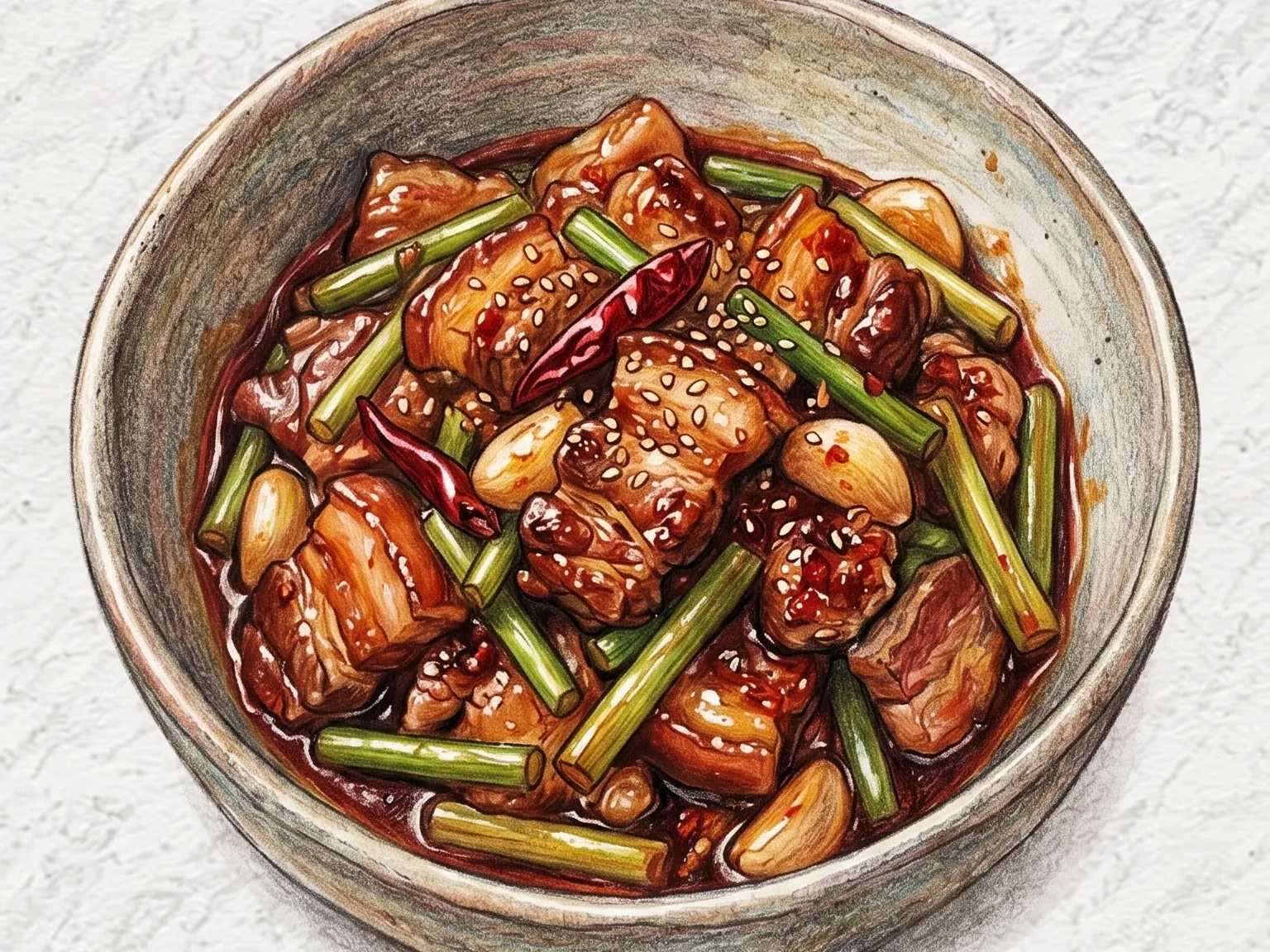
Maneuljjong bacon bokkeum is a side dish built on rendered bacon fat, in which garlic scapes and onion are stir-fried and finished with soy sauce and oligosaccharide syrup for a glossy coat. The bacon's smoky saltiness provides a deep flavor base that requires no additional complex seasoning, and the garlic scapes counter it with a sharp, crisp bite. The syrup creates a thin lacquer on the surface that balances the salt with gentle sweetness. Sesame seeds top the finished dish, and reducing the soy sauce compensates if the bacon runs particularly salty.

Korean Garlic Chive & Clam Stir-fry
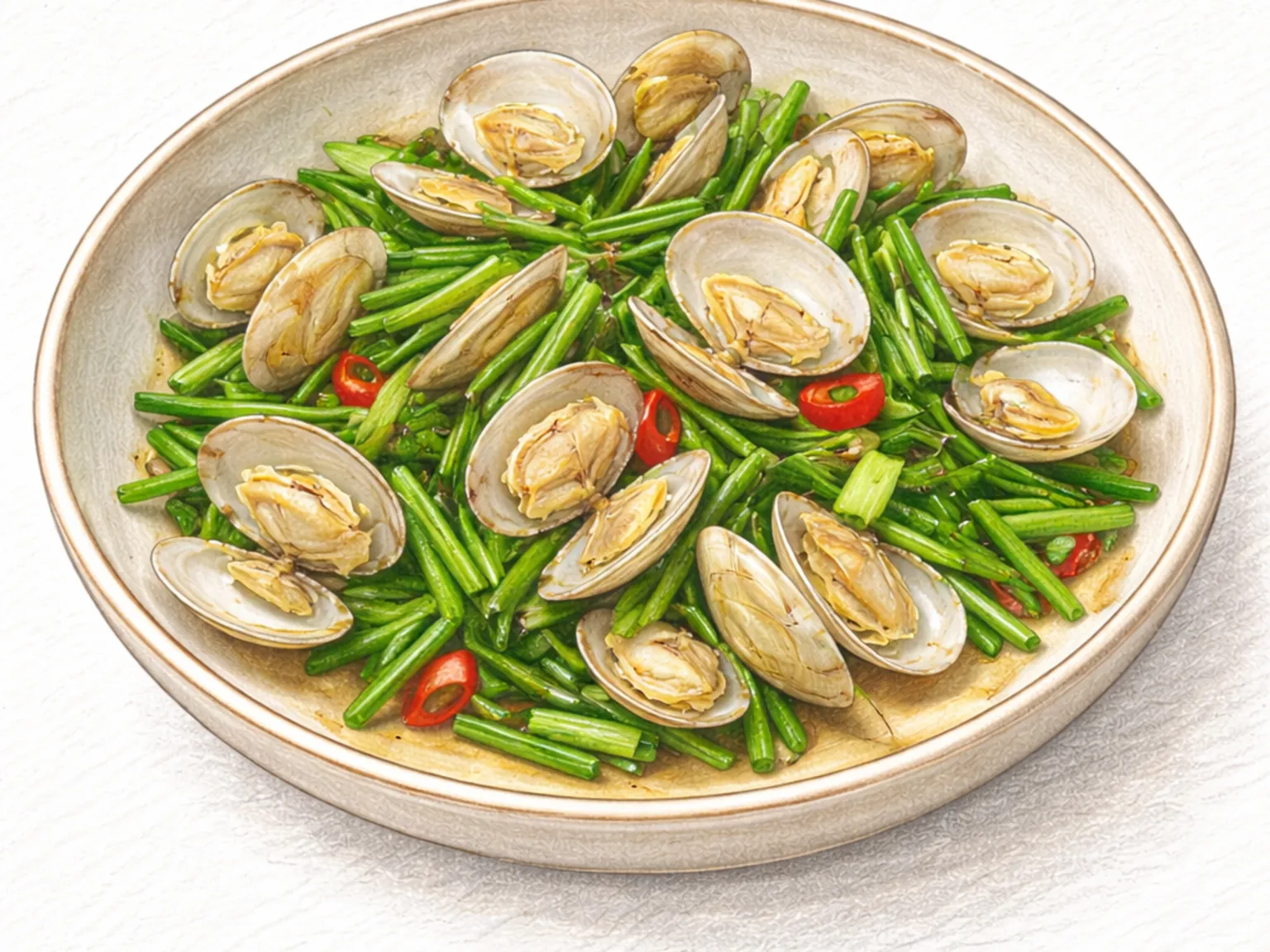
Clams purged in salt water are steamed with rice wine until their shells open, then stir-fried with garlic chives, soy sauce, and oyster sauce. The rice wine strips away any briny off-notes while amplifying the clean oceanic umami, and the liquid the clams release as they open becomes a built-in sauce. Garlic chives go in during the last 40 seconds only; longer exposure to heat wilts them into a stringy mass and disperses their aroma. Sliced red chili contributes more visual contrast than actual spice, and a final drizzle of sesame oil smooths out the flavors. Any clam that fails to open after steaming should be discarded for safety. The dish works equally well as a drinking snack alongside soju or as a protein-rich side at the dinner table.

Korean Abalone & Garlic Stem Stir-fry
Jeonbok-maneuljong-butter-bokkeum quickly stir-fries sliced abalone and garlic scapes in butter, maximizing a rich, nutty aroma. The abalone is cut thin and seared briefly over high heat to keep its firm, bouncy texture, while the garlic scapes stay crisp. Butter provides a creamy base, soy sauce adds a subtle savory note, and black pepper rounds out the fragrance. It is an elegant yet simple way to prepare abalone, well-suited for dinner guests or special occasions.

Korean Oyster Water Parsley Stir-fry
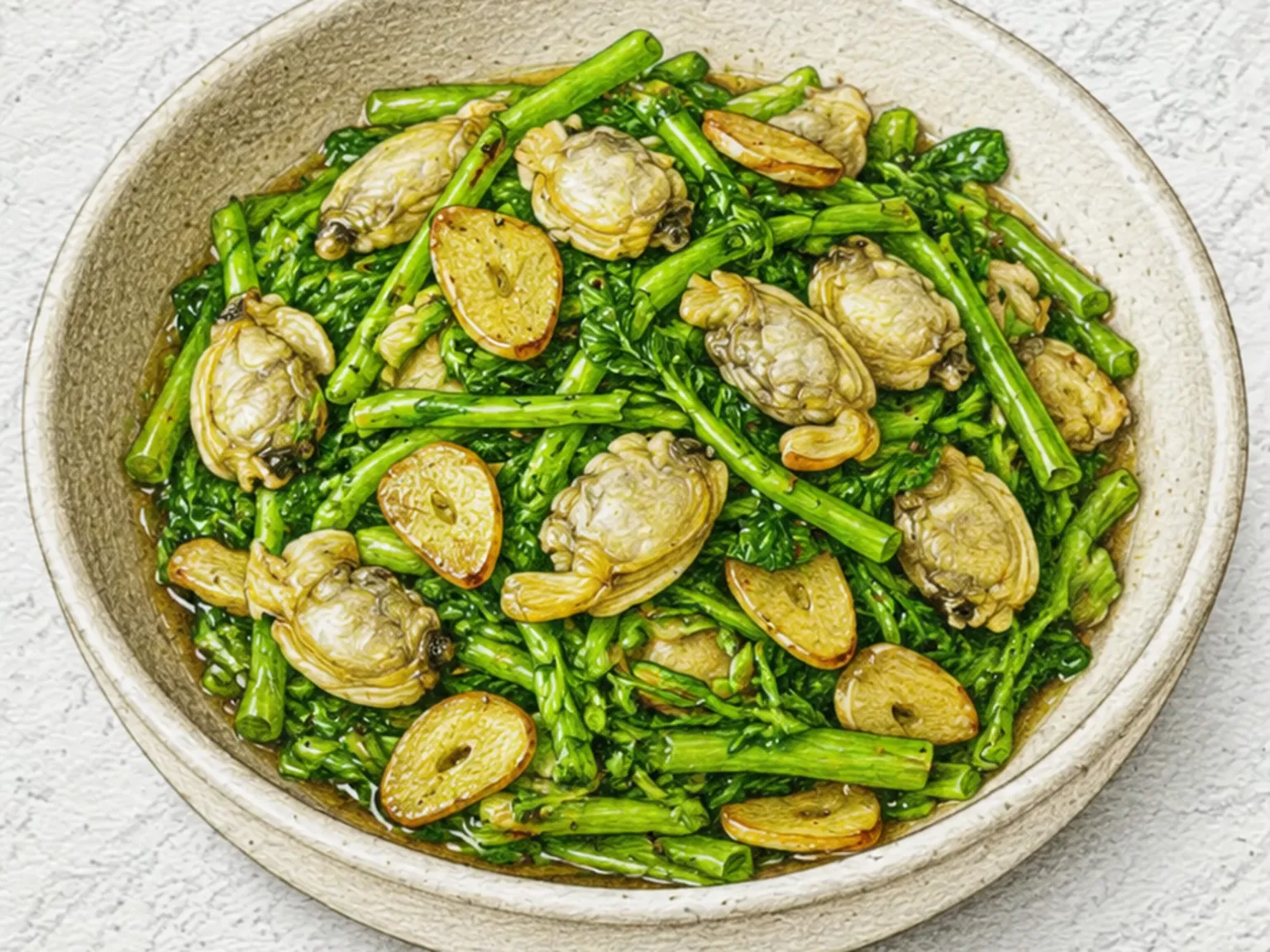
Gul-minari-bokkeum stir-fries plump raw oysters with fragrant water parsley (minari), gochugaru, and light soy sauce over high heat. The oysters cook just enough to firm up while keeping their juicy brine, and the minari retains its crunch and herbal freshness. The briny sweetness of the oysters meets the clean, grassy note of minari, creating a balanced and refreshing dish. It is best prepared in winter when oysters are at their plumpest and most flavorful.

Korean Stir-Fried Garlic Scapes
Maneuljjong-bokkeum is stir-fried garlic scapes - the curling flower stalks cut from garlic plants before they bloom - seasoned with soy sauce and oligosaccharide syrup. Garlic scapes carry the plant's growth energy in a concentrated, milder form: they deliver a gentle garlic fragrance without the sharp bite of the bulb. Cutting into 4 to 5 cm pieces and blanching for thirty seconds softens the outer fibrous skin while keeping the interior crisp. Skipping the blanch and going straight to the pan creates an uneven result - tough outside, undercooked inside. The syrup-and-soy combination builds a sweet-salty glaze on the scape surfaces, and sesame oil is added only after the heat is off to preserve its fragrance. This banchan keeps in the refrigerator for about five days, making it a reliable weekday side dish. Spring through early summer is peak garlic scape season.

Korean Spicy Gochujang Dried Squid Stir-Fry
Jinmichae - shredded dried squid - is a Korean pantry staple prized for its chewy texture and umami that intensifies the longer you chew. This preparation coats the strands in a gochujang glaze, making it one of the most widely kept banchan in Korean refrigerators. Briefly soaking the dried squid in water before squeezing softens the tough fibers and opens them to absorb the sauce. The sauce - gochujang, gochugaru, rice syrup, soy sauce, and garlic - is stir-fried first over low heat to mellow the raw chili edge, then the squid is tossed through quickly. Sesame oil and seeds finish the dish off heat, producing a sweet-spicy coated snack that keeps well for days.