Korean Garlic Scape Anchovy Braise
Quick answer
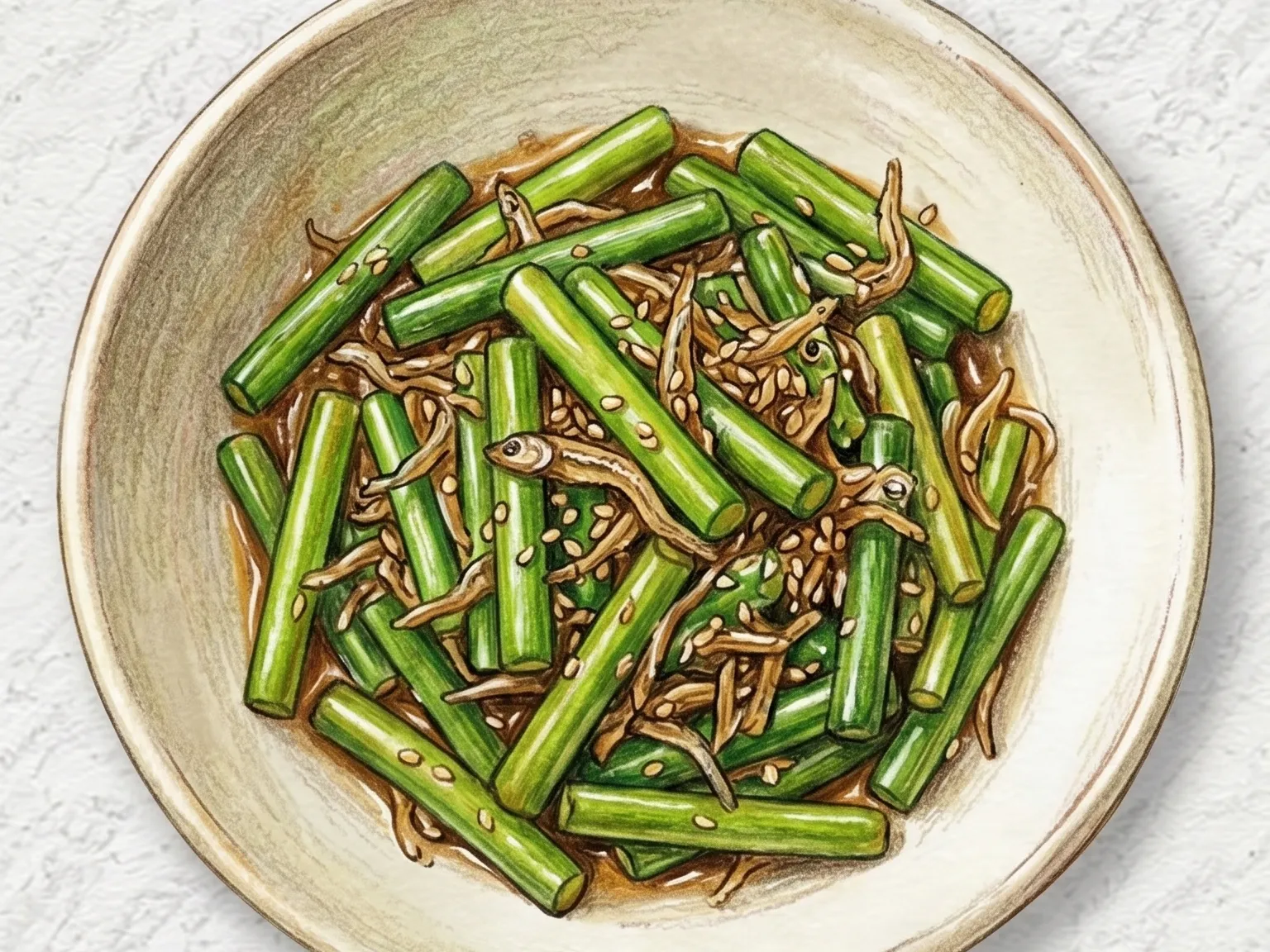
Maneuljjong-myeolchi-jorim is a Korean pantry side dish of garlic scapes and small dried anchovies glazed in soy sauce, oligosaccharide syrup, and sesame oil.
What makes this special
- Maneuljjong-myeolchi-jorim balances glazed garlic scapes with savory, dry-toasted dried anchovies.
- Dry-toasting anchovies 90 seconds removes fishiness before a short braise
- Oligosaccharide keeps the gloss and moisture longer than sugar for packed lunches
Key ingredients
Core cooking flow
- 1 Trim any tough ends from 250 g garlic scapes, then cut them into 4 cm pieces so they cook evenly.
- 2 Heat a dry pan over medium-low heat and toast the anchovies for 1 minute 30 seconds.
- 3 In the same pan, add 120 ml water, 3 tablespoons soy sauce, 2 tablespoons ol...
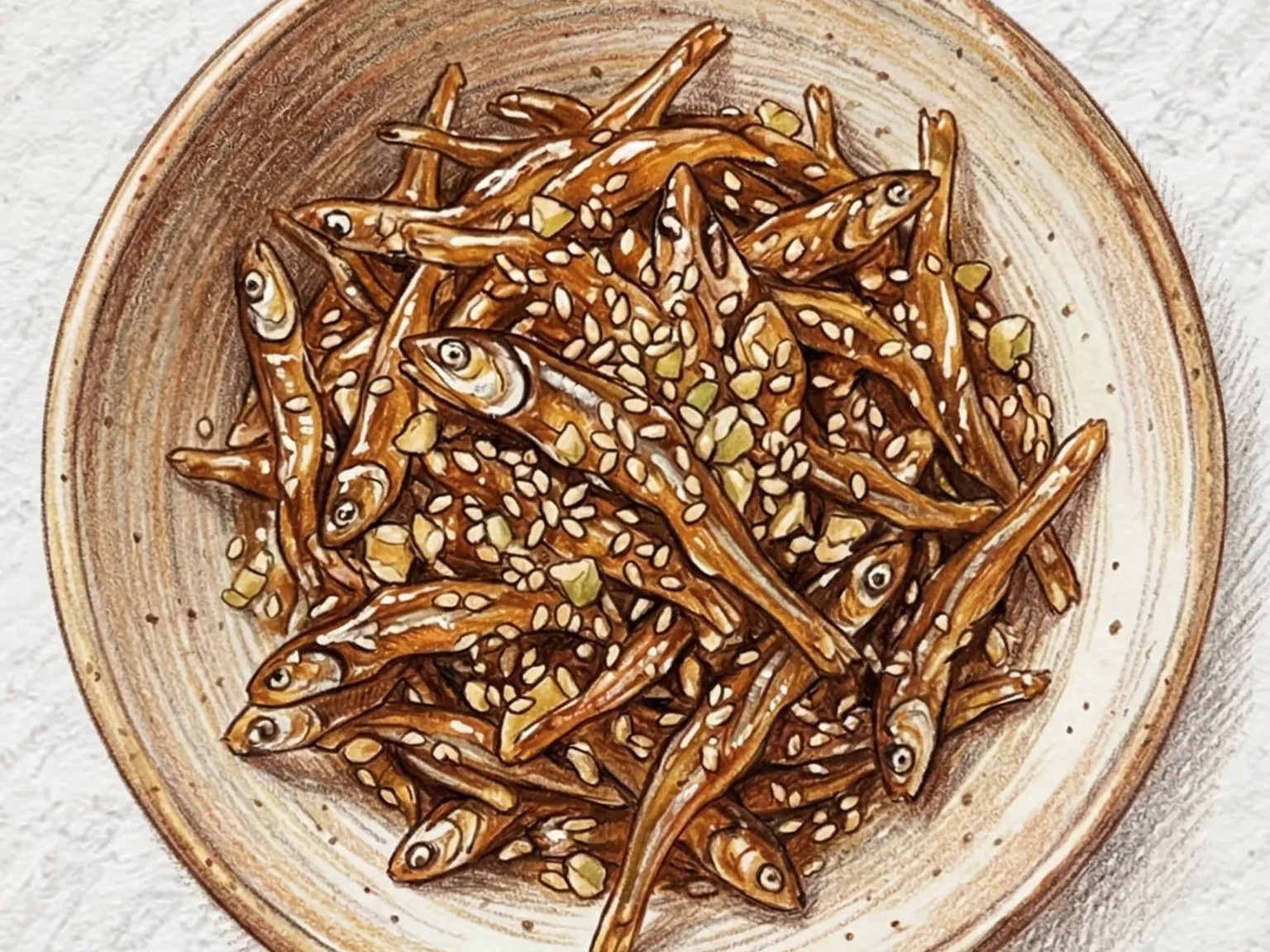
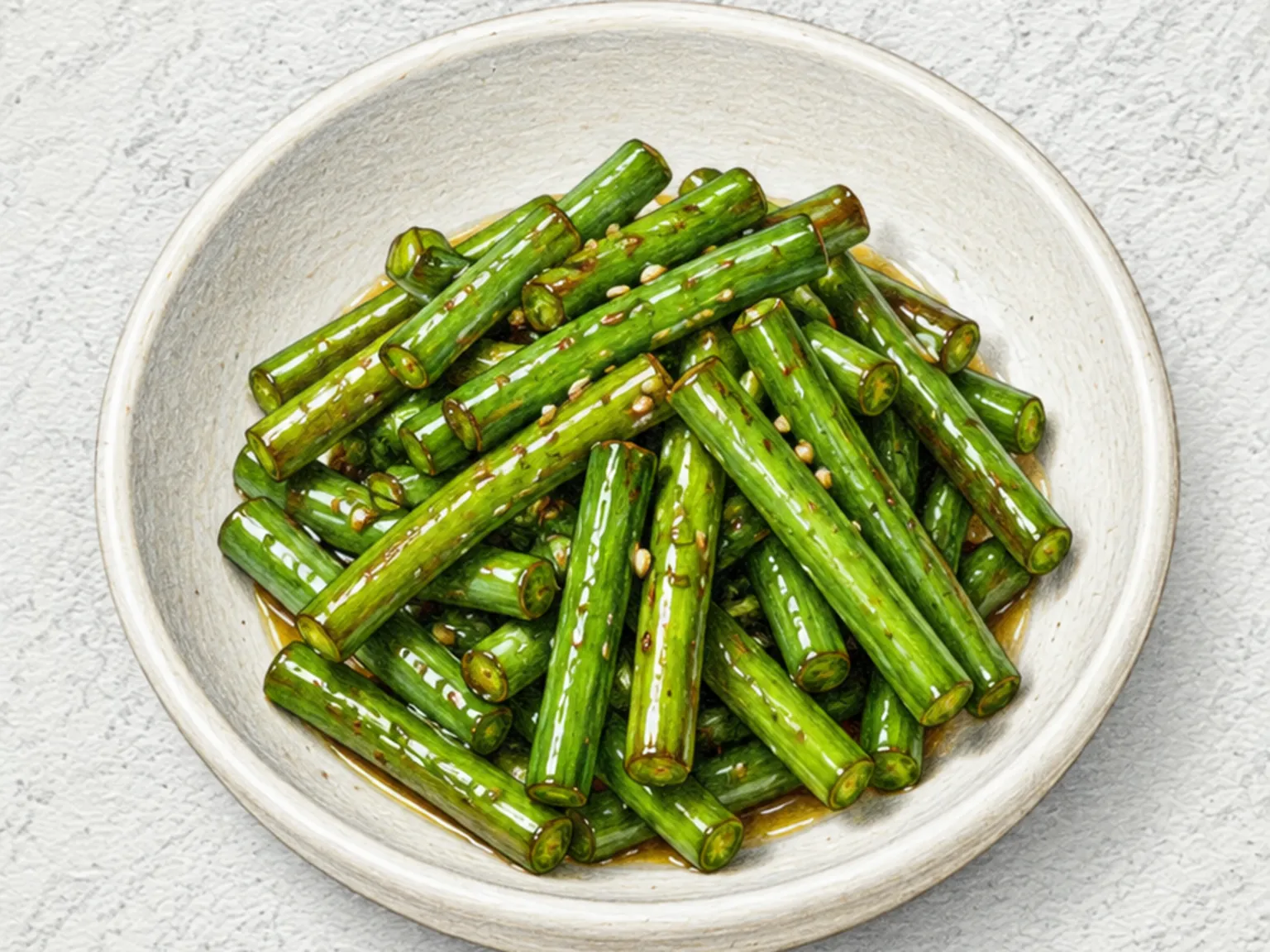
Maneuljjong-myeolchi-jorim is a Korean pantry side dish of garlic scapes and small dried anchovies glazed in soy sauce, oligosaccharide syrup, and sesame oil. The anchovies are coated evenly as the seasoning heats around them, building a sweet-salty shell that deepens into nuttiness with each bite. Garlic scapes are cut into short pieces and stir-fried directly in the sauce without blanching, which keeps them snappy rather than soft. Oligosaccharide syrup holds its shine and moisture longer than plain sugar, and sesame oil is added only at the very end to preserve its aroma. The finished dish keeps for well over a week under refrigeration, making it a reliable weekly batch cook. It travels well in lunchboxes, and spooned over hot white rice the glaze soaks into the grains and brings the whole bowl together.
Instructions
Read the steps as a cooking flow: prep, heat, seasoning, doneness control, and finish.
- 1Heat
Trim any tough ends from 250 g garlic scapes, then cut them into 4 cm pieces so they cook evenly.
Shake 70 g small dried anchovies in a sieve to remove powdery crumbs that can make the glaze gritty.
- 2Finish
Heat a dry pan over medium-low heat and toast the anchovies for 1 minute 30 seconds.
As soon as they smell nutty and feel drier, transfer them to a plate so they do not harden.
- 3Control
In the same pan, add 120 ml water, 3 tablespoons soy sauce, 2 tablespoons oligosaccharide syrup, and 1 tablespoon minced garlic.
Simmer over medium heat for 2 minutes, stirring until the syrup loosens and the sauce bubbles evenly.
- 4Control
Add the garlic scapes and cook over medium heat for about 4 minutes, turning them often through the sauce.
They should turn brighter green and bend slightly, while the centers still feel crisp when pressed.
- 5Heat
Return the toasted anchovies and lower the heat to medium-low.
Braise briefly for 2 to 3 minutes, folding gently until the glaze clings to the anchovies and scapes, without boiling long enough to toughen them.
- 6Finish
When only a little glossy sauce remains on the pan bottom, turn off the heat.
Add 1 tablespoon sesame oil and 1 teaspoon sesame seeds, toss for 30 seconds, then serve warm or cool before refrigerating.
After the steps
Pick a recipe that fits this dish.
Continue with shared ingredients, meal pairings, or a similar method.
Recipes That Go Well With This
More Steamed →Based on shared ingredients and meal pairing
Korean Anchovy & Shishito Braise
Myeolchi kkwari jorim is a Korean side dish of dry-toasted small anchovies and shishito peppers glazed in a sweet soy sauce with corn syrup and cooking wine. Toasting the anchovies first drives off any fishy smell and brings out their nuttiness, while the peppers are stir-fried in oil to release a mild, lingering heat. The glaze coats everything in a shiny, sweet-salty finish, and sesame oil with sesame seeds add a final toasted aroma. This banchan tastes even better the next day after the sauce has fully settled in, making it one of the most reliable lunchbox staples in Korean home cooking.
Korean Braised Burdock and Konjac
Ueong gonyak jorim is a low-calorie Korean braised side dish of diagonally sliced burdock root and bite-size konjac in soy sauce with oligosaccharide syrup. The burdock is soaked in vinegar water to remove astringency, and the konjac is blanched then dry-toasted briefly to minimize its neutral odor. Adding the syrup once the liquid has reduced by half creates a gentle gloss and softens the salt. Sesame oil and sesame seeds finish the dish with a toasted note. Despite using just a handful of inexpensive ingredients, the contrasting textures of crunchy burdock and bouncy konjac make this banchan more interesting than the short ingredient list suggests.
Korean Mushroom Japchae (Shiitake Glass Noodle Stir-Fry)
Beoseot japchae replaces beef with shiitake mushrooms as the primary source of savory depth, making it a staple of Buddhist temple cuisine and vegetarian tables alike. Sweet potato noodles are soaked and boiled, then rinsed in cold water immediately to lock in a firm, springy texture. Shiitake, spinach, carrot, and onion are each cooked separately - their moisture levels and heat tolerances differ enough that combining them prematurely flattens every component. Soy sauce, sugar, minced garlic, and sesame oil bring the noodles and vegetables together, and the finished dish rests for ten minutes so the seasoning penetrates the noodles evenly. The result is a japchae where the mushroom carries genuine umami weight without any meat.
Korean Braised Anchovy Side Dish
Myeolchi-jorim simmers tiny dried anchovies in soy sauce, rice syrup, and garlic into a moist, glazed banchan that contrasts fundamentally with stir-fried anchovy preparations. Where bokkeum chases crispness by cooking over high heat with minimal liquid, jorim pursues the opposite - anchovies braise in a seasoned liquid on low heat until they absorb it from the inside out, becoming pliant and saturated with sweet-salty flavor all the way through their flesh. A one-minute dry toast in a bare pan removes any residual fishiness before soy sauce, syrup, minced garlic, and water go in together, simmering uncovered for ten minutes while the liquid steadily reduces. As the sauce thickens, a sticky dark glaze wraps around each anchovy; biting one releases a rush of seasoned juice from within rather than the crunch of a dehydrated fish. Sesame seeds and sesame oil stirred in off heat add a final layer of warmth and nuttiness. Once fully cooled, the reduced sauce thickens further into an almost jelly-like coating that holds the anchovies together in a satisfying cluster. Stored in an airtight container in the refrigerator, myeolchi-jorim keeps well for over a week and the flavor continues to deepen as the anchovies sit in the congealed glaze.
Serve with this
Korean Ssamjang Hwe Deopbap
This variation on hoe-deopbap replaces the standard cho-gochujang with a dressing of ssamjang mixed with vinegar and sesame oil, shifting the dominant flavor away from sweet heat and toward fermented bean depth. The doenjang component in ssamjang works against the rawness of the fish rather than masking it with chili, producing a rounded, earthy complexity that deepens with each bite. Vinegar cuts through ssamjang's thick, pungent weight and introduces a clean acidity that keeps the overall flavor from feeling heavy. Flounder sashimi is cut into bite-sized pieces and kept refrigerated, while the rice is served at room temperature so the two elements neither clash nor blend into an indistinct warmth. Julienned carrot and perilla leaves provide a crisp, juicy resistance that contrasts directly with the chewy elasticity of the fish. Dressing the vegetables in advance draws out moisture that would soften the rice, so all the components are placed in the bowl separately and tossed together only at the moment of eating to preserve every texture.
Korean Oxtail Soup
Sokori-guk demands patience - oxtail pieces are soaked in cold water to draw out blood, then placed in a heavy pot with enough water to cover and simmered for at least three to four hours. During that long, slow cook, collagen buried in the joints and connective tissue dissolves into the liquid, producing a broth so rich in gelatin that it sets into a solid block when refrigerated. Skimming fat and foam at regular intervals keeps the final broth a clean, milky white with no greasy residue. The meat, once it slides easily off the bone, is torn along the grain into shreds that are impossibly soft, while the tendon segments offer a pleasantly bouncy chew. Seasoning is deliberately minimal - coarse salt, black pepper, and sliced scallion - because the bones themselves have already contributed all the depth the soup needs. Served with a bowl of steamed rice and a side of kkakdugi, the cubed radish kimchi's sharp tang provides the only counterpoint this quietly powerful broth requires.
Korean Soy Pickled Asparagus
This pickle applies the Korean jangajji tradition - soy-brine preservation - to asparagus, a vegetable that arrived in Korean cooking relatively recently but now appears freely across banchan preparations. The asparagus is blanched for just 20 seconds to fix its color and soften the fibrous outer layer, then immediately shocked in ice water to lock in a vivid green and a firm, snapping texture. Packed upright in a sterilized jar, the spears are covered with a boiling brine of soy sauce, rice vinegar, sugar, and water that partially cooks the surface while leaving the core crisp and springy. Within 24 hours the brine penetrates enough for the pickle to be edible, but the flavor peaks at three days when the sweet-sour-salty balance has fully developed. Unlike most jangajji that rely on root vegetables or dense greens like radish and napa cabbage, asparagus brings a distinctive grassy, almost herbal note to the preserved format - a quality that stands on its own without the weight of fermentation. Keeps refrigerated for two weeks, and works well alongside rich or oily dishes where its acidity provides contrast.
Similar recipes
Korean Soy-Braised Whole Garlic
Peeled whole garlic cloves are simmered in a mixture of soy sauce and corn syrup until they turn glossy and deeply seasoned throughout. Raw garlic's sharp, pungent bite mellows completely during the slow braising, transforming into a gentle sweetness that merges with the soy sauce's salinity. The corn syrup reduces alongside the soy sauce, forming a lacquer-like glaze that clings to each clove and catches the light. Low heat is essential: cooking too fast browns the exterior while leaving the core hard and under-seasoned. With patience, the garlic softens to a texture resembling a roasted potato, yielding easily when pressed with chopsticks yet holding its shape on the plate. A final drizzle of sesame oil seals the surface with a warm, nutty aroma that completes the balance of salty, sweet, and rich. The finished jorim keeps well under refrigeration for over a week, making it a practical banchan to prepare in advance.
Korean Soy-Braised Baby Potatoes
Algamja ganjang-jorim is a Korean banchan of baby potatoes braised in a soy-sugar glaze, a dish so simple in its ingredients - soy sauce, sugar, corn syrup, garlic, and a handful of small potatoes - that it has persisted in home cooking across generations. The potatoes are parboiled whole first to partially cook the starchy exterior, then transferred into the seasoning liquid and simmered over low heat as the sauce reduces. As the liquid evaporates, a dark amber lacquer forms around each potato while the interior stays dense and floury. Keeping the lid off and gently shaking the pan rather than stirring with a utensil allows the coating to build evenly without breaking the potatoes apart. Sesame oil and sesame seeds go in at the end when the sauce has thickened to a glaze, adding a roasted fragrance to the finish. Refrigerating overnight deepens the penetration of the soy seasoning into the center, and the dish keeps for close to a week - practical enough to make in a single batch for the whole week.
Korean Soy-Braised Deodeok Root
Deodeok-jorim is a Korean braised banchan made from deodeok root simmered in soy sauce, rice syrup, garlic, and sesame oil until each piece takes on a glossy, lacquered coating. The root's pronounced bitter-herbal aroma softens considerably as the sweet-salty glaze penetrates during cooking, while the interior stays dense and pleasantly chewy throughout. A single green chili stirred in near the end contributes a restrained background heat, and toasted sesame seeds with a final drizzle of sesame oil add a nutty dimension on top. Deodeok is a foraged mountain root prized for its earthy, slightly resinous character, and this preparation tames that wild quality just enough to make it approachable as a daily side dish. Paired with other vegetable banchan, it anchors the kind of traditional Korean table that prioritizes vegetables over protein.