Mango Sticky Rice
Quick answer
Mango sticky rice is Thailand's most beloved dessert, built on nothing more than three ingredients - glutinous rice, coconut milk, and ripe mango - yet delivering a compl...
What makes this special
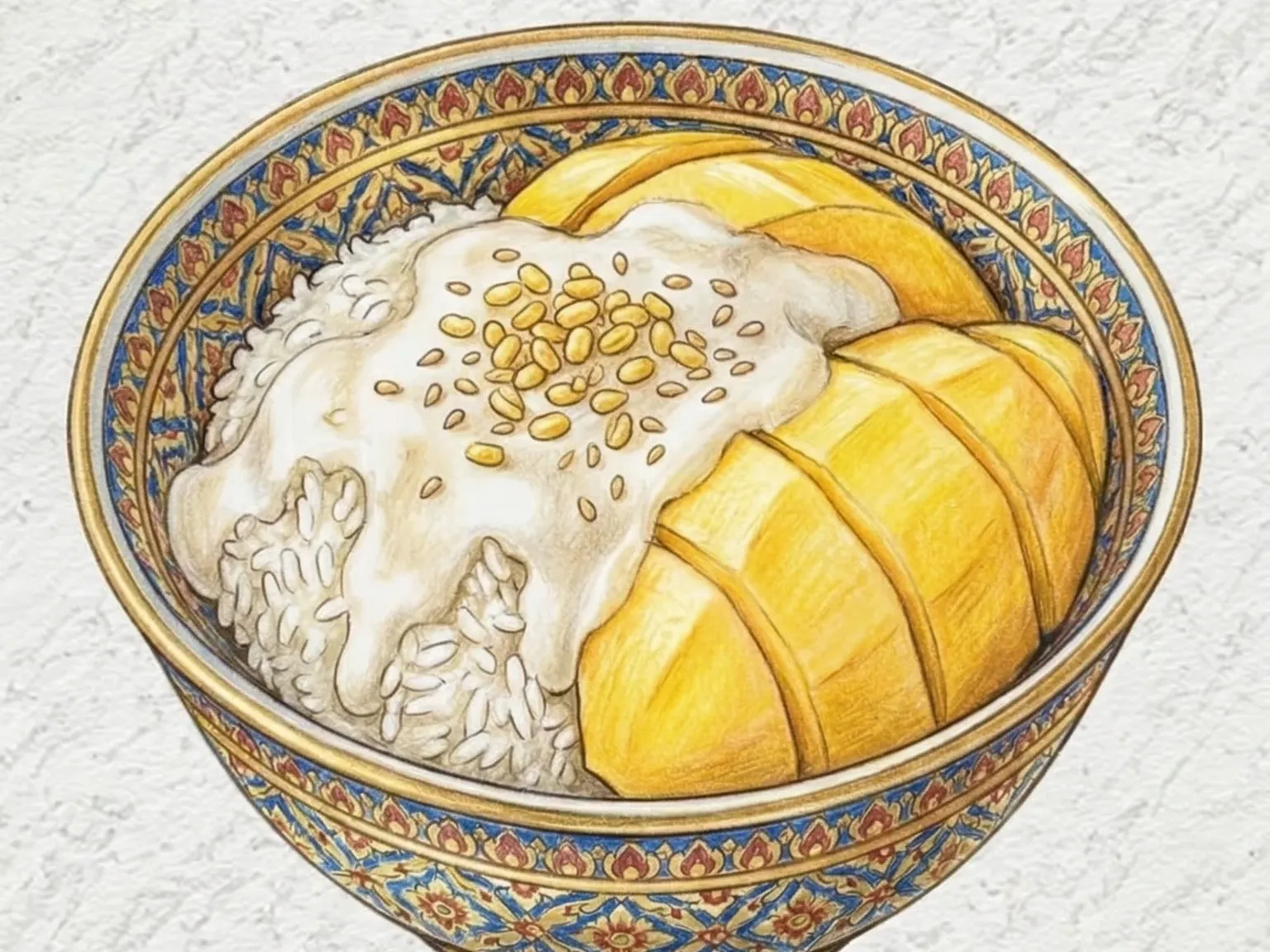
- Glutinous rice soaked in sweetened coconut milk sits beneath sliced ripe mango in Mango Sticky Rice.
- Sticky rice soaked 6+ hours then steamed for maximum chew
- Two-thirds of coconut milk absorbed into rice before serving
Key ingredients
Core cooking flow
- 1 Rinse 300g glutinous rice several times until the water runs mostly clear, t...
- 2 Drain the soaked rice in a sieve for about 10 minutes so it is wet but not dripping.
- 3 Combine 300ml coconut milk, 60g sugar, and 0.5 tsp salt in a small saucepan.
Mango sticky rice is Thailand's most beloved dessert, built on nothing more than three ingredients - glutinous rice, coconut milk, and ripe mango - yet delivering a complexity that belies its simplicity. The rice is steamed, then soaked in warm coconut milk sweetened with sugar and tempered with a pinch of salt, which keeps the dish from being one-dimensionally sweet. Slices of ripe mango, ideally the fragrant Nam Dok Mai variety, are laid alongside the warm rice. A drizzle of thickened coconut cream on top ties everything together, and a scattering of toasted mung beans or sesame seeds adds a final nutty note. The dish is at its peak between April and June when mangoes are at their sweetest.
Instructions
Read the steps as a cooking flow: prep, heat, seasoning, doneness control, and finish.
- 1Control
Rinse 300g glutinous rice several times until the water runs mostly clear, then cover it with plenty of fresh water.
Soak for at least 6 hours, or overnight if possible, so the grains hydrate evenly before steaming.
- 2Step
Drain the soaked rice in a sieve for about 10 minutes so it is wet but not dripping.
Spread it in the steamer in an even layer, then steam over strong heat for 20 to 25 minutes until the center feels tender.
- 3Control
Combine 300ml coconut milk, 60g sugar, and 0.5 tsp salt in a small saucepan.
Stir over medium-low heat until the sugar dissolves, and turn off the heat as soon as small bubbles appear around the edge.
- 4Control
Pour two-thirds of the warm coconut sauce over the hot rice and fold gently with a spatula.
Cover and rest for 10 to 15 minutes, turning it once midway so the grains absorb the sauce evenly.
- 5Control
Warm the remaining sauce over low heat for 1 to 2 minutes, just to keep it pourable.
Peel 2 ripe mangoes, slice around the pits into thick pieces, and handle them gently so the juicy flesh stays neat.
- 6Finish
Spoon the coconut rice into serving bowls and arrange the mango slices neatly beside it.
Drizzle the remaining sauce over the rice, sprinkle with 1 tsp sesame seeds if using, and serve while the rice is still warm.
After the steps
Pick a recipe that fits this dish.
Continue with shared ingredients, meal pairings, or a similar method.
Recipes That Go Well With This
More Asian →Based on shared ingredients and meal pairing
Massaman Curry (Thai-Muslim Mild Chicken Potato Peanut Coconut Curry)
Massaman curry stands apart from other Thai curries with its mild, sweet-savory character and its roots in the Muslim communities of southern Thailand, where trade routes from Persia and India brought cinnamon, cardamom, cloves, and star anise into the local kitchen long before chili became dominant. These whole spices simmer in the coconut milk base, lending an aromatic warmth that is closer to a slow-braised stew than to the fiery curries Thailand is more widely known for. Chicken thighs, whole shallots, potatoes, and roasted peanuts braise together until the potatoes begin to break apart and naturally thicken the sauce, absorbing the spiced oil along the way. Tamarind paste and palm sugar steer the richness toward a gentle tang and sweetness rather than a heavy or one-dimensional creaminess. The result is a deeply layered curry that uses almost no chili heat, making it one of the most approachable dishes in the Thai repertoire for those unaccustomed to spice while still rewarding more experienced palates with its complexity.
Panang Curry (Thai Thick Peanut Coconut Curry)
Panang curry is the thickest and richest member of the Thai curry family, distinguished by its concentrated coconut base and the addition of ground peanuts. The cooking begins by splitting coconut cream in a hot pan until the fat separates, then frying the curry paste in that fat to bloom its aromatics. The remaining coconut milk is added gradually and simmered until the sauce reduces to a spoonable consistency. Peanut butter or finely ground roasted peanuts give it a subtle nuttiness that sets it apart from green or red curries. Fish sauce provides depth, palm sugar brings sweetness, and torn kaffir lime leaves contribute a bright citrus fragrance.
Thai Iced Tea
Thai iced tea is a boldly flavored, sweet milk tea made by steeping black tea leaves with cardamom over low heat for five minutes to produce a deeply concentrated brew. The intentionally strong extraction is necessary because the ice slowly dilutes the drink as it sits, and a weak brew would taste watery long before the last sip. Sugar is dissolved while the tea is still hot, then the liquid is cooled fully before being poured over a glass packed with ice. Milk and condensed milk are poured gently on top without stirring to create a visual gradient of white layered over amber, and the drink is mixed at the table before drinking. Once combined, the cardamom's floral spice and gentle bitterness weave through the sweetened black tea base to produce a complex flavor that goes beyond simple sweetness. Adjusting the amount of condensed milk is the easiest way to control how sweet the finished drink turns out.
Khanom Jeen Nam Ya (Thai Fermented Rice Noodles in Fish Curry)
Khanom jeen nam ya is a traditional Thai dish of fermented rice noodles bathed in a thick, fragrant curry sauce built from fish and coconut milk. White fish fillets are poached with lemongrass and kaffir lime leaves, then flaked and folded into a simmering pot of red curry paste and coconut milk. The fish dissolves into the sauce, lending body and a subtle marine sweetness that balances the heat of the curry. Fish sauce sharpens the salt, and palm sugar rounds off the edges. The finished sauce is ladled generously over coiled bundles of the thin, slightly sour fermented noodles. A spread of raw garnishes - bean sprouts, morning glory, green beans, shredded cabbage, and fresh chili - accompanies each serving, letting diners customize texture and freshness with every bite. The dish traces its origins to royal Thai cuisine but is now a common sight at market stalls across the country.
Serve with this
Thai Drunken Noodles
Pad kee mao, or drunken noodles, is a Thai stir-fried noodle dish where wide rice noodles are wok-tossed with chicken, garlic, fresh chili, and Thai basil over very high heat. The noodles are soaked briefly in lukewarm water until pliable but not soft. Garlic and chili go into the smoking-hot wok first to release their aroma, followed by sliced chicken thigh. Onion and bell pepper are added next and stir-fried quickly to keep them crisp. Fish sauce delivers briny umami while dark soy sauce darkens the noodles and adds a subtle sweetness. Thai basil is folded in only after the heat is turned off, so its anise-like fragrance stays intact rather than cooking away. Maintaining intense wok heat throughout is critical - too low and the noodles steam instead of sear.
Som Tam Thai (Thai Green Papaya Salad)
Som tam Thai shreds green papaya into thin strips and pounds them in a mortar with Thai chilies, palm sugar, lime juice, and fish sauce, bruising the fibers just enough to let the dressing seep in while keeping the crunch intact. The pounding technique drives flavor deeper than simple tossing, creating a salad where each strand carries the full range of sweet, salty, sour, and spicy in a single bite. Palm sugar's dark caramel sweetness, fish sauce's fermented brine, the sharp brightness of lime, and the direct burn of chili hold each other in a balance that defines the dish. Roasted peanuts scattered on top add a nutty crunch to finish. Without a mortar, a large bowl and a rolling pin work as a substitute by applying light pressure to bruise the papaya without crushing it. Halved cherry tomatoes pounded in alongside the papaya release their juice into the dressing and contribute a natural sweetness and extra moisture.
Korean Sesame Oil Abalone Porridge
Both abalone flesh and innards are used together with a generous two tablespoons of sesame oil to maximize nuttiness in this porridge. The innards carry a concentrated brininess unique to abalone, and sauteing them with minced garlic in sesame oil infuses the fat with both marine and roasted flavors simultaneously, forming the aromatic foundation for the entire pot. Soaked rice is stirred into that same seasoned oil and cooked until each grain turns translucent, a step that coats the starch in fat and gives the porridge a fuller, rounder flavor. Water is then added and the mixture simmers for 25 minutes while the grains slowly dissolve their starch into a naturally thick consistency. Stirring regularly throughout this stage prevents the rice from settling and scorching on the pot floor. Soup soy sauce and salt are added at the finish, their saltiness anchoring the nuttiness of the sesame oil rather than competing with it. Chopped chives provide both color and a light onion fragrance. An extra drizzle of sesame oil just before serving deepens the aroma and gives the surface a subtle sheen.
Similar recipes
Thai Red Duck Curry (Thai Coconut Milk Red Curry with Crispy Duck)
Thai red duck curry marries the deep, fatty richness of duck breast with the pungent heat of red curry paste, all smoothed by coconut milk into a velvety, rust-colored sauce. The duck is cooked skin-side down first without any added oil, rendering its fat and crisping the skin before being sliced into bite-sized pieces. The curry paste is fried in a separate pot until fragrant, then coconut milk is added gradually and seasoned with fish sauce and palm sugar to achieve a balance of salty, sweet, and spicy. Bamboo shoots and red bell pepper are simmered in the sauce, the shoots providing a snappy crunch and the pepper a mild sweetness that complements the duck. Thai basil is stirred in at the very end, wilting just enough to release its distinctive aroma without losing its color. The finished curry is substantial and aromatic, with each serving delivering layers of flavor from the rendered duck fat, the fermented chili paste, and the coconut base.
Pad Thai
Pad thai is Thailand's most widely recognized stir-fried noodle dish, centered on a sauce made from tamarind paste, fish sauce, and sugar that balances sweet, sour, and salty flavors in every bite. The proportion of these three ingredients is what determines the character of the final dish, and adjusting them even slightly shifts the balance noticeably. Dried rice noodles soak in lukewarm water for twenty minutes until they are pliable but still firm enough to hold up under high heat without becoming mushy. Firm tofu is pan-fried first until golden on all sides, establishing a nutty, textured base, then shrimp are added and pushed to the side as soon as they turn pink. The eggs are scrambled in the cleared center of the pan rather than mixed in with everything else, which allows them to set into thin, irregular sheets that distribute evenly through the noodles when tossed. Adding the soaked noodles and sauce over high heat and tossing quickly causes the noodles to absorb the sauce rapidly, developing a glossy, amber-toned coating. Bean sprouts stirred in at the very end keep their crunch, coarsely ground peanuts provide a roasted, brittle texture, and a squeeze of fresh lime just before eating introduces a bright acidity that sharpens the whole dish.
Shrimp Mango Lime Salad
Shrimp mango lime salad is a Thai-style dish that combines briefly poached shrimp with ripe mango, cucumber, red onion, and roughly chopped cilantro, dressed with lime juice, fish sauce, and olive oil. The shrimp go into boiling water for exactly two minutes, which is just long enough to cook them through while keeping their natural snap; any longer causes the proteins to contract and the texture turns from tender to rubbery. Fish sauce contributes a fermented, savory depth that amplifies the shrimp's briny character, while lime's sharp acidity slices through the mango's sweetness and brings the dressing into balance. Thinly sliced red onion adds a raw, peppery heat that creates tension between the sweet fruit and the savory seafood, and cilantro releases a distinctive herbal fragrance with each bite. Cucumber stirred into the mix lightens the overall texture and keeps the salad from feeling too dense. Served cold immediately after dressing, every element stays distinct and the contrast between the yielding fruit, the crisp vegetables, and the firm shrimp comes through clearly.