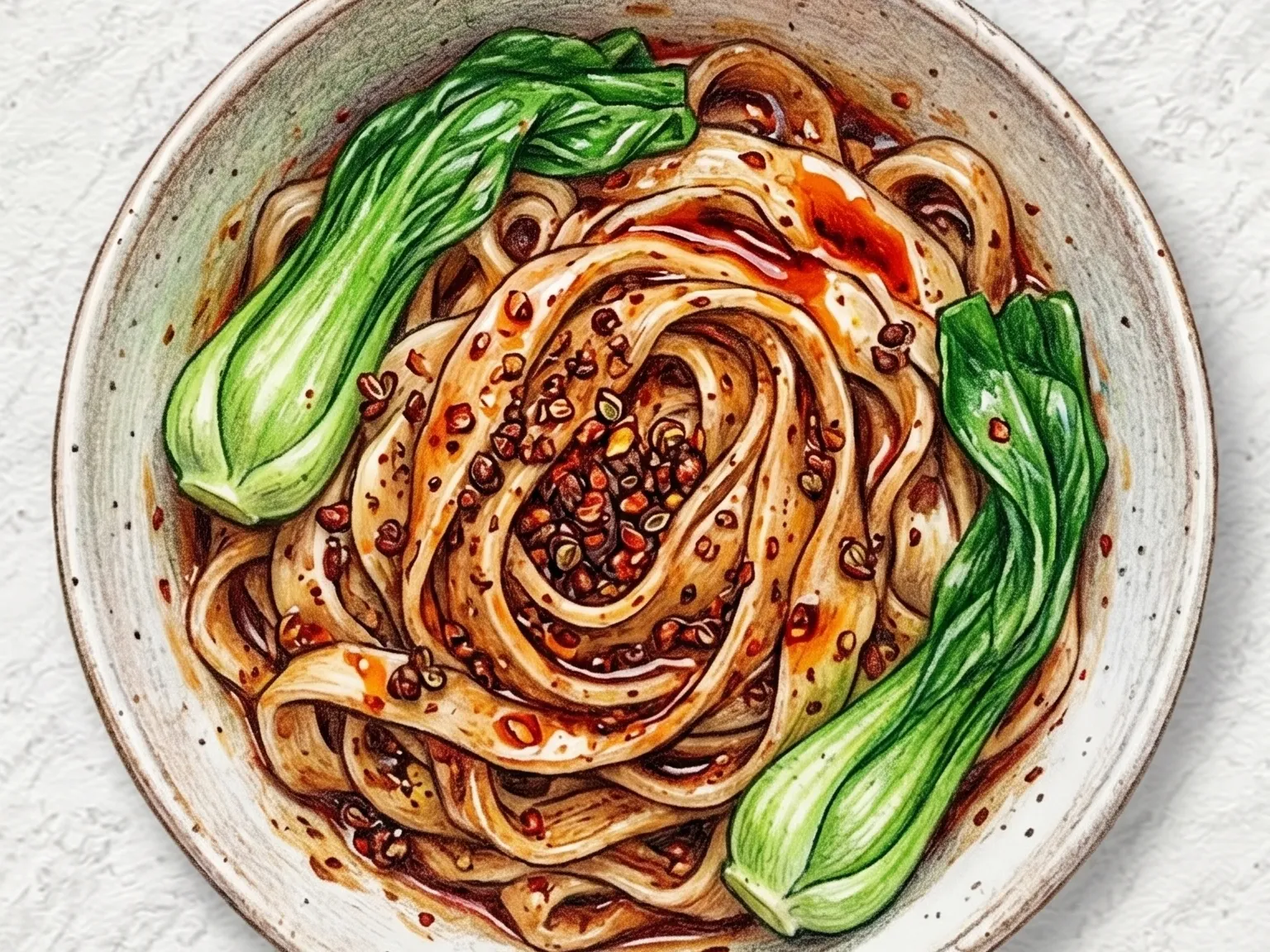
Mala Biang Biang Noodles (Wide Numbing Chili Oil Noodles)
Quick answer
- Total time
- 40 min
- Level
- Hard
- Servings
- 4 servings
- Ingredients
- 9
About this dish
Wide, thick noodles take on the numbing tingle of Sichuan peppercorns, the heat of chili oil, the tang of black vinegar and the fermented saltiness of doubanjiang (chili bean paste) all at once.
Read more
The numbing note comes from warming the peppercorns briefly in chili oil over low heat, pulled off before they darken or smell scorched. Heat is best adjusted with the amount of doubanjiang rather than more chili oil, which keeps the flavor clean. Because the noodles are so broad, a sauce with oil floating on top seasons them unevenly, so the sauce gets stirred to the bottom and the noodles are tossed hard. Boiled 1 minute short of the package time, they stay chewy to the last bite. Bok choy blanched in the noodle water adds a crisp, green bite between the oily strands.
Ingredients
Instructions
- 1
In a large mixing bowl, combine 3 tablespoons soy sauce, 2 tablespoons black vinegar, 1.5 tablespoons doubanjiang, and 1 tablespoon minced garlic. Stir until the doubanjiang loosens fully, leaving no salty clumps in the base sauce.
- 2
Add 3 tablespoons chili oil and 1 teaspoon Sichuan peppercorn to a pan, then warm over low heat for only 40 seconds.
Turn off the heat before the oil darkens sharply or the peppercorns smell scorched.
- 3
Pour the hot chili oil into the prepared sauce and stir evenly.
Scrape the bottom of the bowl as you mix, because separated oil and paste will season the wide noodles unevenly.
- 4
Cook 600 g biangbiang wide noodles in plenty of boiling water for 1 minute less than the package time.
During the first minute, loosen the strands with chopsticks so the broad surfaces do not stick together.
- 5
After lifting out the noodles, blanch 200 g bok choy in the same water for 40 seconds.
When it turns bright green, chill it in cold water and press out excess moisture so it does not thin the oily sauce.
- 6
Add the hot noodles to the sauce bowl and toss firmly with tongs for about 1 minute.
Once the surfaces are coated red, top with bok choy, 3 tablespoons chopped scallion, and the remaining 1 tablespoon chili oil, then serve immediately.
Use-up ingredient planner
Turn these ingredients into two more meals
The overlap excludes basic seasonings. Open the next recipe and your selected dishes will stay with you.
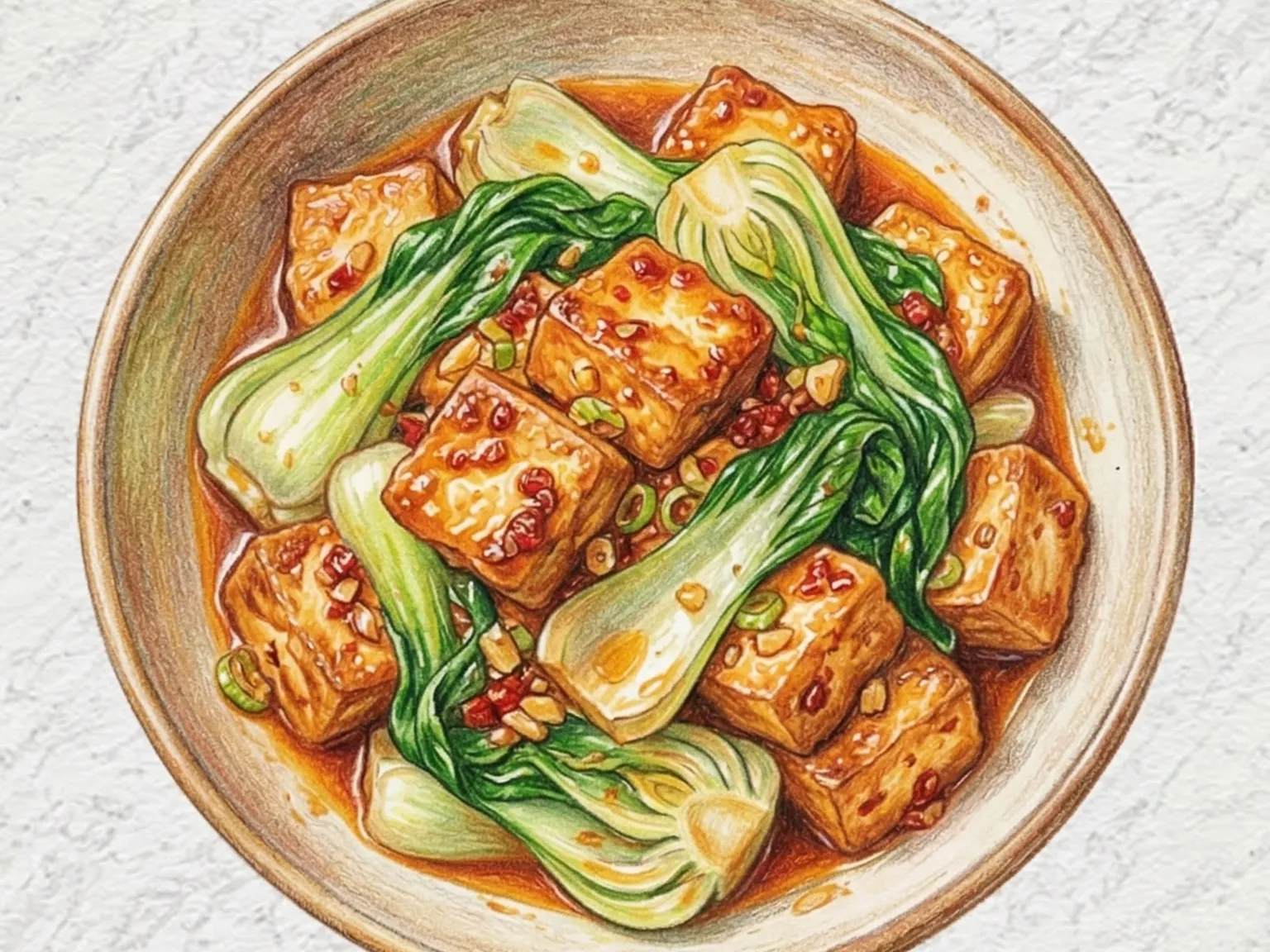
Korean Stir-Fried Bok Choy and Tofu with Doubanjiang
doubanjiang, bok choy
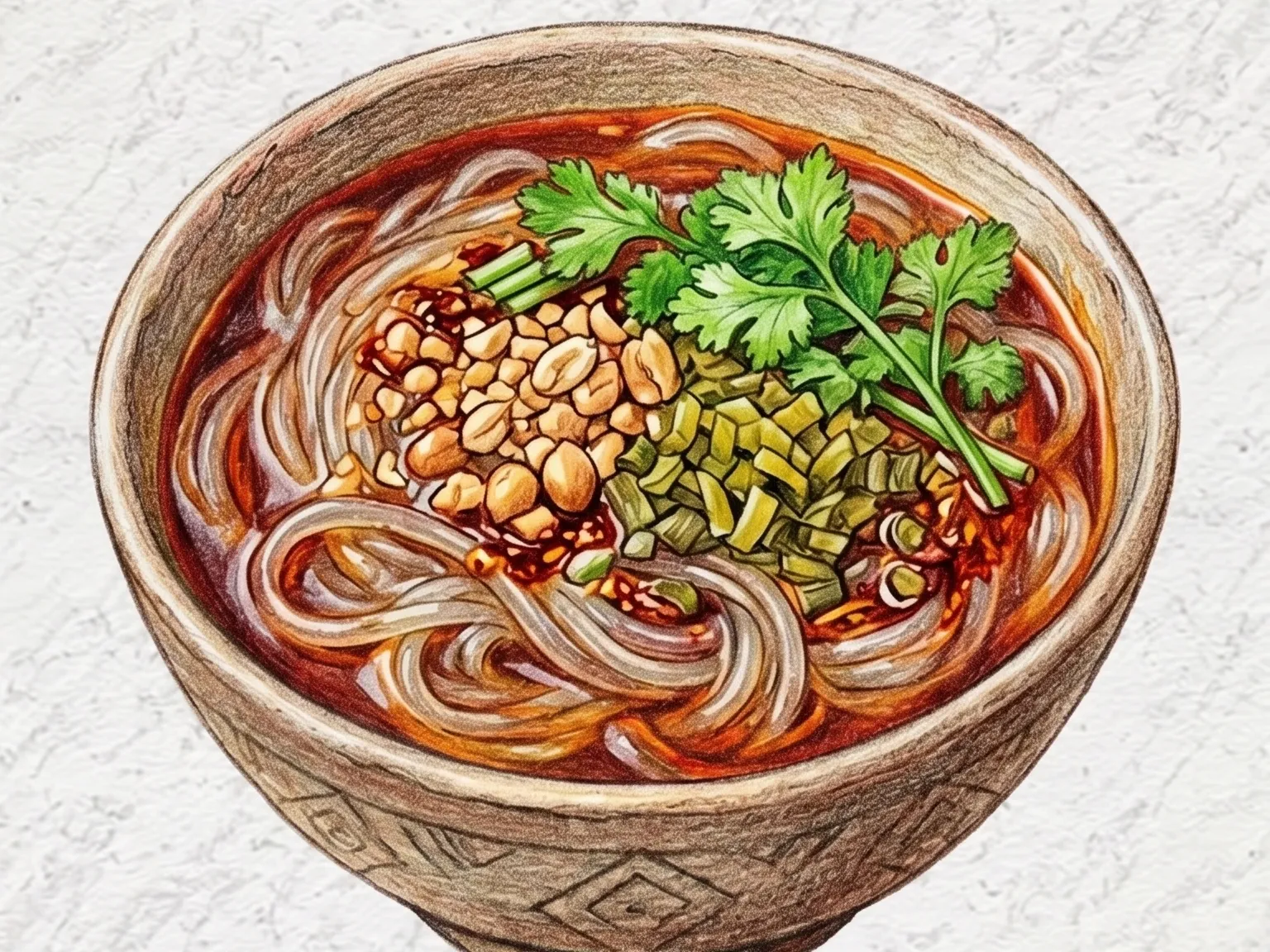
Suanlafen (Sichuan Hot-and-Sour Sweet Potato Noodle Soup)
chili oil, black vinegar
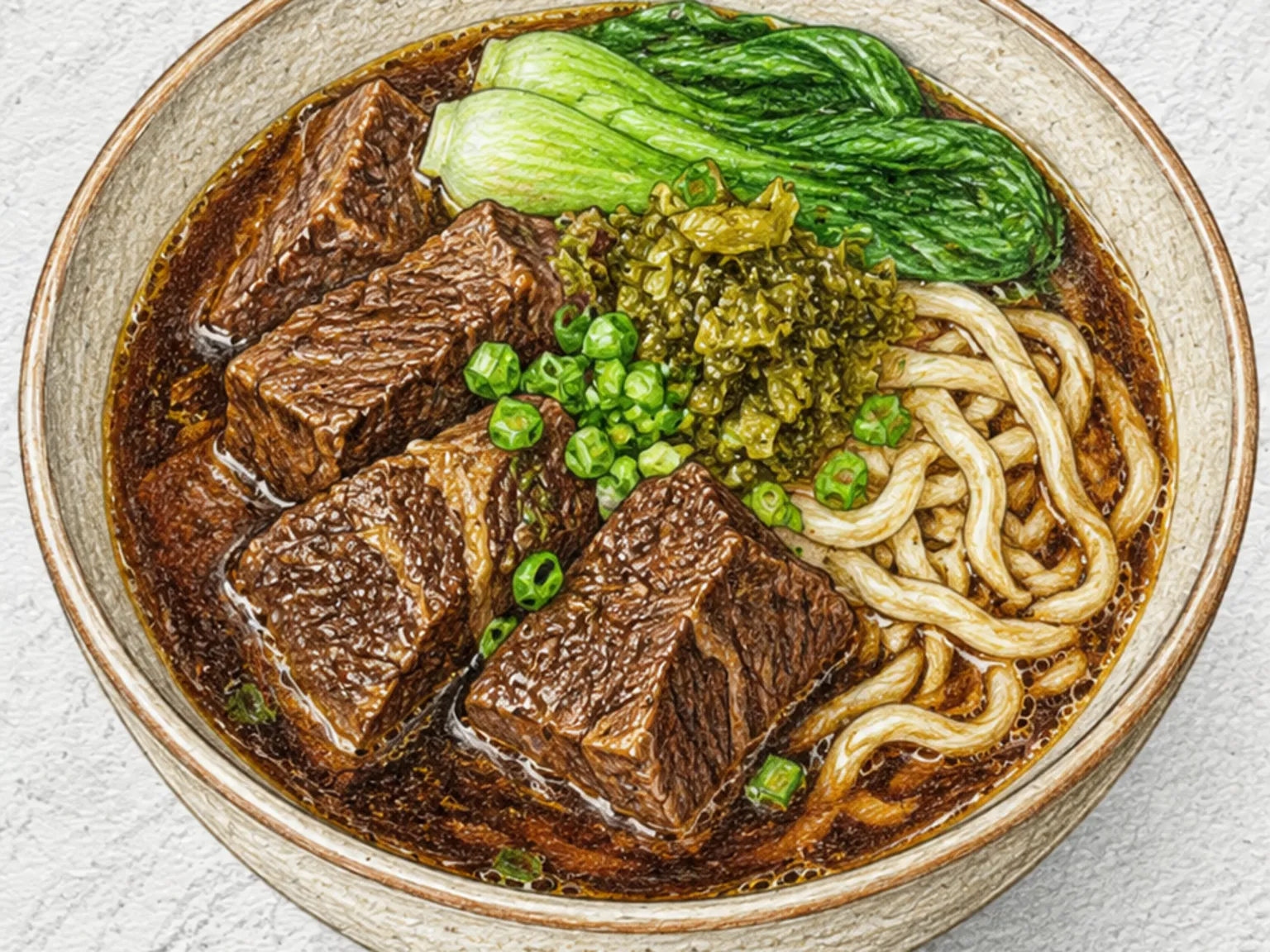
Taiwanese Beef Noodle Soup
doubanjiang, bok choy